Cutting winners and holding losers: one habit, not two
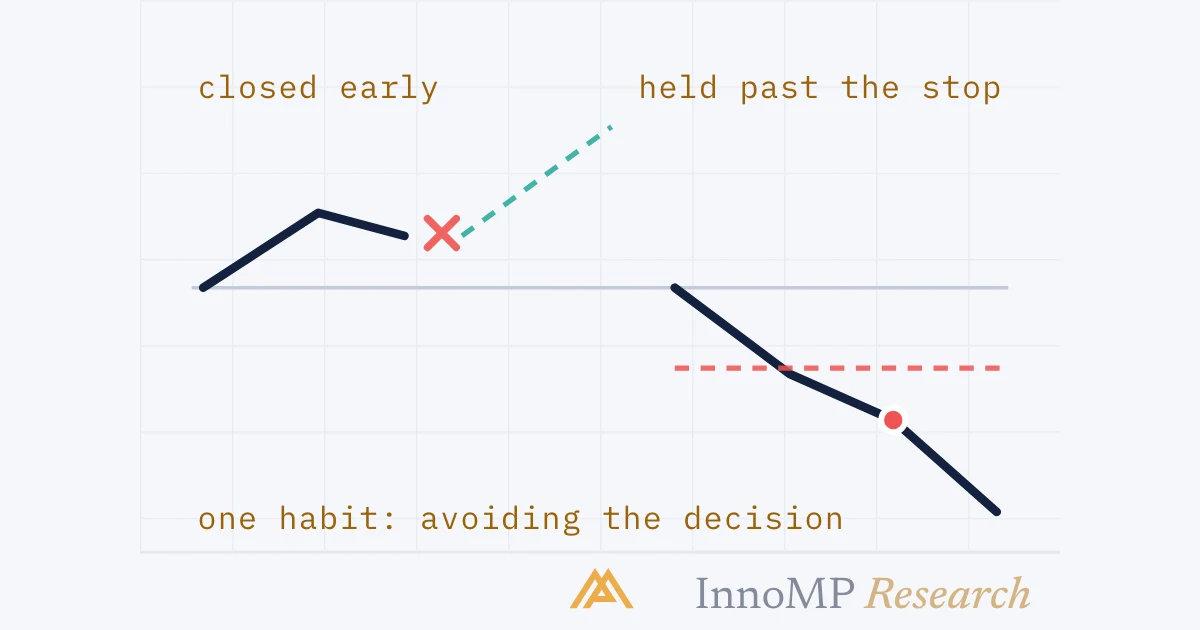
They look like opposite errors. They come from the same source, they compound in the same direction, and one fix addresses both.
IRInnoMP Research · Education Desk Published 31 Aug 2026 · Updated 31 Aug 2026 4 min read
In short
Cutting winners short and holding losers long are two expressions of the same impulse: avoiding the discomfort of an uncertain outcome. Together they compress average wins and expand average losses, which damages a strategy's risk-reward ratio from both directions. The fix for both is the same — commit to exits before entry and place them as resting orders.
Cutting winners and holding losers look like opposite errors. They are the same one.
The market is not involved in either decision. Both are attempts to end the discomfort of not yet knowing.
What it does to expectancy
A strategy planned at 1:2 with a 40% win rate:
As designed: (0.40 × 2R) − (0.60 × 1R) = +0.20R per trade
As executed (winners cut to 1R, losers held to 1.5R): (0.40 × 1R) − (0.60 × 1.5R) = −0.50R per trade
The habit pulls the right side in and pushes the left side out. Neither change is dramatic on any single trade, and together they invert the strategy.
The strategy went from making 0.2R per trade to losing 0.5R per trade, entirely through exits. This is why exits deserve more attention than entries, and receive far less.
Why it is invisible
Each behaviour arrives with a defence that sounds like discipline. Neither survives being written down next to the plan it contradicts.
Seeing it in your own record
Most traders are convinced they do not do this until they see the two columns beside each other. That comparison is the intervention.
Key takeaway
One action addresses both halves: attach the stop and the take-profit as resting orders at entry. Both behaviours depend on the decision being available while the position is open — so remove the decision, and both disappear at once.
Toward is management. Away means the position was sized wrong at entry — and the fix is smaller size on the next one.
What to do instead
Both exits as resting orders at entry. The single highest-leverage change available.
A planned scaling method, if you need one. Take a defined portion at target and trail the rest, decided beforehand and applied consistently.
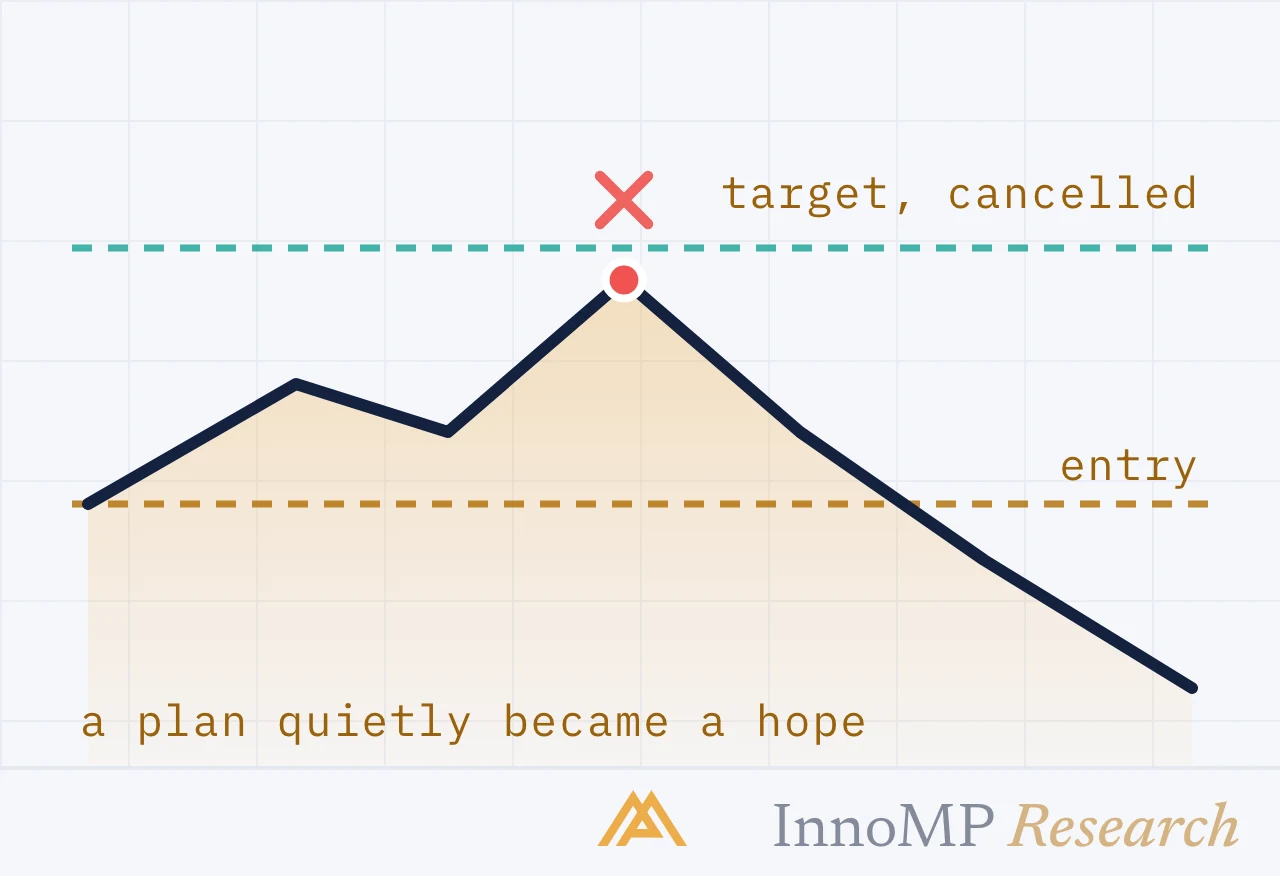
Never widen a stop. Moving it toward reduced risk is management; moving it away is target creep in reverse. If a wider stop is genuinely correct, the position was sized wrong at entry.
Reduce size. At a size where a full stop-out is unremarkable, the urge to interfere with either exit largely disappears — which is Part 15’s point, arriving again.
Both behaviours come from avoiding discomfort rather than from analysis.
They damage the same ratio from opposite directions, so their effects compound.
A journal in R-multiples makes the pattern visible where memory does not.
Resting stop and take-profit orders address both behaviours with one action.
Frequently asked questions
Why do traders cut winners and hold losers?
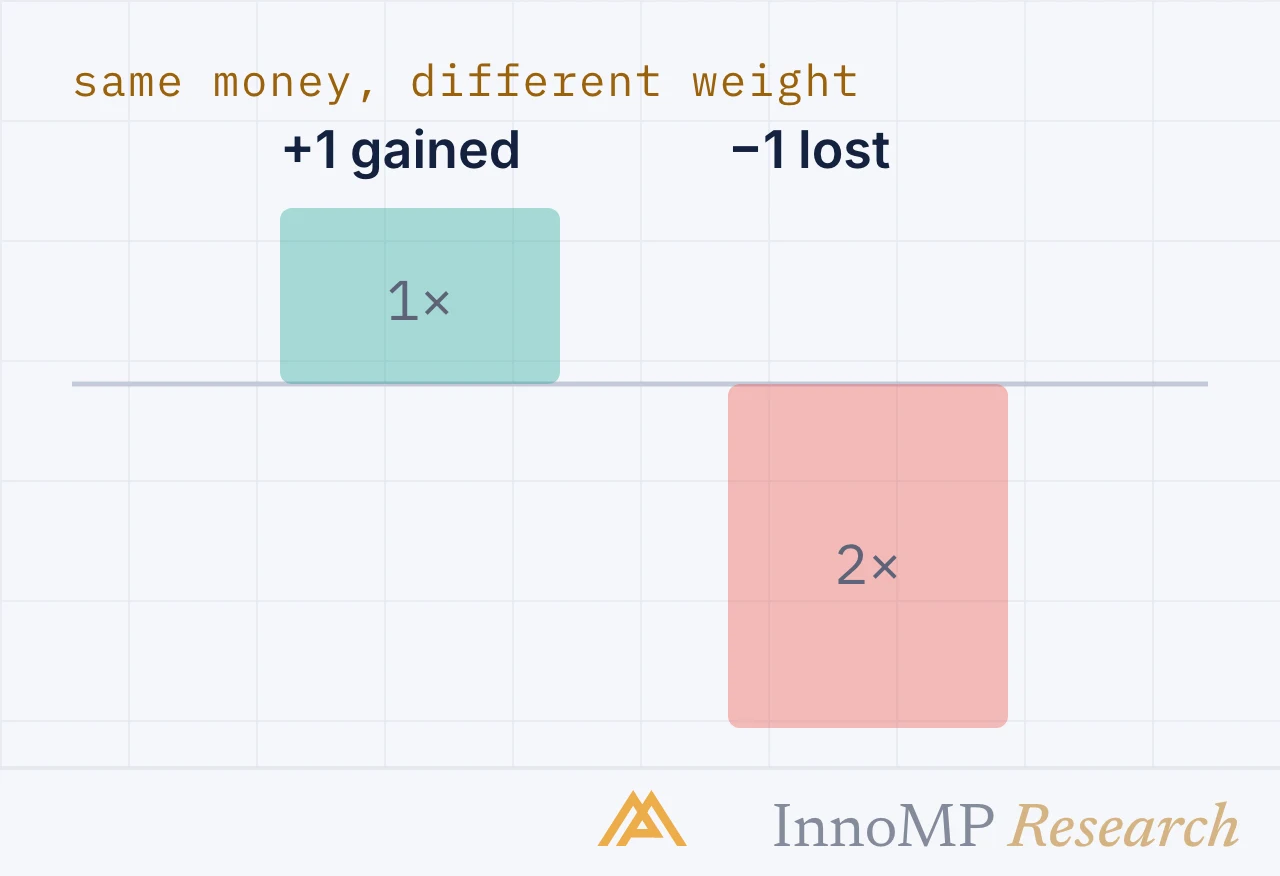
Both avoid discomfort. Closing a winner converts an uncertain gain into a certain one, which relieves the fear of giving it back. Holding a loser postpones the moment the loss becomes real. Neither decision is about the market.
How much damage does this actually do?
Enough to invert a strategy. A plan with a 1:2 ratio and a 40% win rate is profitable; cut the winners to 1:1 and let losers run to 1.5 times the planned stop, and the same entries produce a loss. Nothing about the analysis changed.
How do I fix cutting winners and holding losers?
Attach both the stop and the take-profit as resting orders when you enter. One action addresses both behaviours, because both depend on decisions being available while the position is open.
How do I know if I am doing this?
Journal every trade in R-multiples and compare planned R against realised R. A column of winners landing well below their planned targets, and losers landing beyond their planned stops, is the pattern in numbers.
Trading education from first principles — position sizing, risk, market structure and the habits that keep accounts alive. Written for someone who has never opened a chart, with a diagram at every step.
Published 31 Aug 2026 · Updated 31 Aug 2026
Disclaimer: This content is provided for general informational purposes only and does not constitute investment advice, an offer, or a solicitation to buy or sell any financial instrument. It has been prepared without regard to your individual financial circumstances or objectives. Trading CFDs involves a high risk of loss.
The asymmetry that makes traders cut winners early and hold losers long. Where it comes from, and the structural fixes that work better than trying to feel differently.