Sizing down: the one lever that fixes most psychology problems
Hesitation, early exits, moved stops, revenge trades. Nearly all of them shrink when the position does. Why size is the primary psychological tool, not just a risk one.
IRInnoMP Research · Education Desk Published 31 Aug 2026 · Updated 31 Aug 2026 4 min read
In short
Position size determines the emotional weight of every trading decision, because emotion scales with consequence. Reducing size below the level at which a loss feels significant restores the ability to follow a plan without relying on self-control. This makes sizing the primary psychological intervention available, not merely a risk-management setting.
Position size sets the emotional weight of every decision you make. That makes it the primary psychological tool available — more effective than any technique for staying calm, because it changes the input rather than the response.
The previous fourteen parts have described a range of problems. Almost all of them have the same first-line treatment.
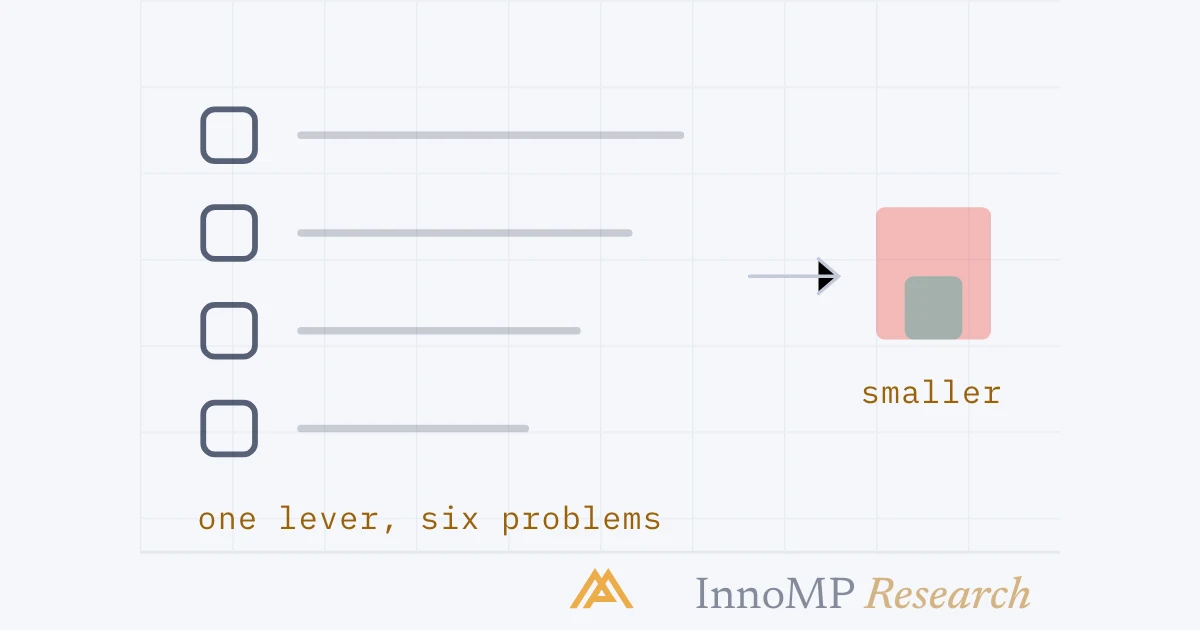
The list of things size fixes
Six distinct problems, one intervention. That is unusual, and worth taking seriously rather than treating as a platitude.
Why it works
Emotion scales with consequence. This is not a flaw to be trained away — it is a reasonable response to actual stakes.
At 0.5% following the plan requires no self-control. At 5% every decision becomes a negotiation. Nothing about the person changed. Finding your threshold is more useful than trying to raise it. The test is behavioural, not introspective.
Reduce size until executing the plan becomes unremarkable. Not comfortable — unremarkable. If you are watching the position, hesitating before entry, feeling the pull to close early or move a stop, you are above your threshold.
Experience raises it slowly, over hundreds of trades. What does not raise it: wanting it to be higher.
The objection, answered
Trading smaller means making less.
The size that maximises expected value on paper is frequently above the size you can execute. The correct choice is the executable one.
Over a career, a larger position size increases both the return and the variance — and variance is the thing that removes traders from the market before their edge can compound.
Key takeaway
Before treating any psychological difficulty as a character problem, halve your position size and see whether it persists. Most of the time it does not — which tells you the plan was fine, the analysis was fine, and the sizing was doing all the damage.
Larger size increases return and variance together — and variance is what removes traders before their edge can compound.
Making it mechanical
Fix the percentage in advance and do not vary it with recent results — that removes overconfidence’s main channel.
Calculate every time. Use the calculator rather than sizing by feel. Arithmetic does not get confident or frightened.
Reduce at a defined drawdown threshold, written before you need it.
Reduce ahead of known volatility — scheduled releases, weekends. The margin calculator shows how much room a position actually has.
Emotional response scales with the size of the consequence, which position size sets.
Most rule-breaking disappears when position size falls below a personal threshold.
Trading smaller costs expected return in the short term and preserves the ability to execute.
The threshold is personal and is found by reducing size until execution becomes easy.
Frequently asked questions
How does position size affect trading psychology?
Emotion scales with consequence. A position risking 1% of an account produces a mild response to a loss; one risking 5% produces a strong one. The chart and the analysis are identical — what changes is whether following the plan requires effort.
How do I find the right position size for me?
Reduce until executing the plan becomes unremarkable. If you hesitate before entry, exit early, or feel the urge to move a stop, the size is above your threshold. The correct size is the one at which a full stop-out is boring.
Isn't trading smaller just leaving money on the table?
In the short term, yes. But a smaller position followed correctly beats a larger one managed emotionally, and the arithmetic of drawdown means survival dominates return. The size that maximises expected value on paper is often above the size you can actually execute.
Should I increase size after a winning streak?
No. A winning streak is weak evidence of skill and strong evidence of variance. Size should change with account equity, which happens automatically when risk is a fixed percentage, not with recent results.
IR
InnoMP Research · Education Desk
Trading education from first principles — position sizing, risk, market structure and the habits that keep accounts alive. Written for someone who has never opened a chart, with a diagram at every step.
Published 31 Aug 2026 · Updated 31 Aug 2026
Disclaimer: This content is provided for general informational purposes only and does not constitute investment advice, an offer, or a solicitation to buy or sell any financial instrument. It has been prepared without regard to your individual financial circumstances or objectives. Trading CFDs involves a high risk of loss.
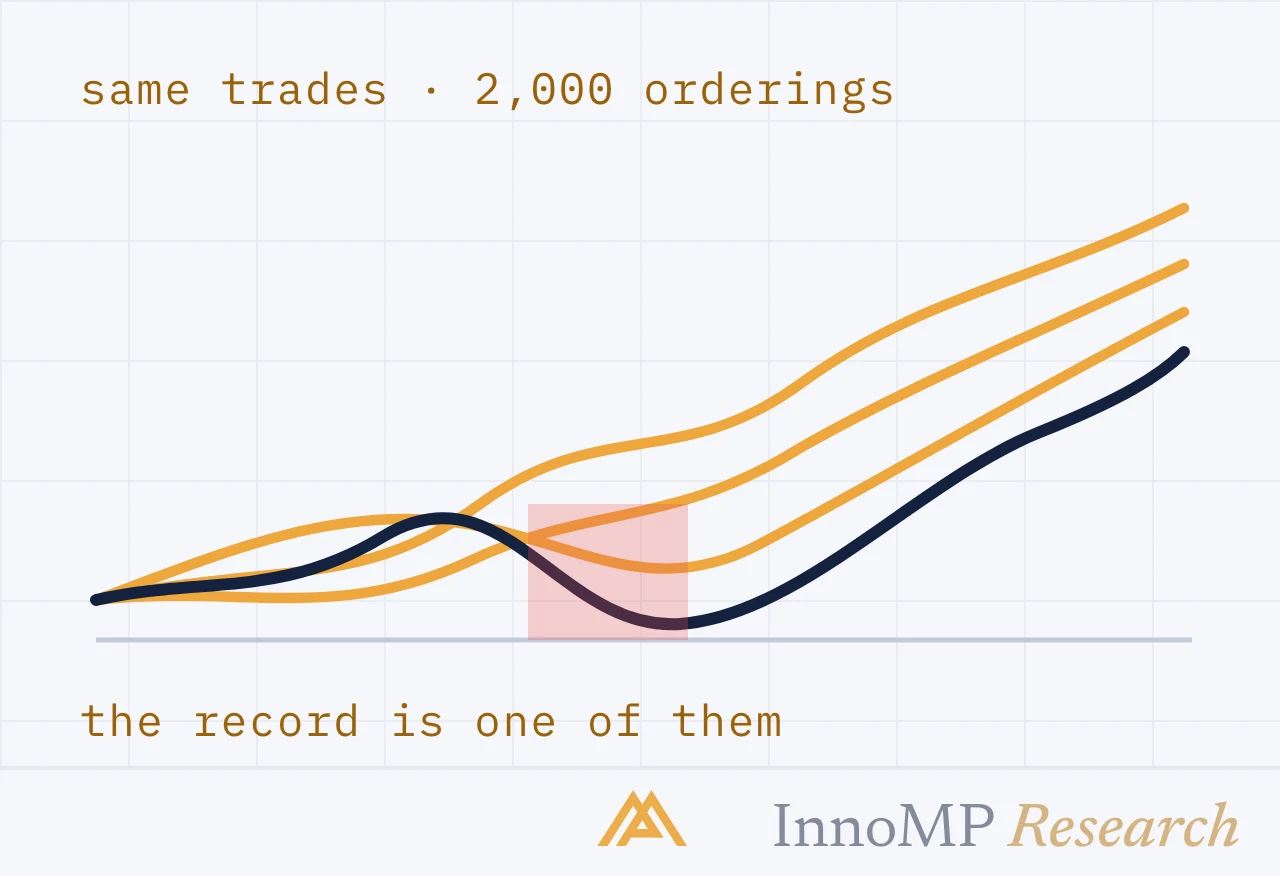
The worst run in the record is one draw of many. How to resample the same trades thousands of times, read the distribution of maximum drawdown and losing streaks it produces, and size so the bad draws are survivable.
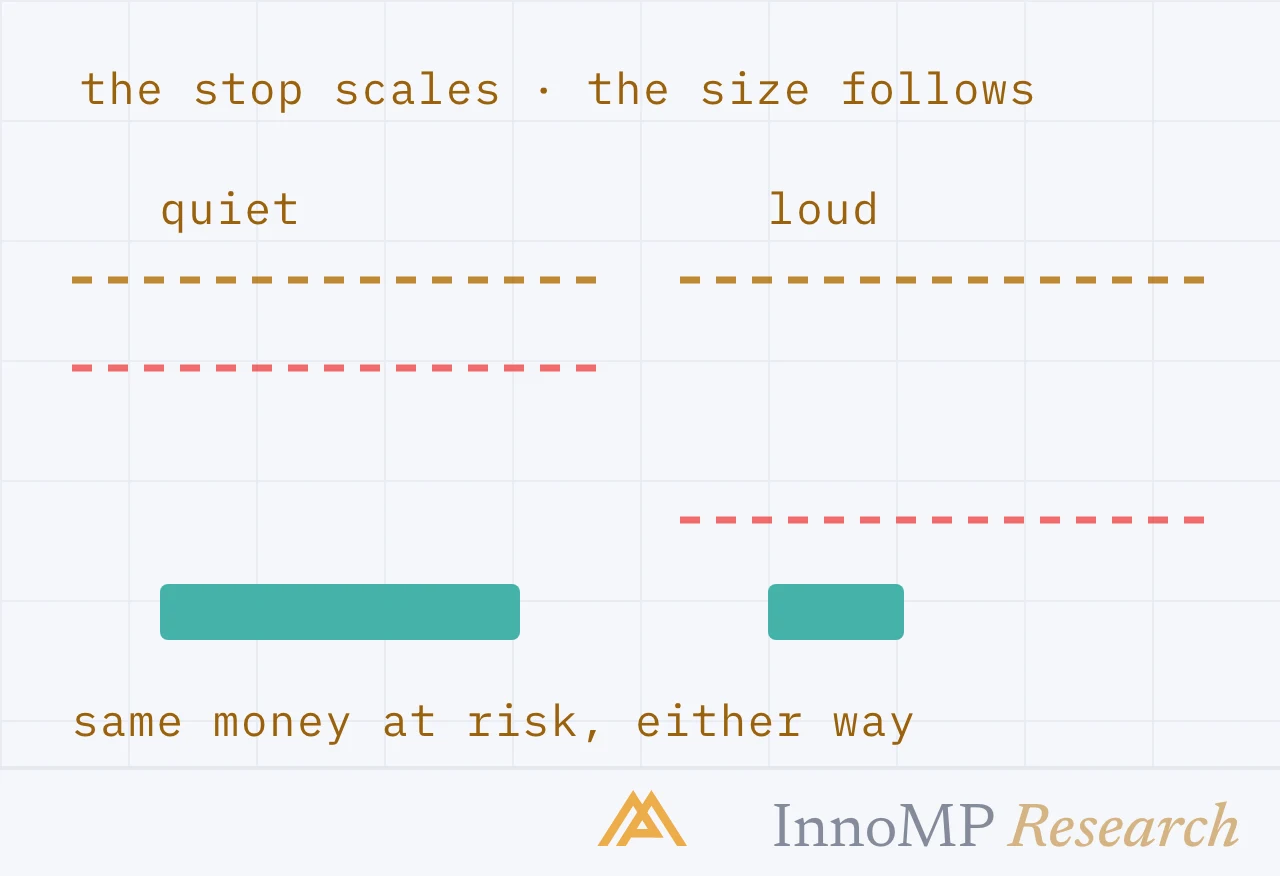
A 30-pip stop is tight in one regime and inside the noise in another. How to place the stop as a multiple of ATR, size the position from it so that risk in money stays constant, and what changes when volatility does.
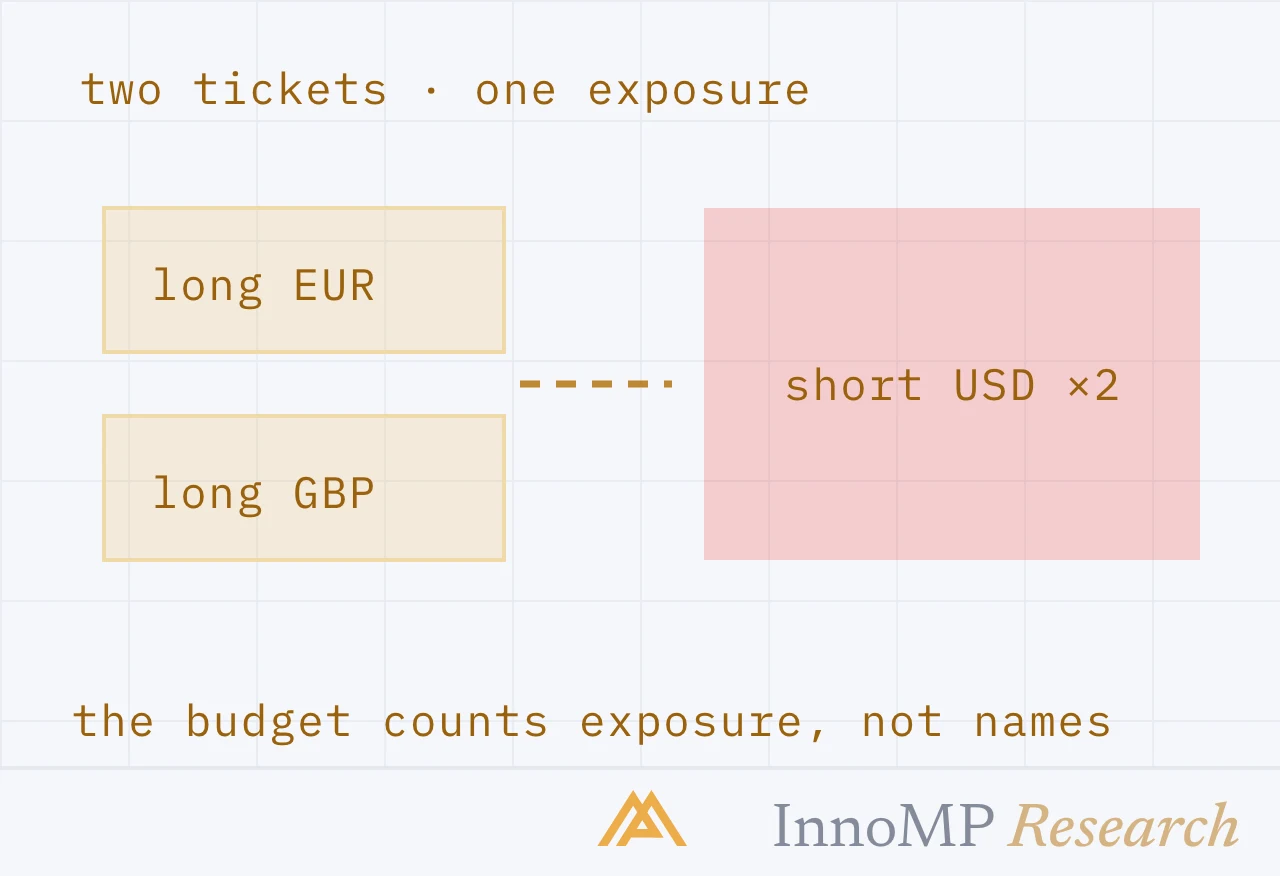
Long EURUSD and long GBPUSD is not two trades. It is one short-dollar position with two names, and the risk budget has to see it that way. How exposure adds up across pairs that share a leg, and how to size for it.