Skip to content

InnoMP Research — Market Research & Education

Market Research & Education ·
  • Every note dated and updated
  • Corrections on the record
  • No investment advice
Lead Note · Market structure

How to trade US100 CFDs: a framework for the Nasdaq-100

Same direction as the S&P 500, bigger swings. Why the Nasdaq-100 moves more, how concentrated it may be, the one-contract lot, and sizing at a higher level.

InnoMP Research · Education Desk 9 min read
Read the note

Education

Notes written for someone who has never opened a chart. One idea per piece, a diagram at every step.

All education notes →
InnoMP Research cover art — a number and its doubt
Trading journal

Expectancy with error bars: how sure the record lets you be

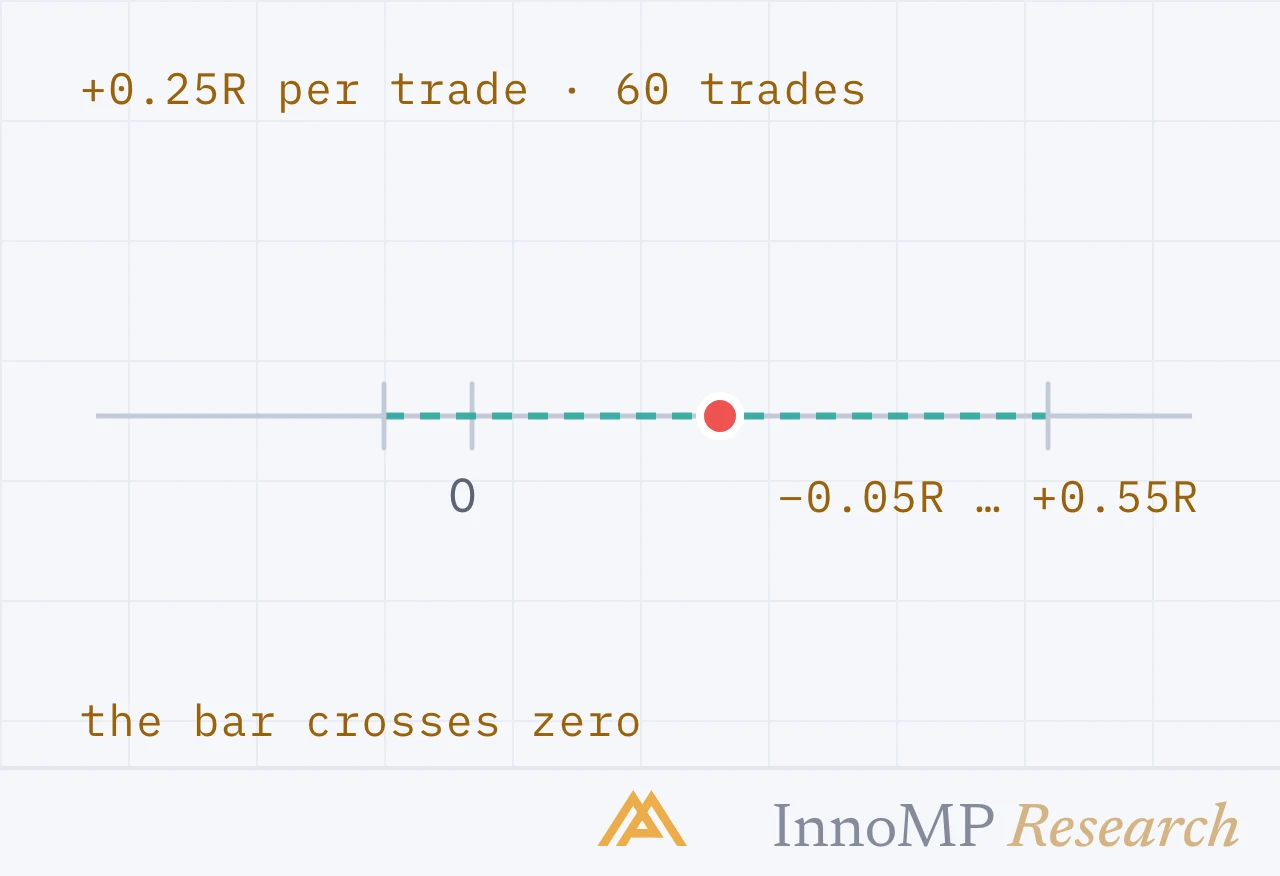
A record says +0.25R per trade. The question is how far from that the truth could be. How to put a standard error and a confidence interval on expectancy, and how many trades it takes to tell an edge from zero.

9 min read
InnoMP Research cover art — the day starts in London
Market structure

How to trade GBPUSD: a framework for cable

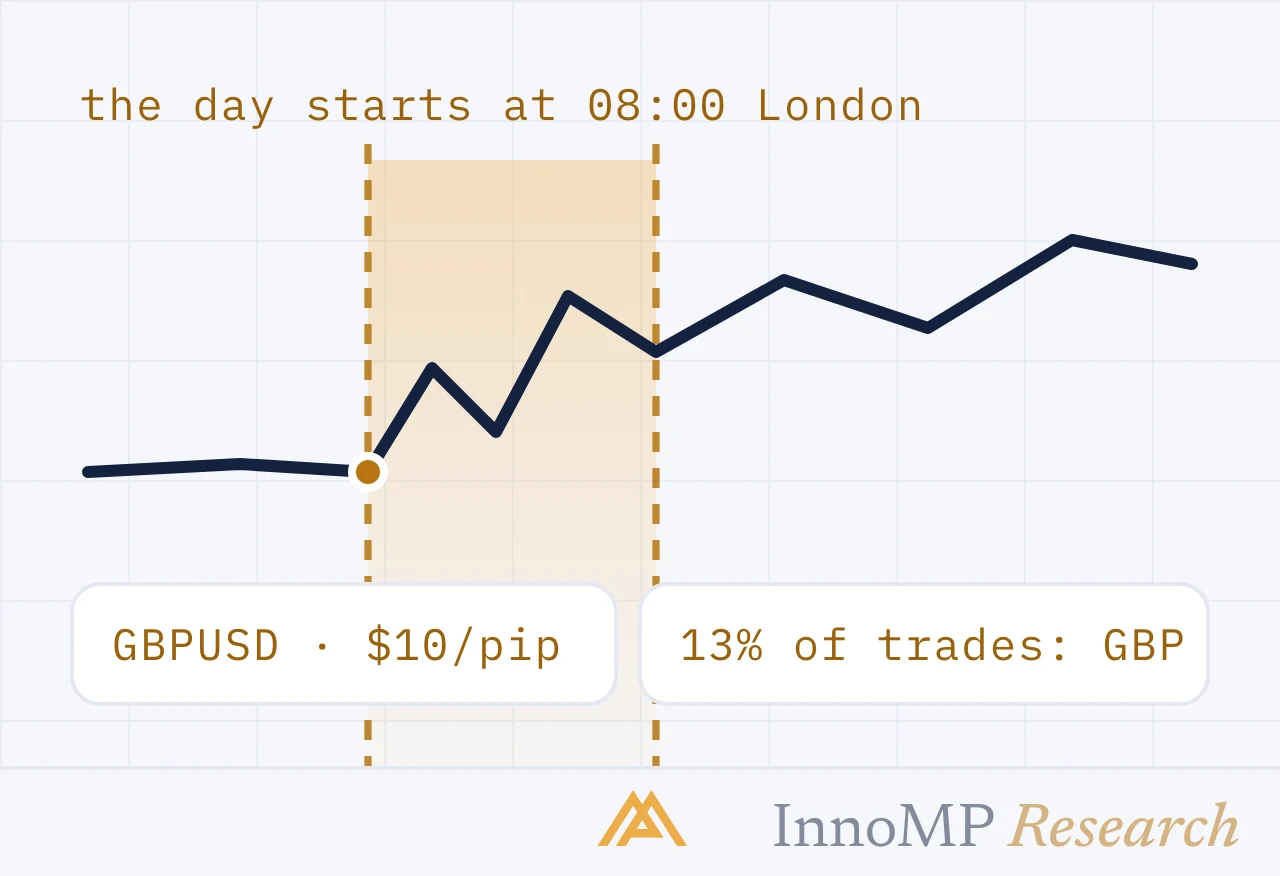
The fourth most traded currency, a day that starts at 08:00 London, a 07:00 inflation print into a thin book, a noon Bank of England. Drivers, contract, sizing.

7 min read
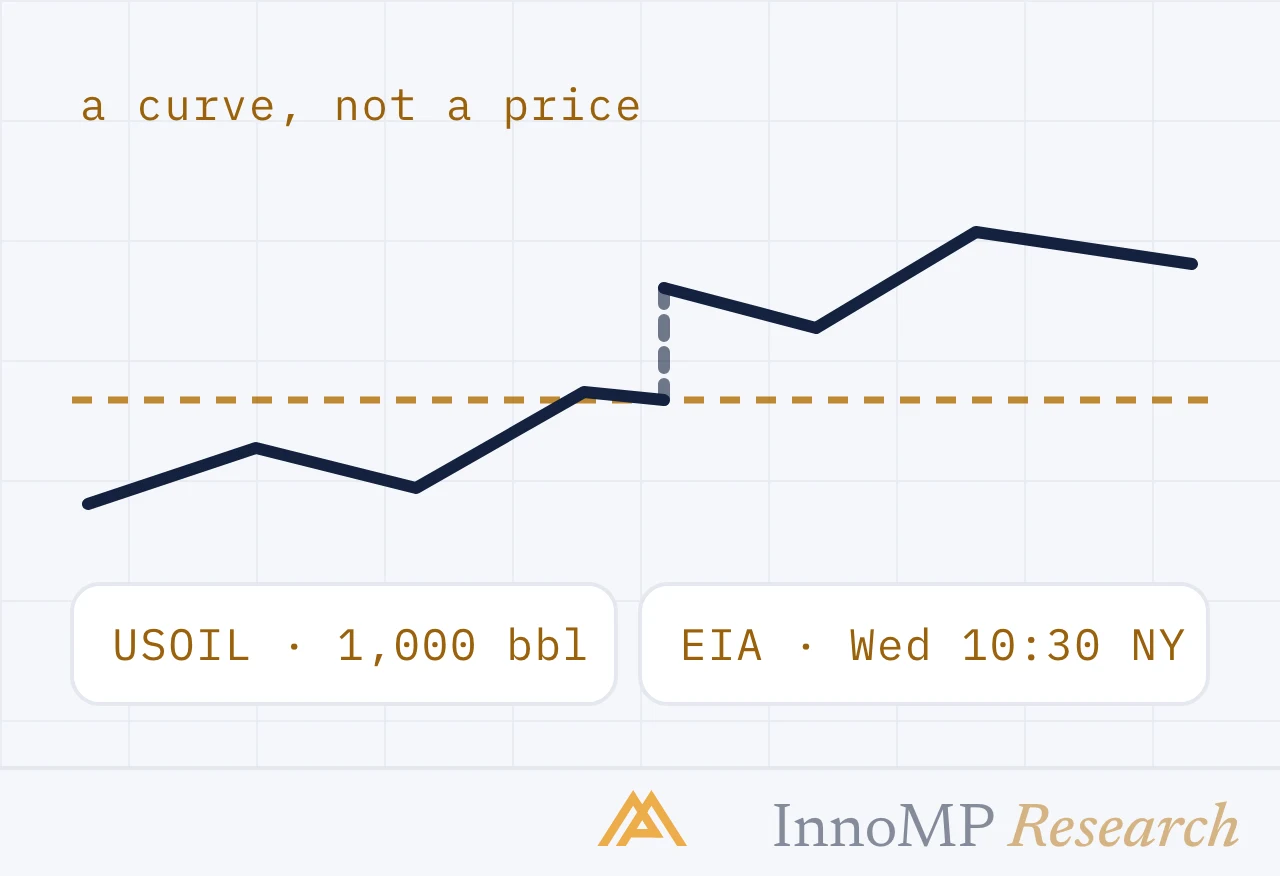
InnoMP Research cover art — a curve, not a price
Market structure

How to trade oil CFDs: a framework for WTI crude

A CFD on crude tracks a monthly futures contract, which changes how oil moves and what it costs to hold. Drivers, the roll, the Wednesday report, and sizing.

8 min read
More in this section

Courses

Six courses, read in order. Start wherever your record says you are.

Education map →
12-part series CFD Foundations

A twelve-part starting course in CFD trading. What a contract for difference actually is, what a pip is worth, what the spread is and what a trade really costs, and the sizing and margin arithmetic that decides whether a losing run is survivable — then the shape of the trading week. No prior knowledge assumed.

Start with Part 1 →
20-part series Technical Analysis: Foundations

A twenty-part beginner course in reading price charts. Starts from what a candlestick actually records and builds to the indicators inside InnoMP Market Watcher. Every part is written for someone who has never opened a chart, with diagrams at each step.

Start with Part 1 →
18-part series Technical Analysis: Intermediate

Level 2 of the technical analysis course. Foundations taught the pieces — structure, levels, candles, patterns, indicators. This level puts them together: reading three timeframes in order, what volume can and cannot tell you in a CFD market, how the trading day is structured, which instruments move together, and how the pieces become a setup you can test. Assumes the Foundations course.

Start with Part 1 →
16-part series Technical Analysis: Professional

Level 3 of the technical analysis course. Foundations taught the pieces and Intermediate put them into a setup with a record. This level goes underneath and beyond: how a price is actually made and what execution costs, where liquidity rests and how it moves price, how volatility changes and how to size for it, what a record can prove and what it cannot, and how a discretionary process becomes a system that can be run — and stopped — by rule. Assumes both earlier levels.

Start with Part 1 →
20-part series Trading Psychology, from the ground up

A twenty-part course in the mental side of trading — why losses hurt more than equivalent gains, where tilt comes from, how rules survive contact with a drawdown, and the routines that hold a process together. Each part includes a diagram and a plain-English definition.

Start with Part 1 →
8-part series How to Trade

Instrument-by-instrument guides. Each one covers what actually moves the market, the contract you are trading, the sessions and calendar events that matter for it, and how to size a position for its volatility rather than for a generic pip count.

Start with Part 1 →

Platform

Setup guides for the InnoMP APP, WebTrader and MetaTrader 5.

View all →
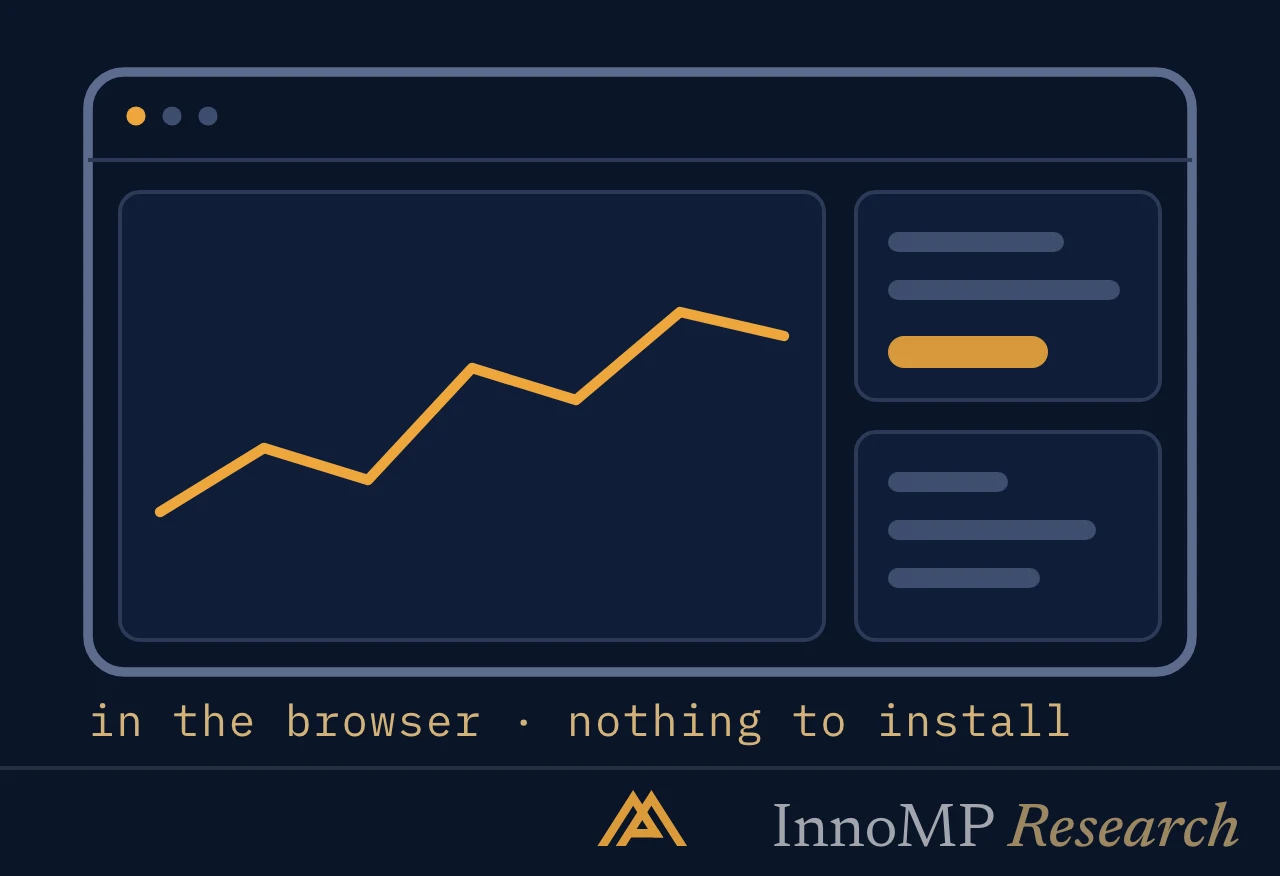
InnoMP Research cover art — WebTrader, room by room
Platforms

InnoMP WebTrader: a complete tour for new users

Everything in the browser, nothing to install: 100+ instruments, 80 indicators, 30 drawing tools and Market Watcher alerts. Where everything lives in InnoMP WebTrader — and how to arrange it for real work.

5 min read
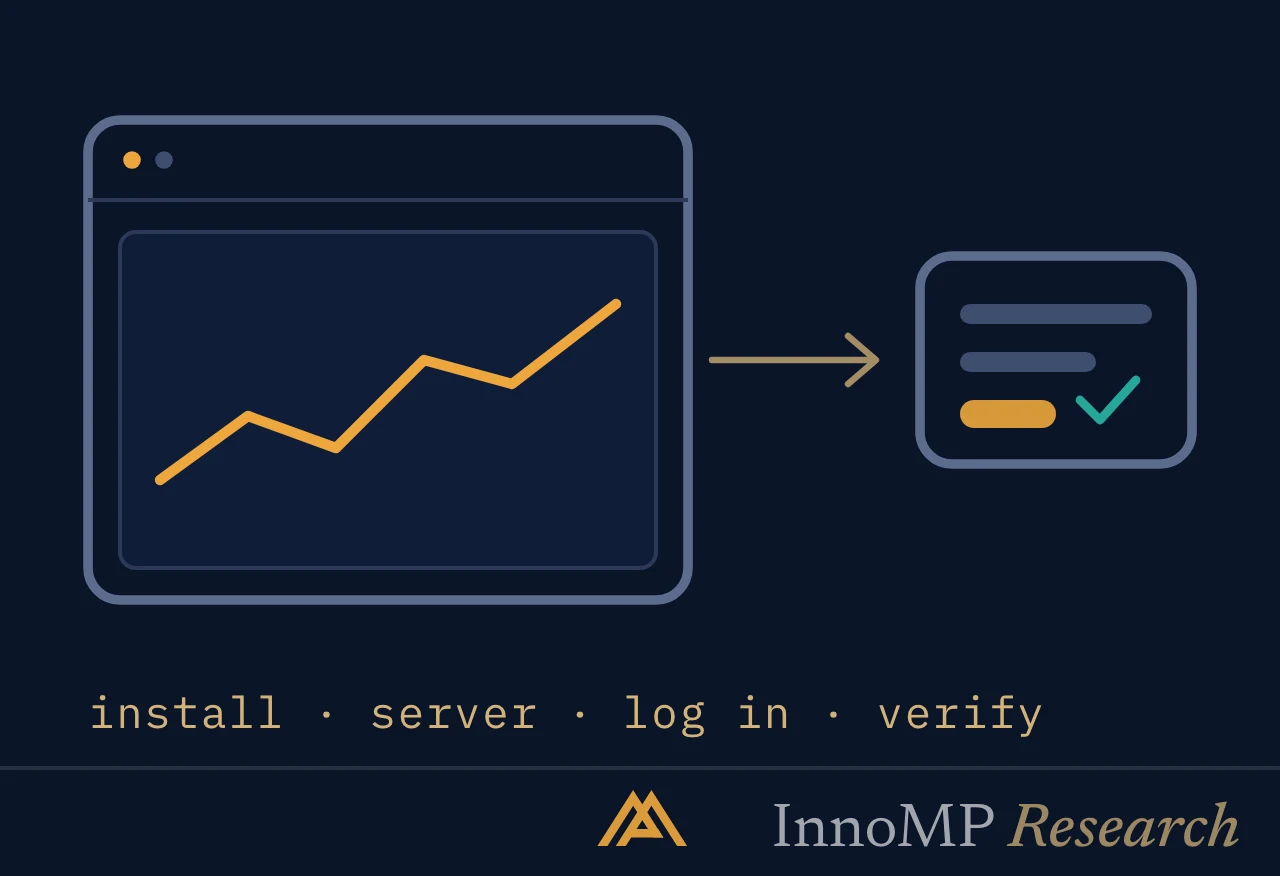
InnoMP Research cover art — MetaTrader 5, connected
Platforms

Connecting MetaTrader 5 to your InnoMP account

MT5 setup in four steps — install, find the server, log in, verify the connection — plus the settings worth changing before the first trade and the errors that stop most people.

5 min read

Promotions

Live InnoMP programmes, explained by the desk — the terms, the arithmetic, and what to check before you opt in.

All promotions →
Prestige Rewards · Live Now

Every closed lot earns points. Every month sets the multiplier.

InnoMP Prestige Rewards converts trading volume into MP-Points, with a tier from Silver to Diamond reset monthly by net deposit. Here is how it accrues — and the arithmetic to do before a points balance changes how you trade.

◈ 4 membership tiers ✕ Up to 2.0× multiplier ◇ No entry fee

MP-Points carry no cash value. Terms & Conditions apply.

Trade & Travel · Live Now

Trade anywhere. Go everywhere.

Hit your tier's net deposit and lot volume — and fly. Flights and hotels for two, from Hong Kong to the Maldives.

✈ 3 Travel Tiers 🌍 6 Destinations 🏨 Up to 5 Days 4 Nights

Prize subject to availability. Terms & Conditions apply.

Glossary

The terms the most notes rely on — each defined so it stands on its own, and linked to the article that explains it.

All 310 terms →
  1. 01SpreadThe difference between the bid and the ask. It is the cost paid on entry, present in the quote whether or not a commission is charged separately.Defined in 4 notes
  2. 02LiquidityThe volume of resting orders available at and around a price. Where it is thin, the same order size moves price further.Defined in 2 notes
  3. 03ExpectancyThe average result per trade, given a win rate and the average sizes of wins and losses. It determines whether a strategy makes money over a sample.Defined in 1 notes
  4. 04VarianceThe spread of outcomes a strategy produces around its expectancy. It is why a sound strategy has losing runs and an unsound one has winning ones.Defined in 4 notes
  5. 05SlippageThe difference between the price an order was expected to fill at and the price it filled at. It widens where liquidity thins, notably around data releases and at the weekly open.Defined in 2 notes
  6. 06ConsolidationA period in which price moves within a contained range rather than progressing, typically with declining range and volume.Defined in 2 notes
  7. 07SupportAn area where buying has previously stopped a fall. It is a zone rather than a single price.Defined in 1 notes
  8. 08Contract sizeThe quantity of the underlying instrument represented by one lot — 100,000 units for a standard forex lot, 100 ounces for XAUUSD.Defined in 2 notes
  9. 09Market structureThe sequence of swing highs and swing lows that describes what price has been doing, independent of any indicator.Defined in 1 notes
  10. 10Pip valueWhat one pip of movement is worth in the account currency for a given position. It depends on the pair, the lot size and the account currency.Defined in 1 notes
  11. 11Position sizeThe number of lots in a trade. It is what converts a stop distance into an amount of money at risk, and it sets the emotional weight of every decision that follows.Defined in 2 notes
  12. 12ResistanceAn area where selling has previously stopped a rise. It is a zone rather than a single price.Defined in 1 notes
  13. 13Risk per tradeThe share of account equity that a single trade is allowed to lose if the stop is hit, set before position size is calculated.Defined in 2 notes
  14. 14Sample sizeThe number of trades a conclusion rests on. Small samples produce runs that look like signal and are not.Defined in 1 notes
  15. 15Trading sessionOne of the three regional periods that make up the forex day — Asia, London and New York — each with its own participants and typical range.Defined in 1 notes
  16. 16ATRAverage True Range — the average size of a period's full range, including any gap from the previous close. It measures how much an instrument moves, not which way.Defined in 1 notes
  17. 17BodyThe rectangular part of a candlestick, spanning the open and the close. Its length shows how far price travelled between those two points.Defined in 2 notes
  18. 18DrawdownA decline from an account's peak, measured to its lowest point before a new peak is made. It is normally quoted as a percentage of that peak.Defined in 2 notes
  19. 19RetestPrice returning to a level it has just broken, which either holds as the level's new role or fails and returns through it.Defined in 1 notes
  20. 20Break of structurePrice closing beyond the most recent swing high or swing low in the opposing direction, ending the sequence that defined the trend.Defined in 1 notes
  21. 21Compliance rateThe proportion of trades that followed the written plan, regardless of whether they made money. It measures process rather than outcome.Defined in 2 notes
  22. 22ConfluenceTwo or more independent reasons pointing at the same price area — for example a trendline meeting a prior level.Defined in 2 notes
  23. 23GapA discontinuity between one period's close and the next period's open, with no trading in between. In CFDs it most often appears at the Monday open.Defined in 1 notes
  24. 24InvalidationThe price at which the reason for a trade is no longer true. A stop belongs there rather than at a chosen loss amount.Defined in 2 notes
  25. 25Margin levelEquity divided by margin in use, expressed as a percentage. It is the figure a platform watches to decide when to liquidate positions.Defined in 2 notes
  26. 26Partial exitClosing part of a position at a target while leaving the remainder open. It fixes some of the result and reduces the position's emotional weight.Defined in 2 notes
  27. 27Pre-commitmentDeciding in advance what will happen in a situation, and removing the ability to reconsider once it arrives.Defined in 2 notes
  28. 28R-multipleA trade's result expressed in units of its initial risk. A trade risking 1% that gains 2% is +2R, regardless of the account size.Defined in 2 notes
  29. 29Stop-lossAn order closing a position at a specified price to cap its loss. Where it belongs is set by invalidation, not by an acceptable loss amount.Defined in 1 notes
  30. 30Tick volumeThe number of times the price changed during a candle's period. It is what the volume bars on a forex or CFD chart show, because no central count of contracts exists for an over-the-counter market.Defined in 1 notes
New to CFDs? Start with the Investment Classroom.

17 structured lessons across 5 learning paths — from margin basics to trading psychology.