Cognitive bias
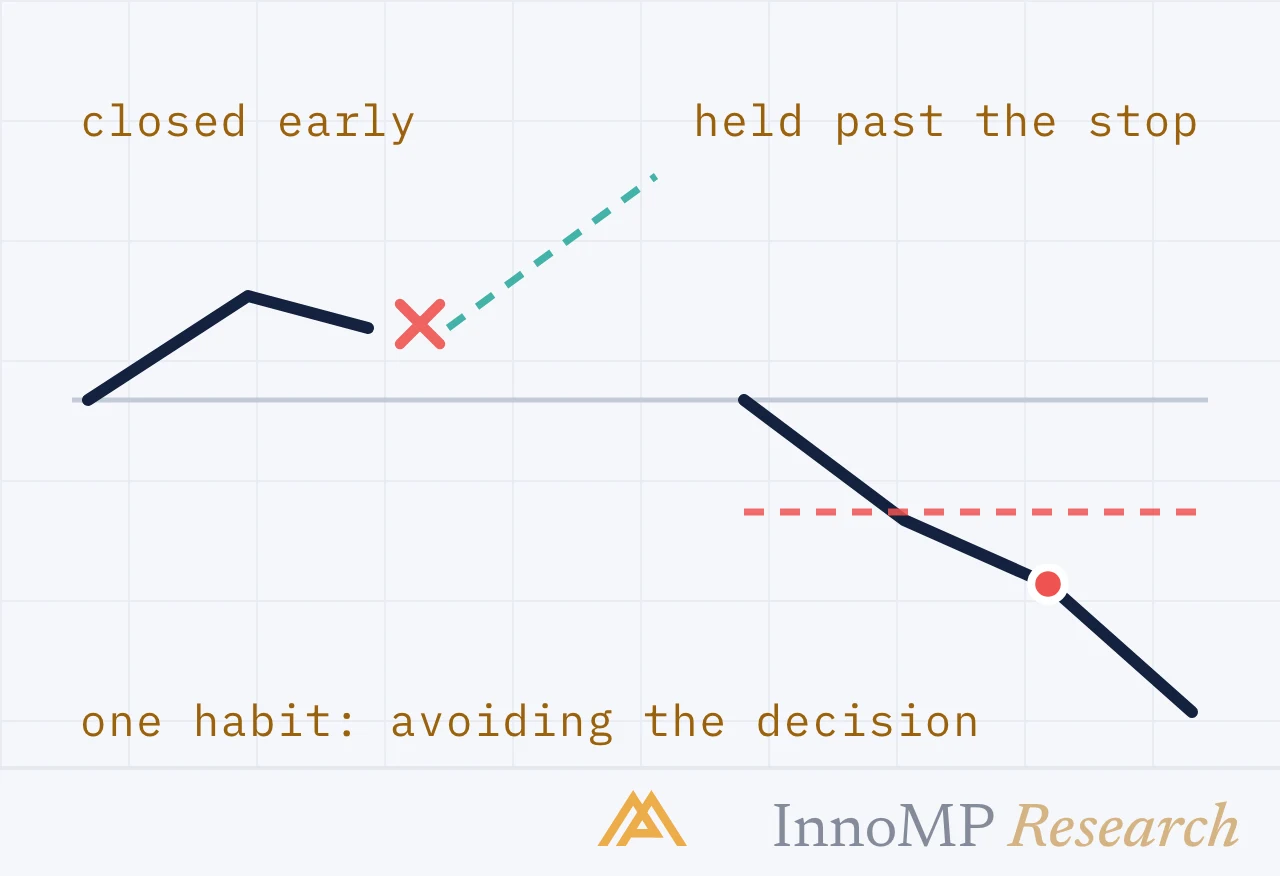
Cutting winners and holding losers: one habit, not two
They look like opposite errors. They come from the same source, they compound in the same direction, and one fix addresses both.
4 min read
Fear, greed, FOMO and tilt — what they cost and how to structure around them.
10 articles
They look like opposite errors. They come from the same source, they compound in the same direction, and one fix addresses both.
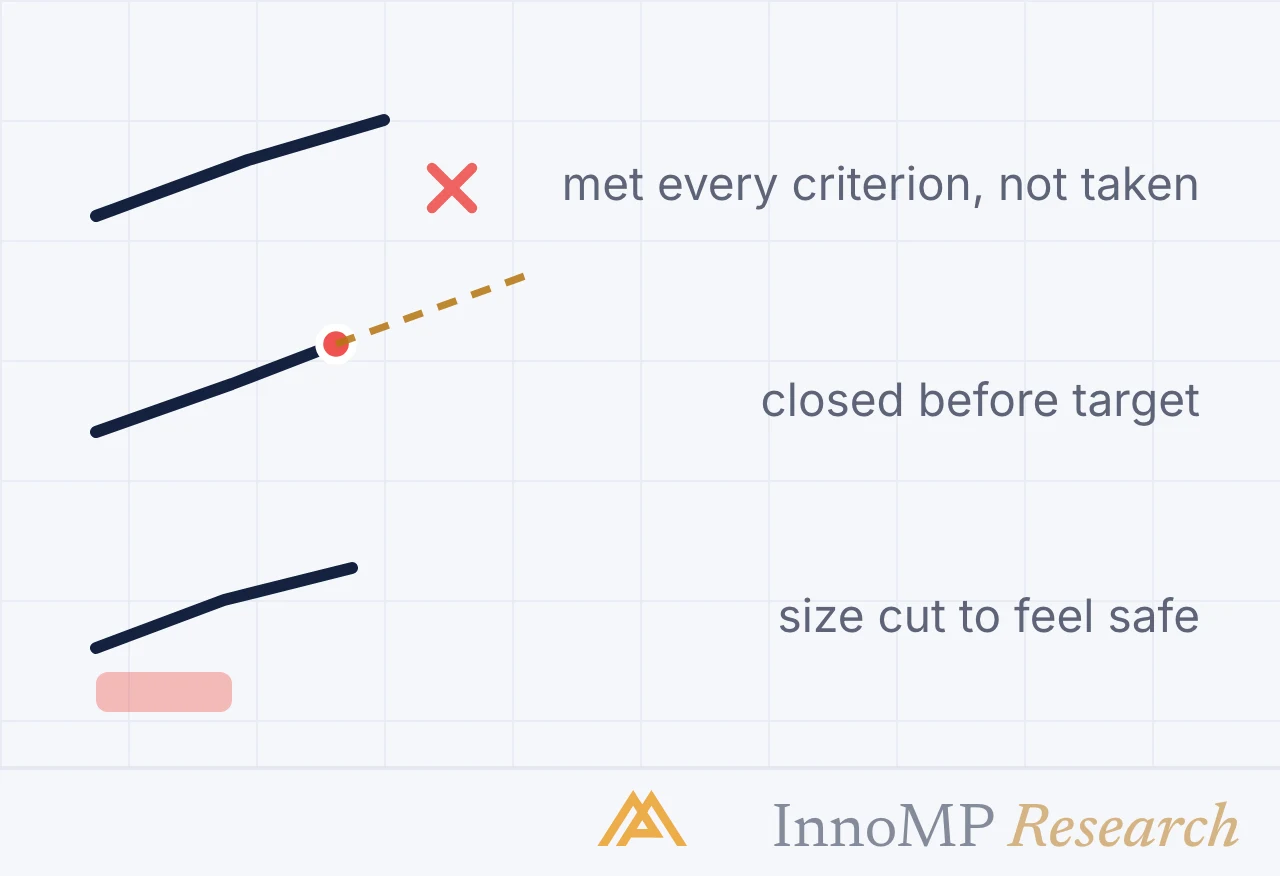
Fear rarely announces itself as fear. It arrives as caution, as a reason to wait, as a good argument for standing aside. How to tell it from genuine risk assessment.
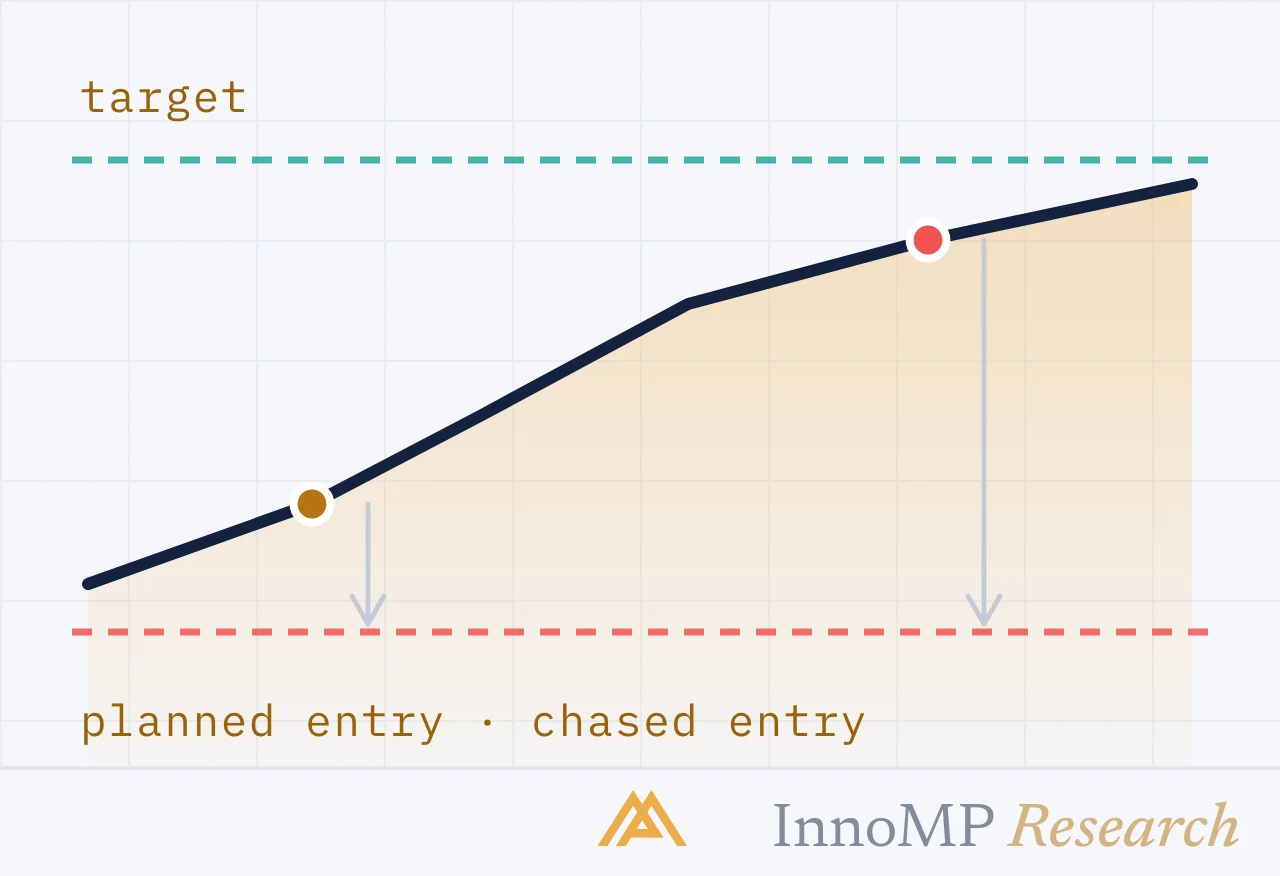
The setup came and went without you. Then price runs, and entering late feels urgent. Why chased entries carry the worst risk-reward on the chart.
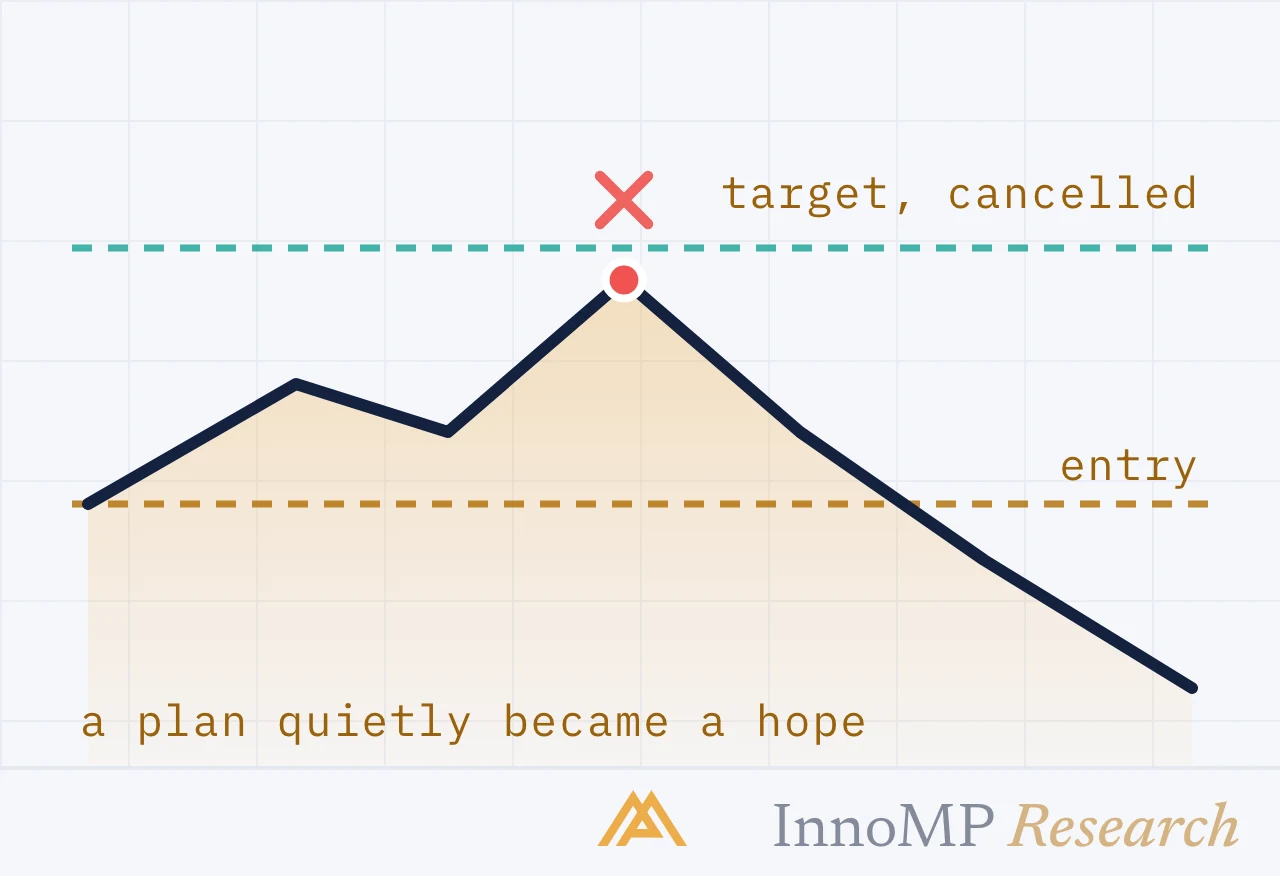
The target was 60 pips. At 55 you decided to hold for 90. How a plan quietly becomes a hope, and the exits that prevent it.
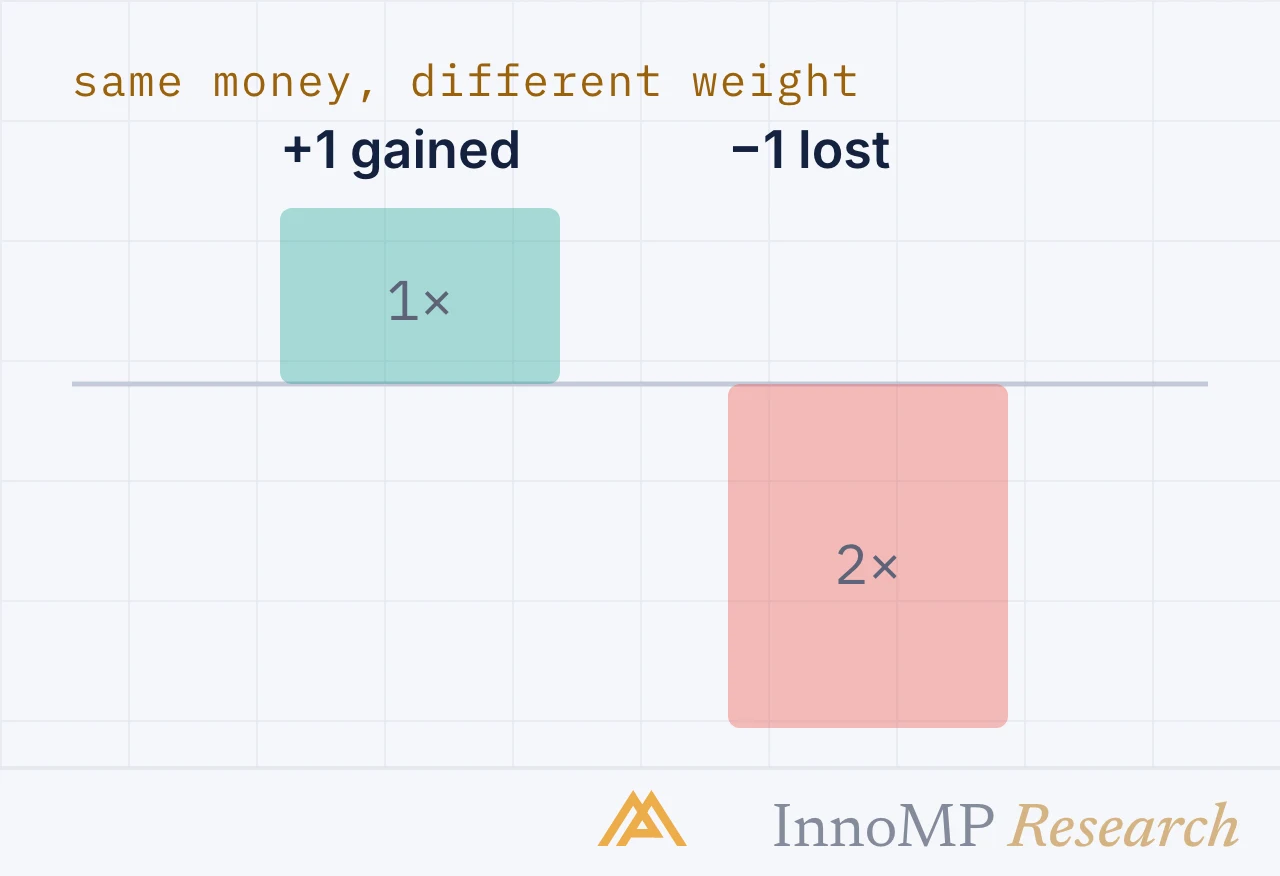
The asymmetry that makes traders cut winners early and hold losers long. Where it comes from, and the structural fixes that work better than trying to feel differently.
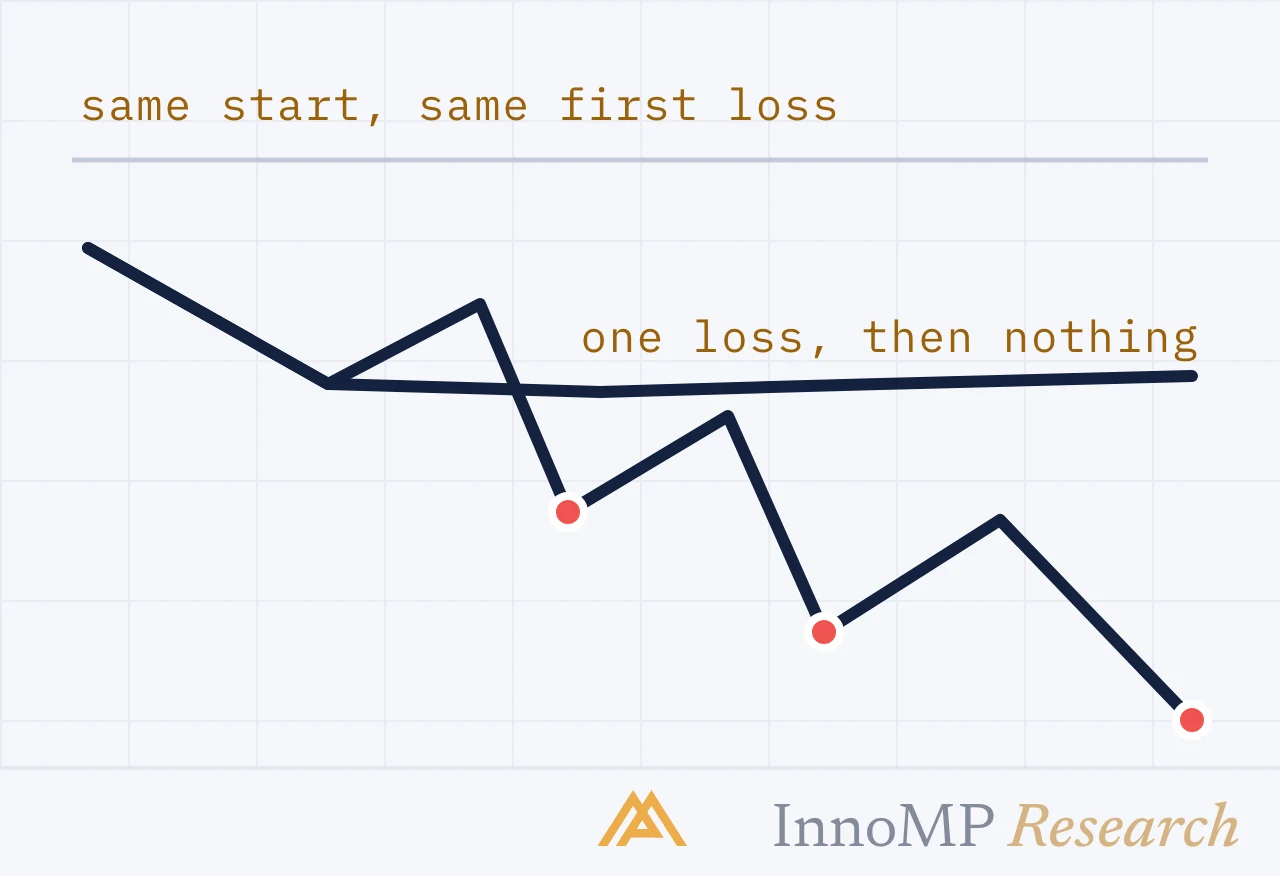
One bad trade produces an emotional state in which the next decisions are worse. How tilt escalates, and the only intervention that reliably stops it.
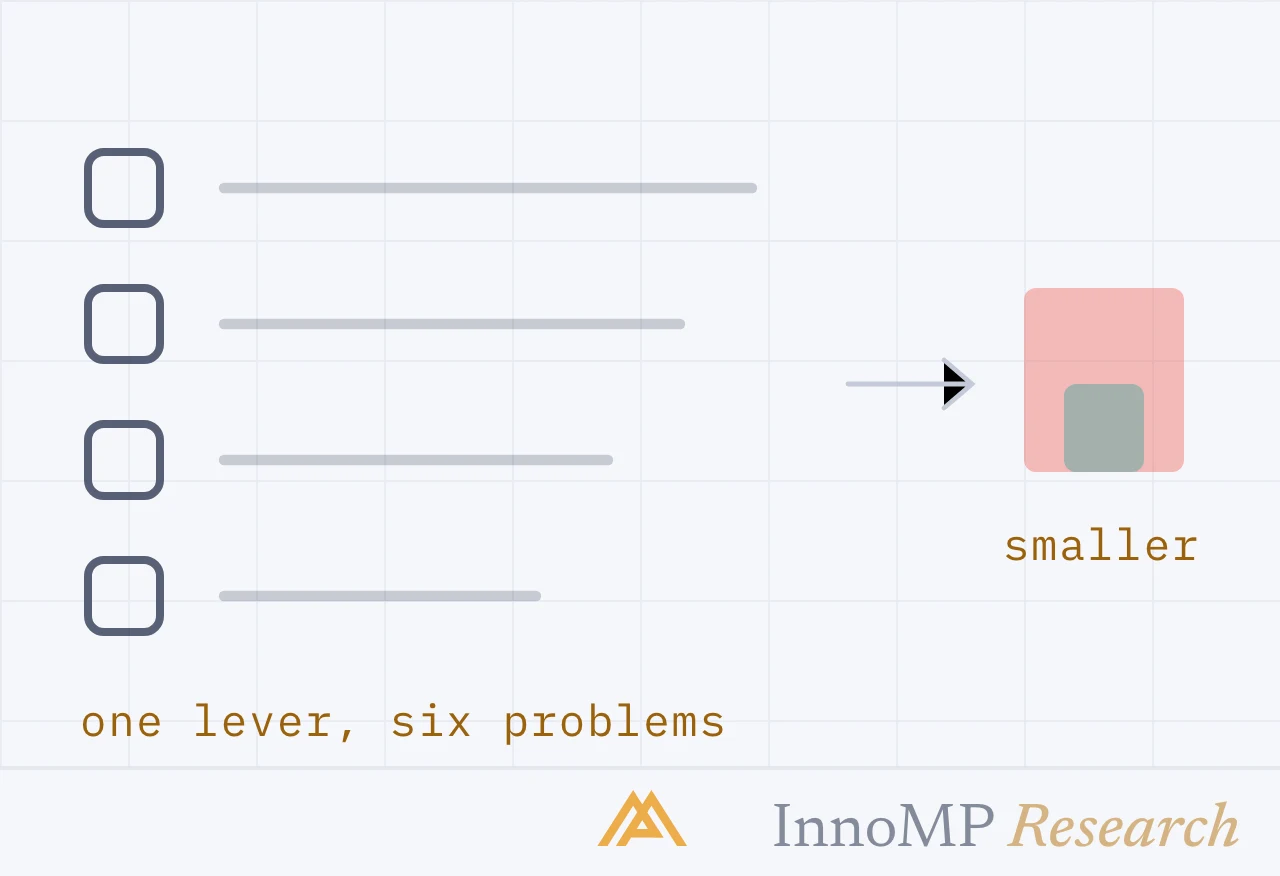
Hesitation, early exits, moved stops, revenge trades. Nearly all of them shrink when the position does. Why size is the primary psychological tool, not just a risk one.
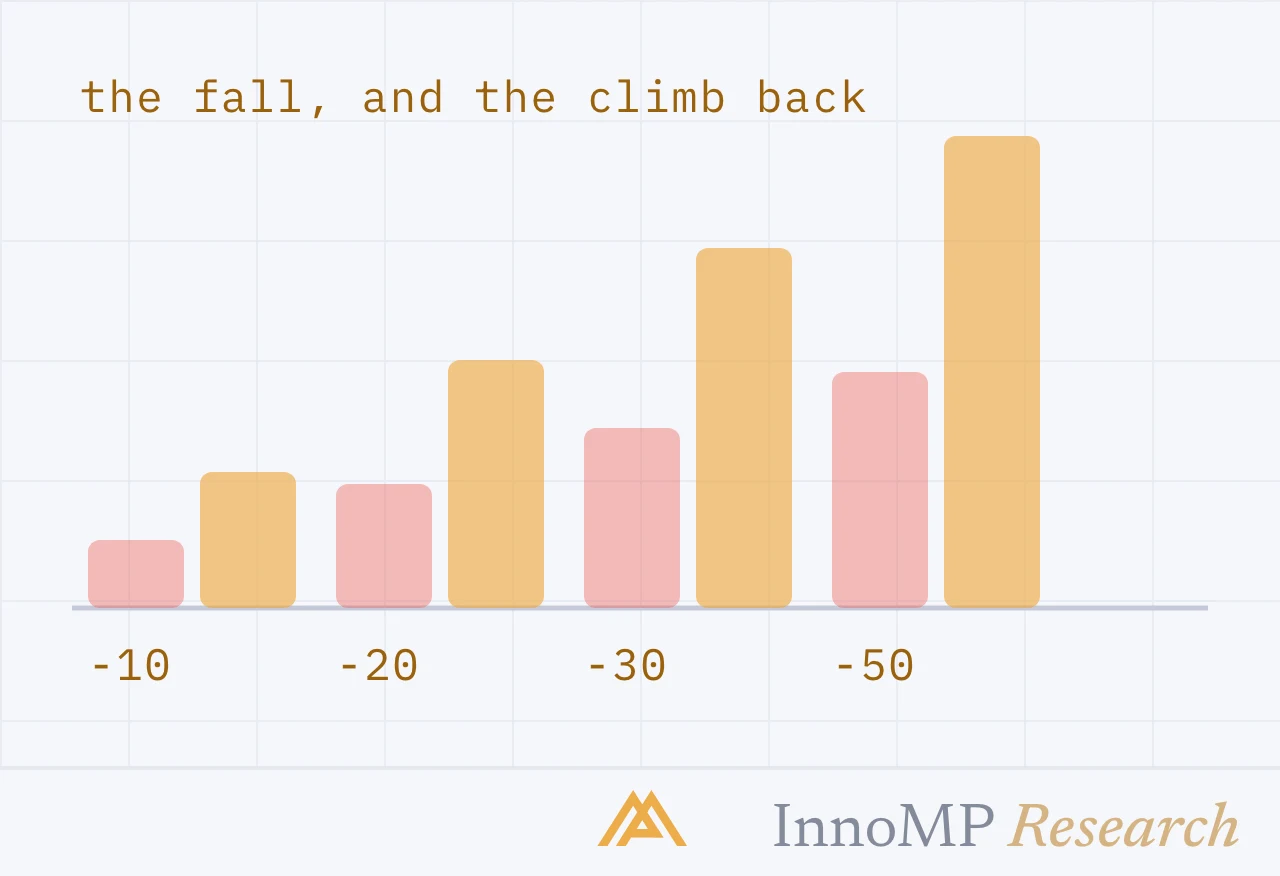
The strategy is fine and the account is down. What that period does to judgement, and the decisions that turn an ordinary drawdown into a serious one.
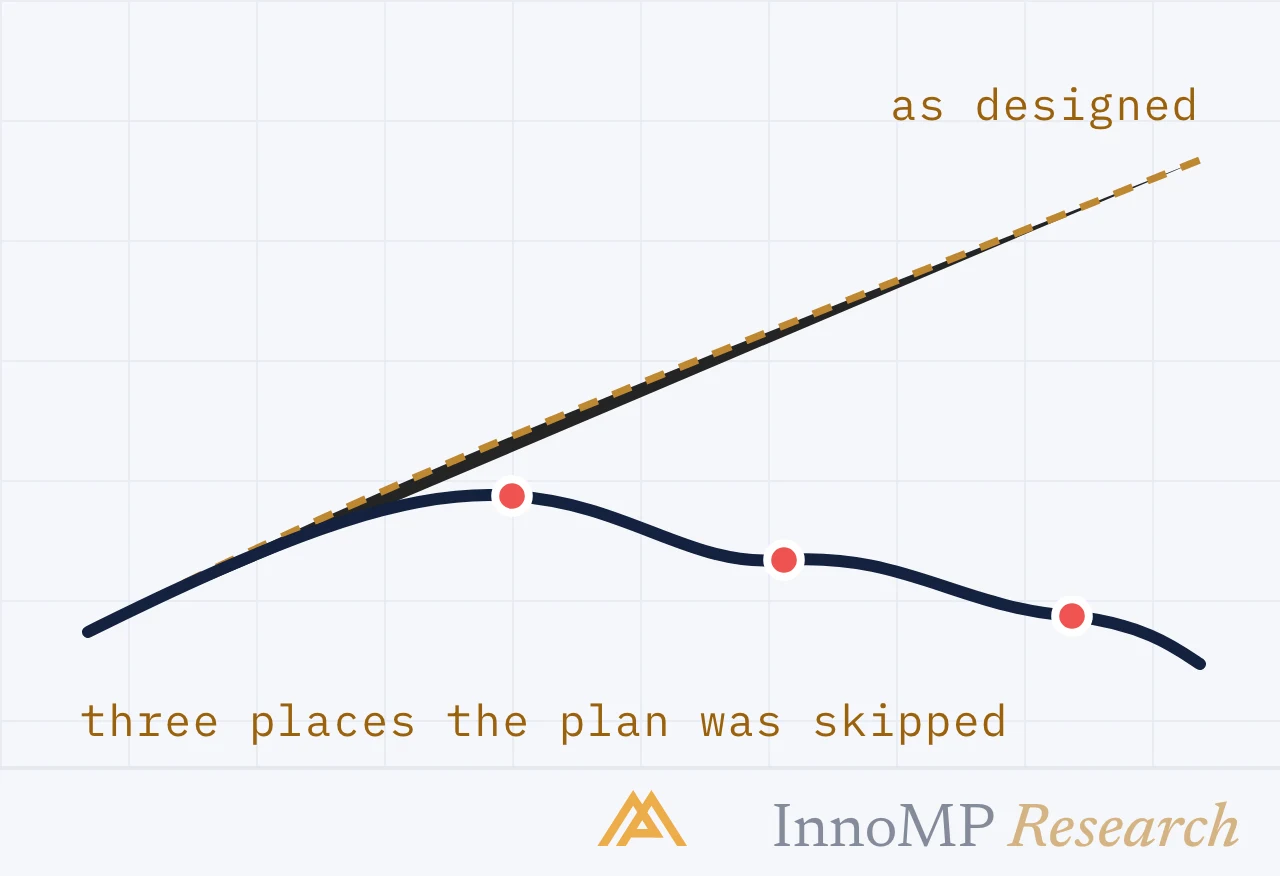
Two traders with the same signals get different results. What separates them is not analysis but execution under pressure — and execution is a psychological problem.
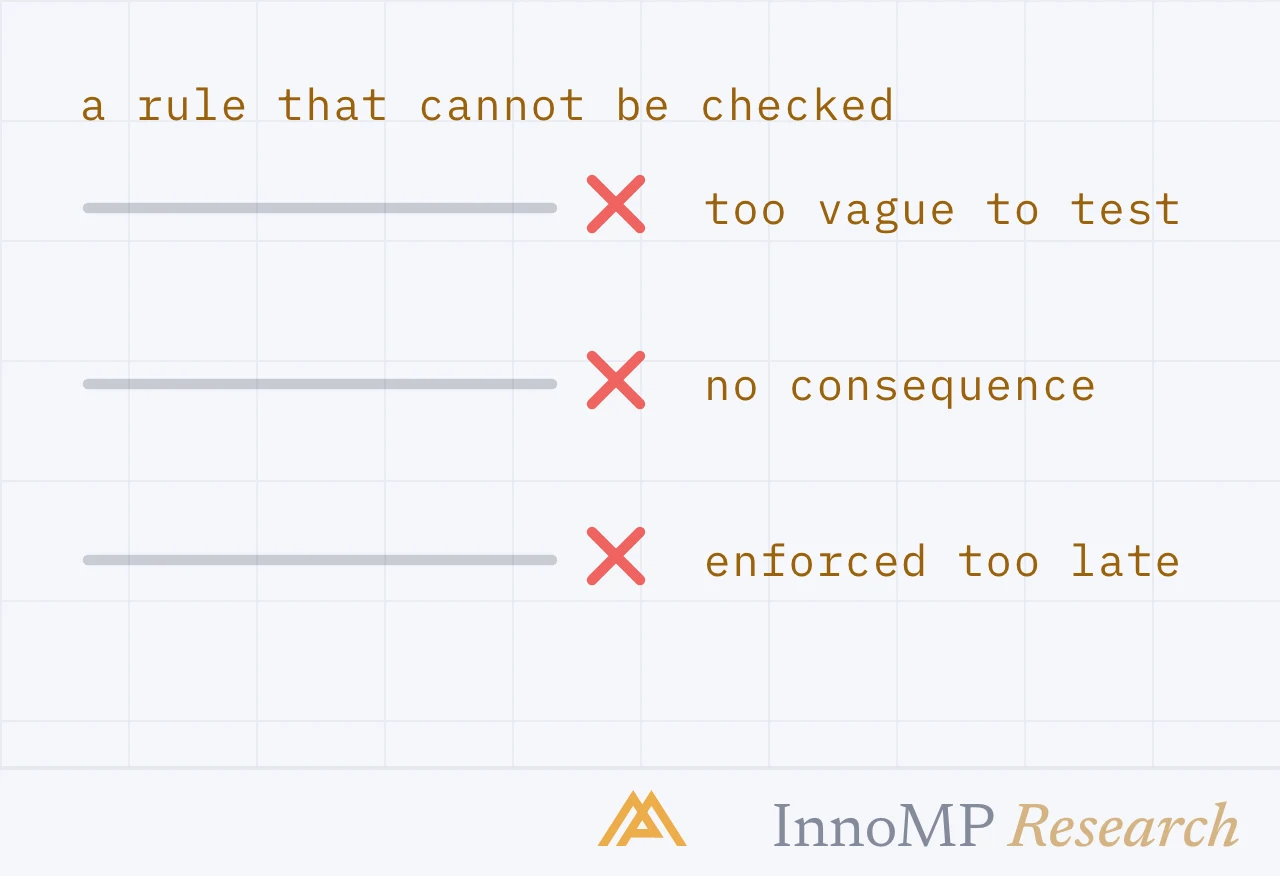
Every trader has rules. Most break them. The failure is usually in how the rule was written, not in the character of the person following it.
Cognitive biasRisk-rewardPosition sizingDisciplineMarket structureRisk managementDrawdown