Boredom and overtrading: the cost of needing something to happen
Most of the time there is no setup. Traders who cannot tolerate that find one anyway, and pay the spread for the privilege.
IRInnoMP Research · Education Desk Published 31 Aug 2026 · Updated 31 Aug 2026 4 min read
In short
Overtrading is taking positions that do not meet your criteria, usually because waiting is uncomfortable rather than because an opportunity appeared. It is costly twice over: marginal setups have a lower win rate, and every extra trade pays the spread and any commission. A maximum trade count and alert-based waiting are the standard defences.
Overtrading is taking positions that do not meet your criteria. The usual cause is not greed or a bad read. It is that waiting is uncomfortable, and a chart is always doing something.
Two costs, and they compound
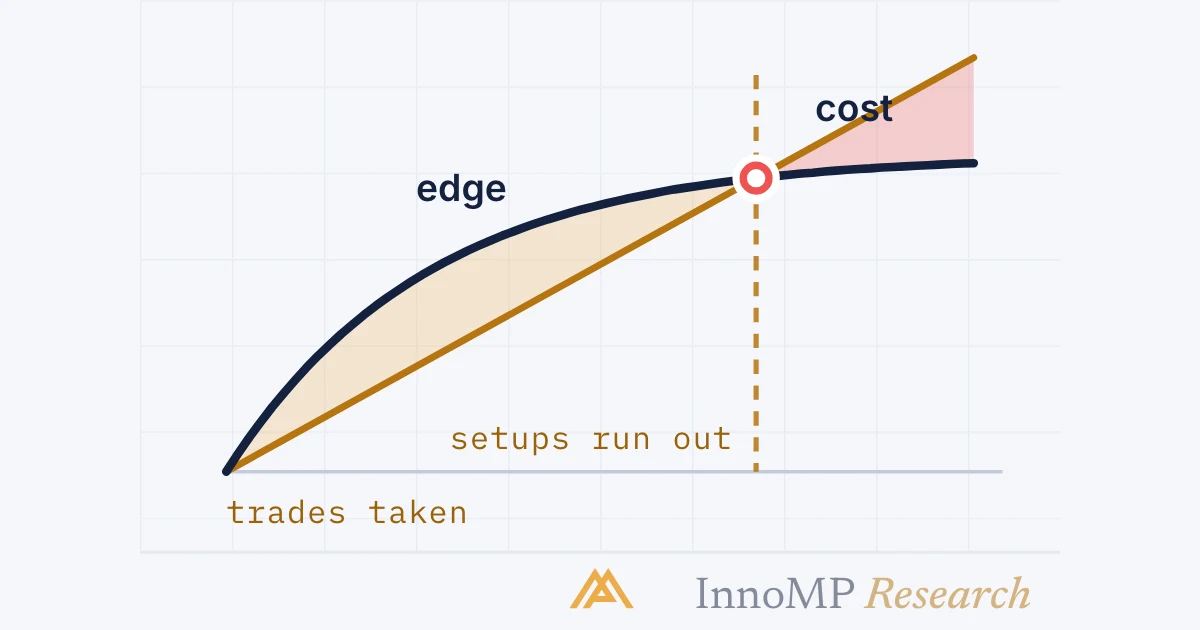
Cost is linear in trade count; edge is not. Past the point where quality setups run out, additional trades add cost without adding edge.
Marginal setups have lower win rates. A setup excluded from your plan was excluded for a reason. Taking it anyway means trading a variant you have never tested, at the same size as one you have.
Costs scale with count. Every trade pays the spread regardless of quality. Twenty trades a week at 0.6 pips on a standard lot is roughly 120 USD of spread. If eight were marginal, most of that cost bought nothing.
Why waiting is hard
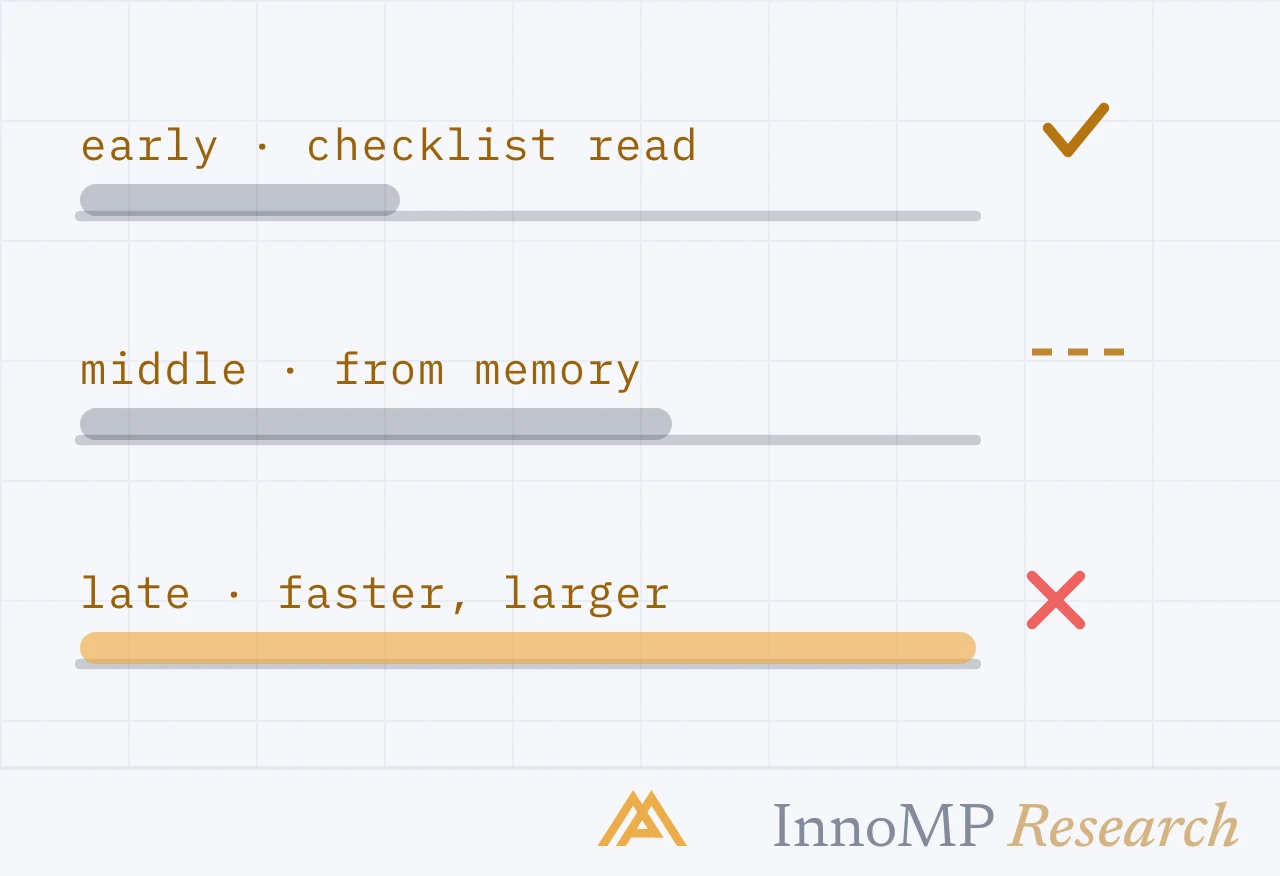
None of the three is about the market. All three are about the experience of sitting still.
The defences
Screen time and trade count are tightly linked. Three of these four work by reducing the first.
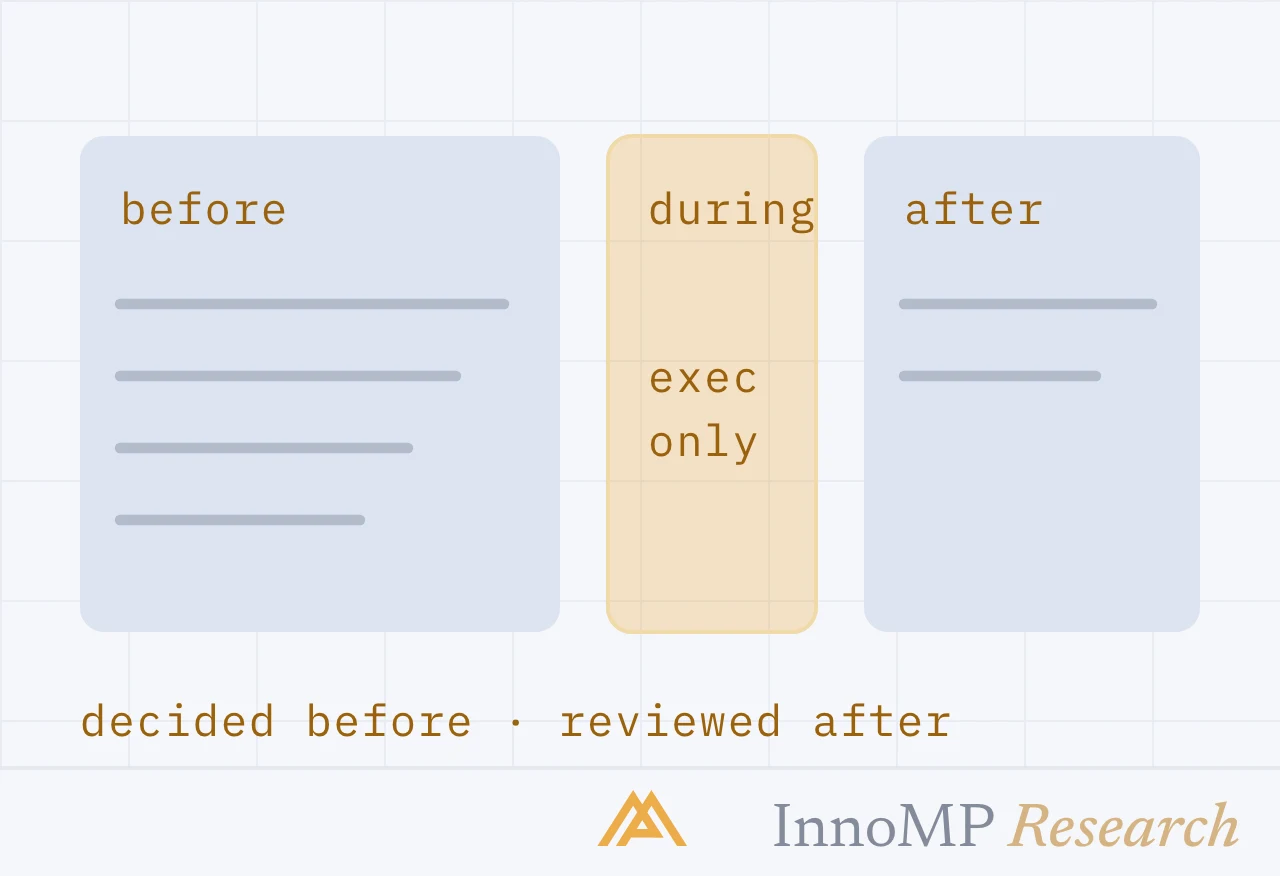
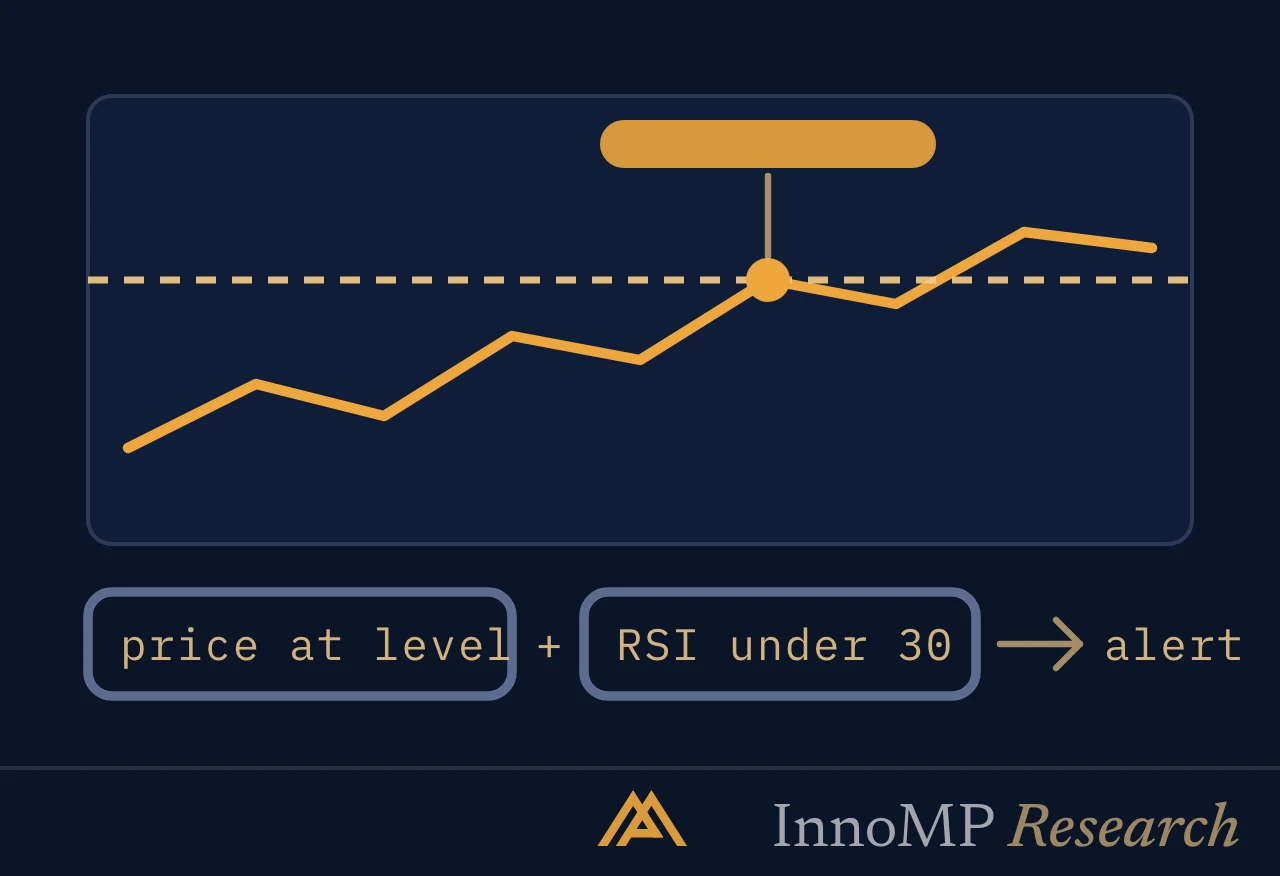
Mark your levels in the pre-session routine, set Market Watcher alerts, and close the chart. A compliance rate below about 80% means you are running a different strategy than the one you tested — a more actionable finding than “I trade too much.” And Part 10’s argument applies: a countable maximum beats a vague intention.
Key takeaway
Not trading is a position. A day with no qualifying setup and no trade taken is a day the plan worked — and recording it in the journal as such, rather than as a blank, is how that stops feeling like failure.
Not trading is a position. Recording it as one is how a quiet day stops feeling like failure.
The scarcity worth remembering
The edge was in the selectivity. It does not survive being diluted.
Good setups are rare. That is what makes them good — the conditions that define them do not occur often, and their edge comes precisely from that selectivity.
Trading costs scale linearly with trade count while edge does not.
Marginal setups have lower win rates by definition, since they were excluded from the plan.
Screen time correlates with trade count, so watching less usually means trading less.
A maximum daily trade count converts an intention into a countable rule.
Frequently asked questions
What is overtrading?
Taking more positions than your plan calls for, typically by accepting setups that do not meet your criteria. The motive is usually discomfort with inactivity rather than the appearance of genuine opportunities.
How do I know if I am overtrading?
Journal each trade against your written criteria. If a significant share are marked non-compliant, or if your trade count varies widely between weeks with similar market conditions, the extra trades are coming from you rather than from the market.
Why is overtrading expensive?
Costs scale with trade count while edge does not. Every extra trade pays the spread and any commission, and marginal setups have lower win rates because they were excluded from the plan for reasons that still apply.
How do I stop overtrading?
Set a maximum trade count per day or week and treat reaching it as a stopping condition. Use alerts rather than watching charts, since screen time and trade count are closely linked.
IR
InnoMP Research · Education Desk
Trading education from first principles — position sizing, risk, market structure and the habits that keep accounts alive. Written for someone who has never opened a chart, with a diagram at every step.
Published 31 Aug 2026 · Updated 31 Aug 2026
Disclaimer: This content is provided for general informational purposes only and does not constitute investment advice, an offer, or a solicitation to buy or sell any financial instrument. It has been prepared without regard to your individual financial circumstances or objectives. Trading CFDs involves a high risk of loss.
The sixth hour of a session produces worse decisions than the first. Why watching more leads to trading worse, and what to do with the hours you free up.
InnoMP's Market Watcher fires on price levels, moving averages, Bollinger bands, MACD, KDJ and RSI — with AND/OR logic. Set up properly, it also enforces deciding before price arrives, not after.