Discipline
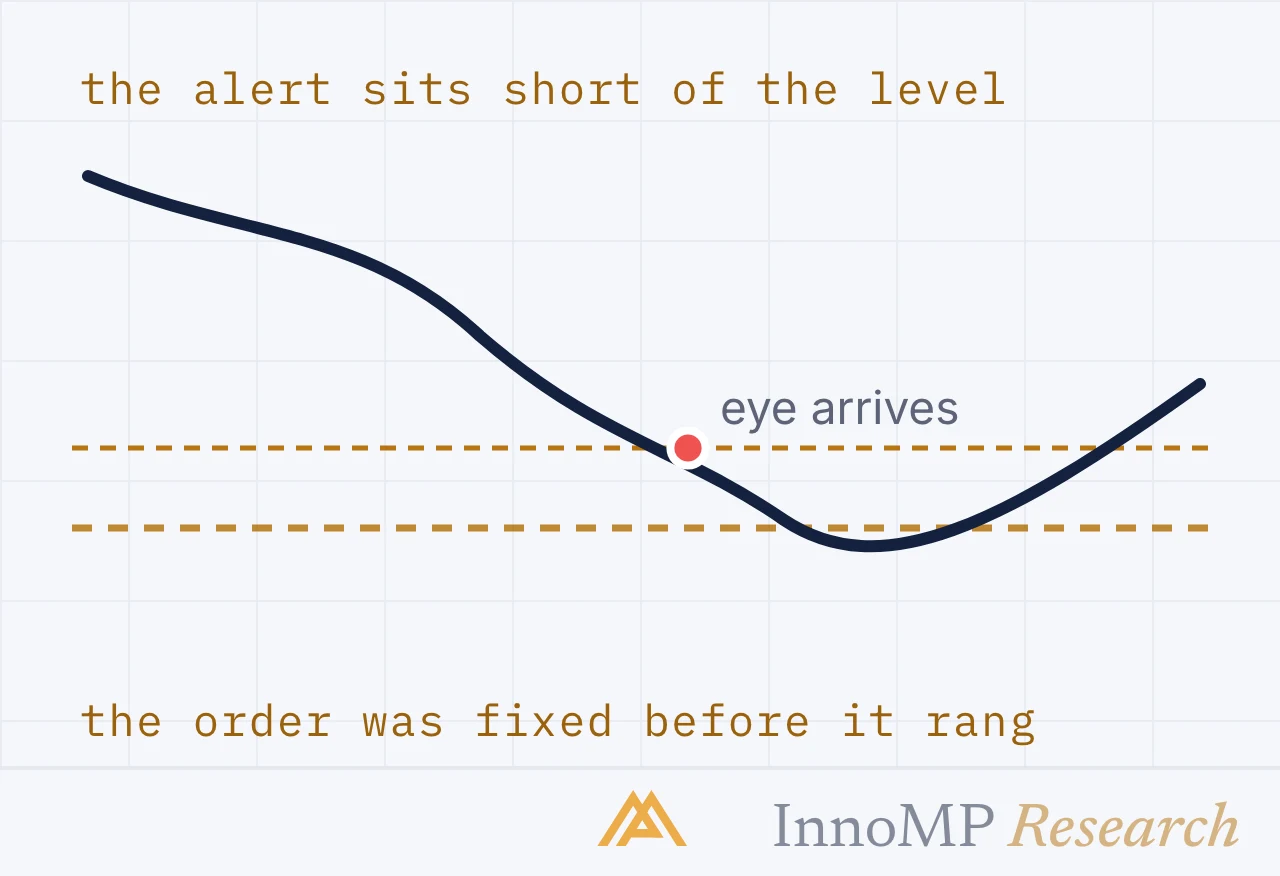
A decision table is as good as the moment it is consulted. How to split its conditions into what an alert can watch and what needs the eye, fix the order by rule, and know what still runs when the screen is off.
Read more → 9 min read
Trading journal
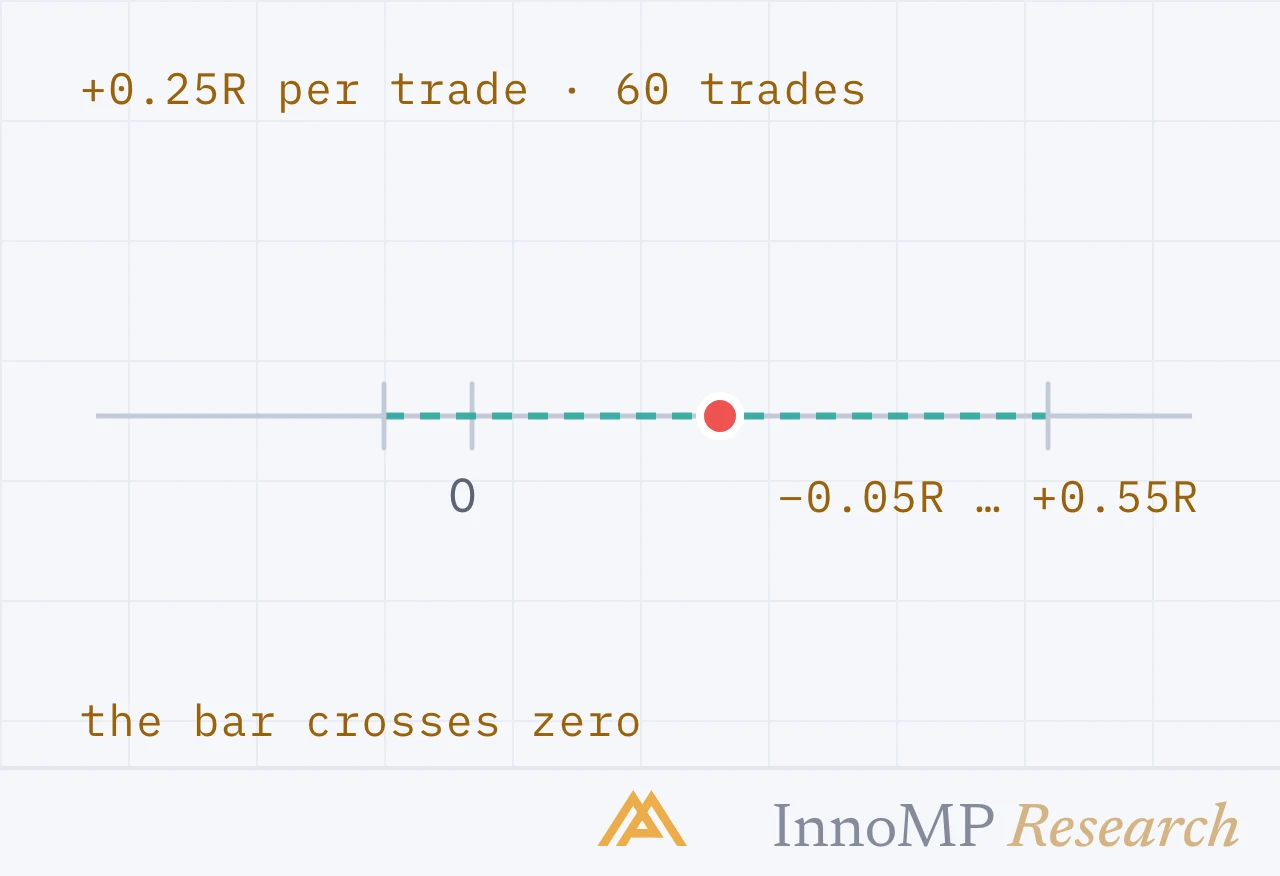
A record says +0.25R per trade. The question is how far from that the truth could be. How to put a standard error and a confidence interval on expectancy, and how many trades it takes to tell an edge from zero.
Read more → 9 min read
Discipline
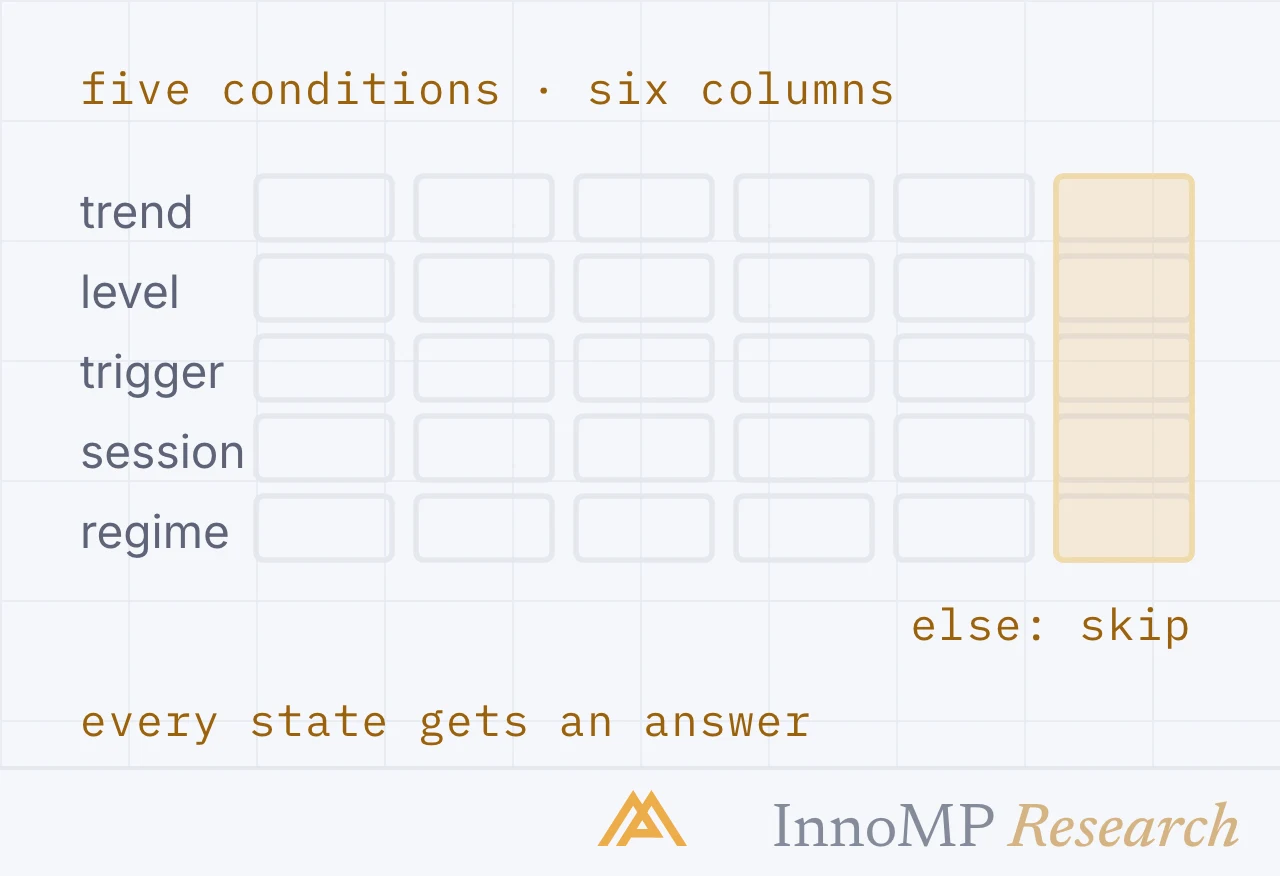
A written setup still leaves gaps: market states its prose never mentioned. How to lay the rules out as a decision table — conditions down the side, a column per rule — and find the gaps and contradictions first.
Read more → 9 min read
Drawdown
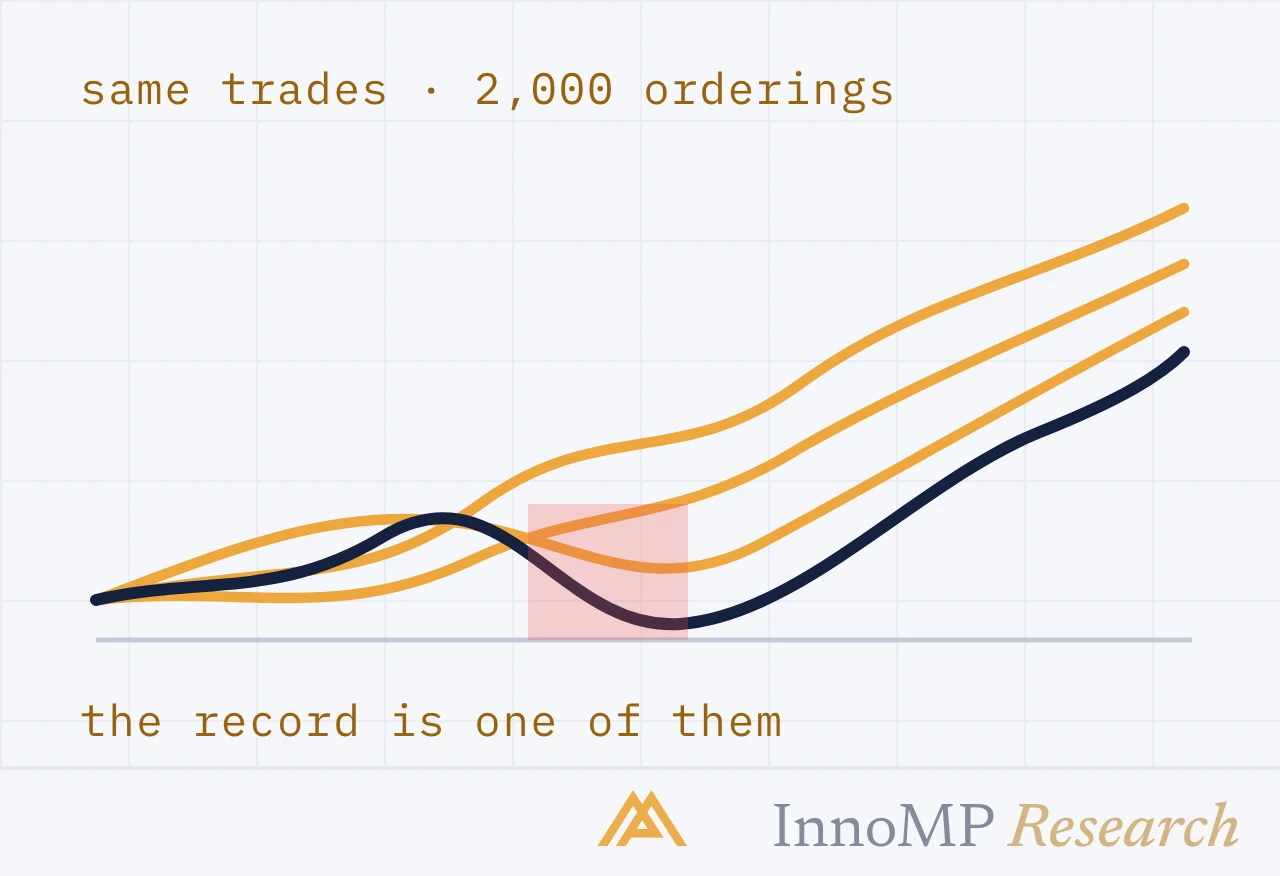
The worst run in the record is one draw of many. How to resample the same trades thousands of times, read the distribution of maximum drawdown and losing streaks it produces, and size so the bad draws are survivable.
Read more → 9 min read
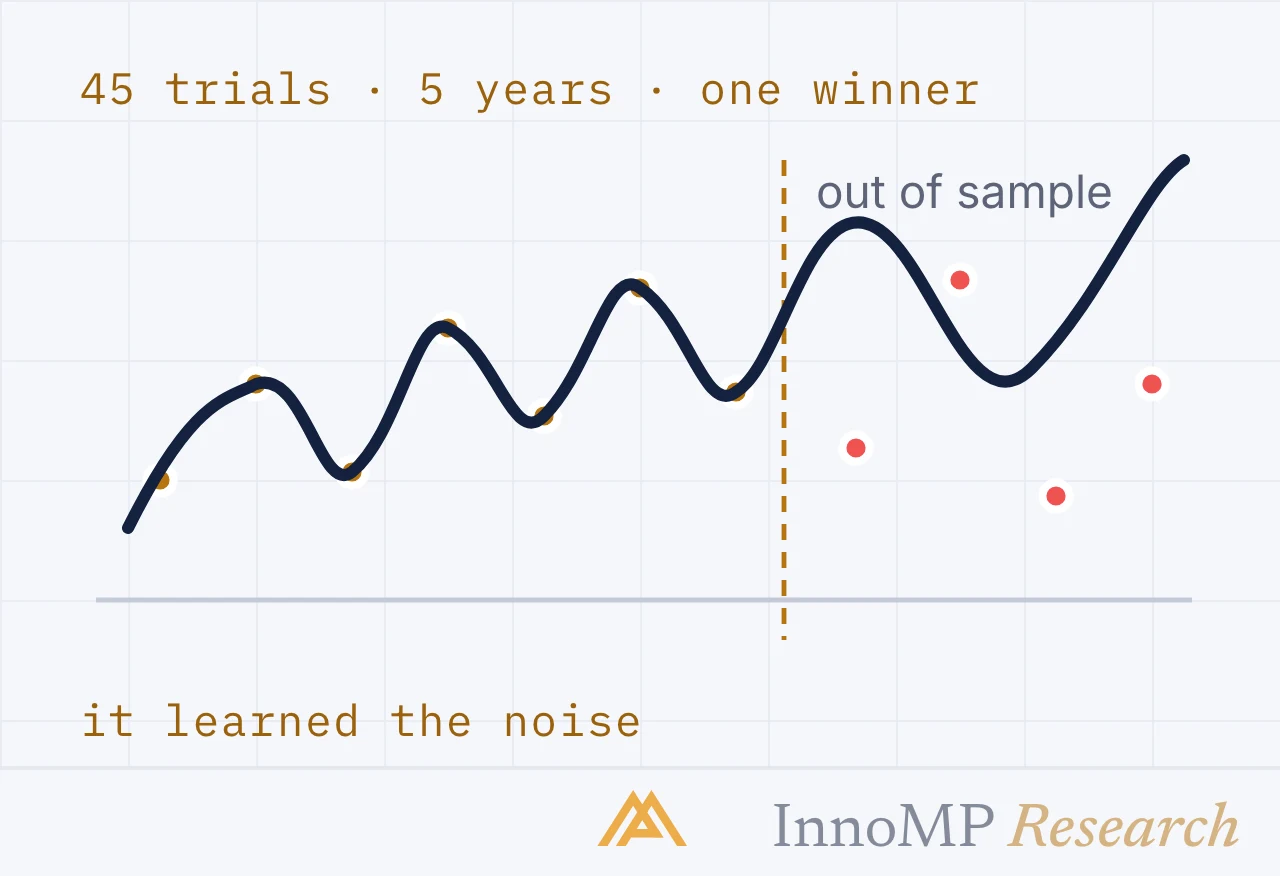
Trading journal
Try enough versions of a rule and one will shine on the past by chance. What overfitting is, why the trial count matters more than the winner's numbers, and how held-out data and walking forward tell fit from luck.
Read more → 10 min read
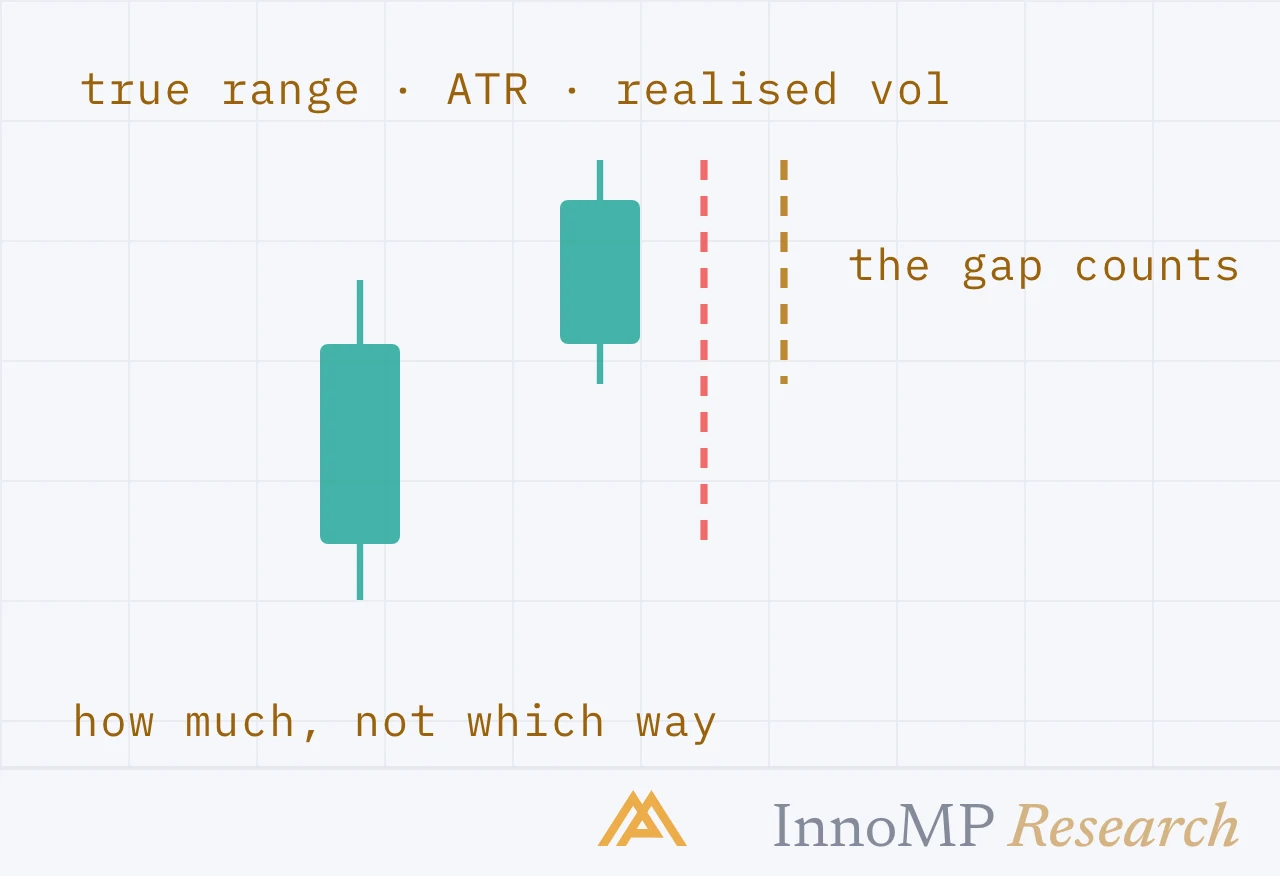
Indicators
Volatility is how much price moves, not where. Three ways to measure it — the true range of a bar, its average over a window, and the standard deviation of returns — and what each one is for.
Read more → 8 min read
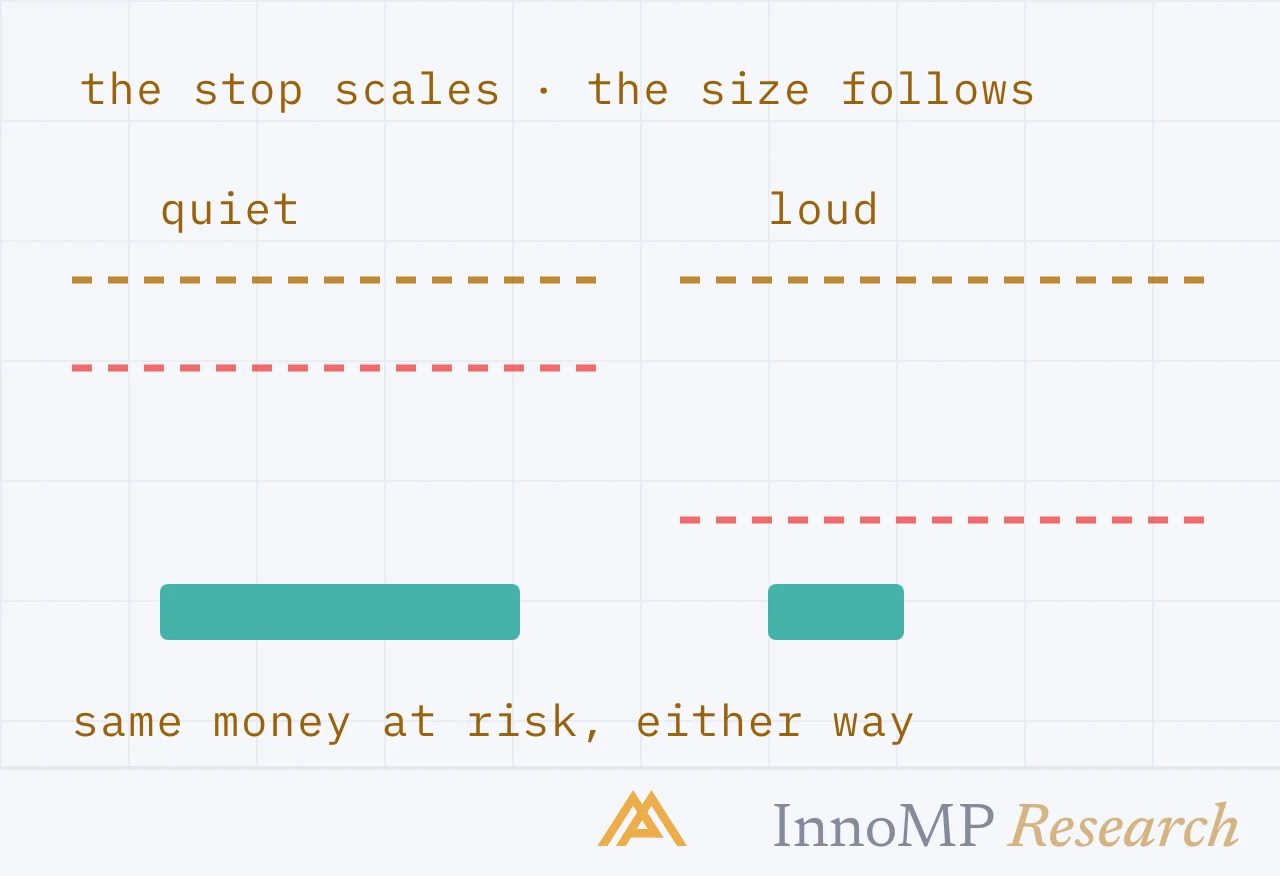
Position sizing
A 30-pip stop is tight in one regime and inside the noise in another. How to place the stop as a multiple of ATR, size the position from it so that risk in money stays constant, and what changes when volatility does.
Read more → 8 min read
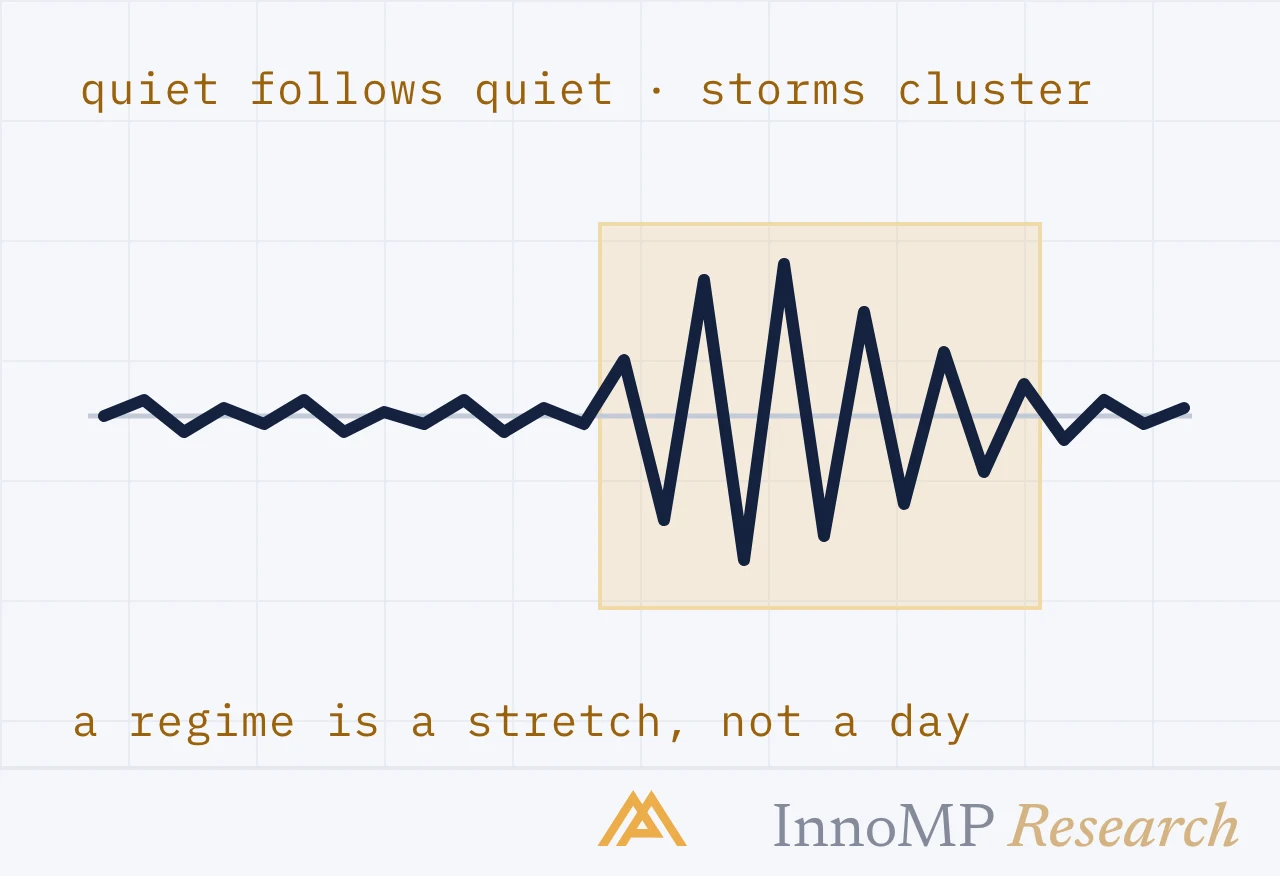
Indicators
Volatility is not random day to day: large moves tend to follow large moves and small ones small. What a regime is, how to tell which one you are in, and why it changes every rule.
Read more → 8 min read
Discipline
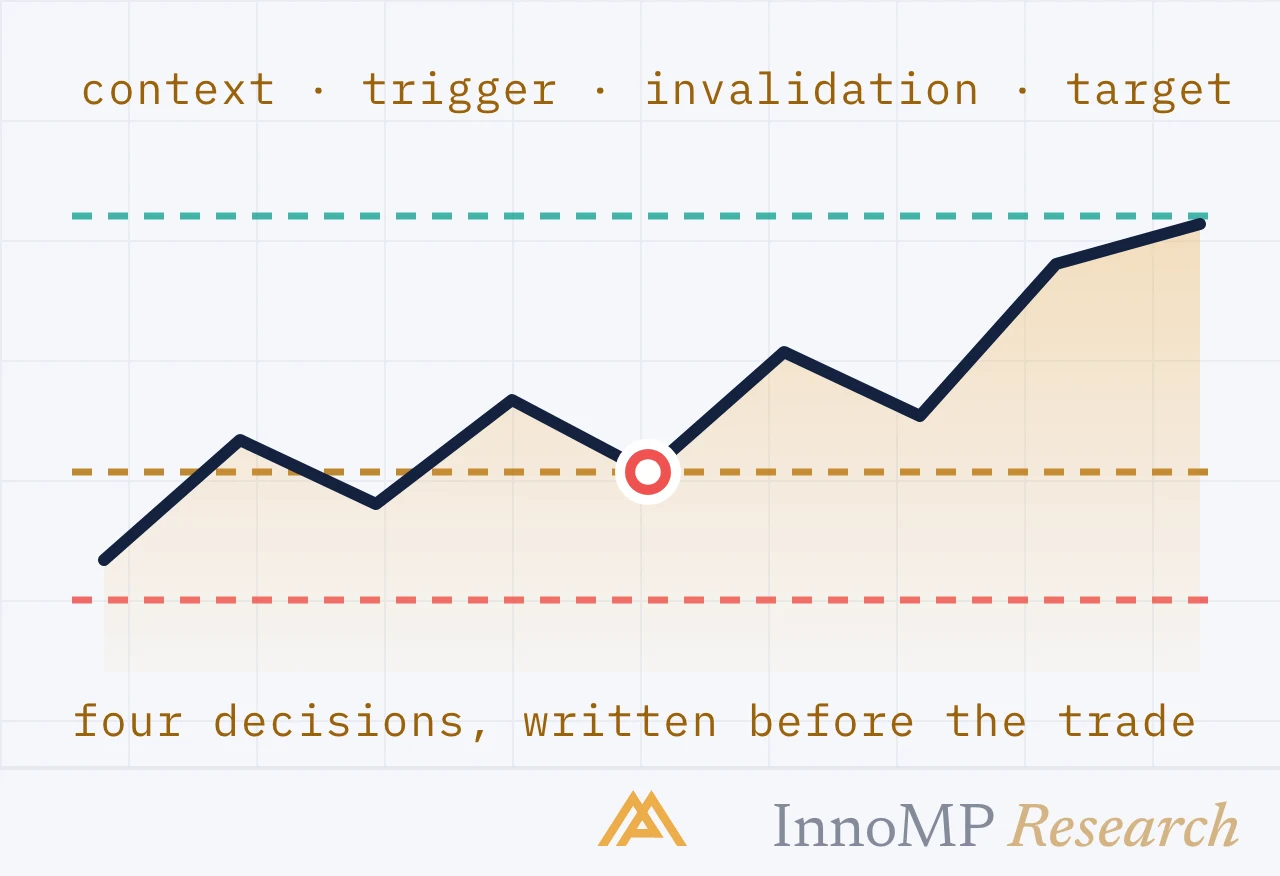
A setup is not a pattern. It is four decisions written before the trade: the context that makes it worth watching, the trigger that makes it a trade, the price that proves it wrong, and the price it aims at.
Read more → 8 min read
Risk management
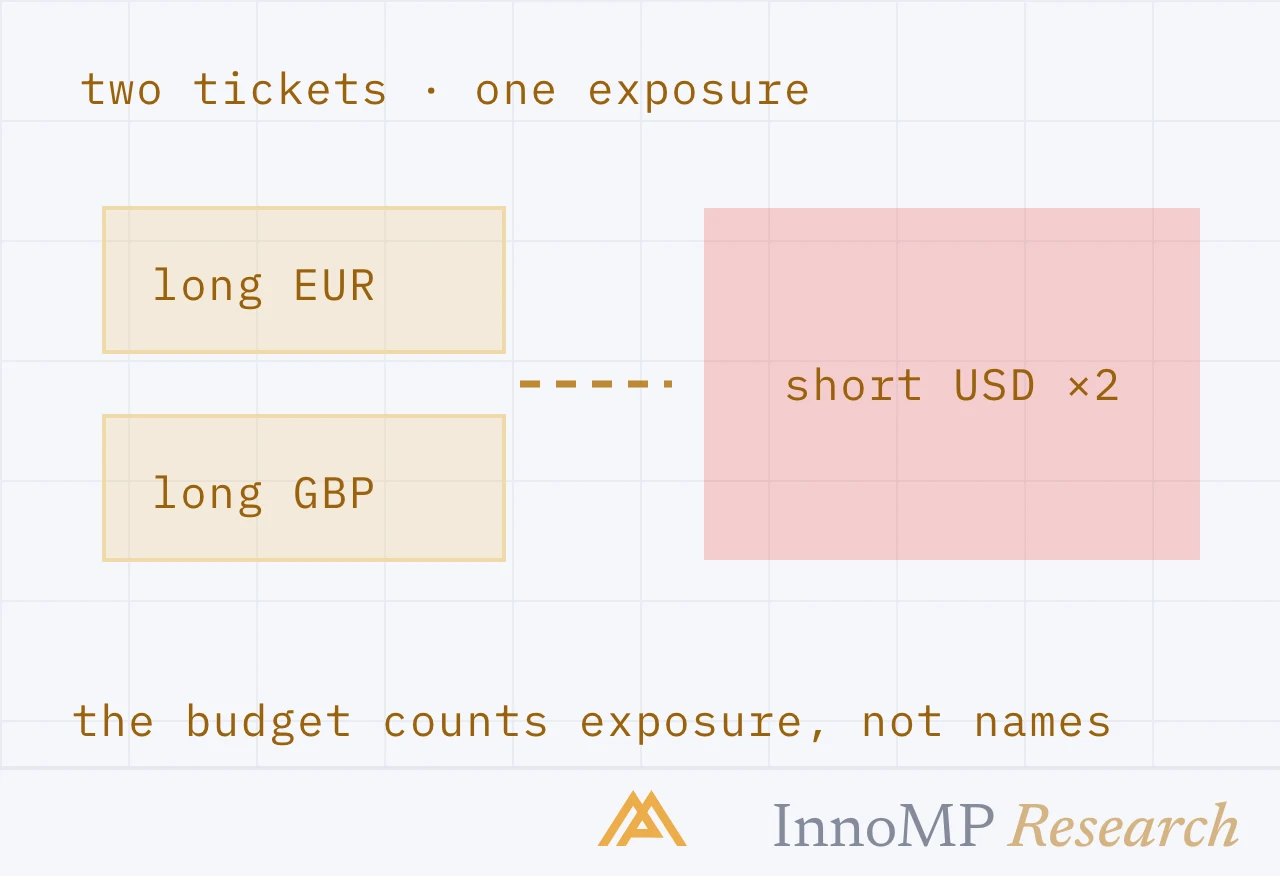
Long EURUSD and long GBPUSD is not two trades. It is one short-dollar position with two names, and the risk budget has to see it that way. How exposure adds up across pairs that share a leg, and how to size for it.
Read more → 8 min read
Risk management
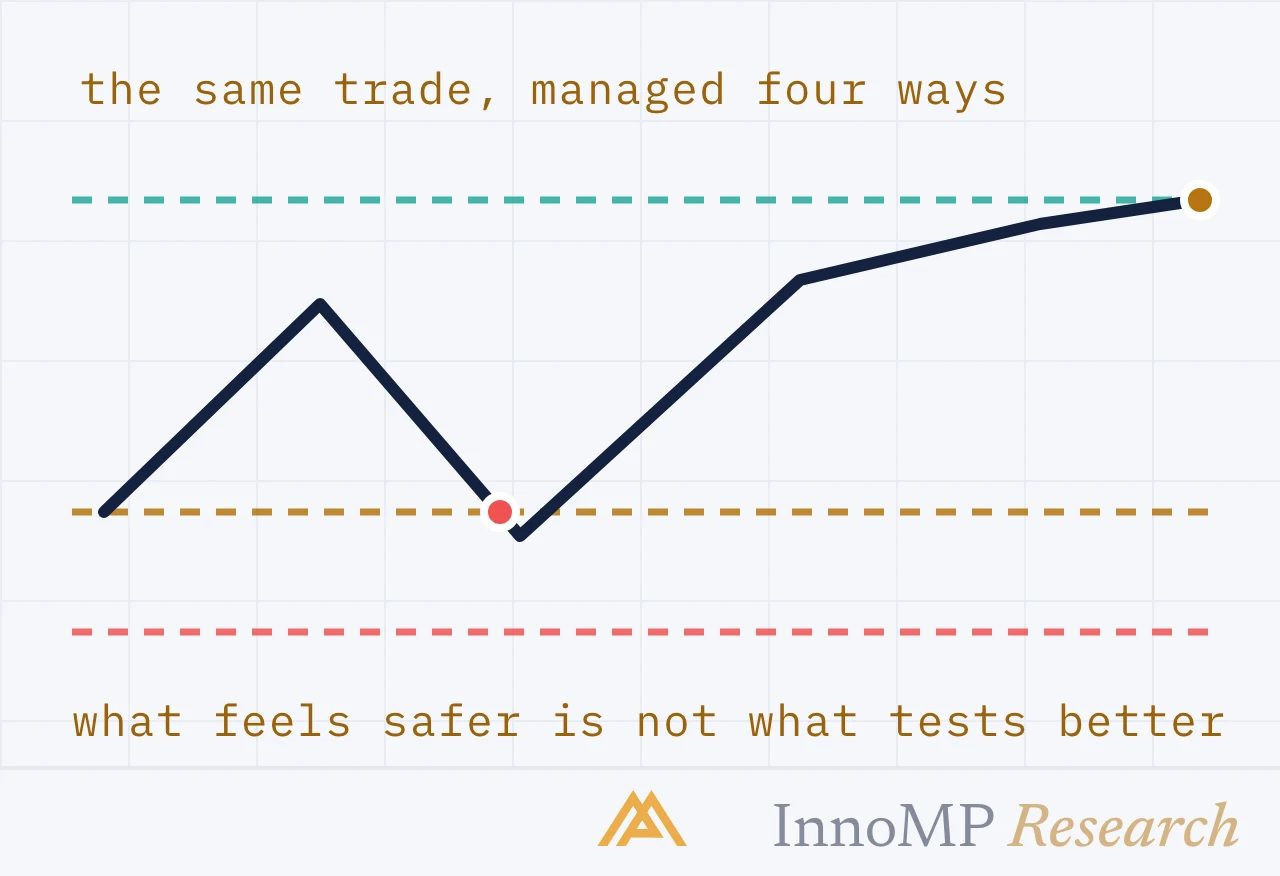
Everything done after entry changes a trade's expectancy, usually less than it changes how it feels. What partials, break-even stops and trailing do to the average win and loss, and when the arithmetic says do nothing.
Read more → 8 min read

PROMOTION
Every closed lot earns points and each month's net deposit sets the multiplier. What the four tiers require, what the estimator implies a lot is worth, and the conditions that quietly decide whether a trade counts.
Read more → 6 min read
See the offer → 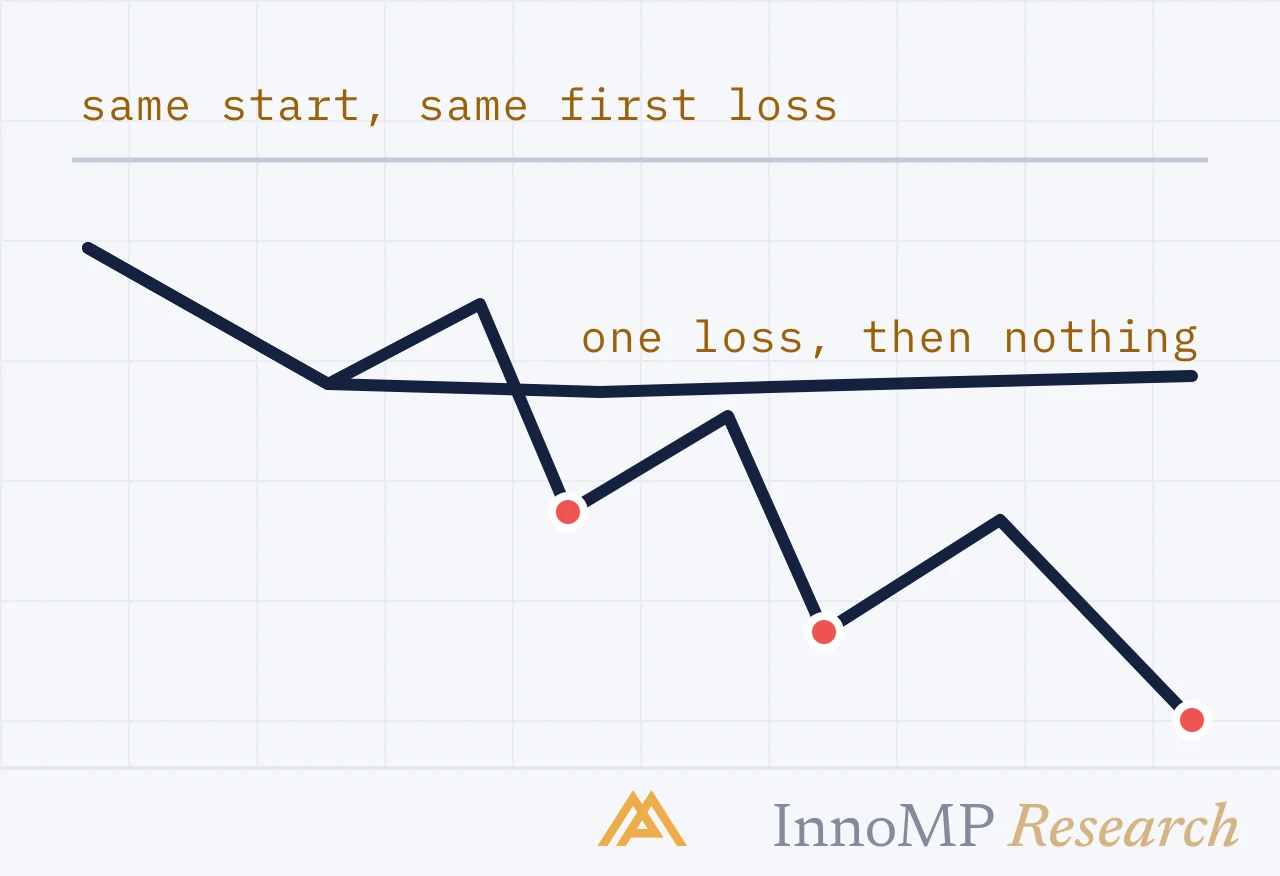
Trading emotions
One bad trade produces an emotional state in which the next decisions are worse. How tilt escalates, and the only intervention that reliably stops it.
Read more → 4 min read
Position sizing
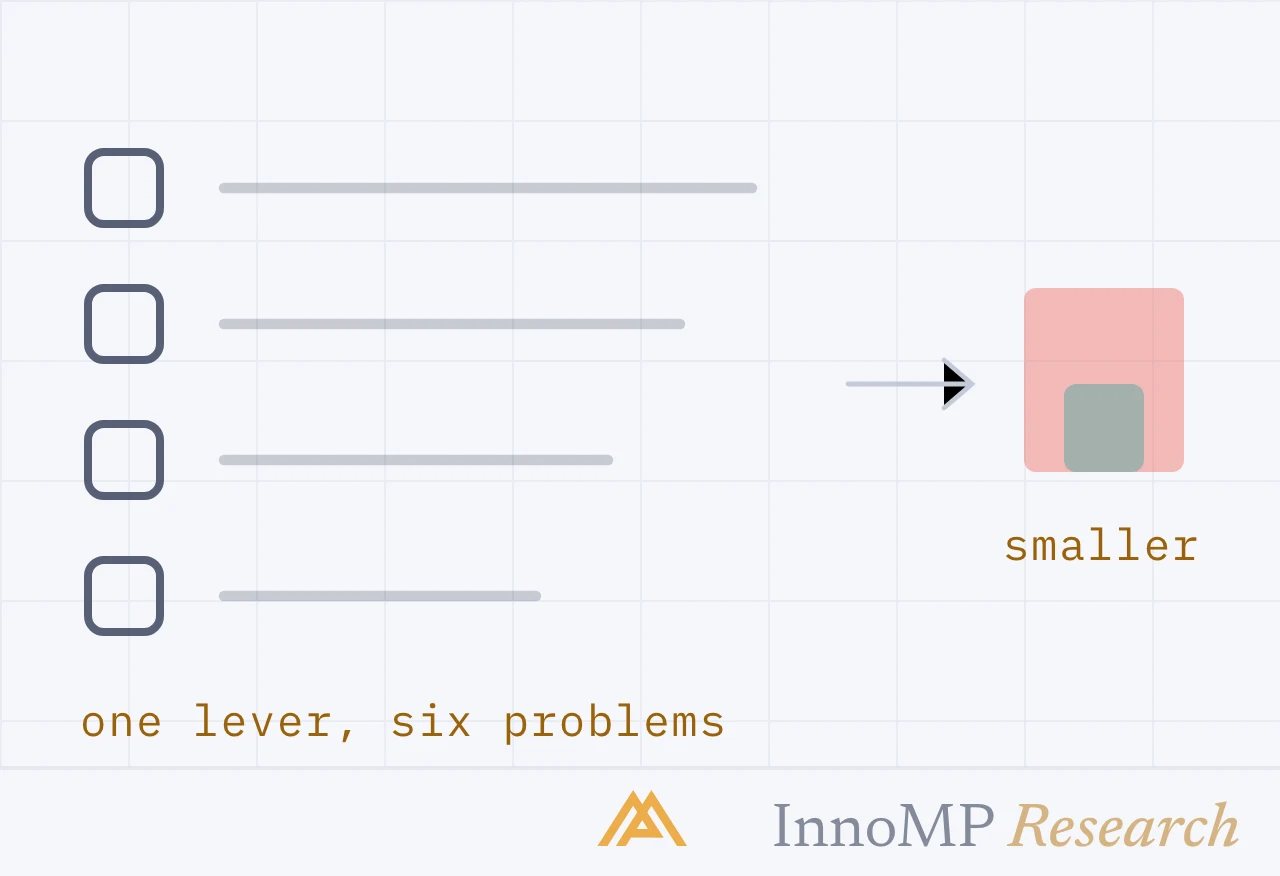
Hesitation, early exits, moved stops, revenge trades. Nearly all of them shrink when the position does. Why size is the primary psychological tool, not just a risk one.
Read more → 4 min read
Drawdown
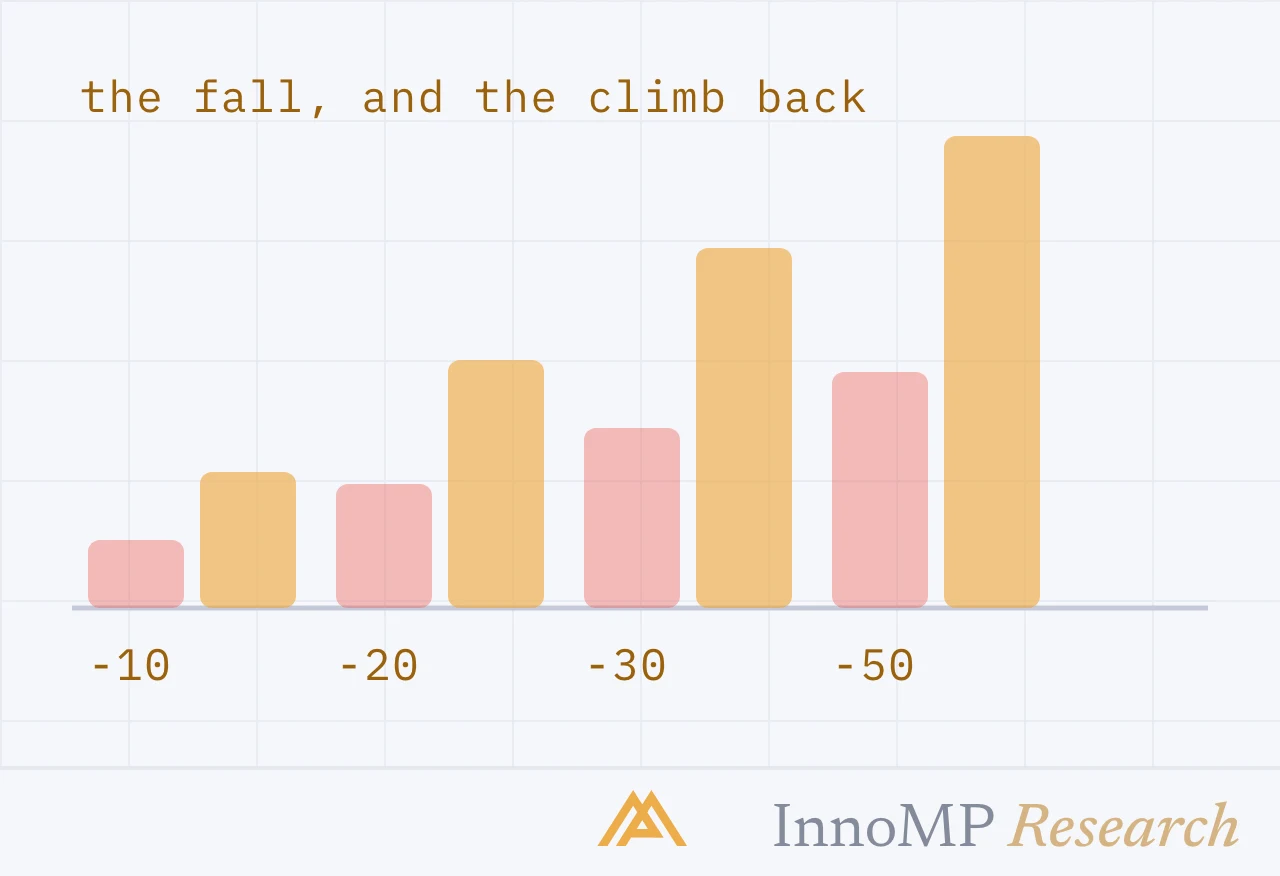
The strategy is fine and the account is down. What that period does to judgement, and the decisions that turn an ordinary drawdown into a serious one.
Read more → 4 min read
Position sizing
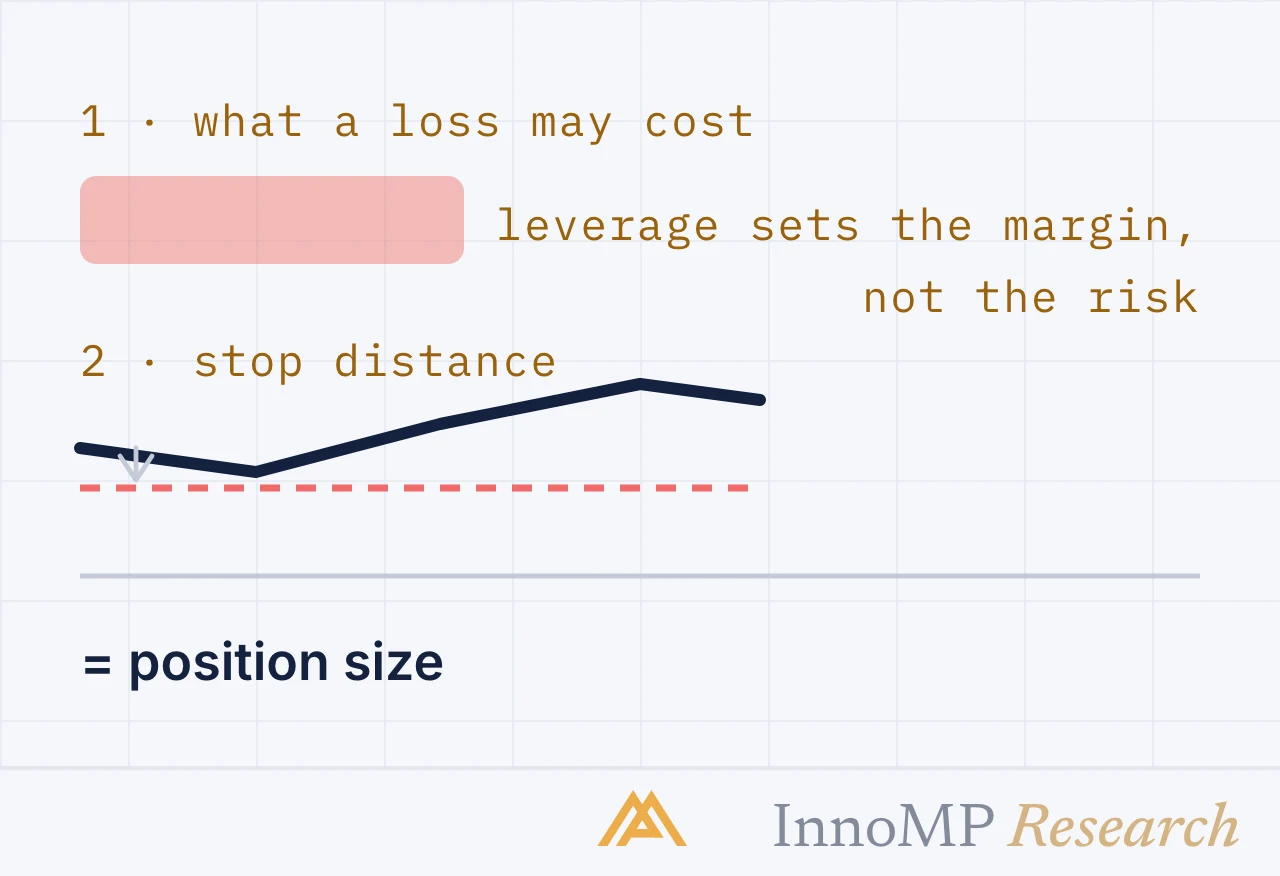
Leverage decides how much margin a trade ties up. Position size decides whether a losing streak ends your account. They are not the same lever, and only one of them is yours to set on every trade.
Read more → 7 min read
Margin
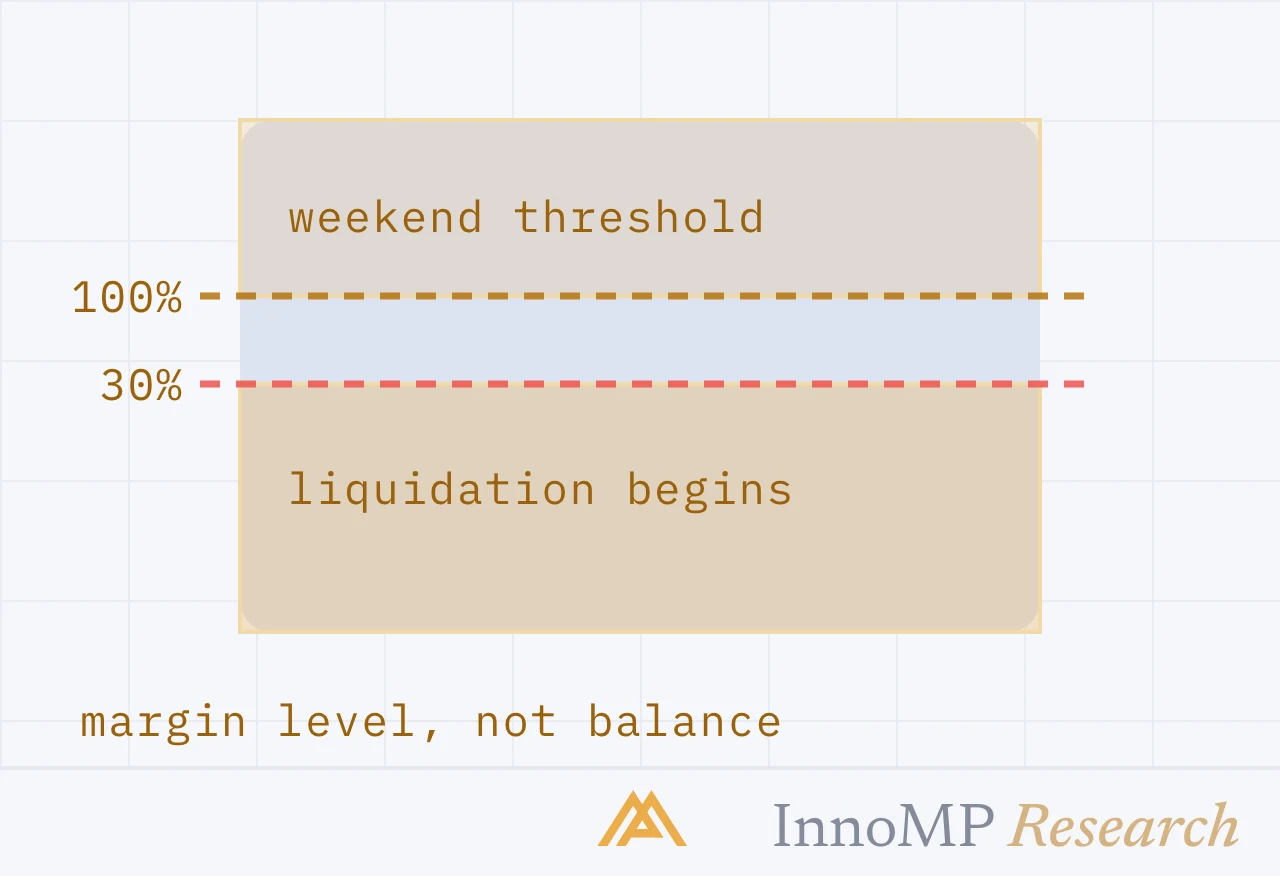
Margin level is the number the platform watches. What it measures, InnoMP's 30% weekday and 100% weekend liquidation thresholds, and the sizing habits that keep both permanently out of reach.
Read more → 6 min read
Risk management
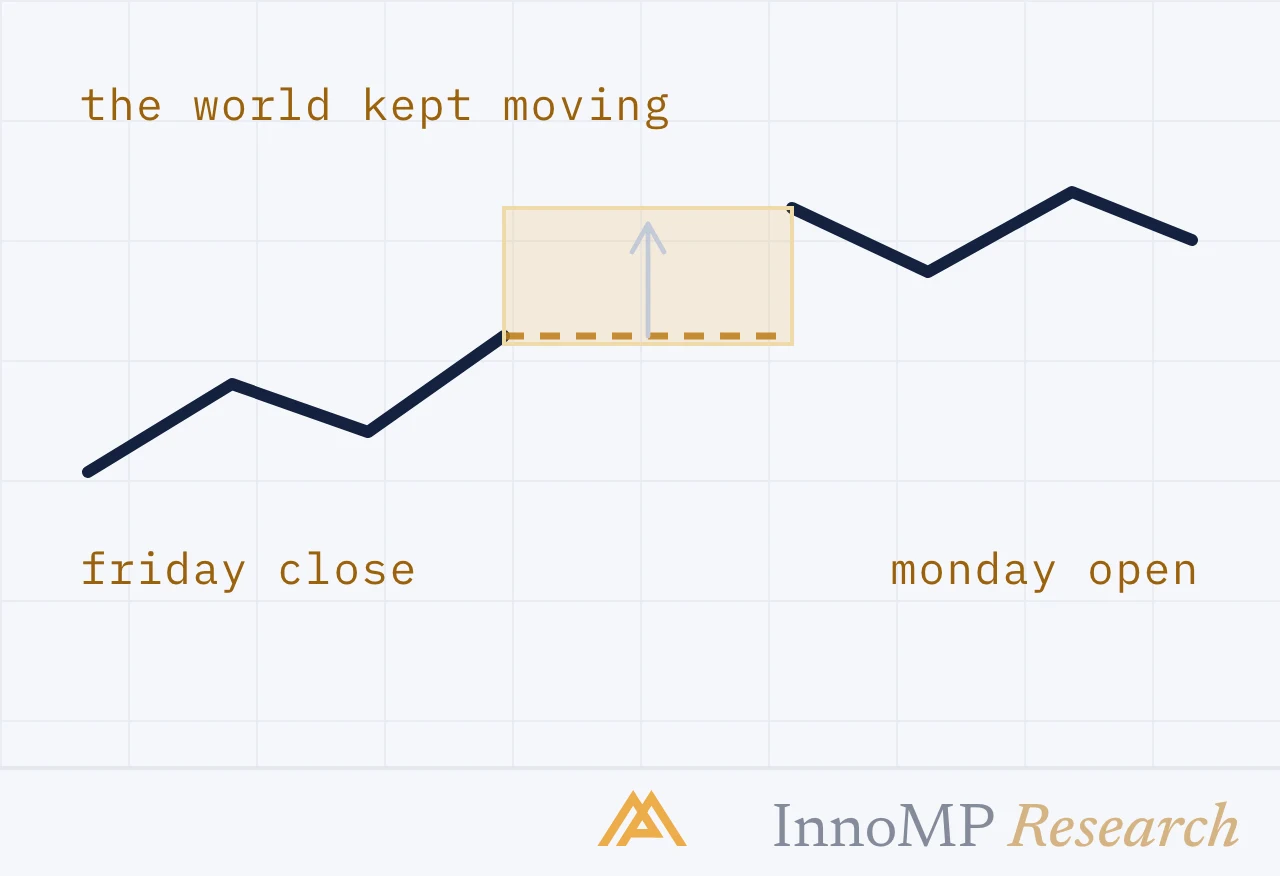
CFD markets close for the weekend; the world that prices them does not. Where gap risk comes from, why InnoMP raises the weekend liquidation threshold, and how to size for both.
Read more → 5 min read
Market hours
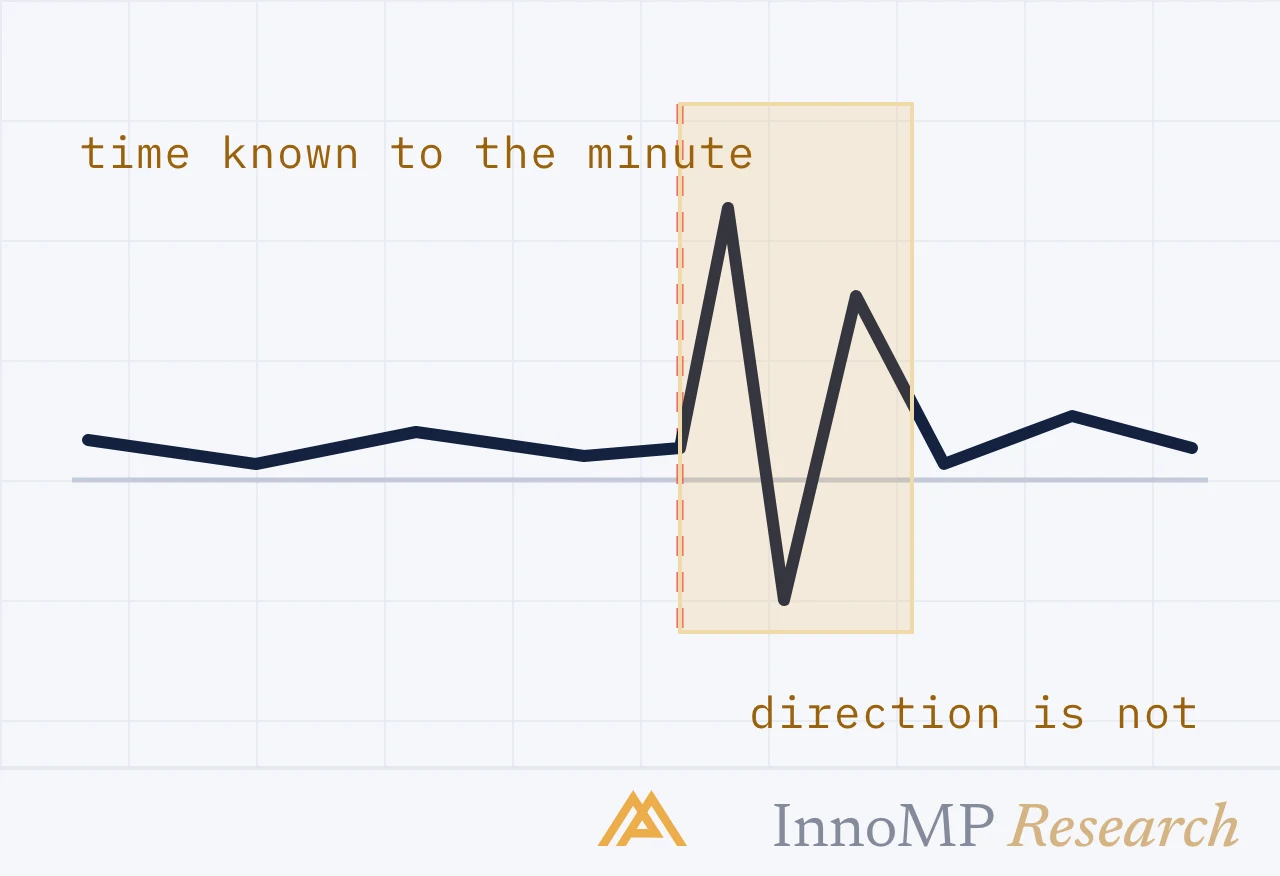
Scheduled releases compress a day of volatility into ninety seconds. A pre-event checklist and a sizing rule matter more than a view on the number itself.
Read more → 6 min read
Risk-reward
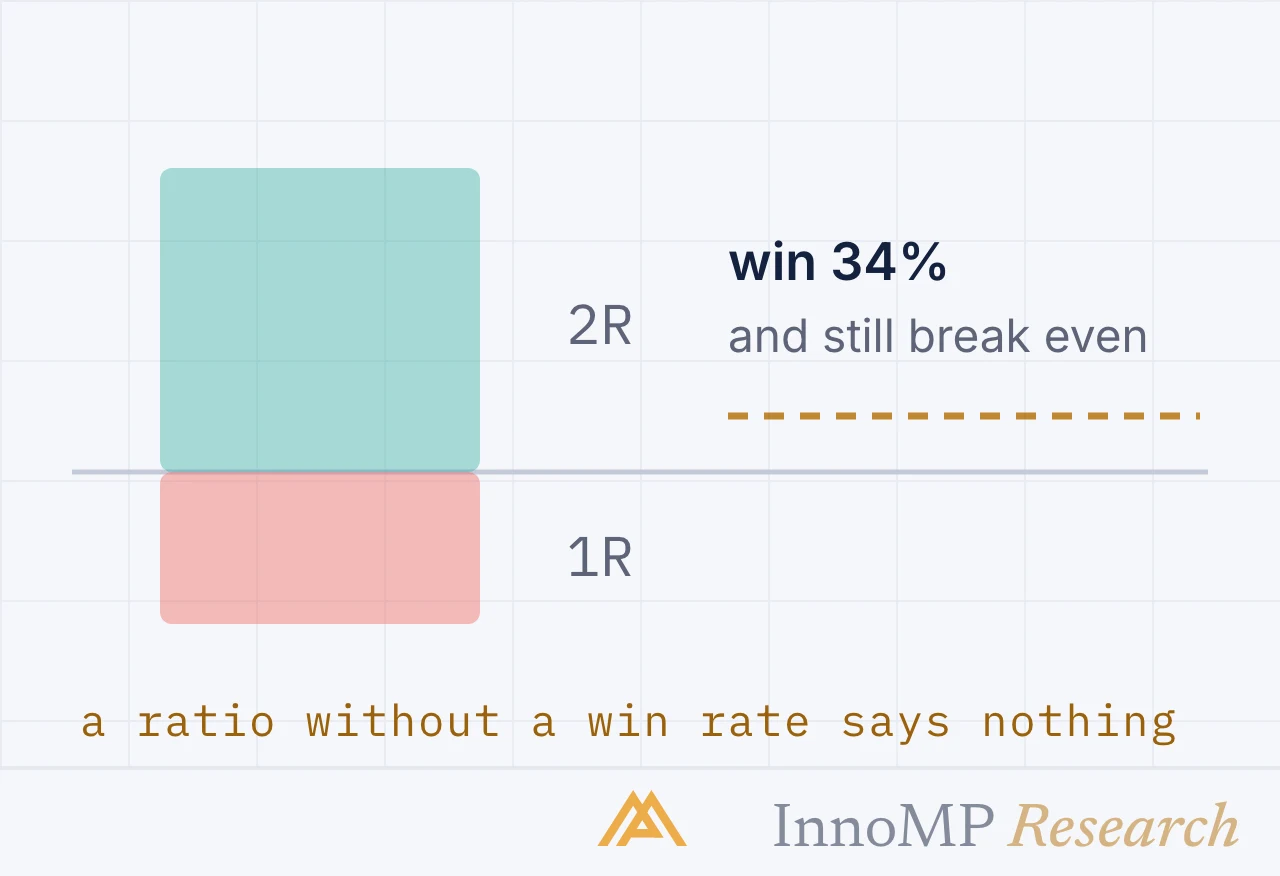
R-multiples make strategies comparable and journals honest — but only when the reward is as real as the risk. Where the ratio genuinely helps, and the two ways it gets gamed.
Read more → 5 min read
Stop-loss
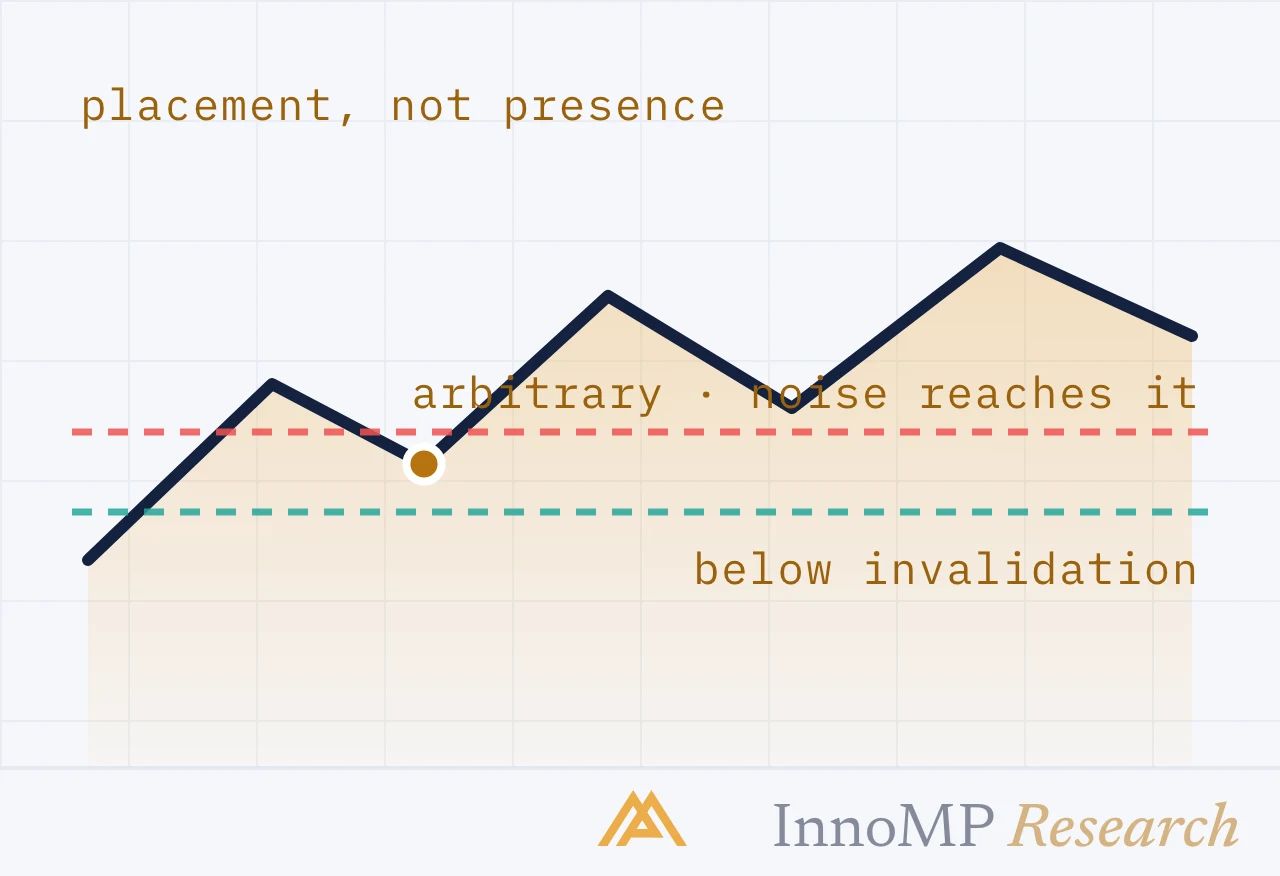
Having a stop is table stakes. Where it sits determines whether it protects the account or simply donates to the market on schedule.
Read more → 6 min read
Drawdown
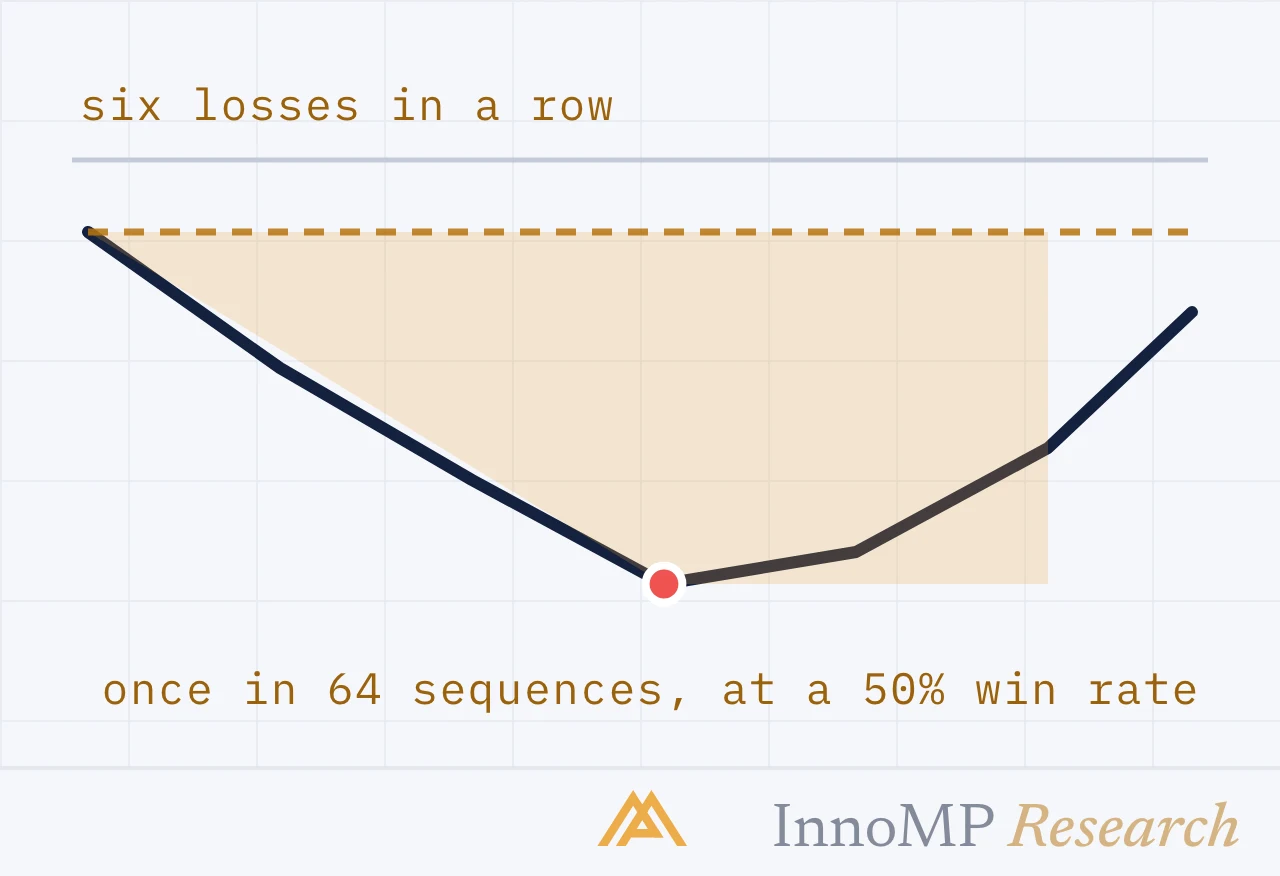
Every strategy has losing runs. Telling an ordinary one apart from a genuine failure is the difference between abandoning something that worked and persisting with something that stopped.
Read more → 6 min read
DisciplinePlatformsTrading journalDrawdownPosition sizingIndicatorsMarket structureStop-loss