The strategy is fine and the account is down. What that period does to judgement, and the decisions that turn an ordinary drawdown into a serious one.
IRInnoMP Research · Education Desk Published 31 Aug 2026 · Updated 31 Aug 2026 4 min read
In short
A drawdown is a decline from an account's peak. Psychologically it is difficult because losses are weighted more heavily than gains, the pressure to act increases as the decline lengthens, and the actions available all make it worse. Most serious drawdowns become serious not through the strategy's own losses but through the trades taken in response to them.
A drawdown is a decline from an account’s peak. Every strategy has them. The technical question — whether a drawdown is variance or genuine failure — is covered in reading a drawdown. This part is about what the period does to the person trading through it.
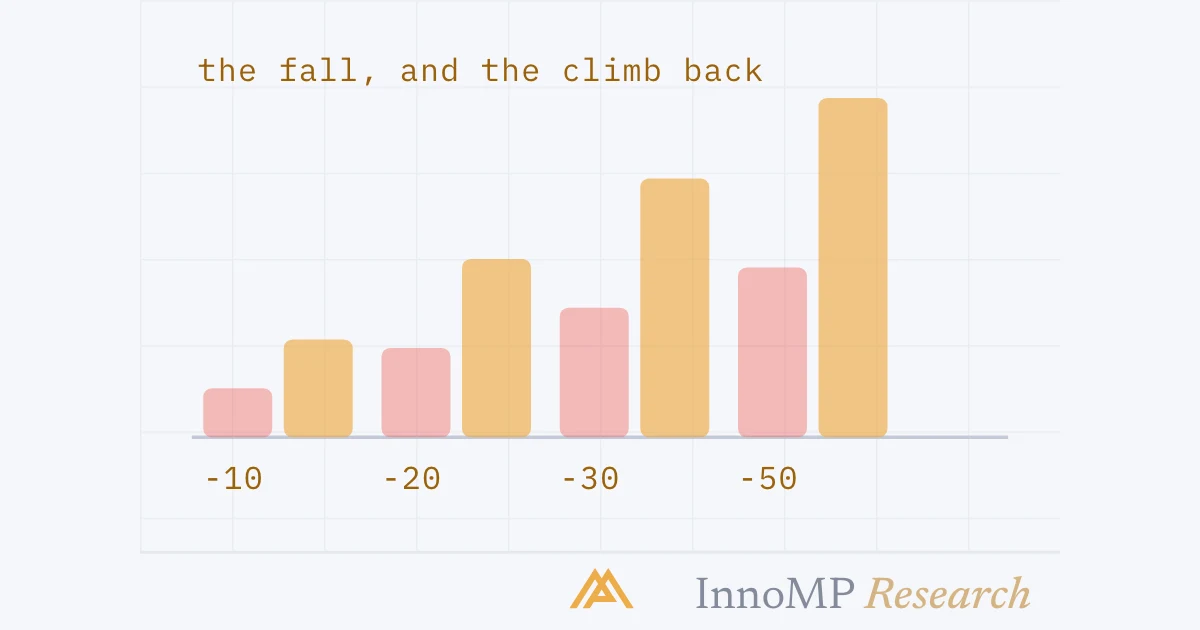
The arithmetic that creates the pressure
At small depths this is a footnote. At 30% it is a different situation entirely — and the trader feels that shift before they can articulate it.
That felt shift is what generates urgency. And urgency, in a drawdown, is the mechanism that makes things worse.
The trap
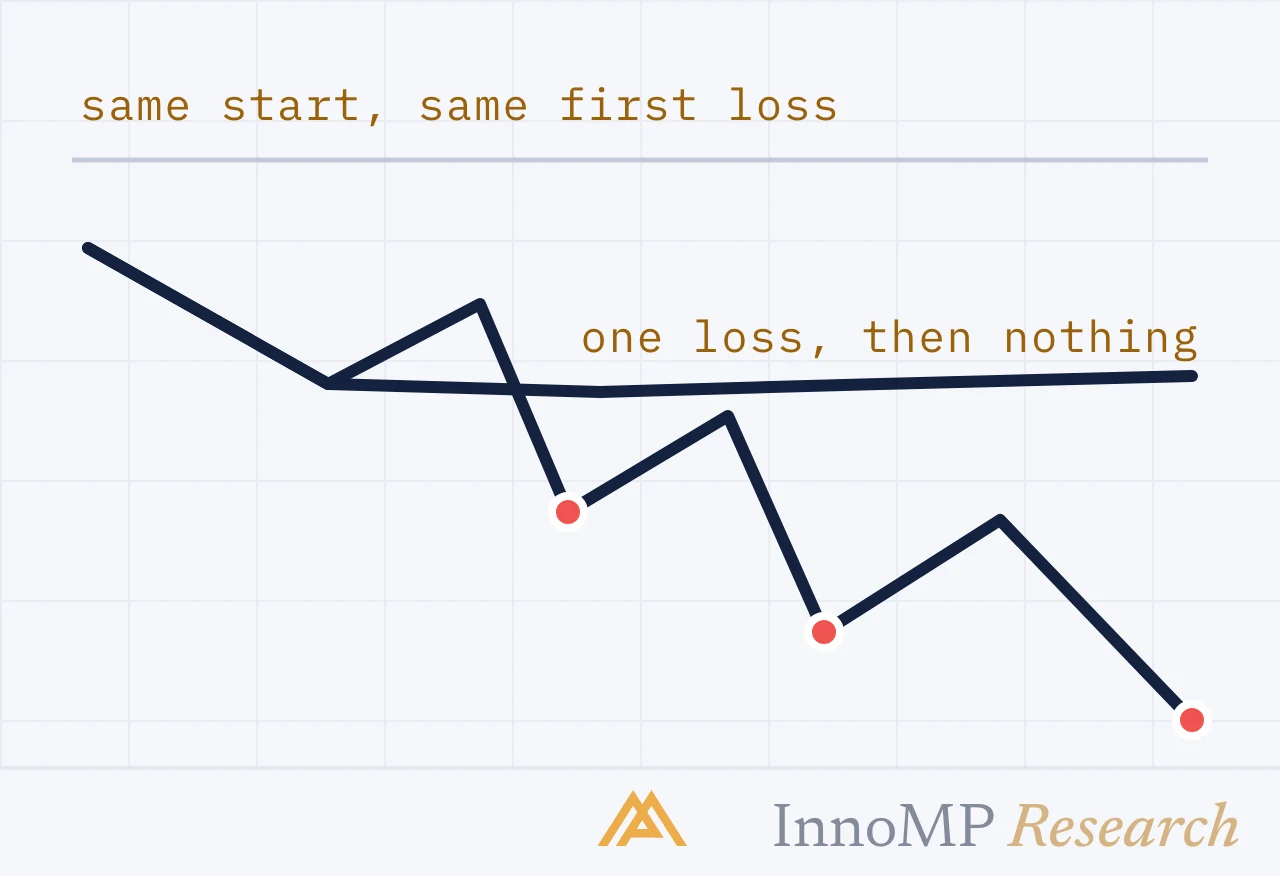
Every action available during a drawdown has a cost. Knowing that in advance is what makes doing nothing a decision rather than a failure to act. Both begin with the same strategy losses. The lower path adds three responses — each intended to speed recovery, each making it less likely.
Deciding in advance
Everything useful about drawdown management is decided before one begins, because during one you are negotiating rather than deciding.
Knowing the floor exists makes the space above it easier to occupy.
A review threshold triggers reading the record, not redesigning. A size-reduction rule lengthens recovery arithmetically but keeps the emotional load where rules still get followed. A minimum sample — as Part 4 shows, five losses is ordinary. A hard floor at which you stop entirely.
Key takeaway
The strategy’s losses are the plan working. What turns a 6% drawdown into a 25% one is the trades taken in response — larger, faster, on setups that would normally be skipped. Nothing about the drawdown requires those trades; they come from the urgency it produces.
Reviewed afterwards, this column is the most valuable thing in the book. Survivors are not the ones who felt nothing.
Recording it while it happens
Keep the journal running through the decline, with one addition: what you felt like doing, next to what you did.
Reviewed afterwards, that column is the most valuable thing in the book. It shows the specific moments when the urge to increase size or lower standards appeared, and whether you acted on it. Traders who survive drawdowns are usually not the ones who felt nothing — they are the ones whose structure held while they felt it.
Recovery requires a larger percentage gain than the percentage lost, and the gap widens with depth.
The pressure to act increases exactly when acting is most likely to be harmful.
Most damage comes from trades taken in reaction to a drawdown rather than from the drawdown itself.
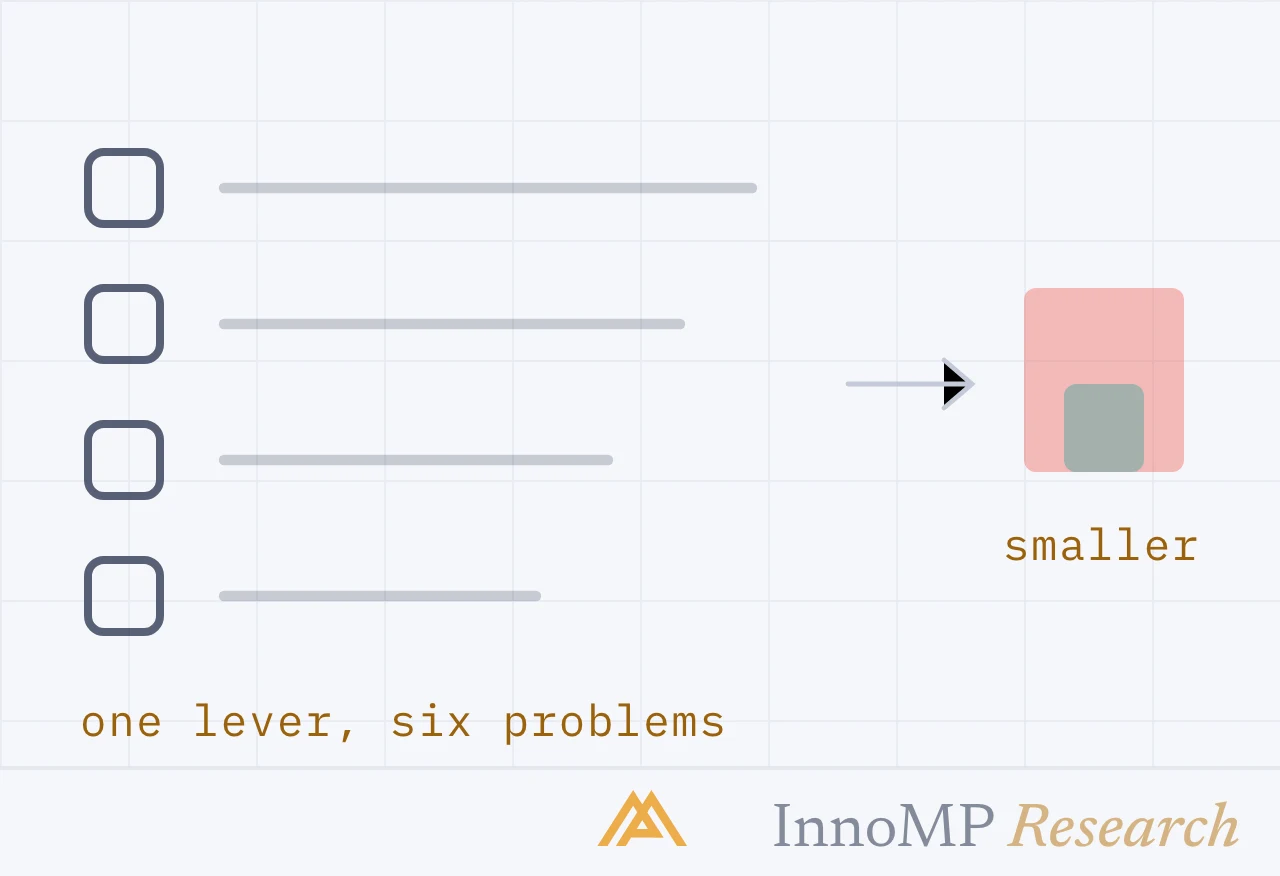
Reducing size lengthens recovery arithmetically but improves the odds of remaining objective.
Frequently asked questions
Why do drawdowns feel worse than the numbers suggest?
Because losses are weighted roughly twice as heavily as equivalent gains, and because a drawdown is a sustained sequence rather than a single event. The feeling accumulates while the account declines, so the emotional cost outpaces the financial one.
How much do I need to gain to recover a drawdown?
More than you lost, and the gap widens with depth. A 10% decline needs 11.1% to recover; 30% needs 42.9%; 50% needs 100%. This asymmetry is the mathematical argument for keeping risk per trade small.
Should I stop trading during a drawdown?
Not necessarily, but reduce size. Many traders halve risk at a defined threshold. It slows recovery arithmetically while substantially improving the odds of staying objective long enough to recover at all.
How do I know if my strategy is broken or just in a drawdown?
Check whether the character of the losses changed — are individual losses larger than designed, are you still trading the same setups, has the win rate moved over a meaningful sample? Variance shows normal-sized losses arriving more often; failure shows something structurally different.
IR
InnoMP Research · Education Desk
Trading education from first principles — position sizing, risk, market structure and the habits that keep accounts alive. Written for someone who has never opened a chart, with a diagram at every step.
Published 31 Aug 2026 · Updated 31 Aug 2026
Disclaimer: This content is provided for general informational purposes only and does not constitute investment advice, an offer, or a solicitation to buy or sell any financial instrument. It has been prepared without regard to your individual financial circumstances or objectives. Trading CFDs involves a high risk of loss.
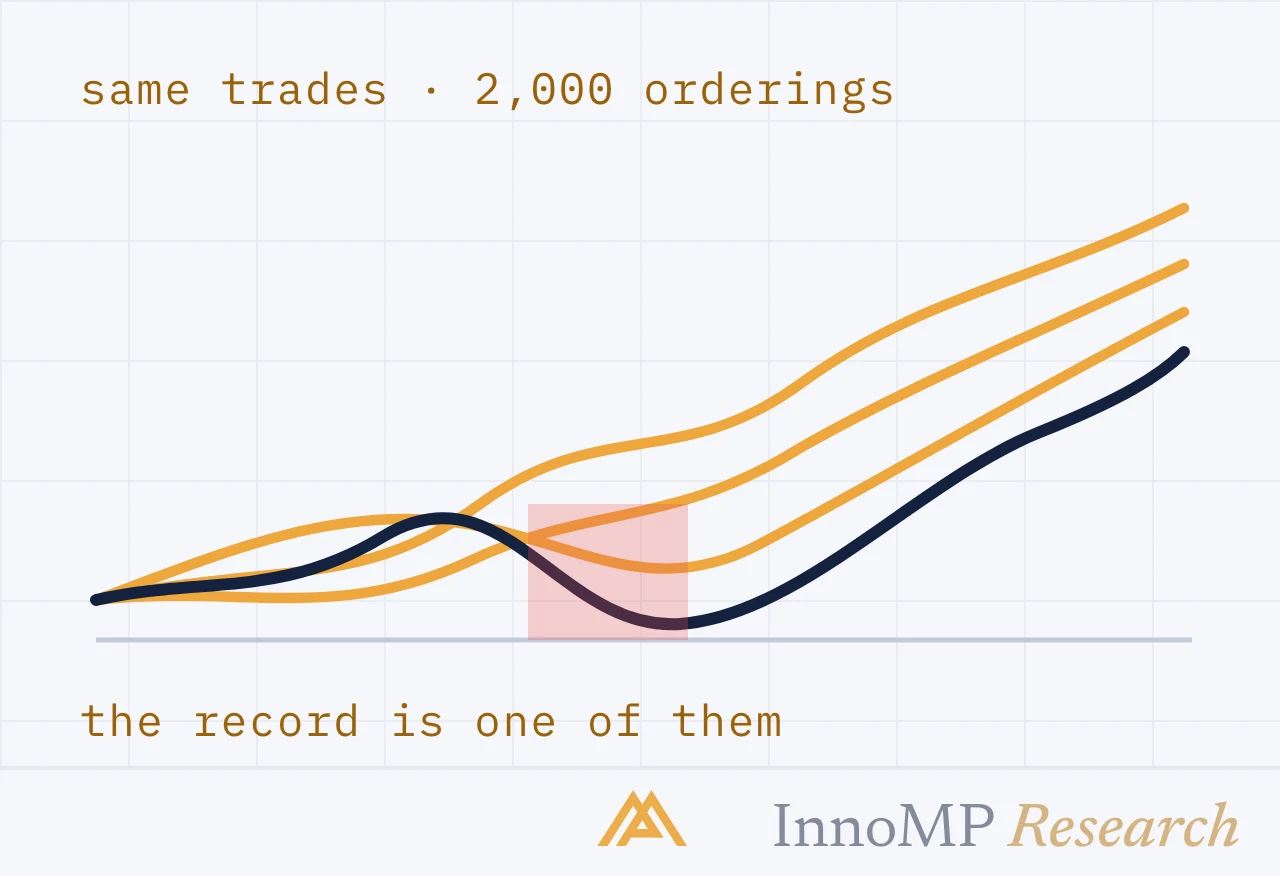
The worst run in the record is one draw of many. How to resample the same trades thousands of times, read the distribution of maximum drawdown and losing streaks it produces, and size so the bad draws are survivable.
Hesitation, early exits, moved stops, revenge trades. Nearly all of them shrink when the position does. Why size is the primary psychological tool, not just a risk one.