Every trader has rules. Most break them. The failure is usually in how the rule was written, not in the character of the person following it.
IRInnoMP Research · Education Desk Published 31 Aug 2026 · Updated 31 Aug 2026 5 min read
In short
Trading rules break under pressure because most are written as intentions rather than as mechanisms. A rule that requires an in-the-moment decision competes with emotion at exactly the moment emotion is strongest. Rules that survive are specific, testable, and implemented as something other than willpower — a resting order, a platform setting, or a hard stopping condition.
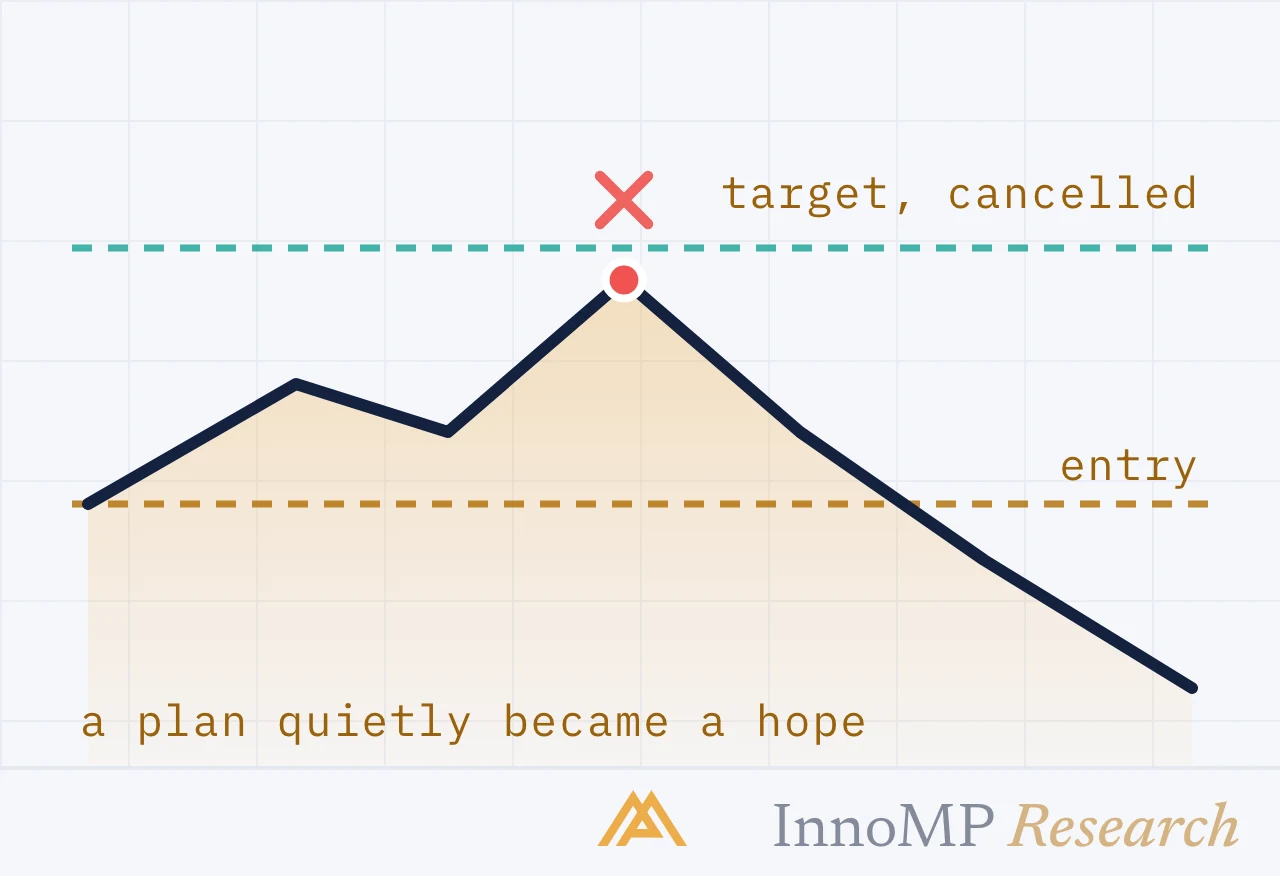
Rules break under pressure because most rules are written as intentions. “Don’t move my stop” is a statement about what you hope to do. At the moment price approaches the stop, that hope is competing with an urge — and the urge has better timing.
The failure is usually in the design of the rule, not in the character of the person holding it.
Three ways rules are written badly
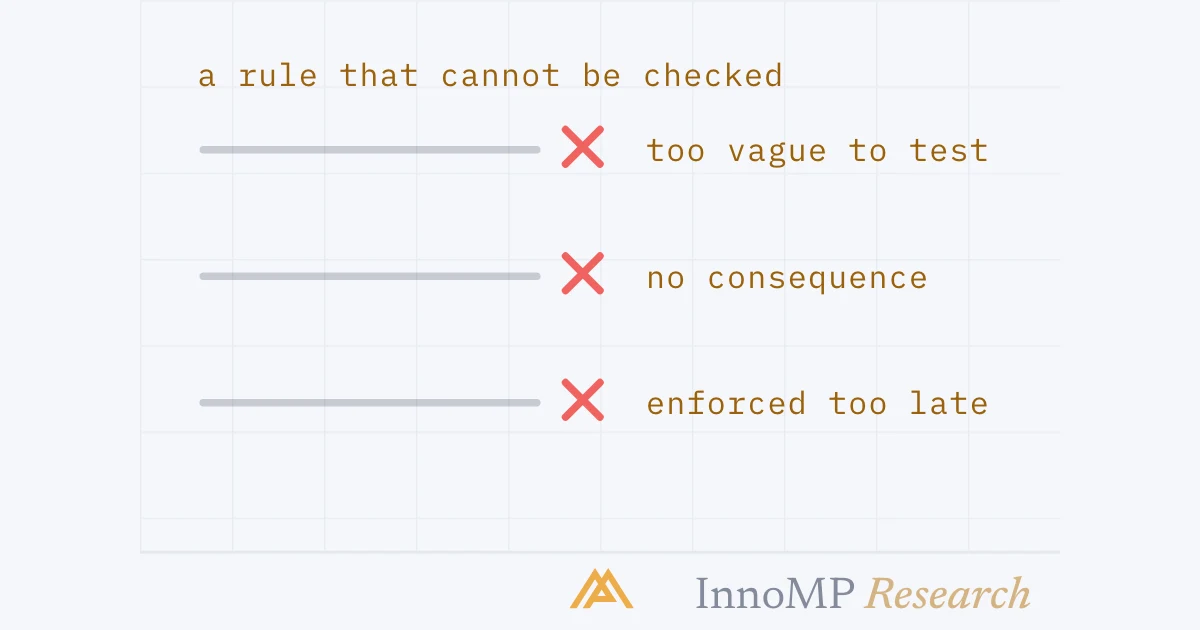
A rule that cannot be broken cannot work either. Being checkable is the minimum requirement.
Too vague to test.“Don’t overtrade.” Compare: “Maximum three trades per day.” That one can be violated, which is what makes it capable of working.
No consequence.“I try to risk 1%” has no mechanism. “If the calculator says the position exceeds 1%, I reduce it or skip the trade” has one.
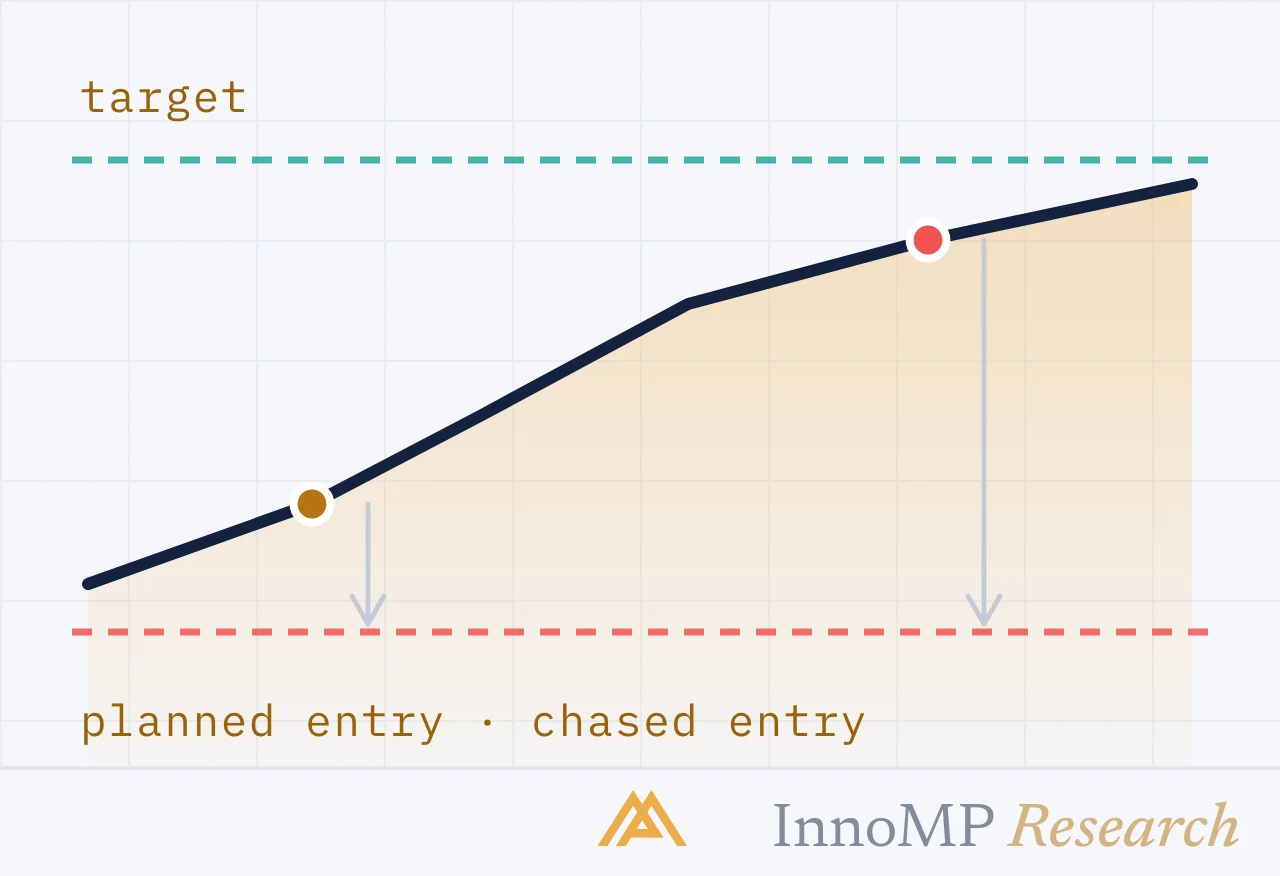
Requires willpower at the worst moment. Any rule whose enforcement happens while a position is open and moving is a rule you will lose roughly half the time, because as Part 9 covers, the state that makes you want to break it is the state that impairs resisting.
Intention against mechanism
The upper implementation has to survive a contest it enters at a disadvantage. The lower one never enters it.
The test for a good rule: what happens if I do nothing? If the correct outcome occurs without your intervention, it is a mechanism. If it requires you to act correctly under pressure, it is an intention.
Every row on the right removes a decision from the moment it would be hardest. That is the whole technique.
Key takeaway
Ask of each of your rules: if I do nothing at the critical moment, does the right thing still happen? Where the answer is no, the rule is asking your willpower to win a fight it enters exhausted. Convert it into an order, a setting or a stopping condition instead.
Keep the list short
Twenty rules cannot be held in mind while a position is moving. Five can — and an unenforced rule is worse than no rule.
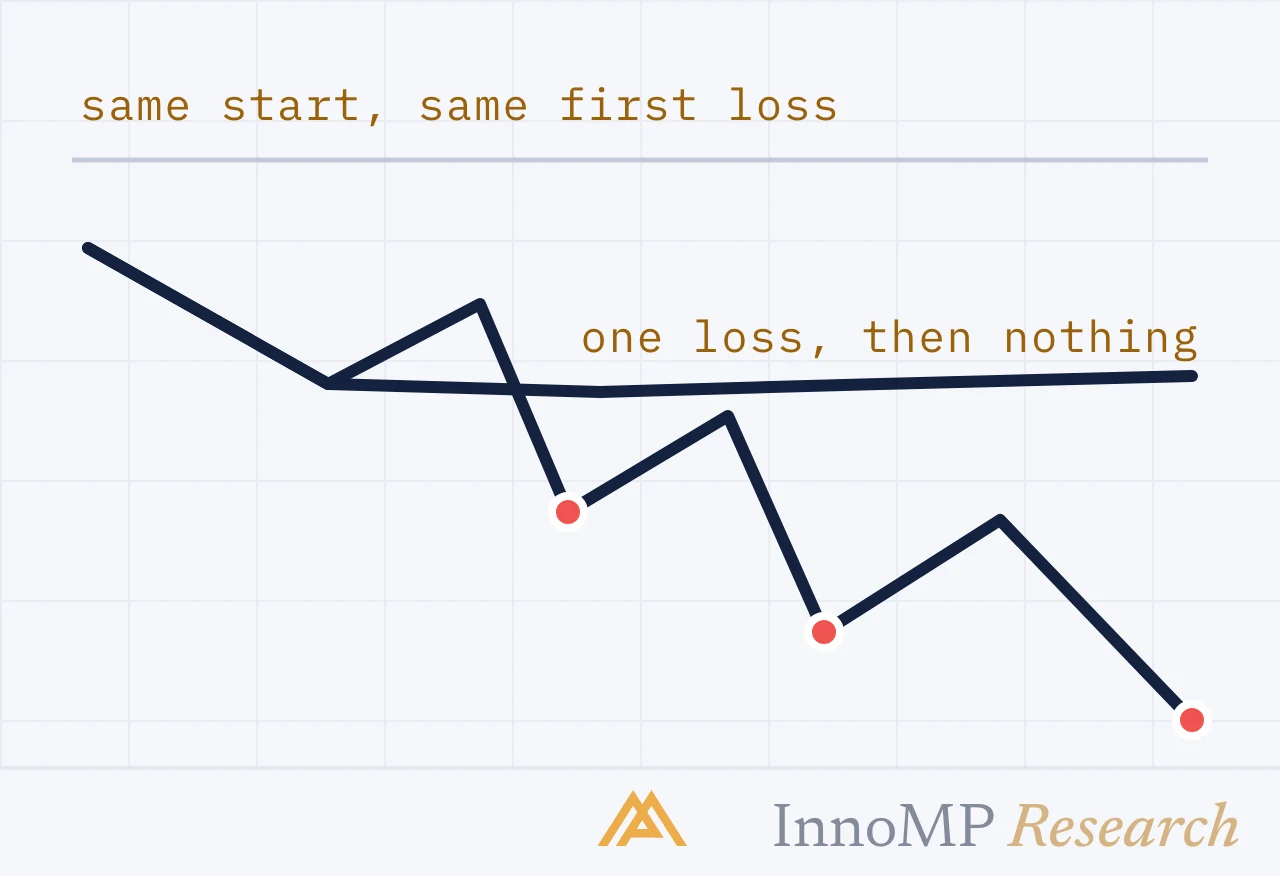
There is also a compounding effect worth naming: an unenforced rule is worse than no rule, because breaking it teaches you that your rules are negotiable. That lesson transfers to the rules that matter.
One question sorts every rule you have. Where the answer is the right branch, convert it into an order, a setting or a stopping condition.
When a rule genuinely needs changing
Rules should be revised — but on a schedule, not under pressure.
Review them when flat, ideally on a fixed cadence, with the journal in front of you. Change one thing at a time so its effect is measurable. Never change a rule while a position is open or on a losing day: a rule modified mid-drawdown is not a revision, it is a rationalisation with a paper trail.
Vague rules cannot be broken because they cannot be tested — which is why they fail silently.
A rule requiring a decision in the moment competes with emotion at its peak.
Rules implemented as resting orders or platform settings do not depend on self-control.
Fewer rules that are actually followed outperform a long list that is not.
Frequently asked questions
Why do I break my own trading rules?
Usually because the rule requires a decision at the moment it matters, and that moment is when emotion is strongest. A rule that says 'do not move my stop' asks you to resist an urge; a stop placed as a resting order does not ask anything.
How do I write trading rules that work?
Make them specific enough to be testable — a price, a percentage, a count — and implement each one as a mechanism rather than an intention wherever possible. Then keep the list short enough to actually remember.
How many trading rules should I have?
Few. Five rules that are followed beat twenty that are not. Every rule you routinely break also erodes the authority of the ones you keep, so an unenforced rule is worse than no rule.
What is pre-commitment in trading?
Deciding in advance and removing your later ability to change the decision — placing a resting stop, setting a daily loss limit, closing the platform after a loss. It works because it does not rely on judgement at the moment judgement is compromised.
IR
InnoMP Research · Education Desk
Trading education from first principles — position sizing, risk, market structure and the habits that keep accounts alive. Written for someone who has never opened a chart, with a diagram at every step.
Published 31 Aug 2026 · Updated 31 Aug 2026
Disclaimer: This content is provided for general informational purposes only and does not constitute investment advice, an offer, or a solicitation to buy or sell any financial instrument. It has been prepared without regard to your individual financial circumstances or objectives. Trading CFDs involves a high risk of loss.