The setup came and went without you. Then price runs, and entering late feels urgent. Why chased entries carry the worst risk-reward on the chart.
IRInnoMP Research · Education Desk Published 31 Aug 2026 · Updated 31 Aug 2026 4 min read
In short
FOMO — fear of missing out — is the urge to enter a trade after the planned entry has passed, driven by watching a move continue without you. Chased entries are structurally poor because the stop must still sit at the original invalidation level, so the stop distance widens while the remaining move shrinks, damaging risk-reward from both directions at once.
FOMO is the urge to enter after your planned entry has passed. It is greed operating before you have a position, and it produces the worst-structured trades most people take.
The invalidation level does not move just because you entered late.
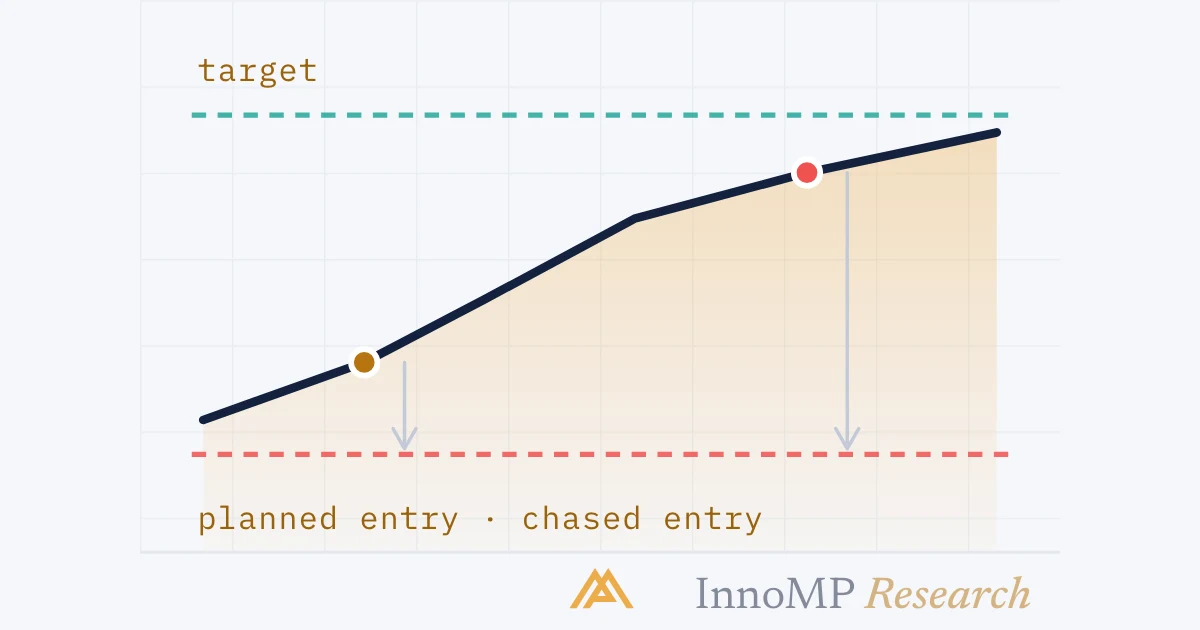
Same stop, same target, same idea. Entering 35 pips later turns 1:3 into 1:0.45 — the trade did not get better because it started working.
Say the plan was to buy at 1.0855 with a stop at 1.0835 and a target at 1.0915 — 1:3. You miss it. Price runs to 1.0890. Entering there, the stop is still 1.0835 (risk now 55 pips) and the target is still 1.0915 (reward now 25 pips).
Smaller position, worse ratio. The only thing that improved is the feeling of participating.
Why it feels urgent
None of the three is about the trade in front of you. All three are about the move you have been watching. You cannot chase a move you did not watch — and the alert delivers you at the price you actually wanted.
The structural fixes
Use alerts instead of watching. This is the single most effective intervention. Set a Market Watcher alert at your entry zone and close the chart. You cannot chase a move you did not watch.
Write the entry zone in advance. “Buy 1.0850–1.0860” is a commitment. “Buy on a pullback” is a sentence you can reinterpret at 1.0890.
Treat a missed setup as closed. The relevant question is not “how do I get into this move” but “where is the next setup.”
Recompute before entering late. If you are about to chase, calculate the ratio at the current price with the unchanged stop. The number is normally so poor that the urge dissolves on its own.
Key takeaway
A missed opportunity costs nothing. A chased entry costs money. These feel similar and are not remotely equivalent — one is an outcome you did not receive, the other is capital you put at risk on the worst terms the chart was offering.
When a late entry is legitimate
The test is one question: can you state a new stop that comes from structure rather than from the old plan?
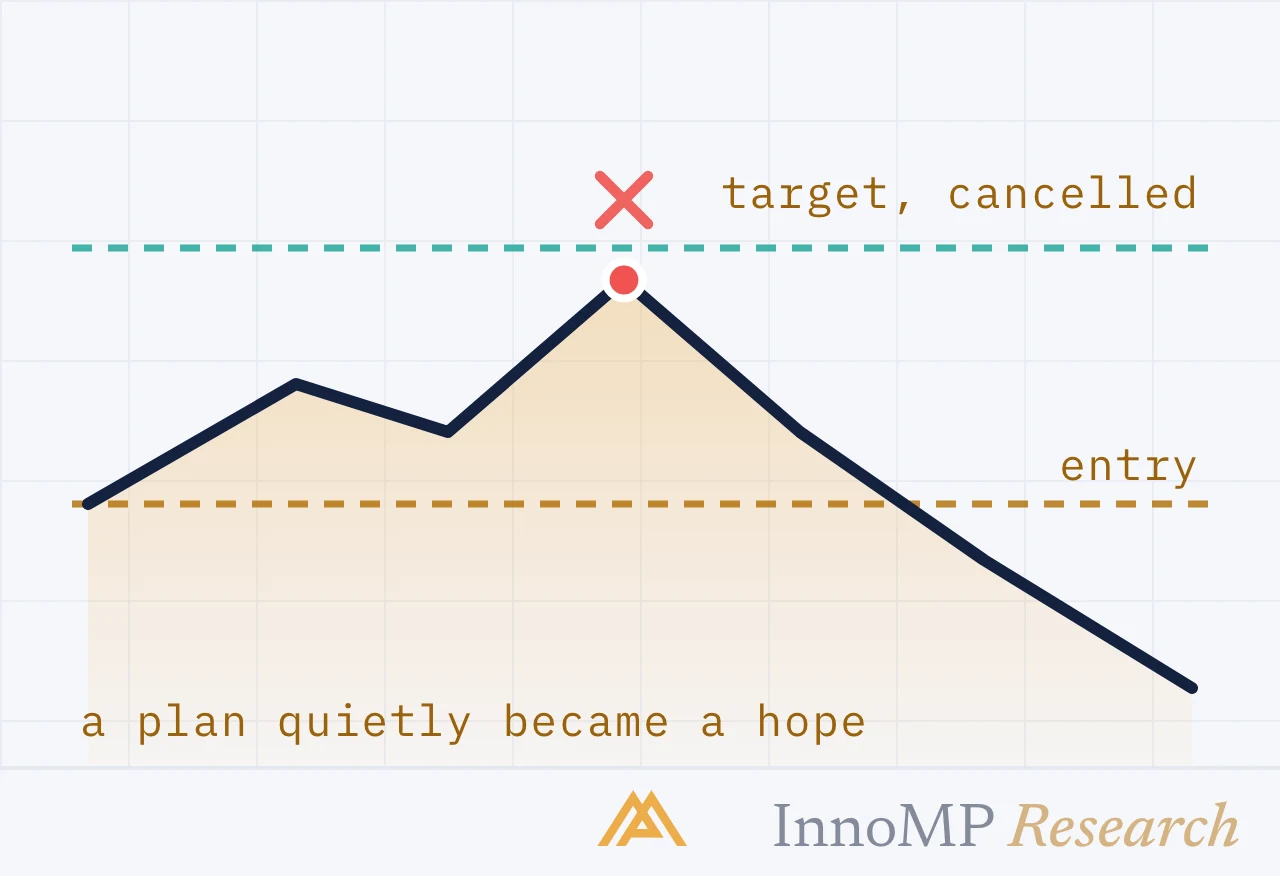
Sometimes price runs and then forms a new setup: a pullback with its own swing low, a consolidation with its own boundary, a retest of a broken level. That is not a late entry into the old trade — it is a new trade with new arithmetic.
The test is simple: can you state a new stop level that comes from structure rather than from the old plan? If yes, it is a setup. If the stop is still the original one, you are chasing.
Next: Revenge trading and tilt — what happens when the emotions from one trade carry into the next.
A chased entry keeps the same invalidation level but has a wider stop distance.
Wider stop distance means a smaller position for the same risk, and a worse reward-to-risk ratio.
FOMO intensifies after a missed setup that would have worked.
Price alerts remove the need to watch, which removes most of the trigger.
Frequently asked questions
What is FOMO in trading?
The urge to enter a position after your planned entry has passed, because the move is continuing and standing aside feels like losing an opportunity. It leads to entries at worse prices with wider stops than the plan intended.
Why are chased entries bad?
Because the invalidation level does not move with your entry. Entering 40 pips higher means a stop 40 pips further away, so the same risk budget supports a much smaller position, and the remaining distance to target is 40 pips shorter. Both sides of the ratio get worse.
How do I stop chasing trades?
Use price alerts instead of watching charts, so you are notified at your level rather than watching a move you are not in. Write the entry zone before the setup arrives, and treat a missed setup as a completed event rather than an open question.
Is it ever right to enter late?
Only if a new setup has formed with its own invalidation level — a pullback, a retest, a consolidation break. That is not a late entry into the old trade; it is a new trade with its own arithmetic.
IR
InnoMP Research · Education Desk
Trading education from first principles — position sizing, risk, market structure and the habits that keep accounts alive. Written for someone who has never opened a chart, with a diagram at every step.
Published 31 Aug 2026 · Updated 31 Aug 2026
Disclaimer: This content is provided for general informational purposes only and does not constitute investment advice, an offer, or a solicitation to buy or sell any financial instrument. It has been prepared without regard to your individual financial circumstances or objectives. Trading CFDs involves a high risk of loss.
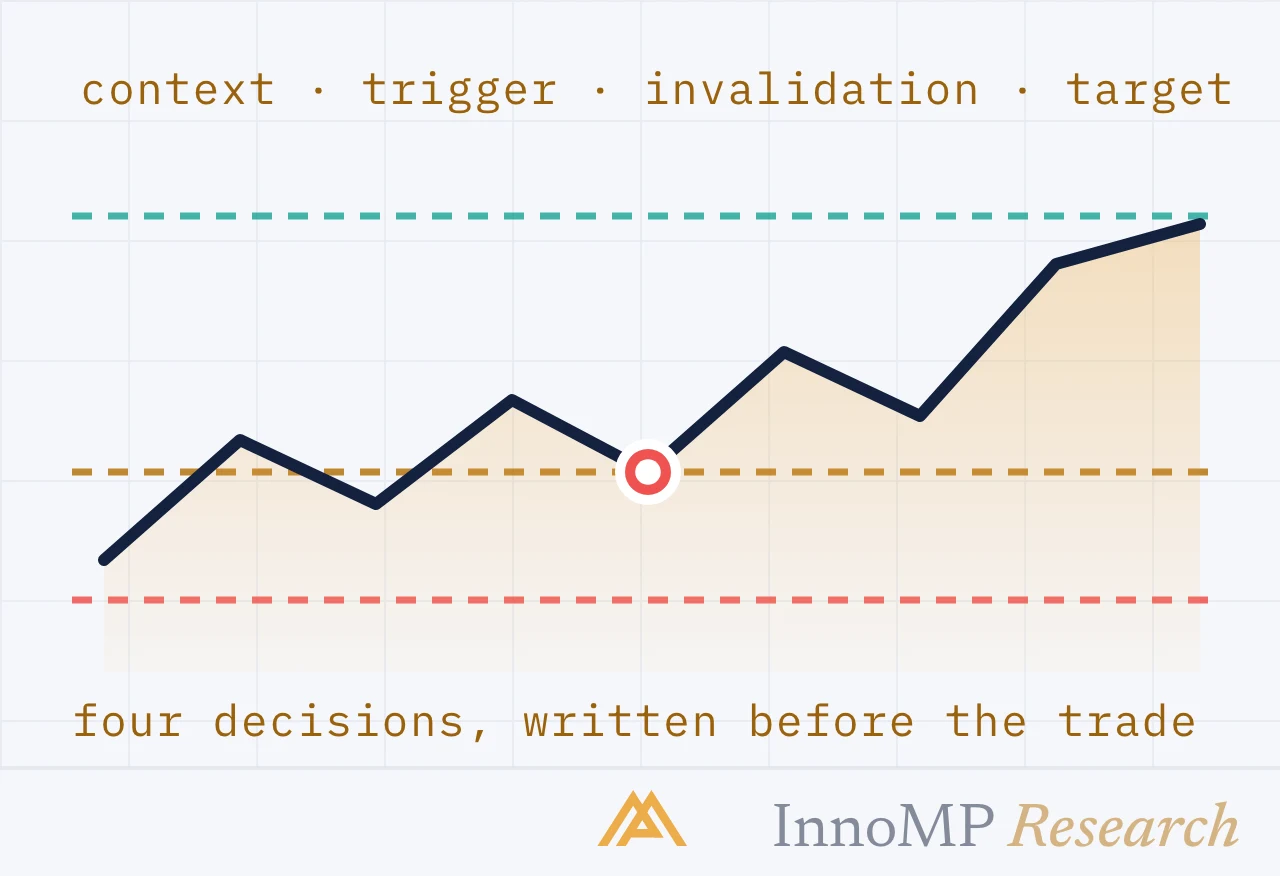
A setup is not a pattern. It is four decisions written before the trade: the context that makes it worth watching, the trigger that makes it a trade, the price that proves it wrong, and the price it aims at.
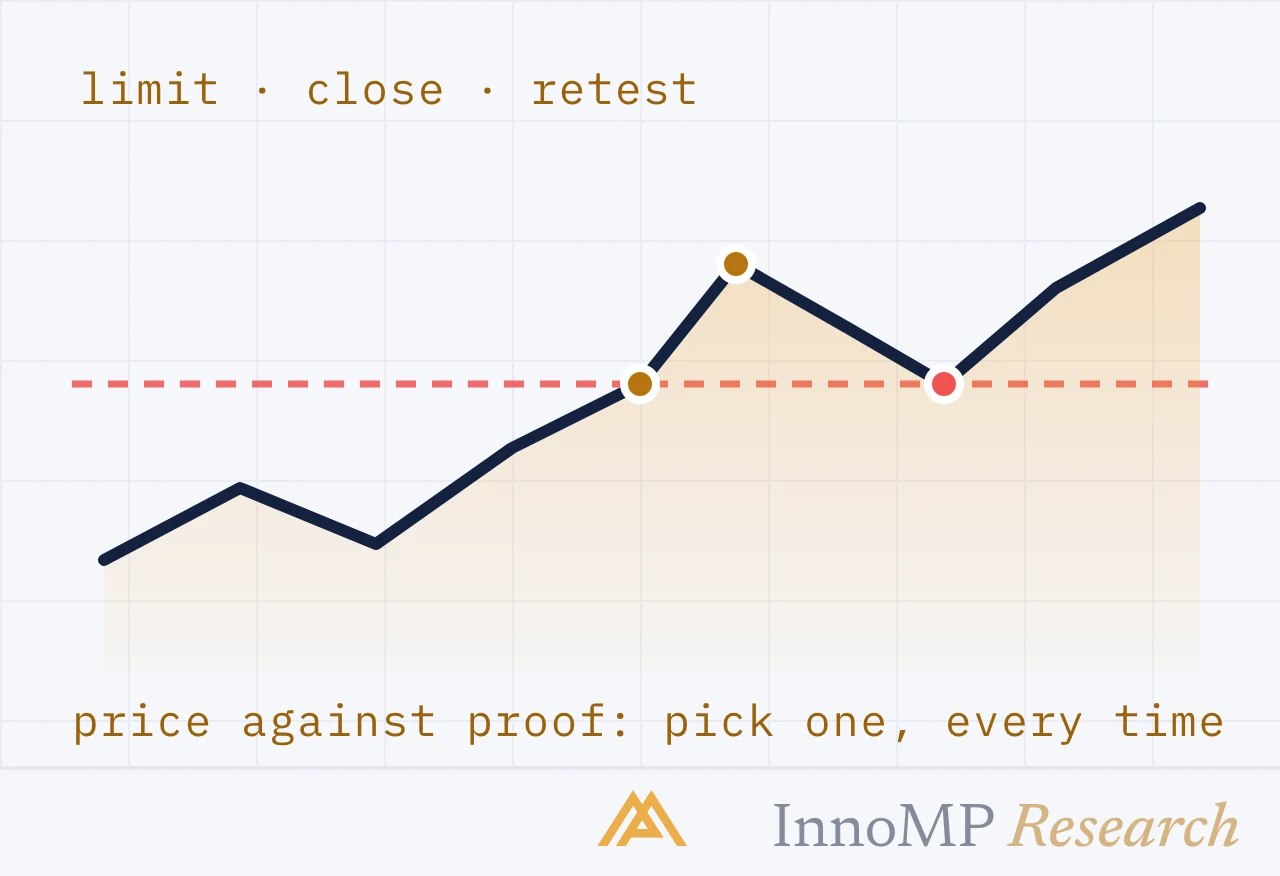
Every entry trades price against evidence. Enter early and the stop is tight but the setup is unproven; wait for confirmation and it is proven but the price is worse. The three common triggers, priced against each other.