Discipline
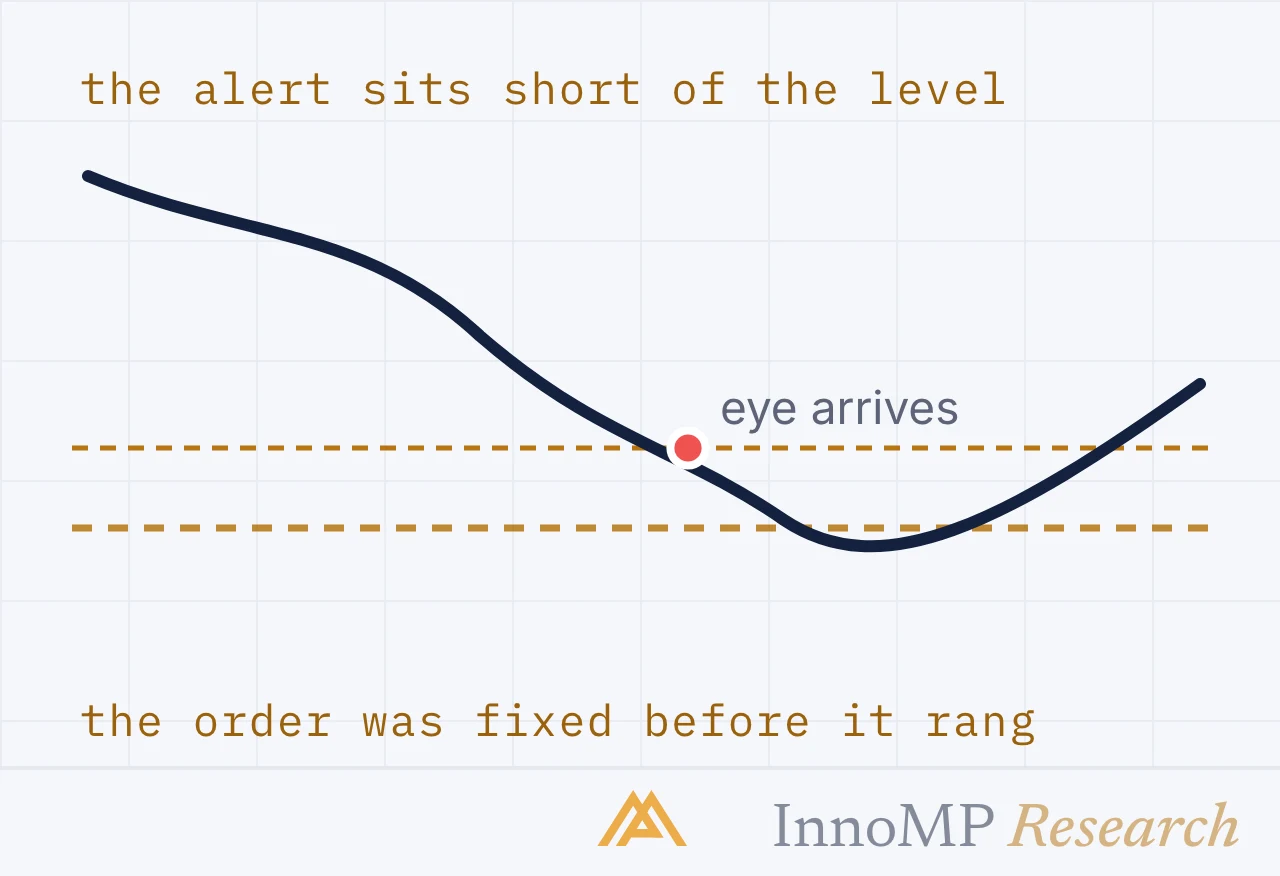
A decision table is as good as the moment it is consulted. How to split its conditions into what an alert can watch and what needs the eye, fix the order by rule, and know what still runs when the screen is off.
Read more → 9 min read
Trading journal
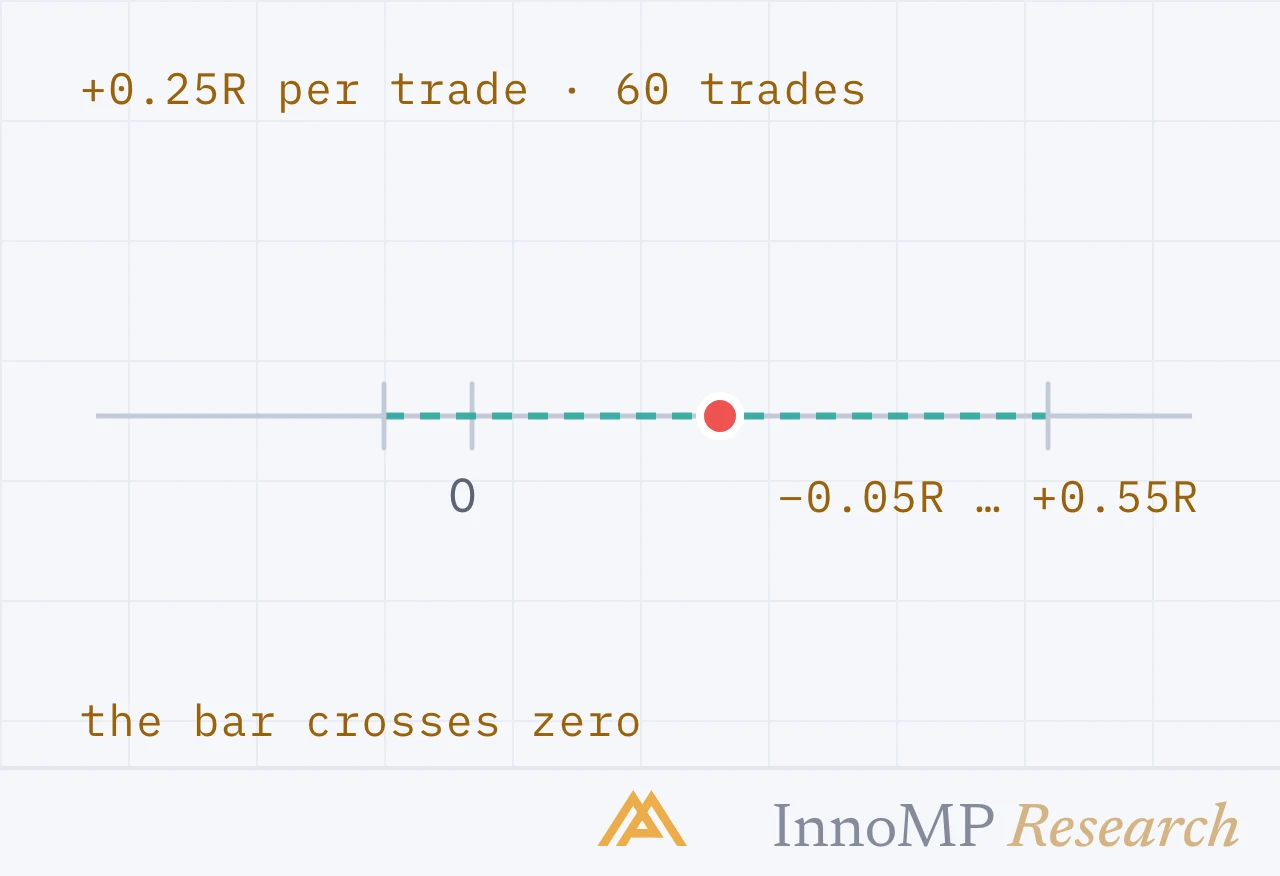
A record says +0.25R per trade. The question is how far from that the truth could be. How to put a standard error and a confidence interval on expectancy, and how many trades it takes to tell an edge from zero.
Read more → 9 min read
Discipline
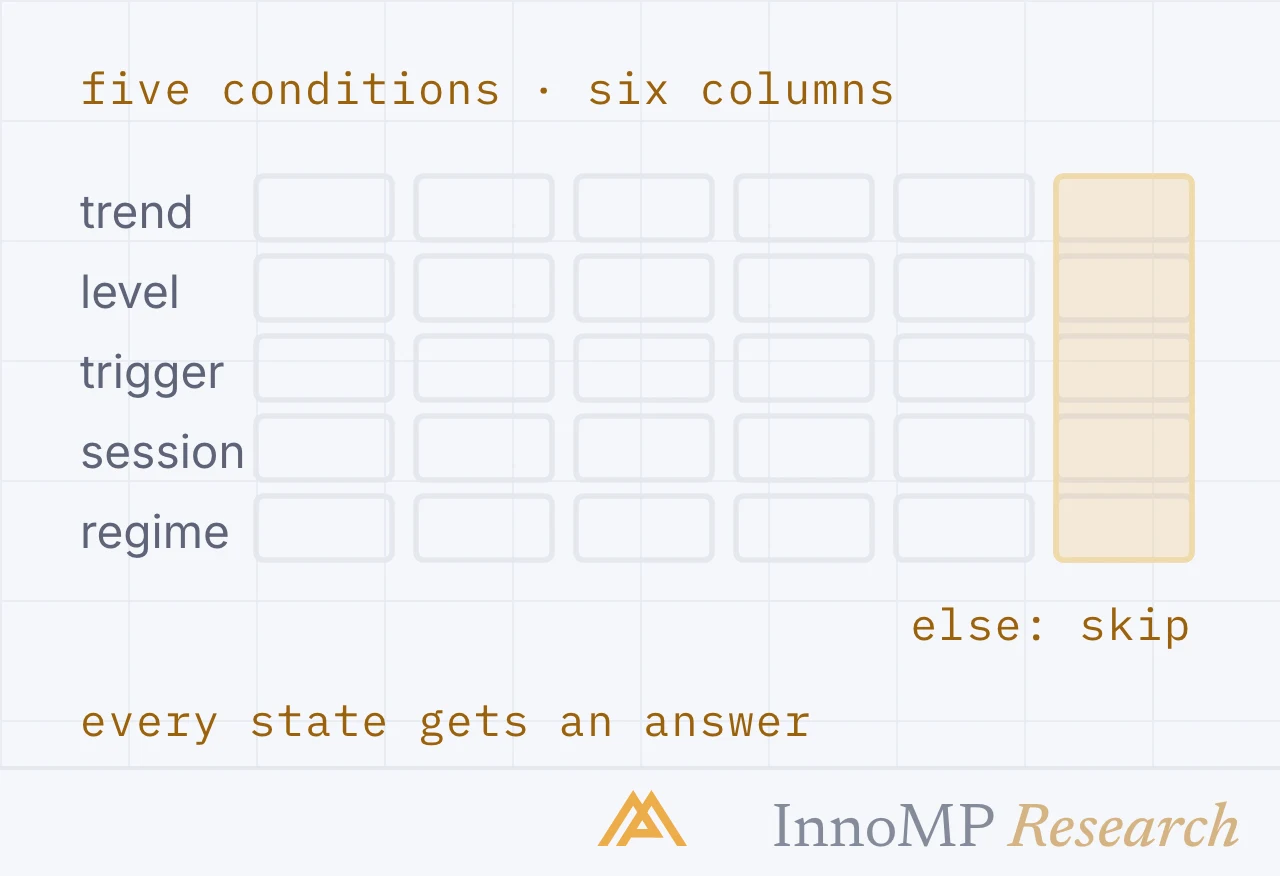
A written setup still leaves gaps: market states its prose never mentioned. How to lay the rules out as a decision table — conditions down the side, a column per rule — and find the gaps and contradictions first.
Read more → 9 min read
Trading journal
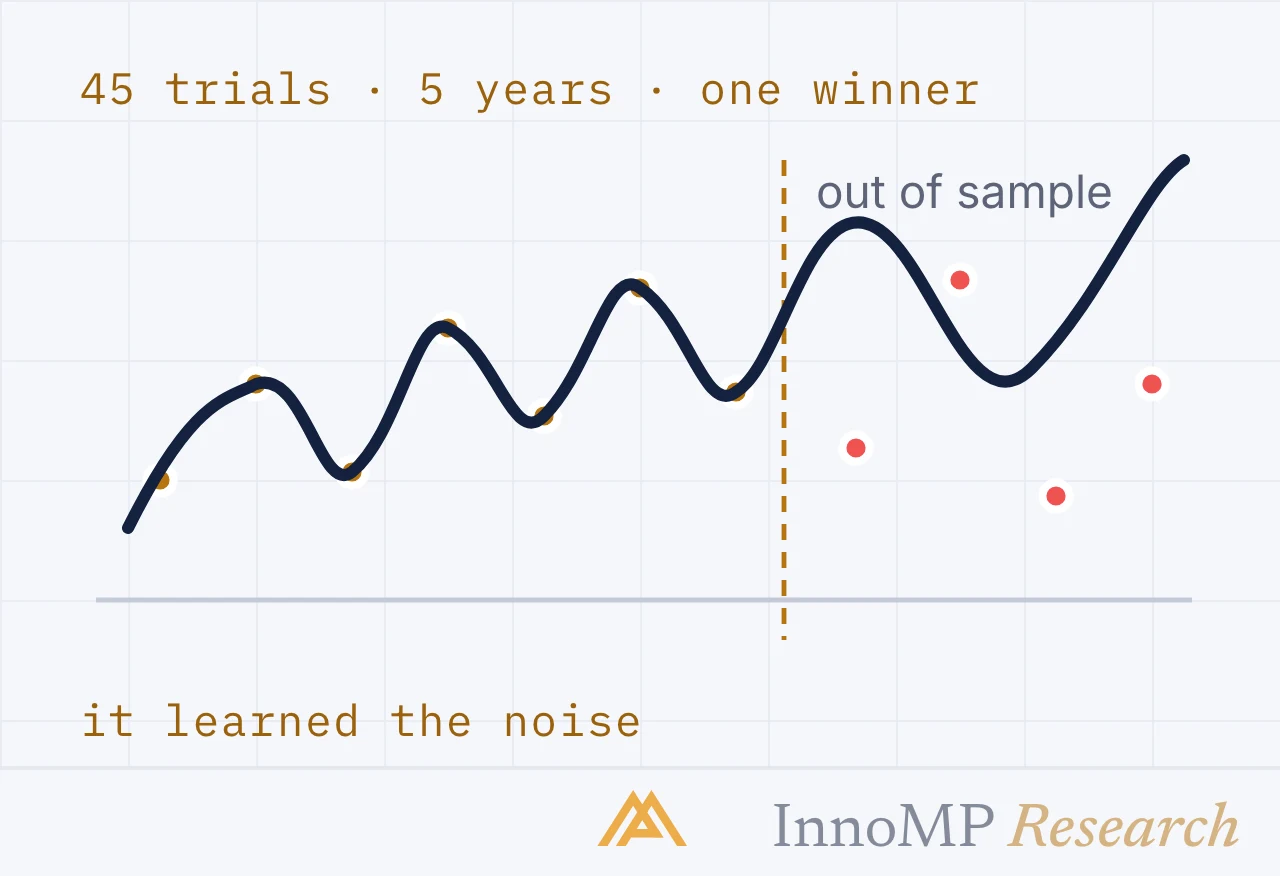
Try enough versions of a rule and one will shine on the past by chance. What overfitting is, why the trial count matters more than the winner's numbers, and how held-out data and walking forward tell fit from luck.
Read more → 10 min read
Discipline
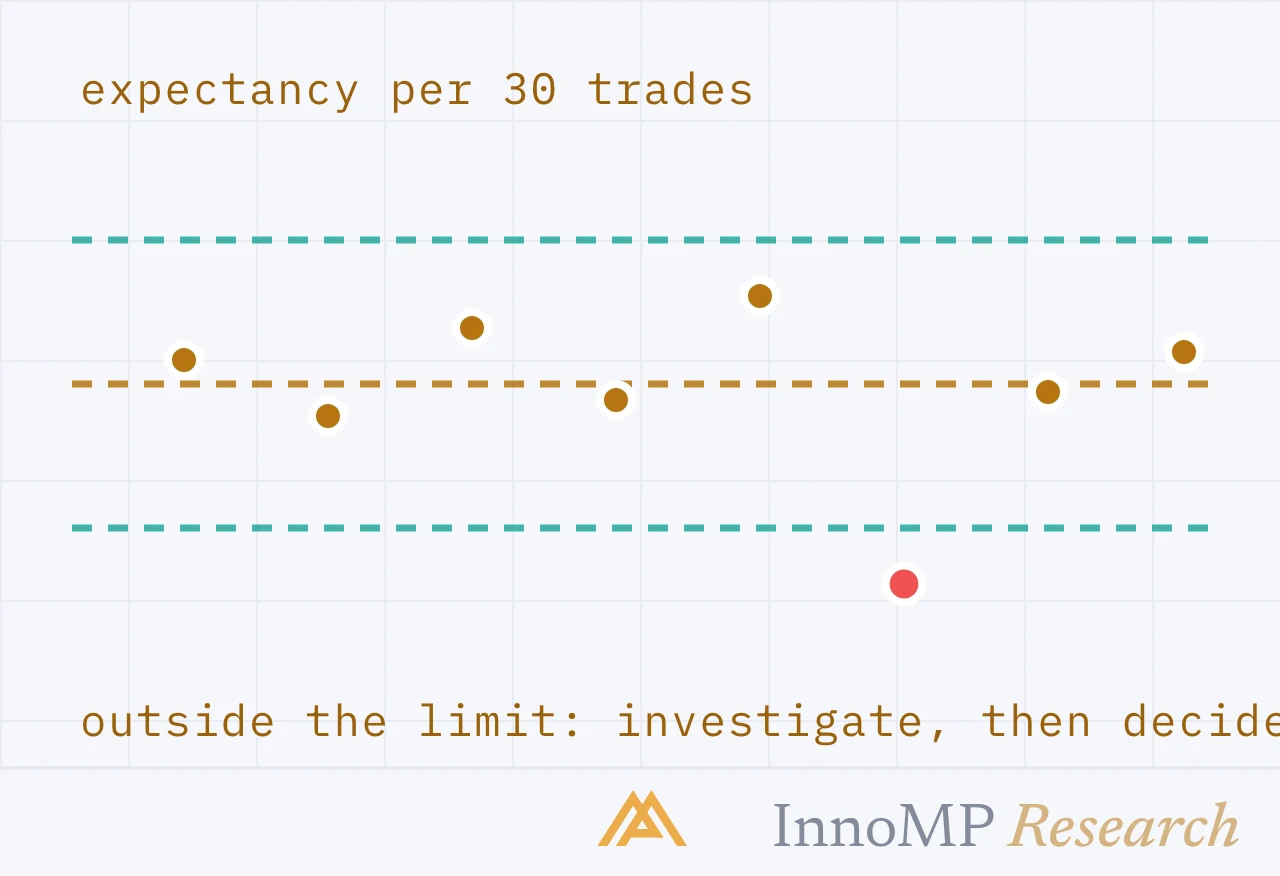
A system never reviewed drifts; one reviewed after every loss is switched off by noise. How to set a weekly, monthly and quarterly cadence, put control limits on the record, and write the kill criteria before trade one.
Read more → 10 min read
Discipline
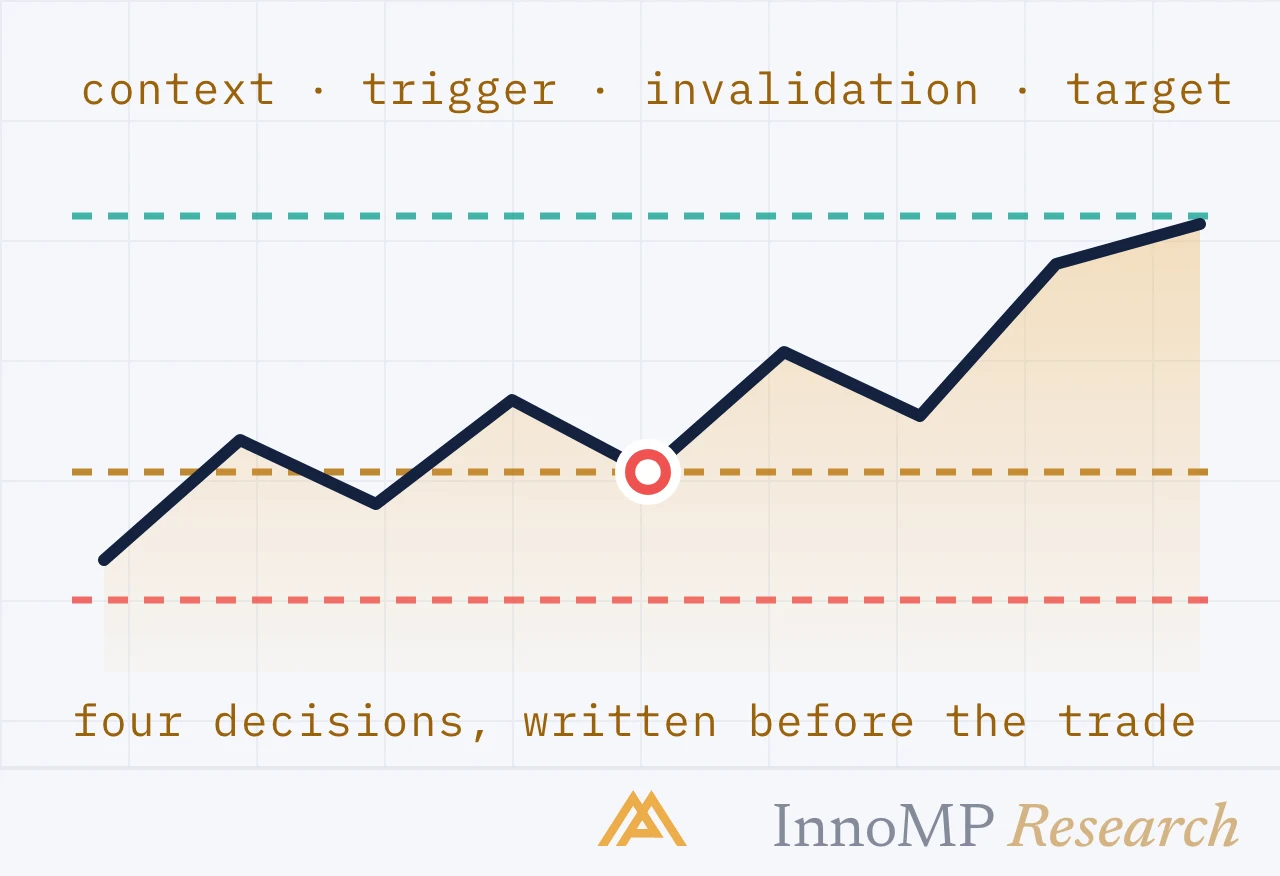
A setup is not a pattern. It is four decisions written before the trade: the context that makes it worth watching, the trigger that makes it a trade, the price that proves it wrong, and the price it aims at.
Read more → 8 min read
Discipline
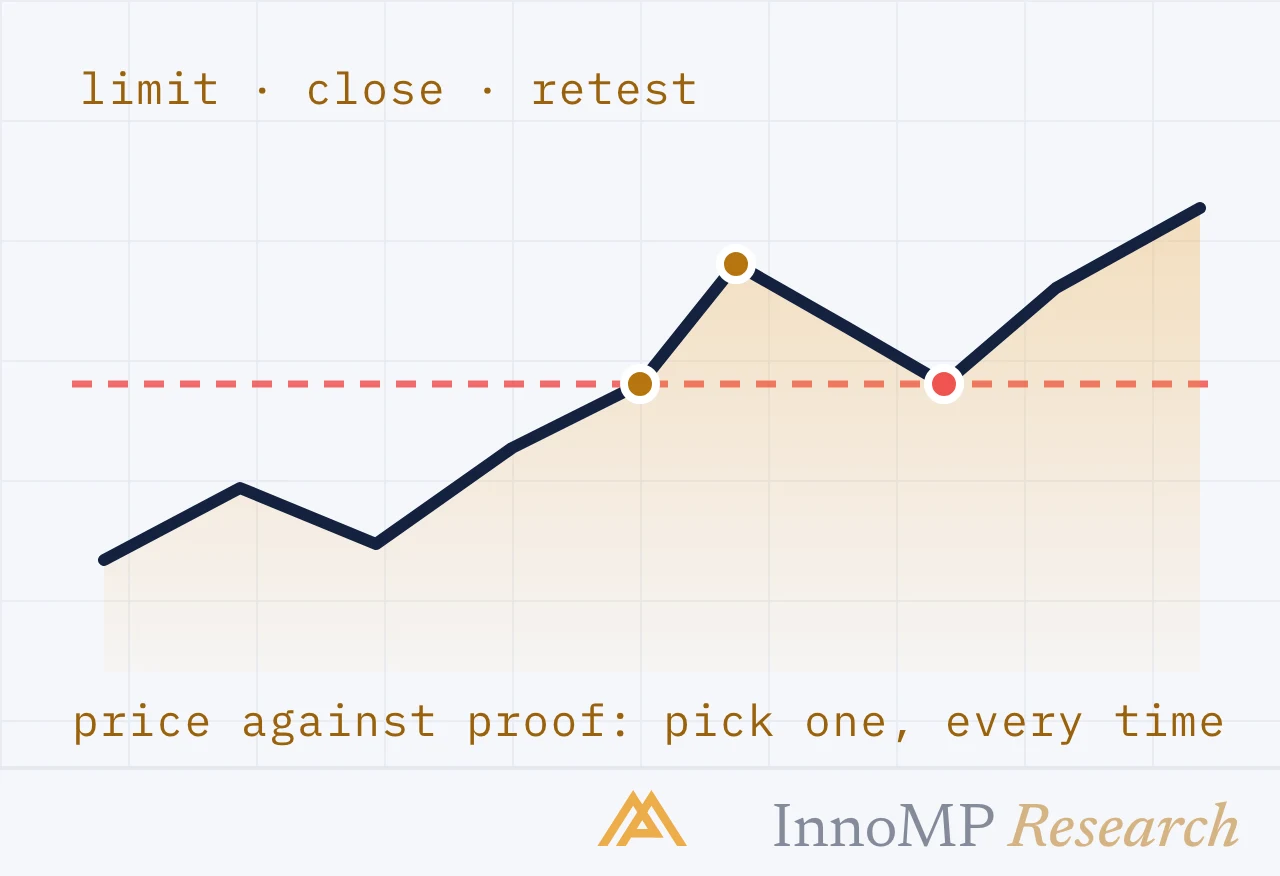
Every entry trades price against evidence. Enter early and the stop is tight but the setup is unproven; wait for confirmation and it is proven but the price is worse. The three common triggers, priced against each other.
Read more → 7 min read
Risk management
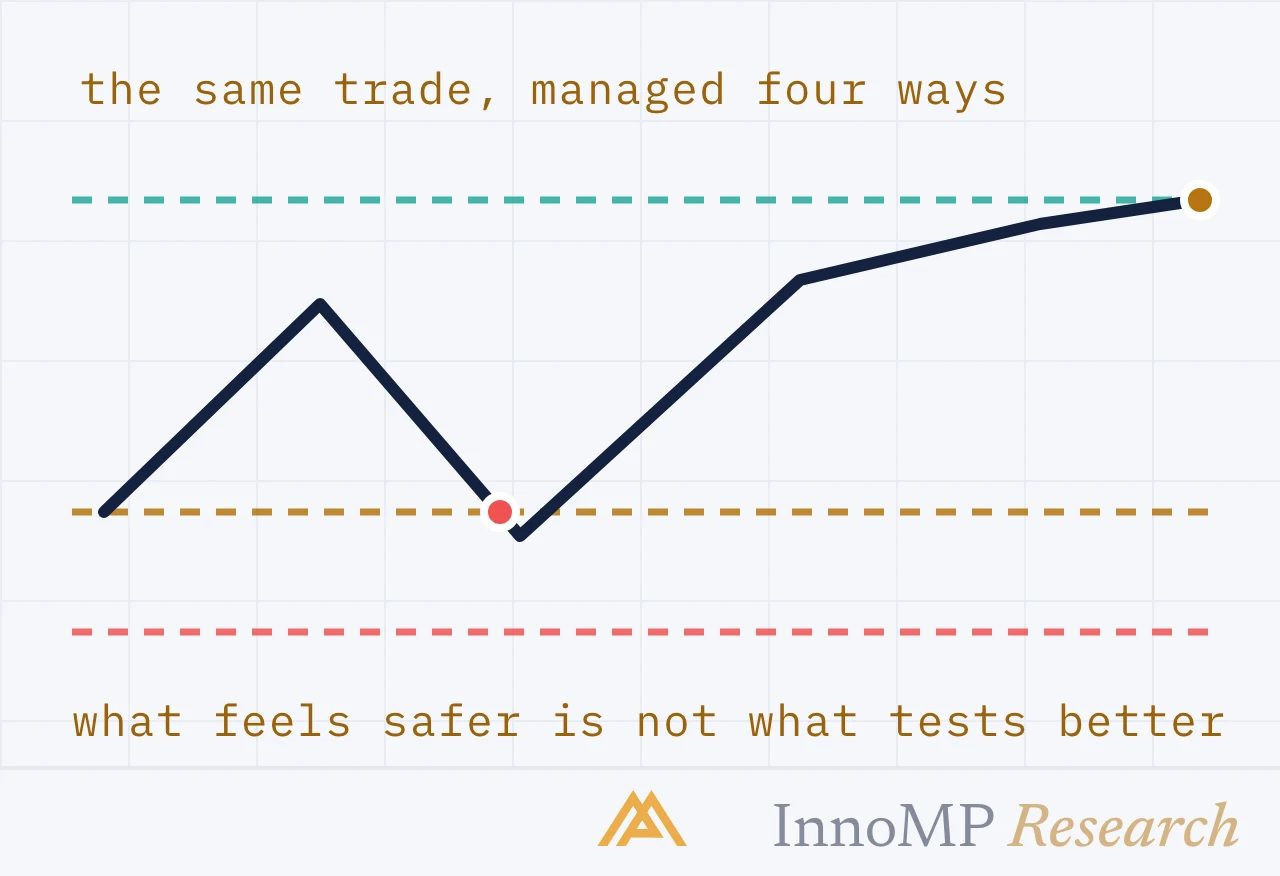
Everything done after entry changes a trade's expectancy, usually less than it changes how it feels. What partials, break-even stops and trailing do to the average win and loss, and when the arithmetic says do nothing.
Read more → 8 min read
Trading journal
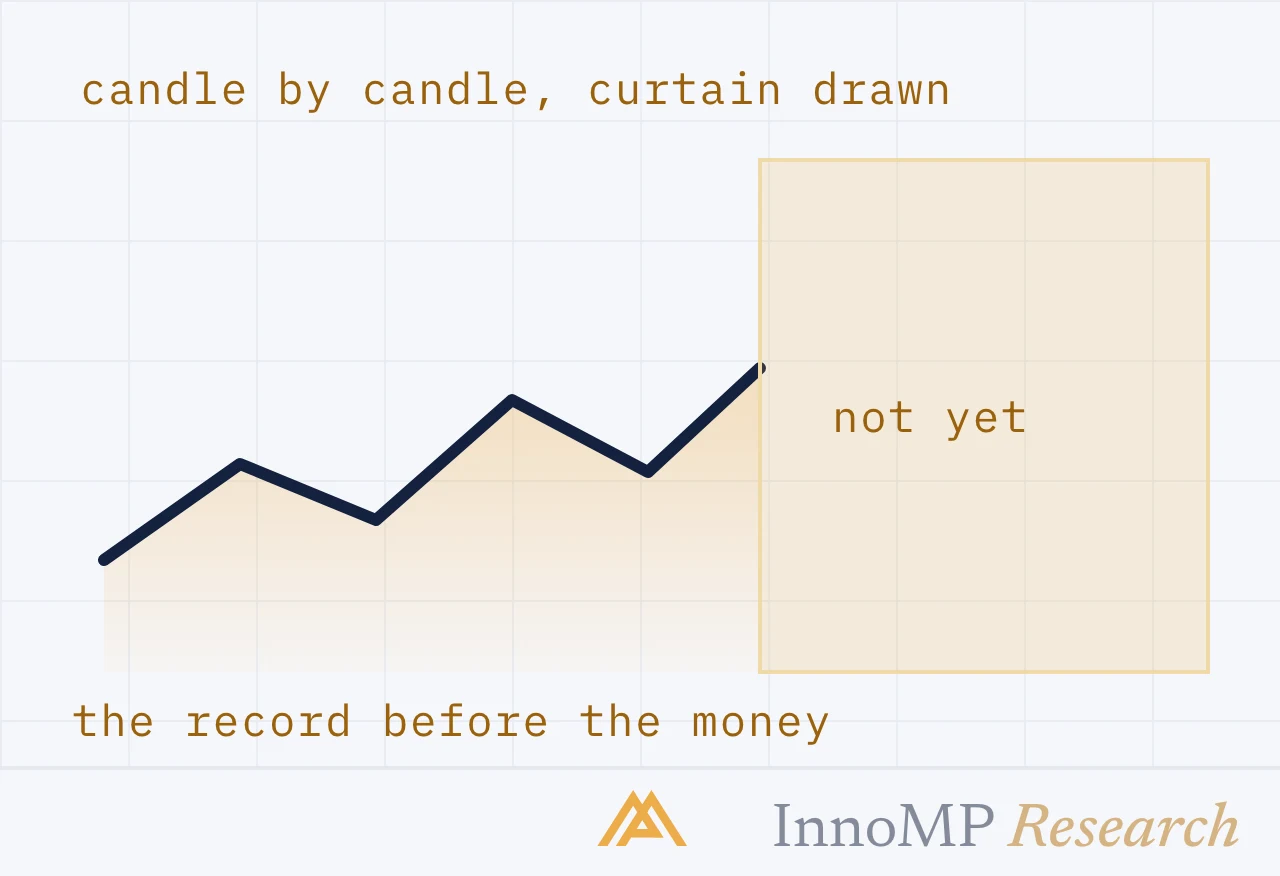
Before a setup is trusted with money it is trusted with a notebook. How to replay a chart candle by candle, record every trade the rules would have taken, and know how many trades it takes before the numbers mean much.
Read more → 9 min read
Discipline
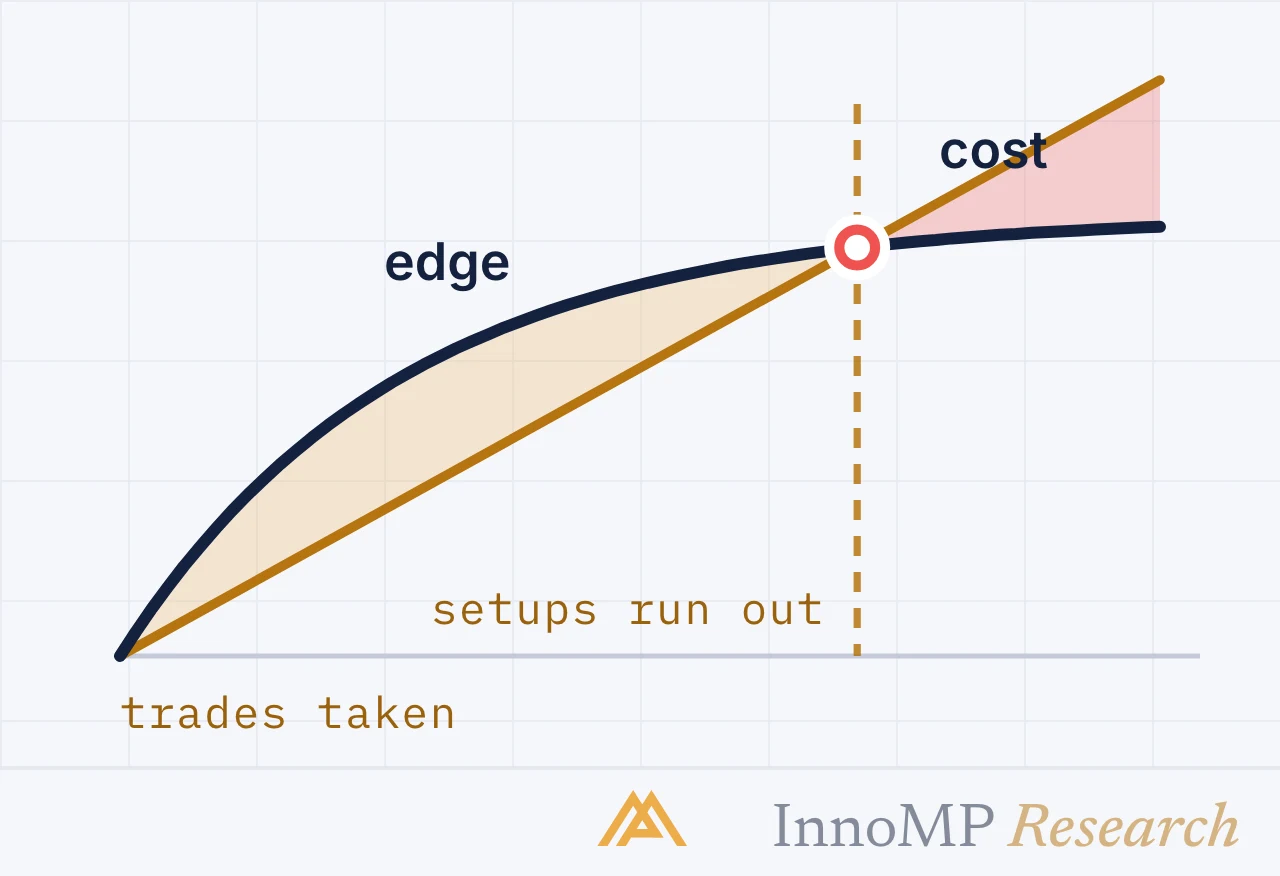
Most of the time there is no setup. Traders who cannot tolerate that find one anyway, and pay the spread for the privilege.
Read more → 4 min read
Discipline
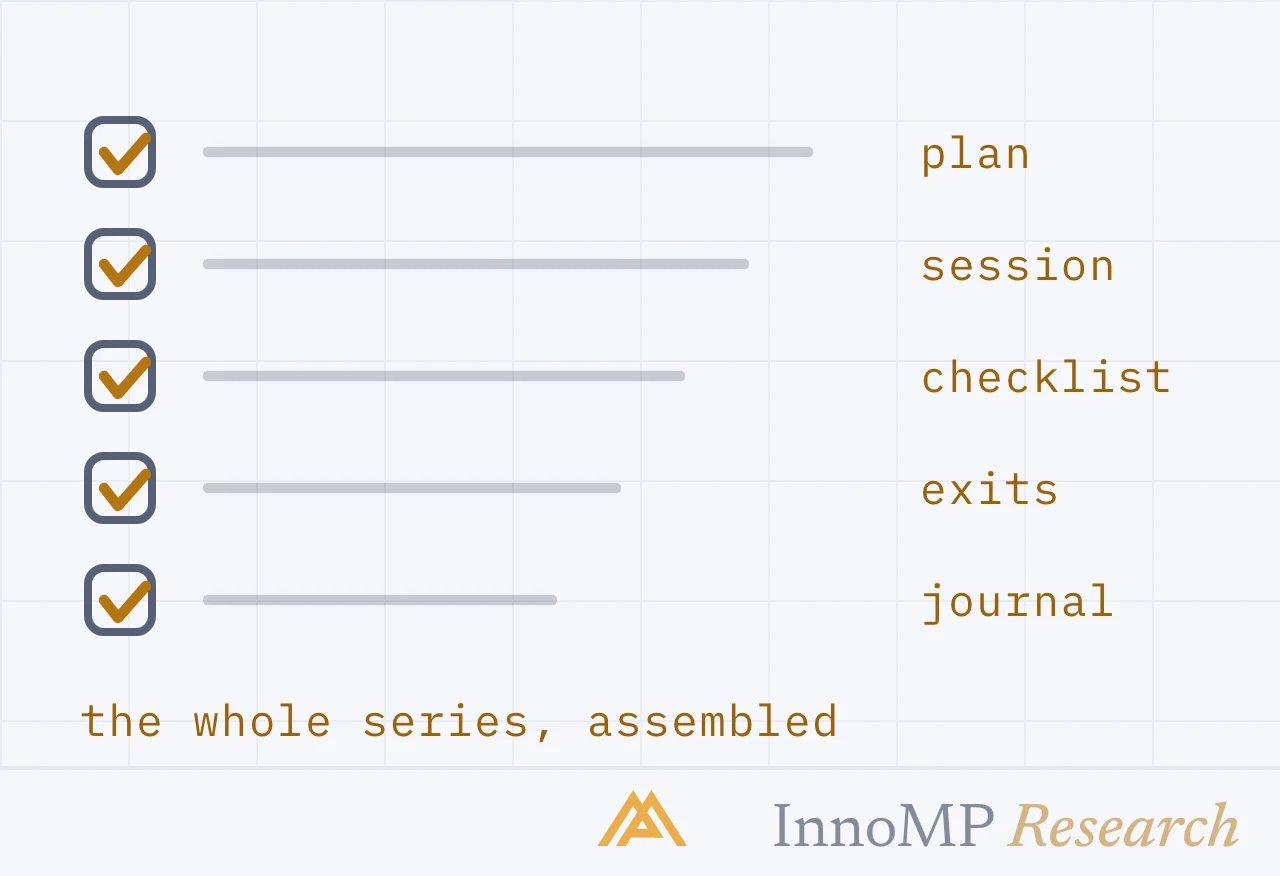
The closing part. What to assemble from this series, in what order, and the honest note about which half of trading actually decides outcomes.
Read more → 4 min read
Cognitive bias
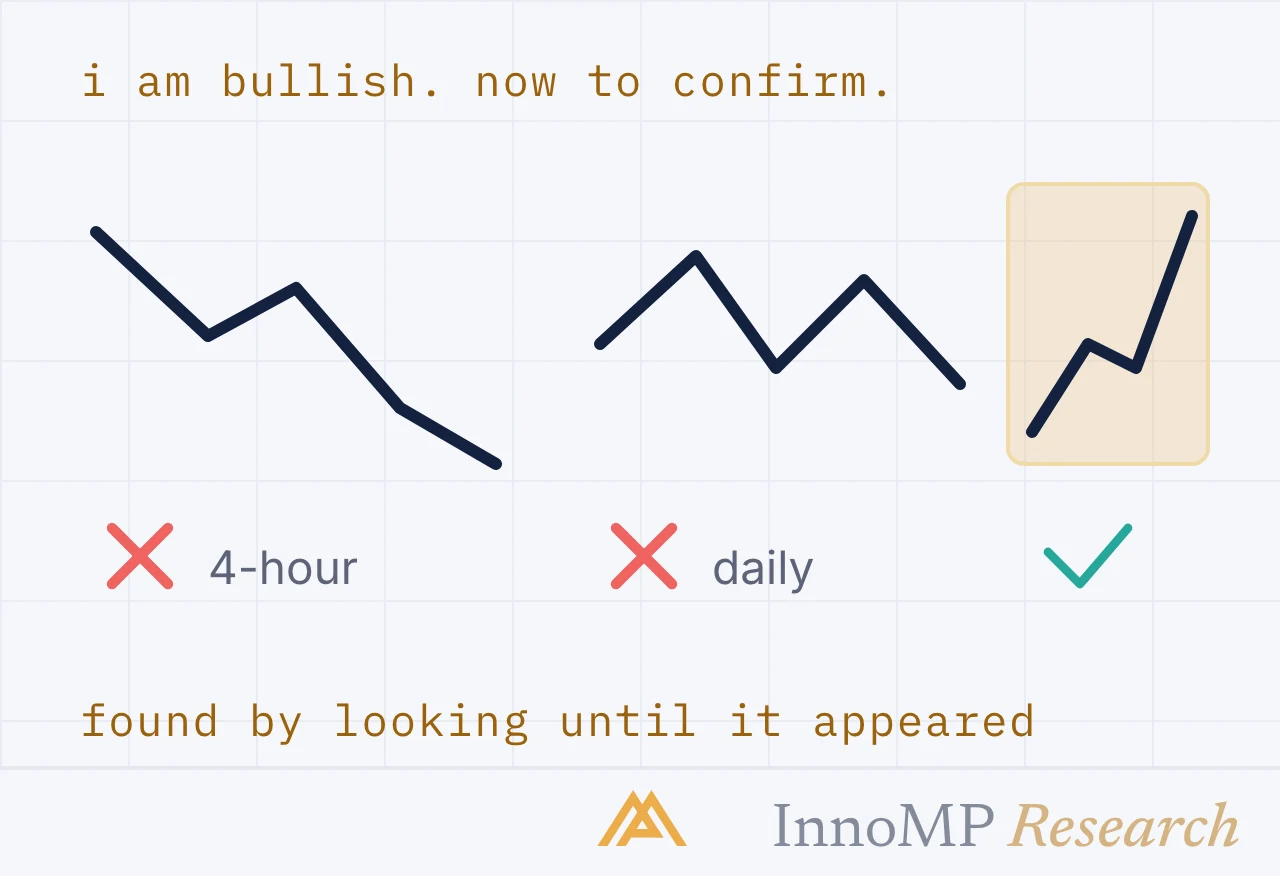
Once you have a view, evidence stops being evidence. How the bias operates in chart analysis specifically, and the practical tests that catch it.
Read more → 5 min read
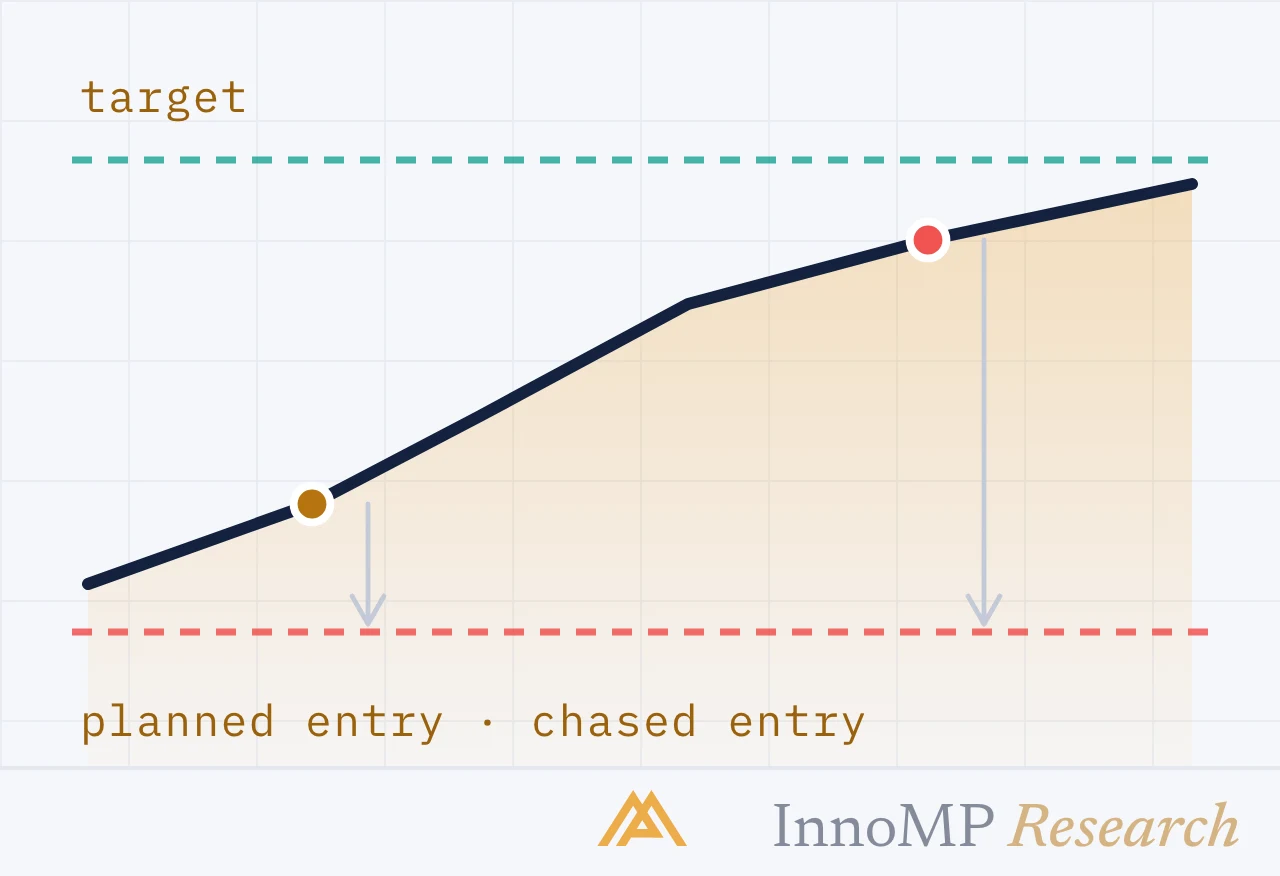
Trading emotions
The setup came and went without you. Then price runs, and entering late feels urgent. Why chased entries carry the worst risk-reward on the chart.
Read more → 4 min read
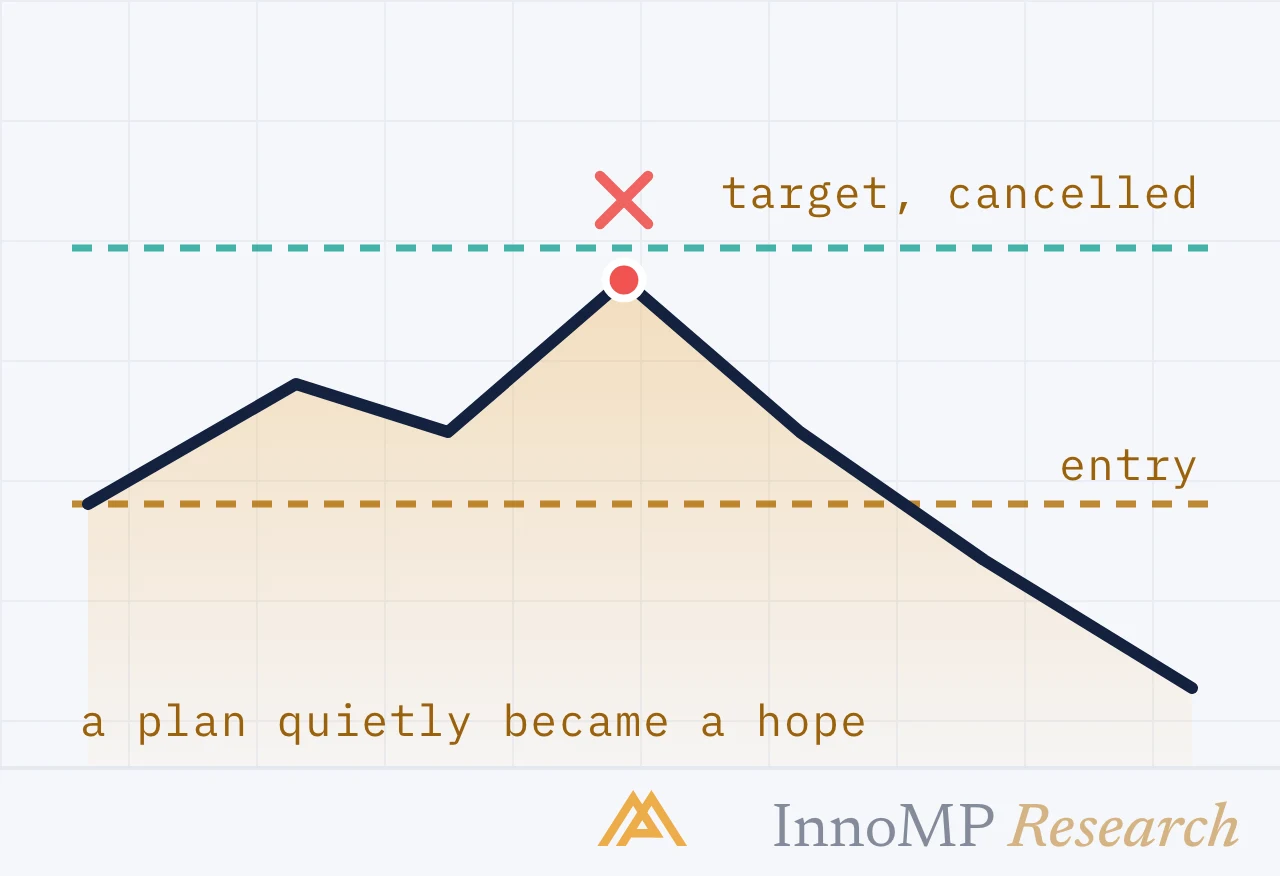
Trading emotions
The target was 60 pips. At 55 you decided to hold for 90. How a plan quietly becomes a hope, and the exits that prevent it.
Read more → 4 min read
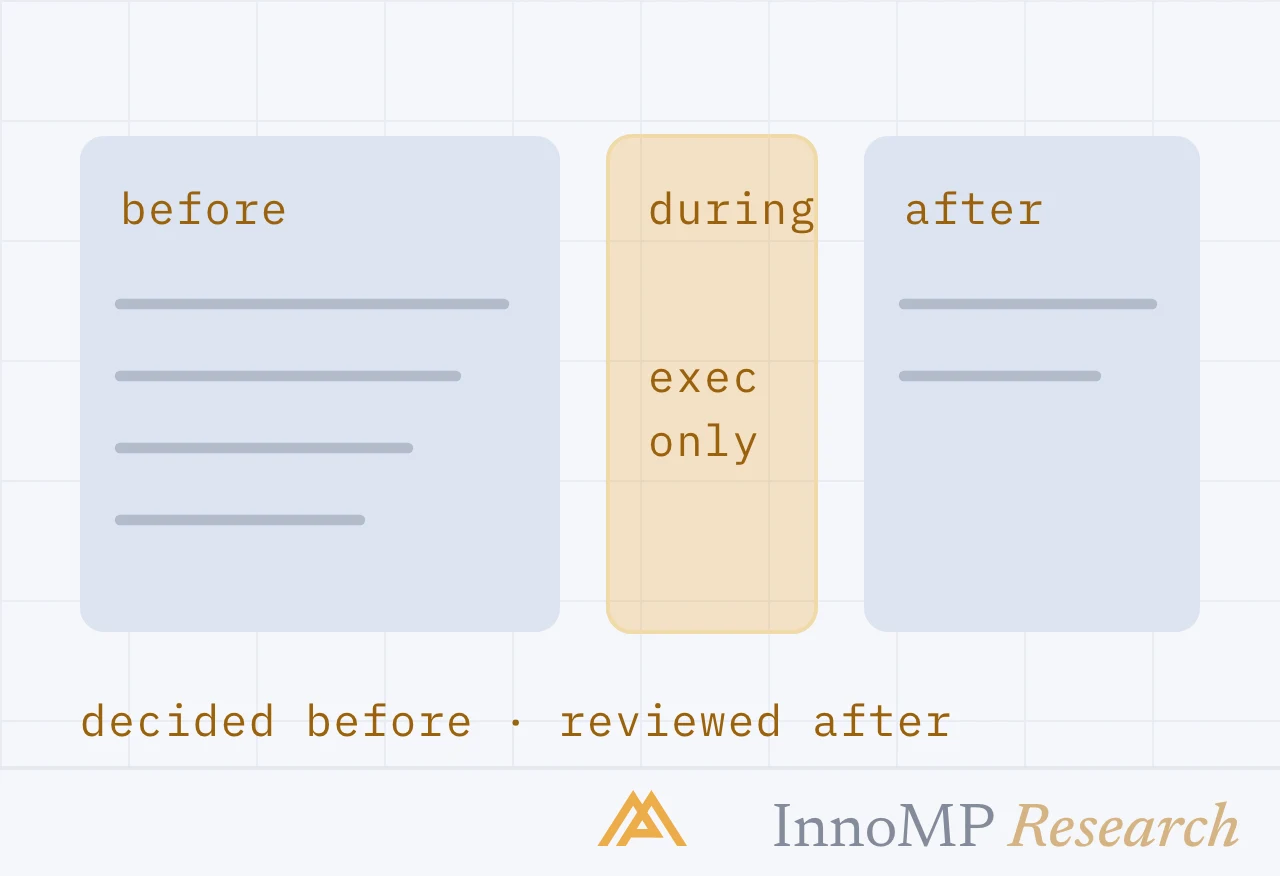
Discipline
The decisions that matter are made before the session and reviewed after it. What belongs in each routine, and why the checklist beats the intention.
Read more → 4 min read
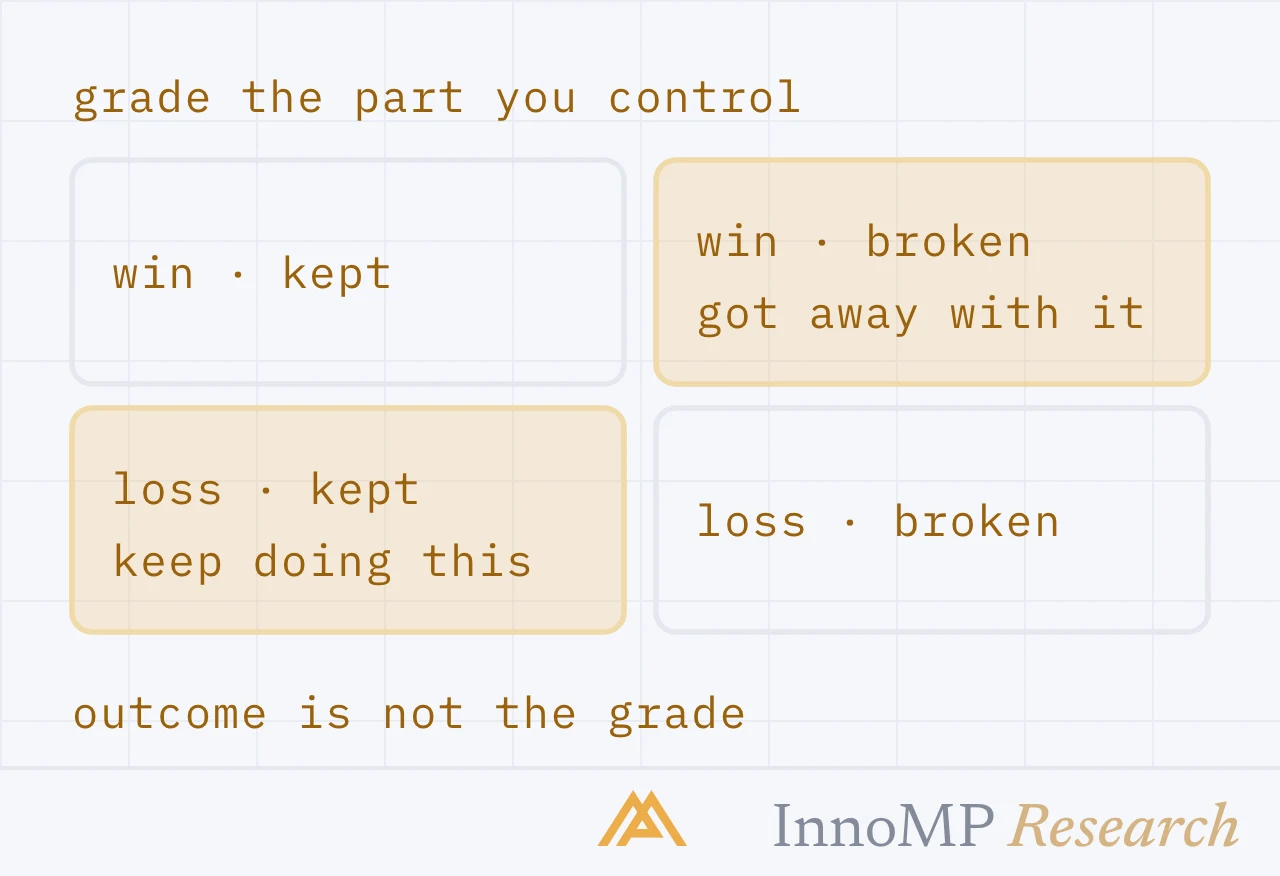
Discipline
A good trade can lose and a bad trade can win. Evaluating yourself on results teaches the wrong lessons — here is what to grade instead.
Read more → 4 min read
Trading emotions
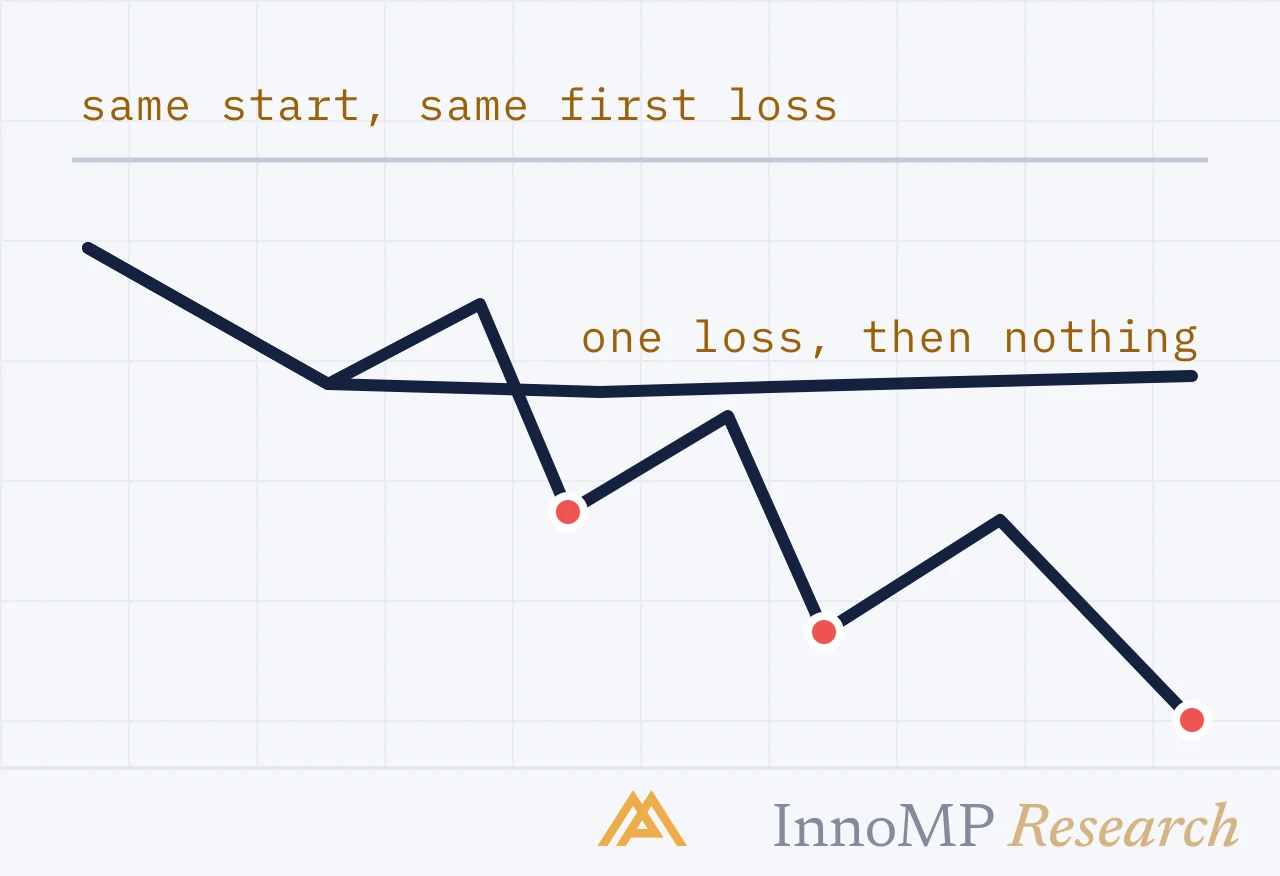
One bad trade produces an emotional state in which the next decisions are worse. How tilt escalates, and the only intervention that reliably stops it.
Read more → 4 min read
Discipline
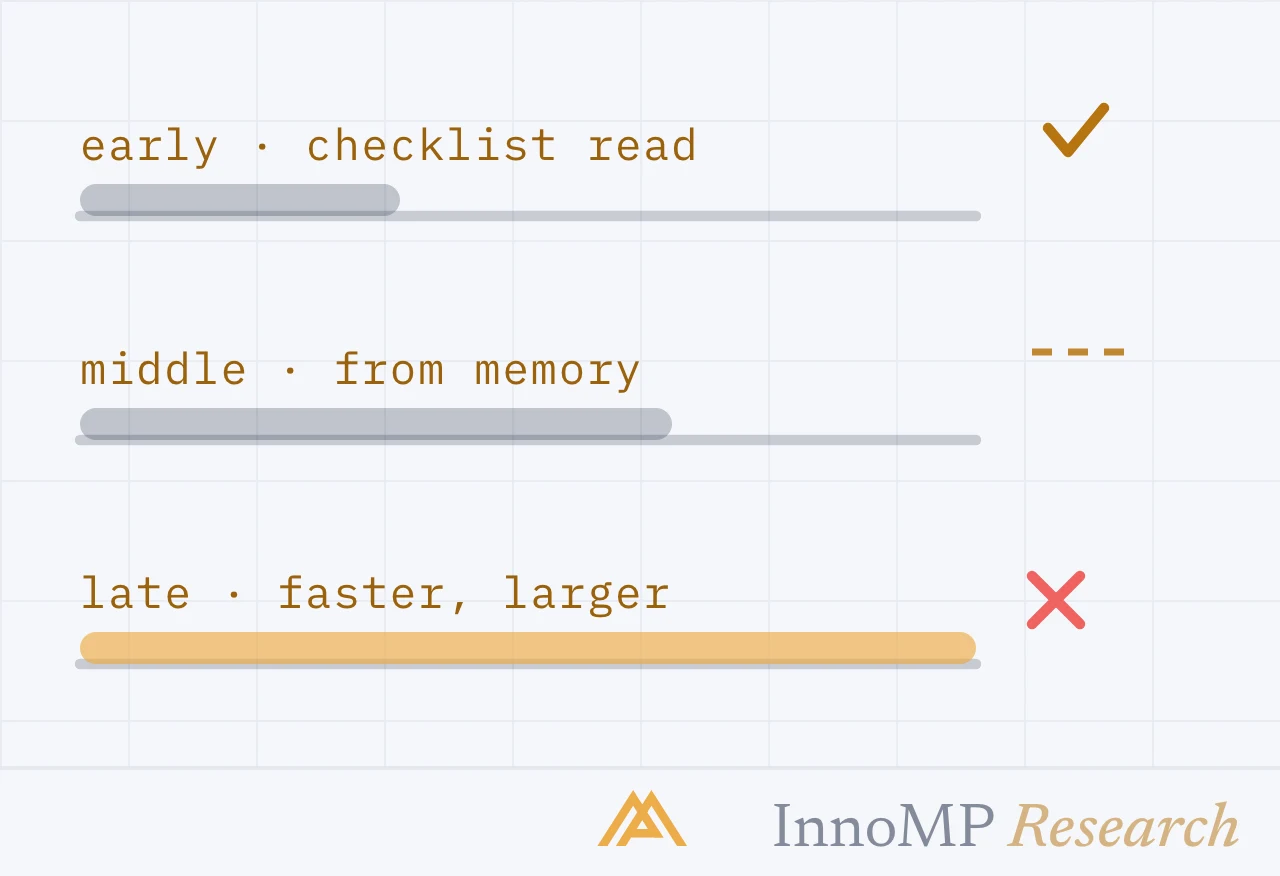
The sixth hour of a session produces worse decisions than the first. Why watching more leads to trading worse, and what to do with the hours you free up.
Read more → 4 min read
Trading journal
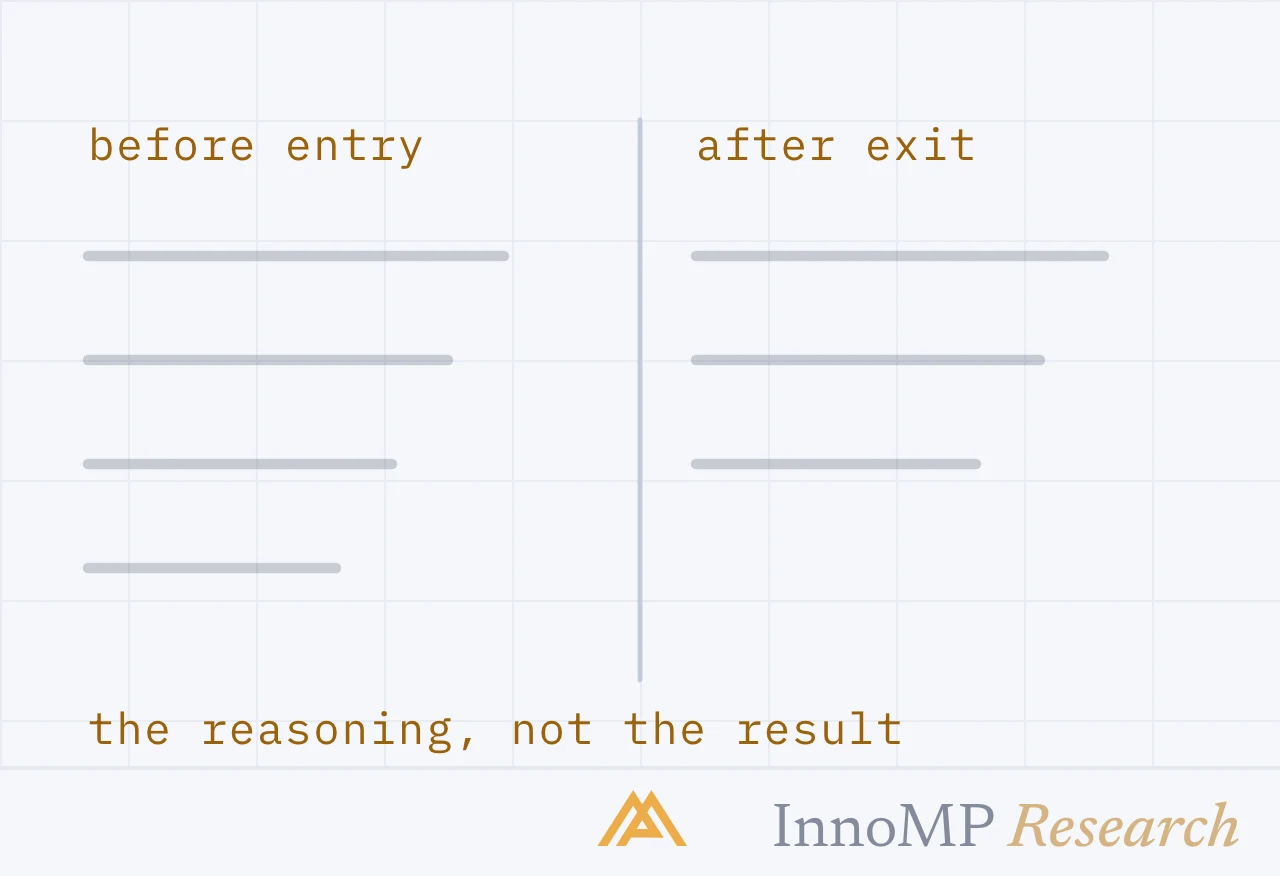
A list of profits and losses teaches almost nothing. What to record instead, and why the fields that matter are the ones written before the outcome is known.
Read more → 4 min read
Discipline
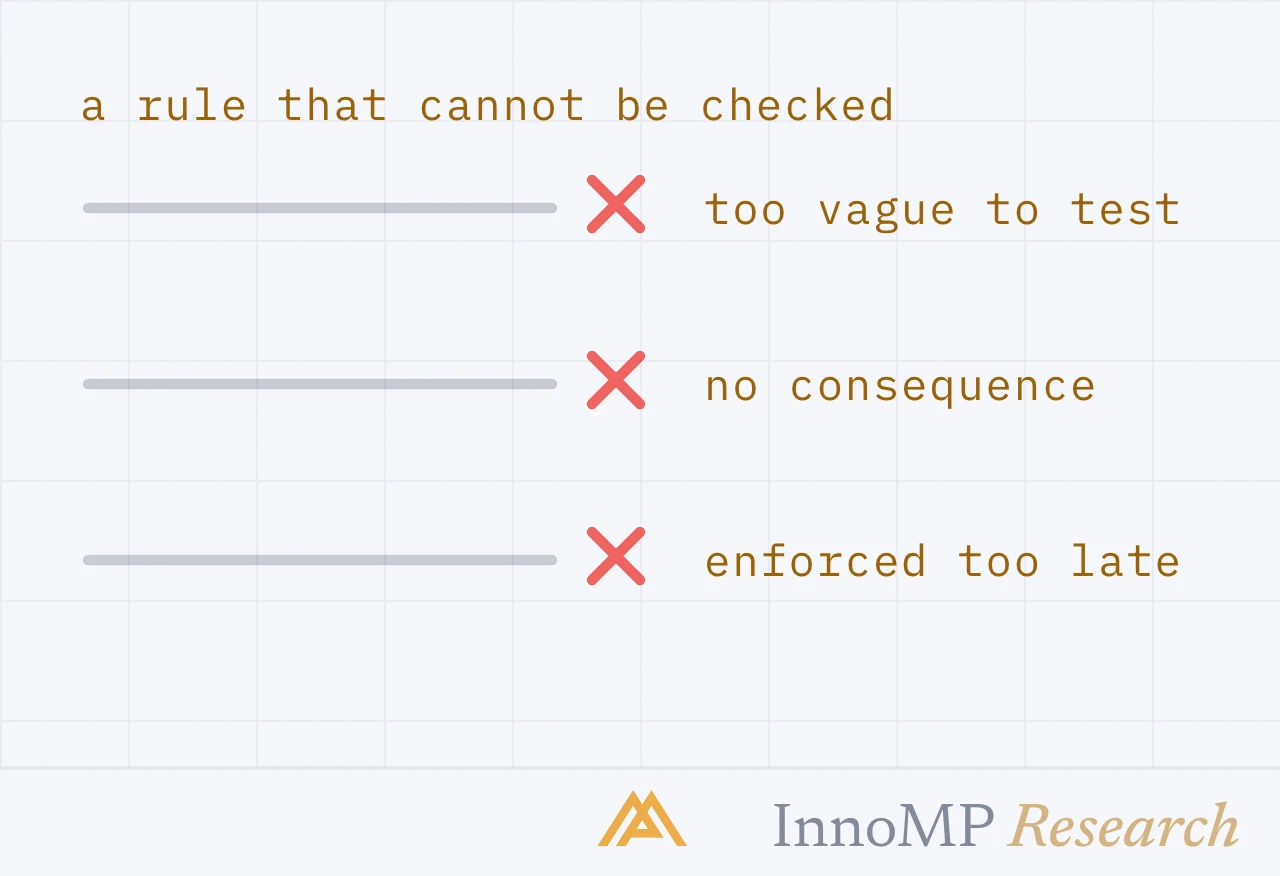
Every trader has rules. Most break them. The failure is usually in how the rule was written, not in the character of the person following it.
Read more → 5 min read
Trading emotions
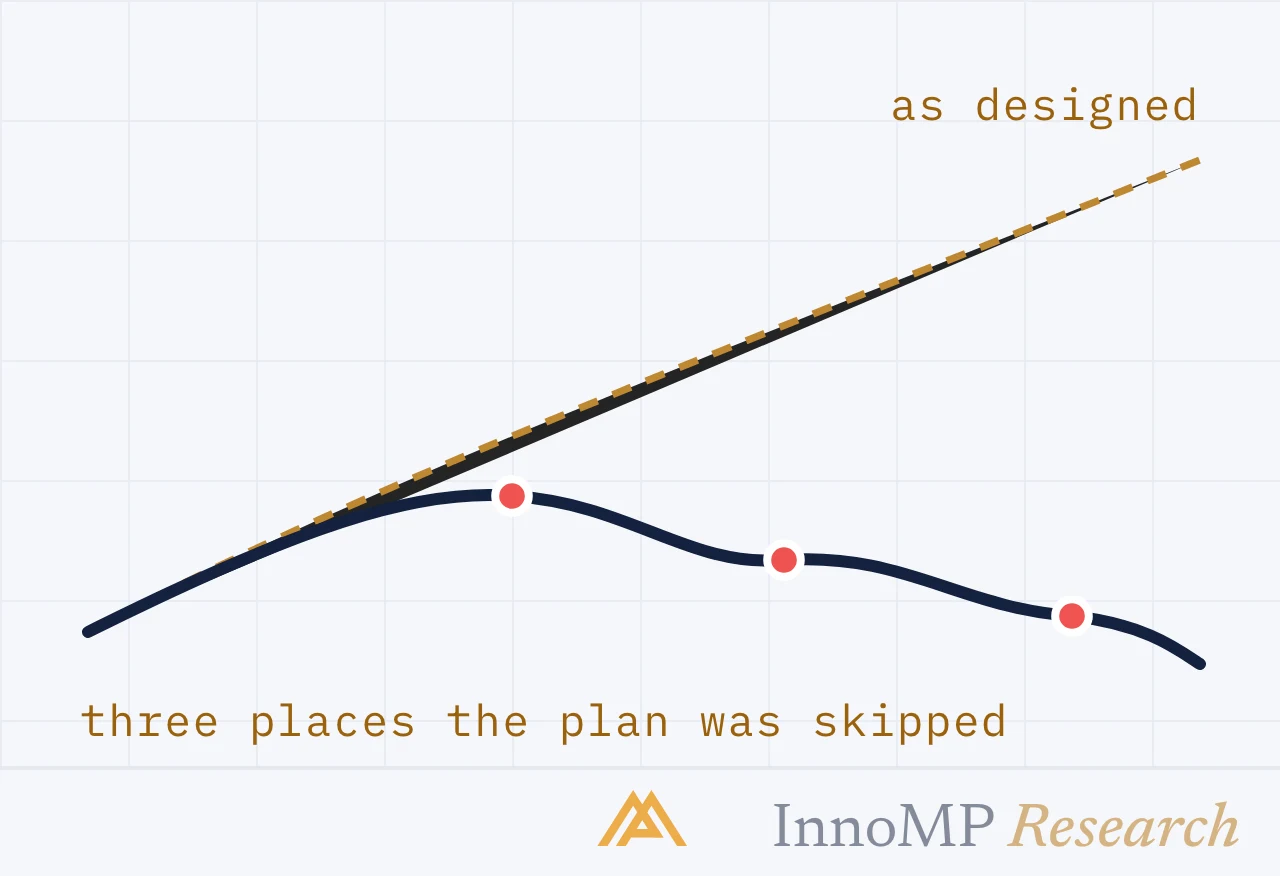
Two traders with the same signals get different results. What separates them is not analysis but execution under pressure — and execution is a psychological problem.
Read more → 5 min read
Discipline
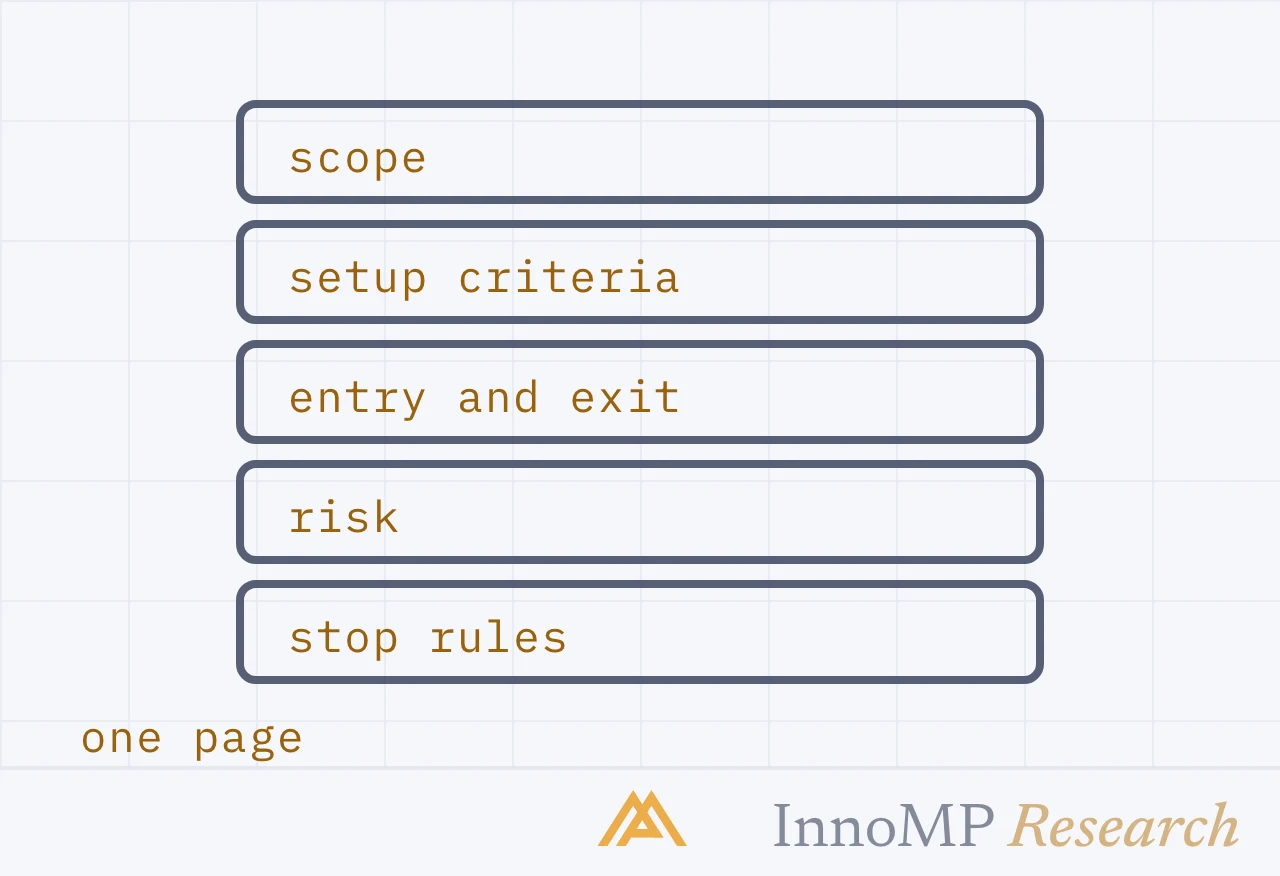
Most trading plans are documents nobody reads twice. What a usable one contains, and the test that separates a plan from a wish list.
Read more → 4 min read
Market Watcher
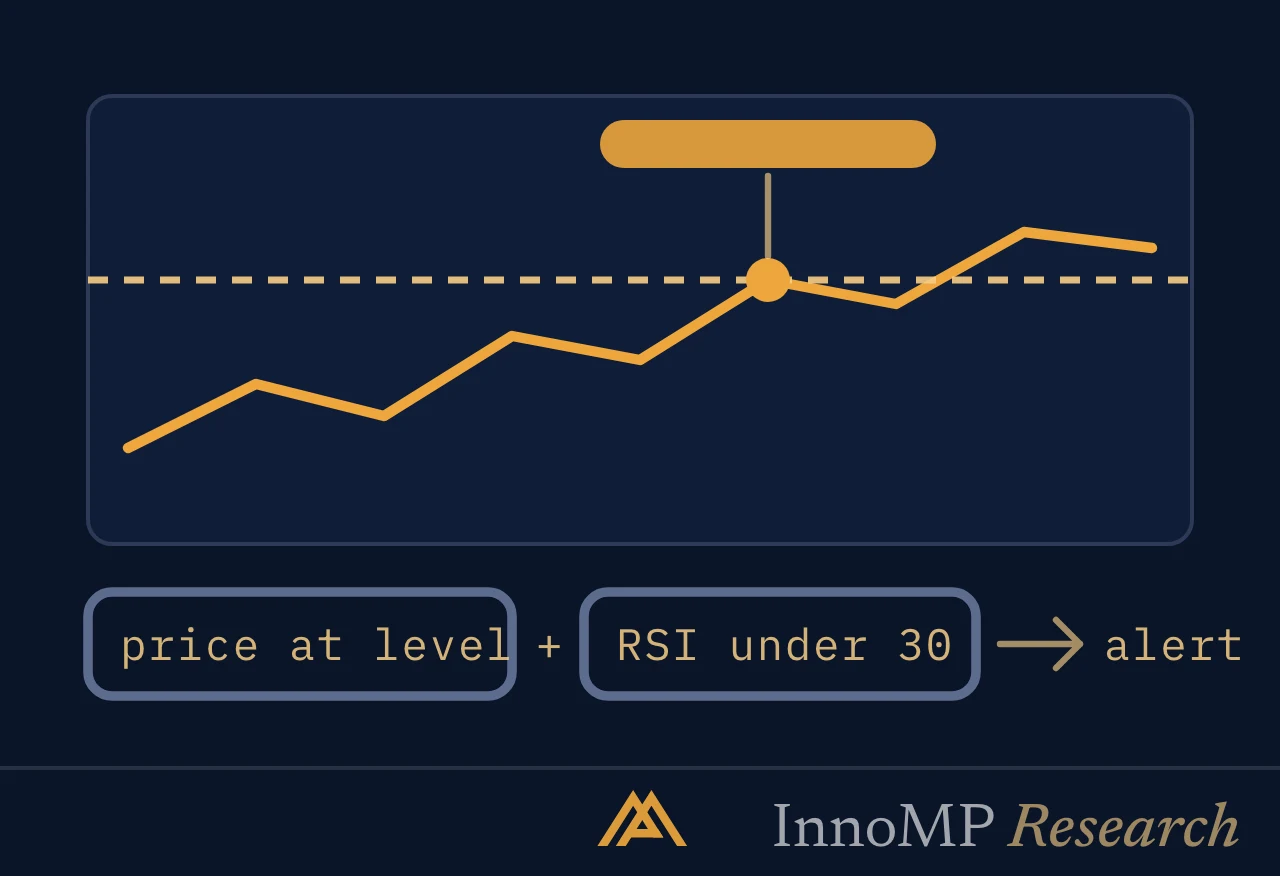
InnoMP's Market Watcher fires on price levels, moving averages, Bollinger bands, MACD, KDJ and RSI — with AND/OR logic. Set up properly, it also enforces deciding before price arrives, not after.
Read more → 5 min read
PlatformsRisk managementTrading journalDrawdownMarket structureStop-lossTrading costsMarket Watcher