Trading psychology is the study of how emotion and cognitive bias affect trading decisions. It matters because a strategy only produces its expected results if it is followed consistently, and the moments when following it is hardest — during losses, after wins, under time pressure — are exactly the moments that determine long-term outcomes.
Trading psychology is the study of how emotion and cognitive bias affect trading decisions. It is treated as a soft topic, secondary to analysis. That ordering is backwards, and the arithmetic shows why.
The execution gap
A strategy’s expected return assumes every signal is taken, at the planned size, with the planned stop. That assumption is doing enormous work.
Consider a strategy with a genuine edge — 45% win rate at 1:2 risk-reward, which compounds nicely over enough trades. Now introduce ordinary human behaviour:
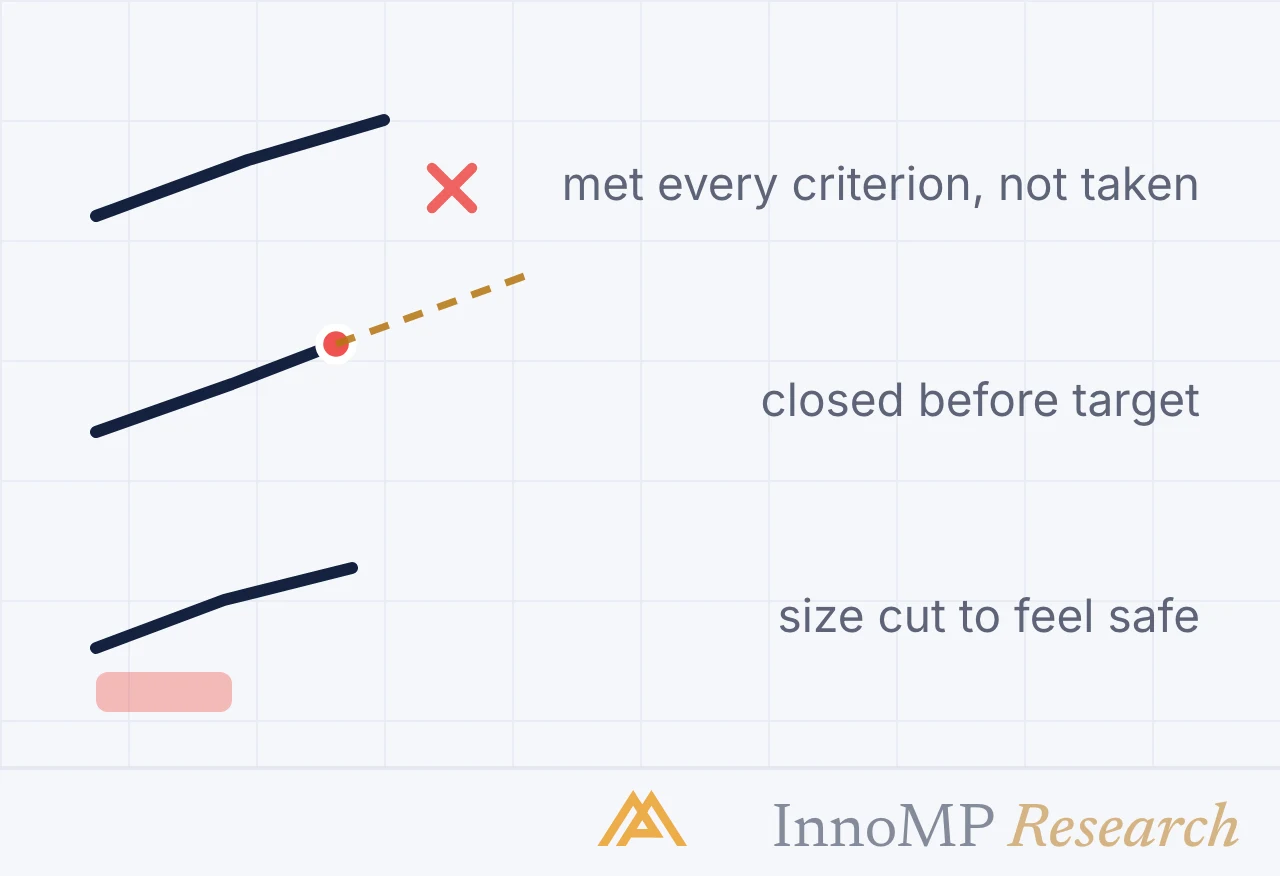
- After three losses, the trader skips the next signal. It was a winner.
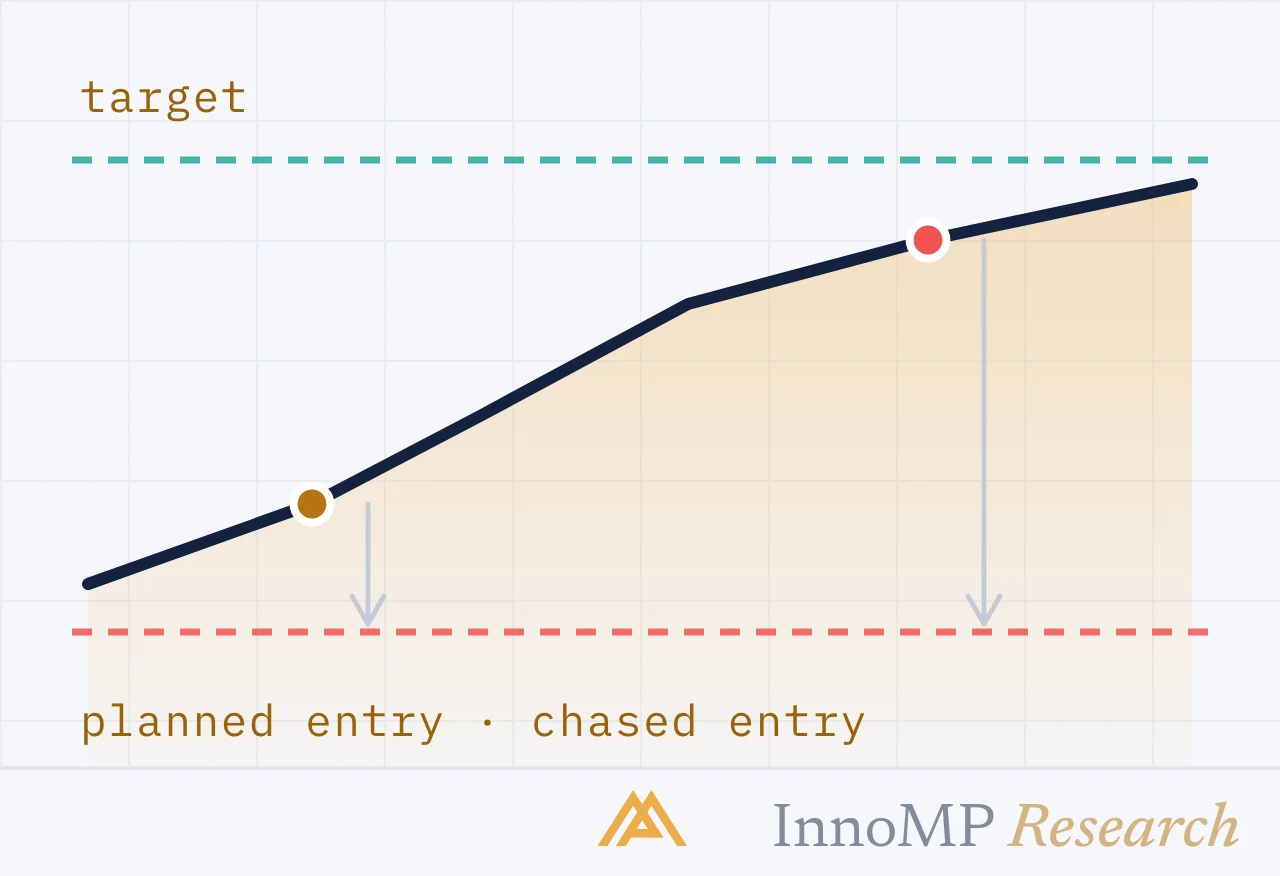
- After a large win, they double size on the following trade. It was a loser.
- One position is held past its stop because it “has to come back”.
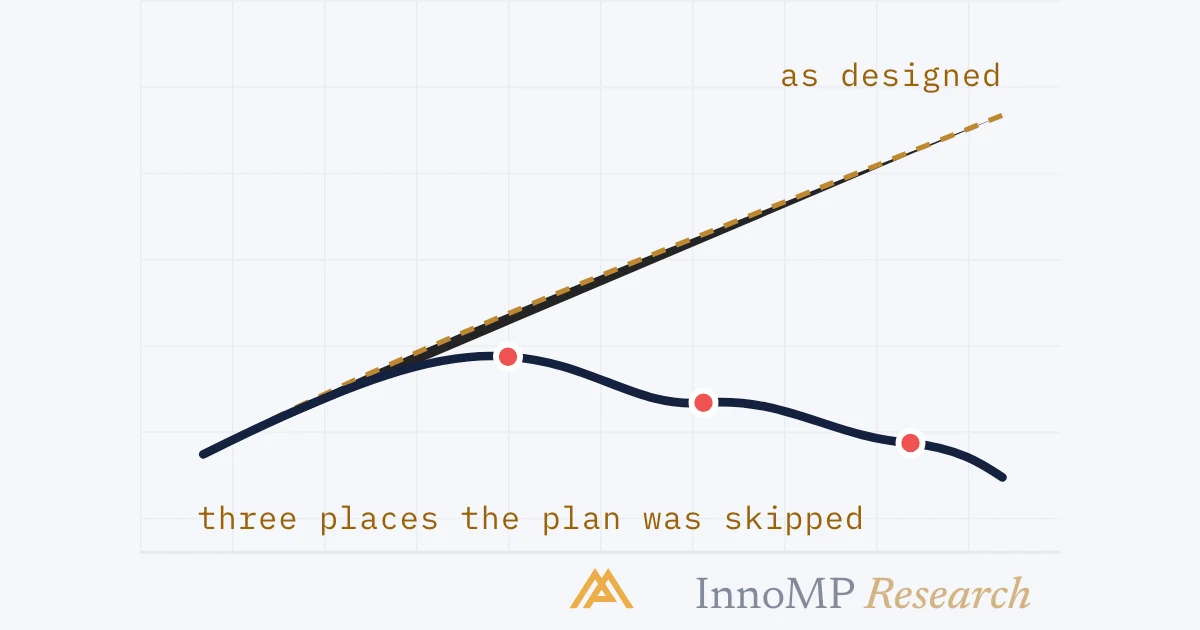
None of these is exotic. Each is a normal response to discomfort. Together they can turn a positive-expectancy strategy into a negative-expectancy account, without anything being wrong with the strategy itself.
This is the execution gap: the difference between a strategy’s results on paper and its results in the hands of a person.
Where the errors cluster
Psychological errors are not evenly distributed. They concentrate in three situations, and knowing which ones lets you prepare.
During losses. The largest cluster. Loss aversion, revenge trading and rule-breaking all live here, and they compound: a loss produces a worse decision, which produces a larger loss. Parts 2, 9 and 14 cover this.
After unusual wins. Less discussed and nearly as costly. A large win produces confidence that the market did not authorise, and the next position is bigger for no analytical reason. Part 5 covers it.
Under time pressure. Fast markets, news releases, a position moving quickly. The window for deliberation closes and habit takes over.
Why willpower is the wrong solution
The standard advice is to be more disciplined. This fails because it treats the problem as a character flaw when it is a design flaw.
A trader who needs willpower to hold a position through a drawdown has a position that is too large. A trader who needs willpower not to revenge-trade has no rule that stops them. Willpower is depletable, worst exactly when needed most, and unavailable at 2am.
Structure does not deplete. The interventions that work are structural:
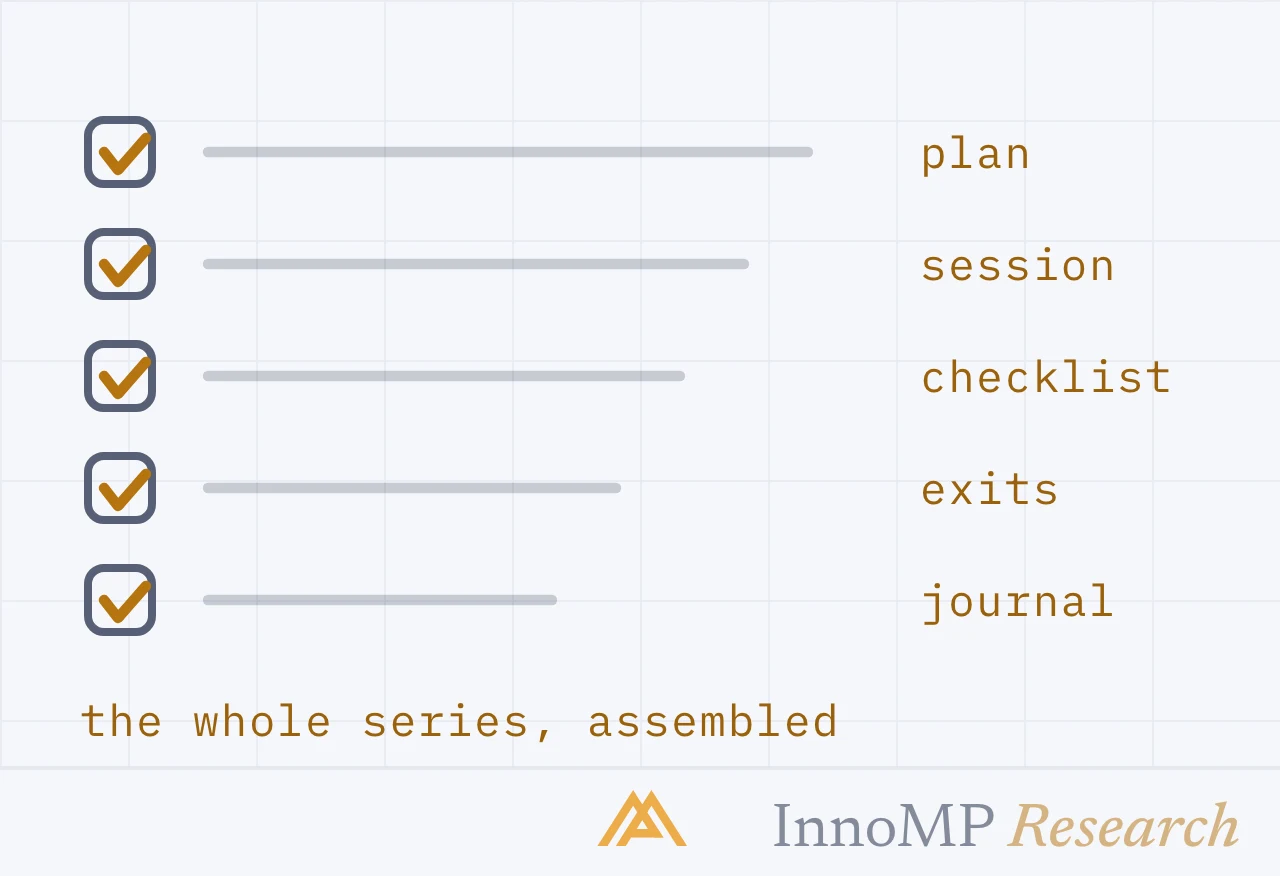
- Position sizing small enough that a loss does not trigger a strong emotional response. This is the single largest lever in the entire subject.
- Written rules decided when calm, so the in-the-moment decision is retrieval rather than reasoning.
- A journal recording decisions rather than only outcomes, so patterns become visible.
- Routines that separate analysis from execution in time.
Size is the master variable
Key takeaway Nearly every psychological problem in trading has a position-sizing component. A position small enough not to matter emotionally is a position you can manage rationally. If you find yourself needing self-control to follow your own plan, the first thing to check is not your character — it is your size.
What this series covers
The honest promise is not that you will become unemotional. Emotion is not removable and would not help if it were. The promise is that you will recognise the specific moments where your judgement is compromised, and have structures in place that do not depend on your judgement being good at those moments.
- A strategy's historical results assume every signal was taken; deviation changes the actual result.
- The same trading plan produces different outcomes for different people because execution differs.
- Psychological errors cluster around losses, unusually large wins, and time pressure.
- Position sizing is the main practical defence, because smaller positions produce weaker emotional responses.