The closing part. What to assemble from this series, in what order, and the honest note about which half of trading actually decides outcomes.
IRInnoMP Research · Education Desk Published 31 Aug 2026 · Updated 31 Aug 2026 4 min read
In short
A durable trading routine consists of a one-page plan, a fixed pre-session sequence, a short pre-entry checklist, mechanical exits placed at entry, a journal recording decisions and state, and a scheduled review. Its purpose is to reduce the number of decisions made under pressure, which is where most avoidable losses originate.
A routine reduces the number of decisions made under pressure. That single sentence is what these twenty parts have been circling.
This last part assembles the pieces into something you can actually run.
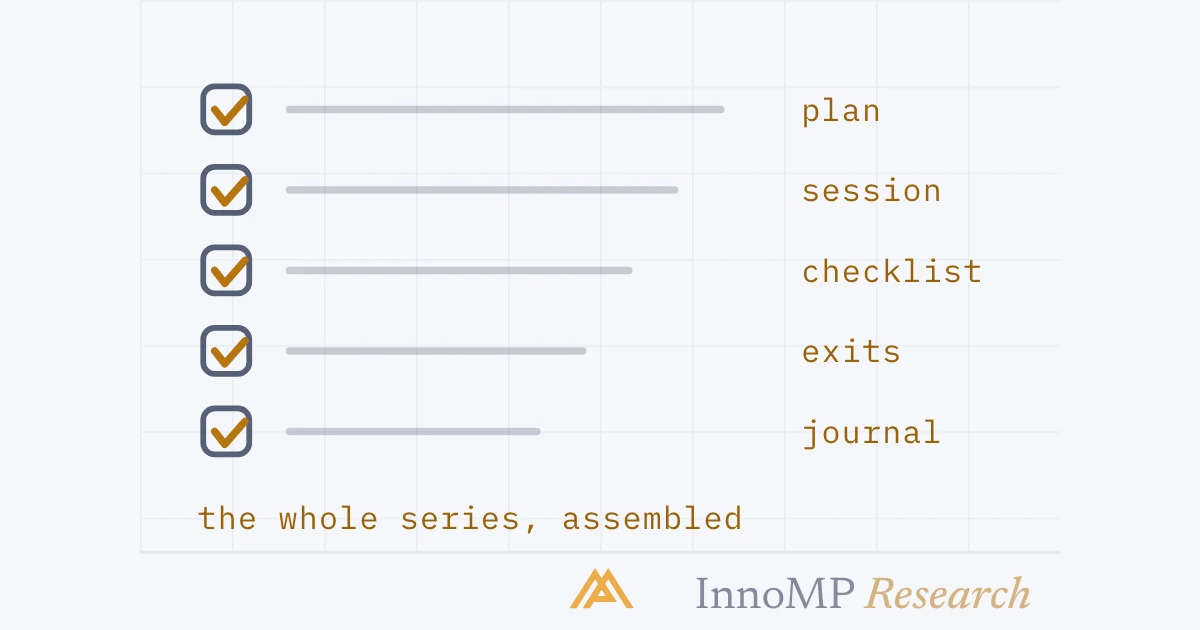
The components
Six pieces, each covered earlier in the series. Assembled, they are a system rather than a set of good intentions.
Four of the six stages happen with no position open. The one that requires a decision in the moment is retrieval from a checklist, not reasoning under pressure.
The order to build it in
Do not attempt all of it at once. Each step works alone, and each one reduces the load on the ones after it.
Step one is Part 15’s argument; the practical move is to use the calculator on every trade and stop varying the percentage with recent results.
The honest closing note
This series has been about the half of trading that receives least attention. It is worth being clear about why.
Analysis is learnable and widely shared. What separates results is everything downstream of it.
That is not a claim that analysis does not matter. The technical analysis series exists because it does — an analysis that defines a clear invalidation point is what makes a position sizeable at all. But analysis without execution is a good idea implemented badly.
Key takeaway
Judge yourself on compliance before results. Compliance improves within weeks and is entirely within your control; results need roughly a hundred trades to say anything and depend partly on variance you do not control. Working on the first is the only work actually available.
None of them requires the market to cooperate. Thirty trades later you have something no amount of reading provides.
What to do this week
Three things, none of which require the market to cooperate:
Calculate your position size on every trade with the calculator instead of estimating.
Attach the stop and target as resting orders at entry, every time.
Start the journal — eleven fields, including how you felt before entering.
In thirty trades you will have something no amount of reading provides: a record of your own behaviour, in numbers, showing which of the patterns in this series are yours.
That record is where the improvement actually starts.
Rules implemented as orders or settings do not depend on self-control.
Position size is the single largest determinant of whether a plan gets followed.
Process is gradeable in ten trades; edge needs roughly a hundred.
A routine that is actually kept outperforms a better one that is abandoned.
Frequently asked questions
What does a complete trading routine look like?
A one-page plan, a 15-minute pre-session sequence, a five-question pre-entry checklist, stop and target placed as resting orders at entry, a journal entry per trade, and a scheduled review every 30 to 50 trades.
How long does it take for a trading routine to work?
Compliance improves within weeks because it is directly controllable. Results take roughly a hundred trades to become informative, so the routine should be judged on adherence first and outcomes later.
What is the single most important change to make?
Reduce position size until following the plan is unremarkable. Most psychological difficulties shrink or disappear at a size where a full stop-out is boring, which makes sizing the highest-leverage change available.
Is trading psychology more important than analysis?
Analysis chooses trades; execution determines whether the strategy's expected results are realised. Since most traders share access to similar analysis, the differences in outcome usually come from the execution side.
IR
InnoMP Research · Education Desk
Trading education from first principles — position sizing, risk, market structure and the habits that keep accounts alive. Written for someone who has never opened a chart, with a diagram at every step.
Published 31 Aug 2026 · Updated 31 Aug 2026
Disclaimer: This content is provided for general informational purposes only and does not constitute investment advice, an offer, or a solicitation to buy or sell any financial instrument. It has been prepared without regard to your individual financial circumstances or objectives. Trading CFDs involves a high risk of loss.
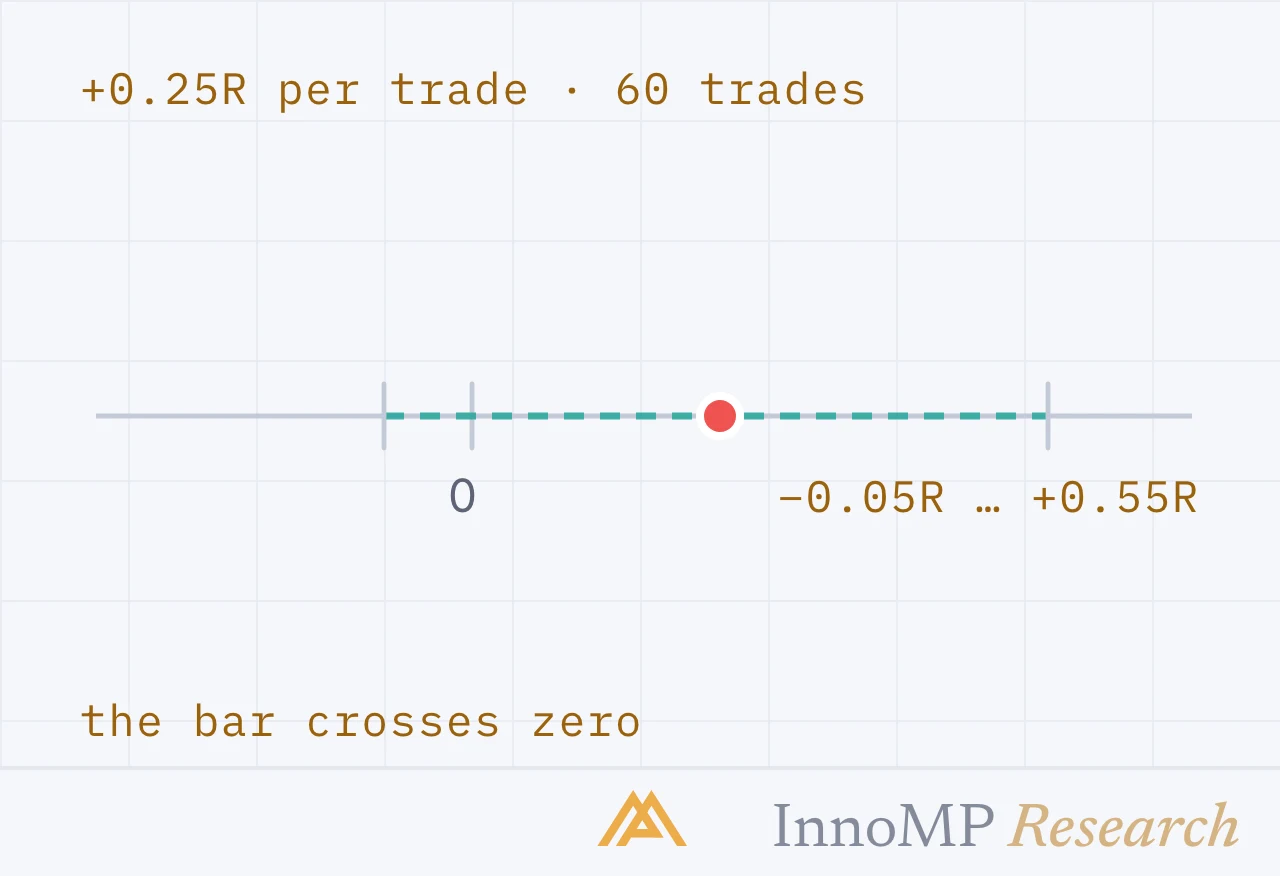
A record says +0.25R per trade. The question is how far from that the truth could be. How to put a standard error and a confidence interval on expectancy, and how many trades it takes to tell an edge from zero.
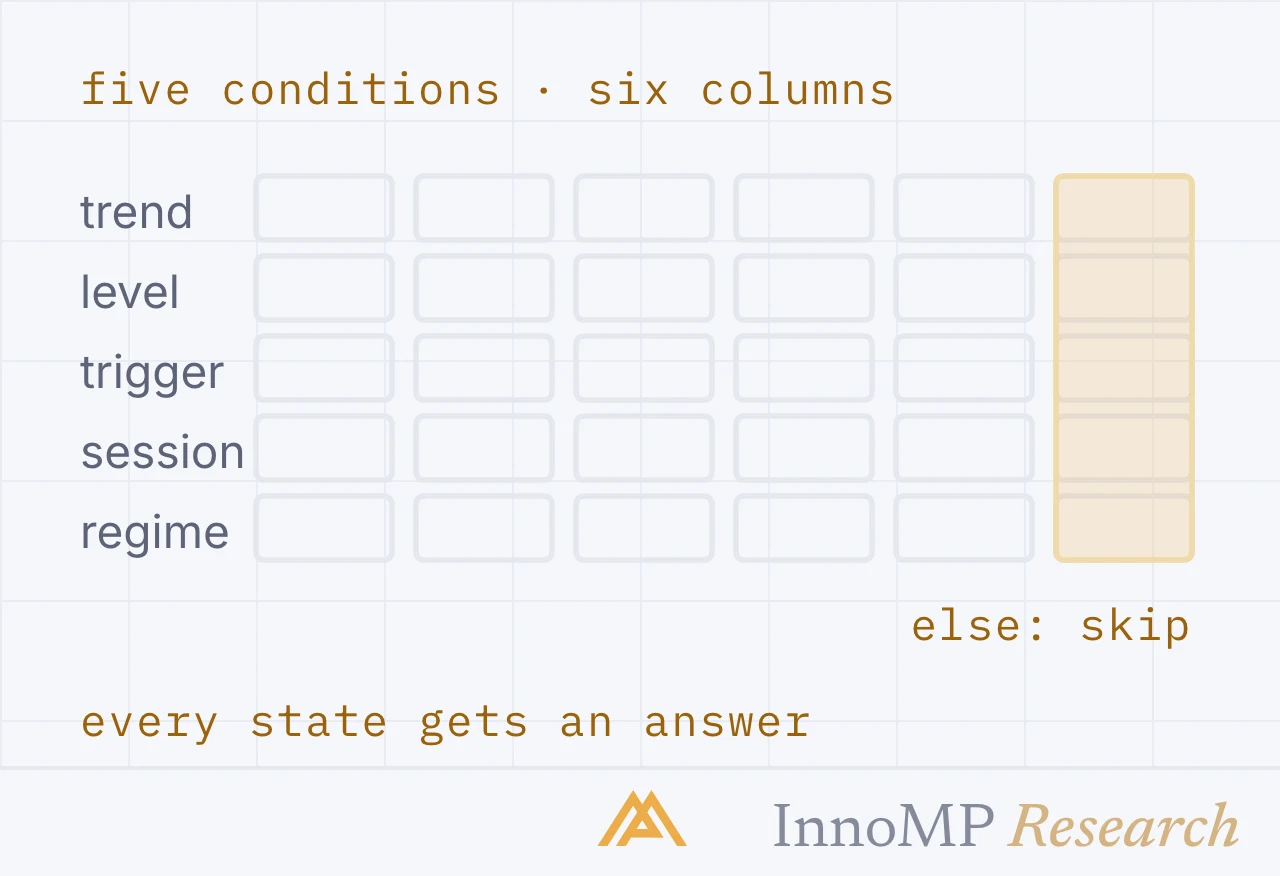
A written setup still leaves gaps: market states its prose never mentioned. How to lay the rules out as a decision table — conditions down the side, a column per rule — and find the gaps and contradictions first.
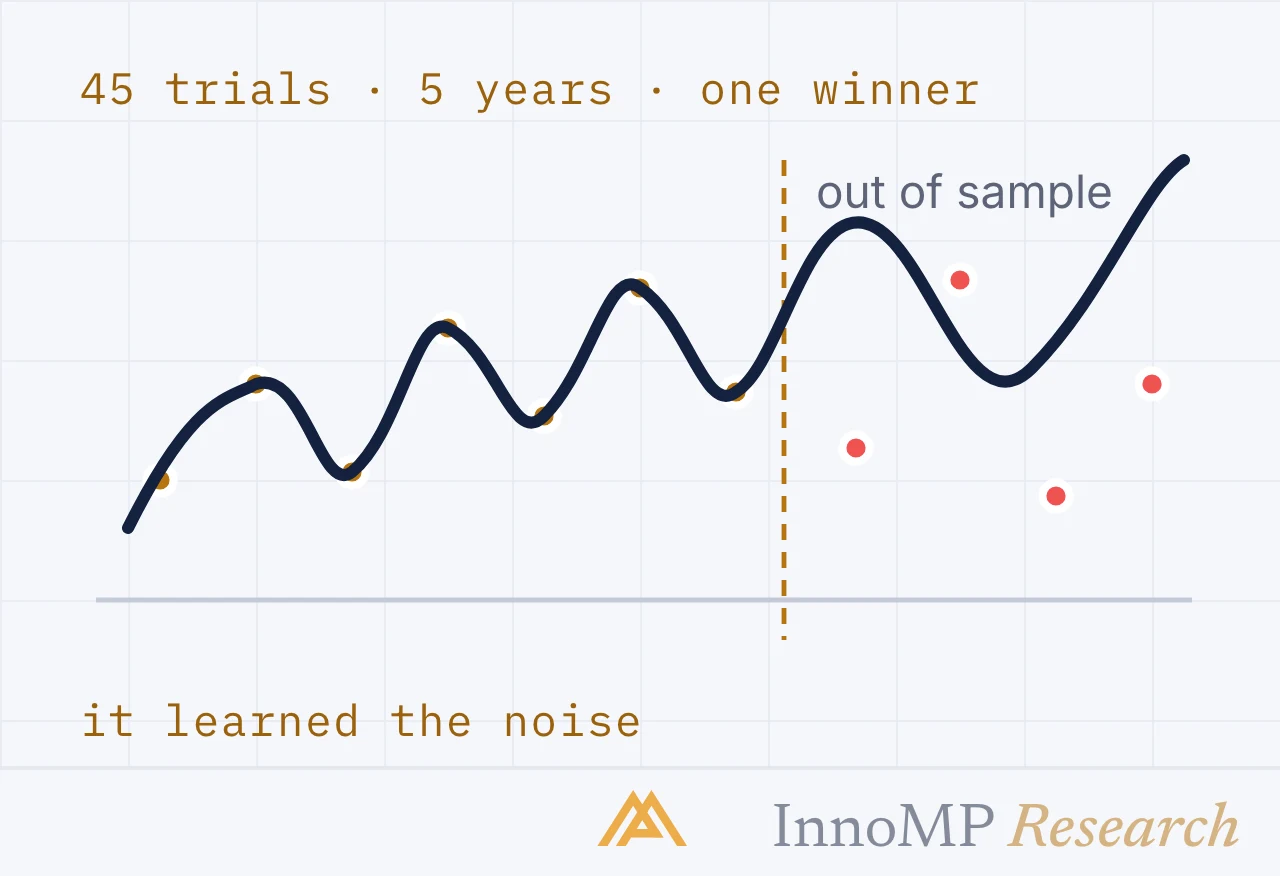
Try enough versions of a rule and one will shine on the past by chance. What overfitting is, why the trial count matters more than the winner's numbers, and how held-out data and walking forward tell fit from luck.