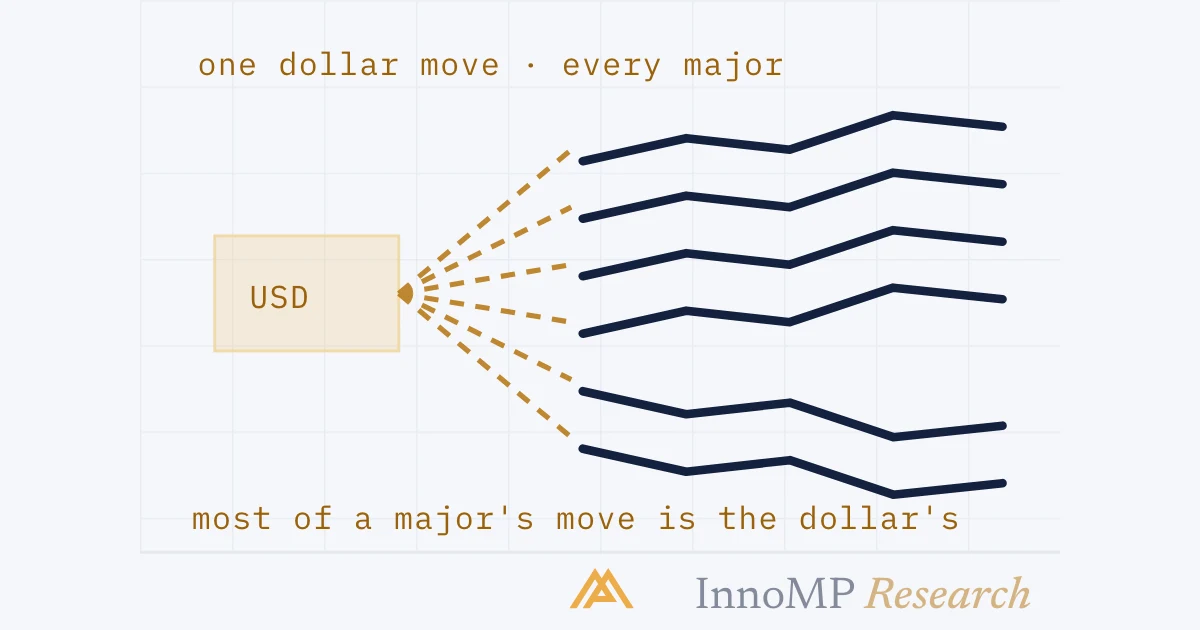
The dollar leg is the US dollar side of a currency pair. Every major contains it, and the dollar is on one side of 88% of all FX trades, so a dollar move appears in all the majors at once — the same way where the dollar is the quote, the opposite way where it is the base. The US Dollar Index reads that leg alone, as a basket of six currencies with the euro the largest weight at 57.6%. Splitting a pair's move into its dollar part and its other part turns seven charts into one dollar read and seven smaller ones.
The dollar leg is the US dollar side of a currency pair. Every major pair contains it, so a move in the dollar is a move in all of them at once — and most of what any major does on a given day is the dollar doing it.
Part 11 called the shared leg correlation by construction, the one kind that does not fade with the window. This part is about the largest instance of it, because no other single input explains as much of the chart a currency trader is looking at.
Eighty-eight per cent
The BIS survey used in Part 5 also reports which currencies the trading is in. Every trade has two sides, so the shares add to two hundred, and the dollar’s share is not close to anyone else’s.
| Currency | On one side of all FX trades, April 2022 |
|---|---|
| US dollar | 88% |
| Euro | 30.5% |
| Japanese yen | 17% |
| Pound sterling | 13% |
Nearly nine trades in ten have the dollar on one side. The pairs a retail platform calls the majors are the ones it is on one side of by definition: EURUSD, GBPUSD, AUDUSD and NZDUSD with the dollar as the quote currency, USDJPY, USDCHF and USDCAD with the dollar as the base.
Which side of the fraction
A pair is a fraction — the base currency over the quote currency. Where the dollar sits decides which way a dollar move pushes the chart.
This is why a screen of seven majors on a dollar day looks like one chart and its reflection. It also explains the negative correlation Foundations readers notice between EURUSD and USDCHF: they are not opposing markets, they are the same dollar viewed from opposite sides, with the euro’s and the franc’s own movements as the difference.
The dollar index
If the dollar is the shared leg, it is worth reading on its own. The US Dollar Index does that: it is the dollar against a basket of six currencies, geometrically weighted, calculated by ICE from the spot prices of the components. The weights have been fixed since the euro replaced five European currencies in 1999.
| Component | Weight |
|---|---|
| Euro | 57.6% |
| Japanese yen | 13.6% |
| Pound sterling | 11.9% |
| Canadian dollar | 9.1% |
| Swedish krona | 4.2% |
| Swiss franc | 3.6% |
Two things follow from the weights. The index is a genuine read of the dollar leg, separate from any one pair — which is what makes it useful. And it is a read taken mostly against the euro, which is what limits it: a day when the euro moves on its own account moves the index without any dollar reason at all.
Separating a pair’s move
The practical question every major chart poses and cannot answer alone: was that the euro, or was that the dollar? The pair shows the difference between its legs; the answer needs what each leg did against someone else.
| EURUSD | Dollar index | Euro crosses (EURGBP, EURJPY) | The move was |
|---|---|---|---|
| Up | Down | Flat | The dollar’s |
| Up | Flat | Up | The euro’s |
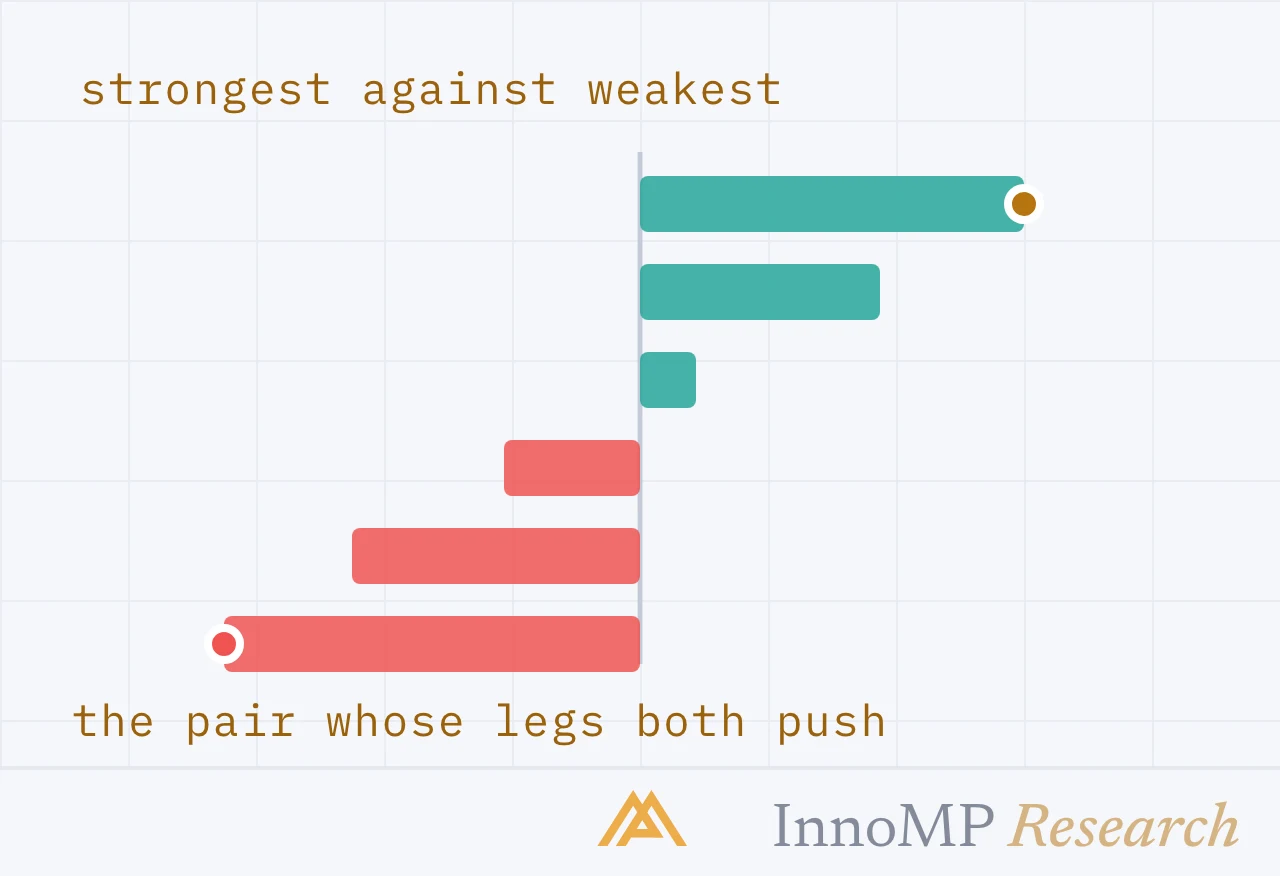
| Up | Down | Up | Both — the pair with both legs pushing |
| Up | Up | Up, strongly | The euro’s, against a rising dollar |
The last two rows are the interesting ones. A pair whose two legs are both pushing is the strongest-against-weakest case that Part 13 is built around. A euro rising against a rising dollar is a euro with a reason of its own, and that reason will show up in every euro cross whether or not EURUSD is the pair being traded.
The check takes a minute and it changes what the trade is. A EURUSD long on a dollar move is a short-dollar position that happens to be expressed in euros; the same long on a euro move is a long-euro position that happens to be expressed in dollars. They are stopped out by different things.
The dollar as the shared context
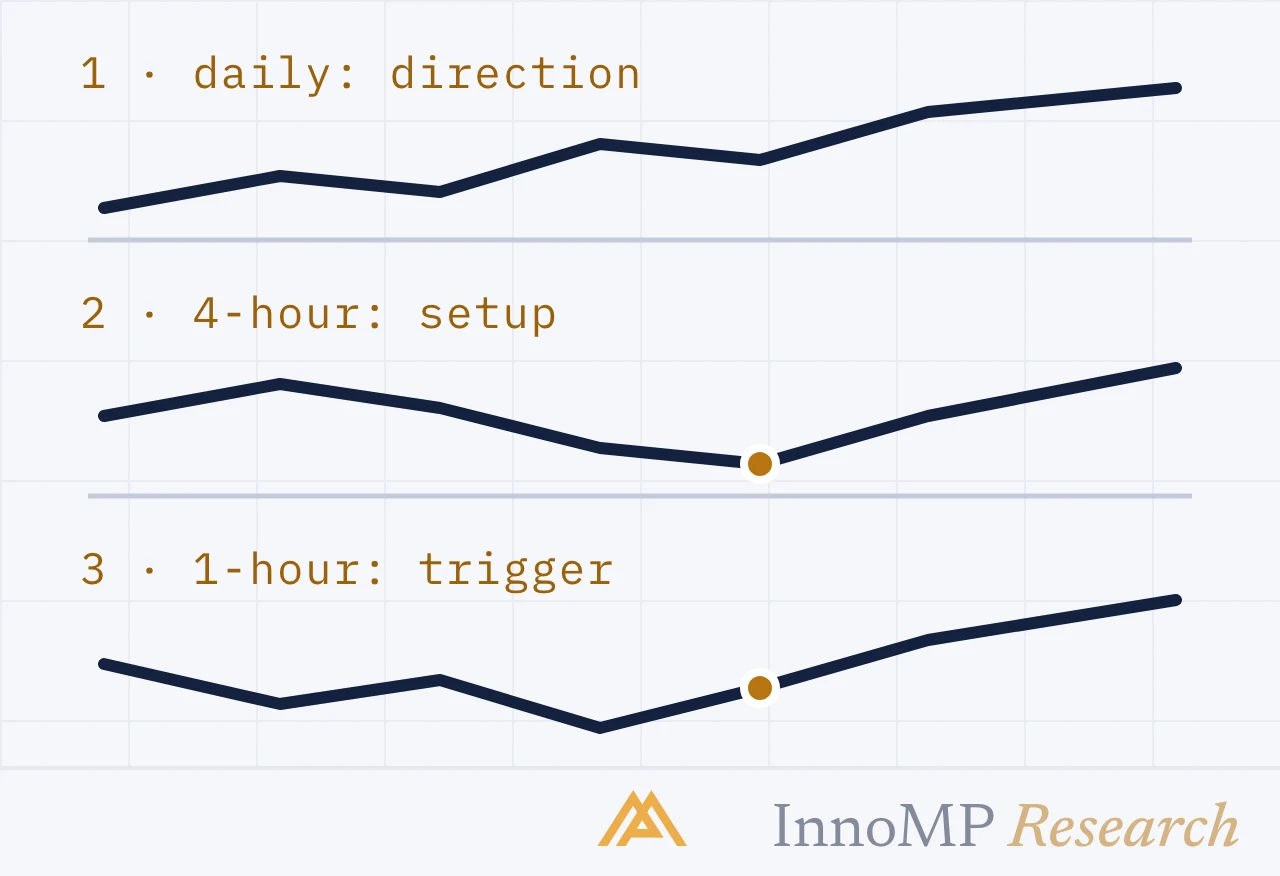
Because the dollar is in every major, the dollar index’s own structure works as a shared higher context for all of them — a Step 1 read, in the sense of Part 1, that applies to seven charts at once.
Two ways to use it, both already familiar.
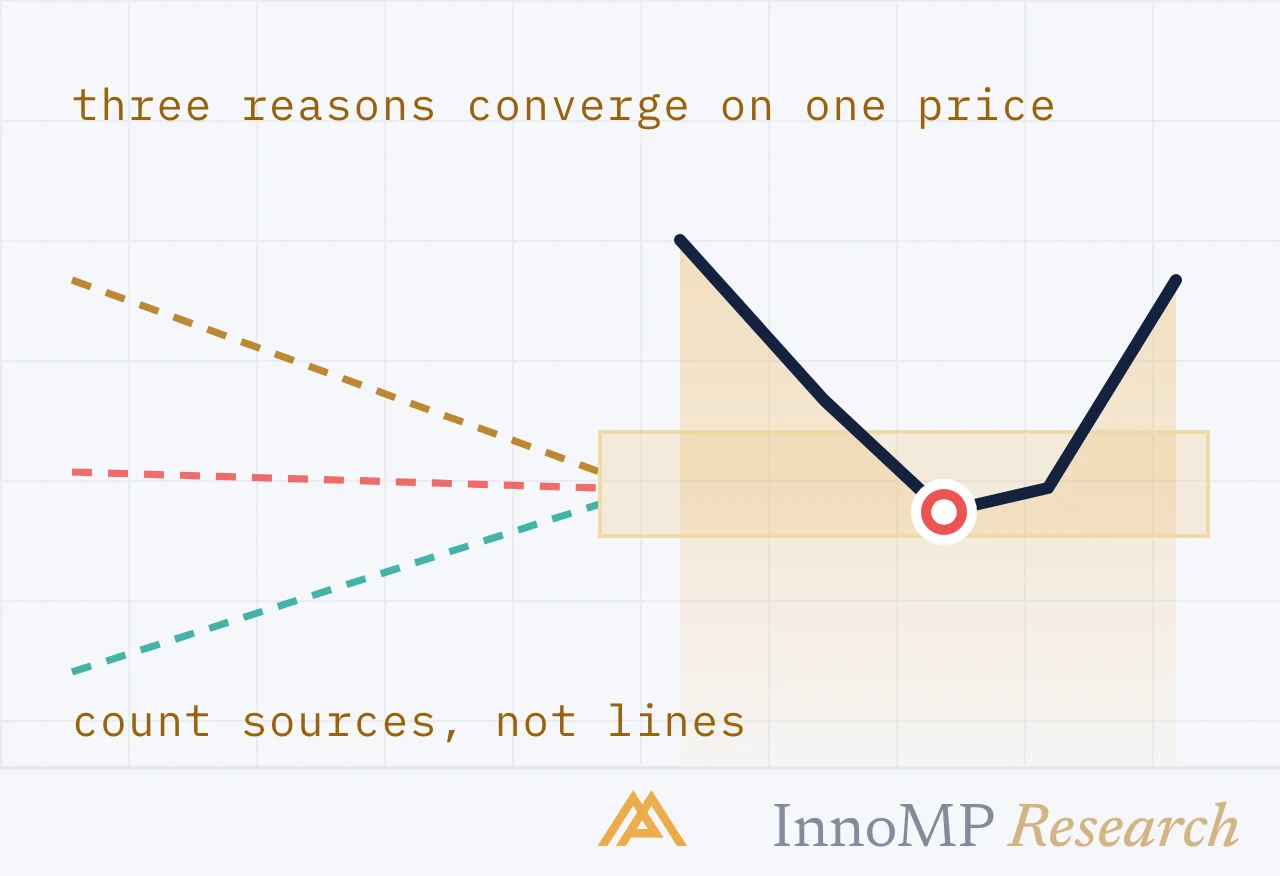
As a reason. A major’s setup that agrees with the dollar index’s structure has an independent source behind it — the confluence rule of Part 3, where the second source is the dollar’s own chart and not the pair’s price. A EURUSD breakout while the index holds its own support is the no agreement case Part 11 drew.
As a warning. The dollar index printing the two events that end a trend — a lower high, then a close through the prior low, the test from Part 4 — is a warning on every dollar pair at once, before any of them has broken its own structure.
Key takeaway The dollar index is the higher timeframe every major shares. Read its structure once, and seven charts have a context that none of them can supply for themselves.
What it does not do
The index is euro-heavy, so it says most about EURUSD and least about the currencies it barely contains. The yen is 13.6% of it; a day when the yen moves for its own reasons — a Bank of Japan decision in the Asian hours — moves USDJPY a long way and the index very little. The Australian and New Zealand dollars are not in it at all, so a commodity-currency move leaves no trace in it. And because the euro is more than half of it, a euro move looks like a dollar move in the index until the euro’s crosses are checked.
| The dollar index is good for | It is poor for |
|---|---|
| A read of the dollar leg without any one pair | Yen-specific and commodity-currency moves |
| Context for the dollar-quoted majors, EURUSD above all | Telling a euro move from a dollar move on its own |
| A warning that applies to every major at once | Anything about the crosses, which have no dollar leg |
Which is why the next part does the same job the index does — reading a leg on its own — but for every currency, against several counterparts, so that the strongest leg and the weakest can be named and put against each other.
Next: Relative strength across pairs — ranking every currency against the rest, and why the cleanest trend is the strongest leg against the weakest.
- The US dollar was on one side of 88% of all FX trades in April 2022; the euro 30.5%, the yen 17%, the pound 13% (BIS).
- Every major pair contains the dollar: as the quote in EURUSD, GBPUSD, AUDUSD and NZDUSD, and as the base in USDJPY, USDCHF and USDCAD.
- A dollar rally moves the dollar-quoted majors down and the dollar-based majors up, at the same time.
- The ICE US Dollar Index weights six currencies: euro 57.6%, yen 13.6%, pound 11.9%, Canadian dollar 9.1%, Swedish krona 4.2%, Swiss franc 3.6%.
- A pair's move is separated into its dollar part and its other-currency part by comparing it with the dollar index and with that currency's crosses.