Pre-trade and post-trade routines: checklist and analysis
The decisions that matter are made before the session and reviewed after it. What belongs in each routine, and why the checklist beats the intention.
IRInnoMP Research · Education Desk Published 31 Aug 2026 · Updated 05 Oct 2026 4 min read
In short
A pre-trade routine is a fixed sequence performed before trading — reviewing higher-timeframe structure, marking levels, checking the economic calendar and confirming risk parameters. A post-trade routine reviews what happened while it is still fresh. Both exist to move decisions out of the moment of execution, where emotion is strongest and time is shortest.
A routine moves decisions out of the moment of execution. That is its entire function.
Everything in this series has pointed at the same problem: decisions made while a position is open, under time pressure, are worse than the same decisions made calmly. A routine is the practical response — do the thinking earlier, and the deciding later becomes retrieval.
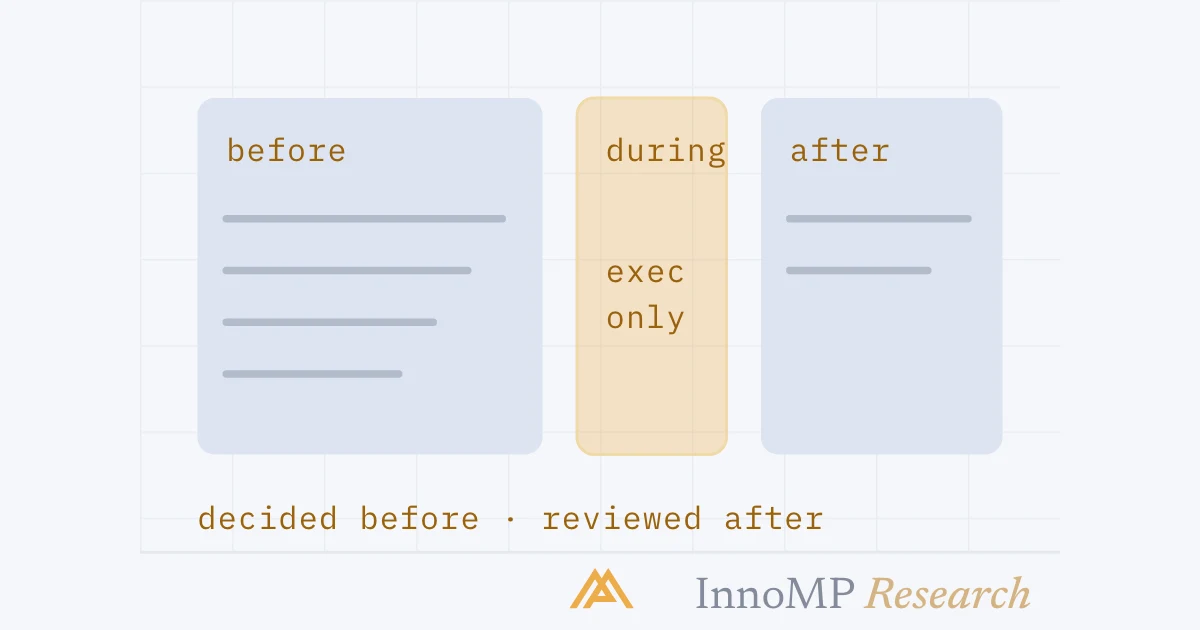
The shape of a session
Thinking happens on the outside. The narrower the set of decisions available in the middle, the better the session tends to go.
The pre-trade routine
Ten to fifteen minutes before the session. Same sequence every time.
Step two matters most. A level drawn while holding a position is drawn by someone who wants it to be there.
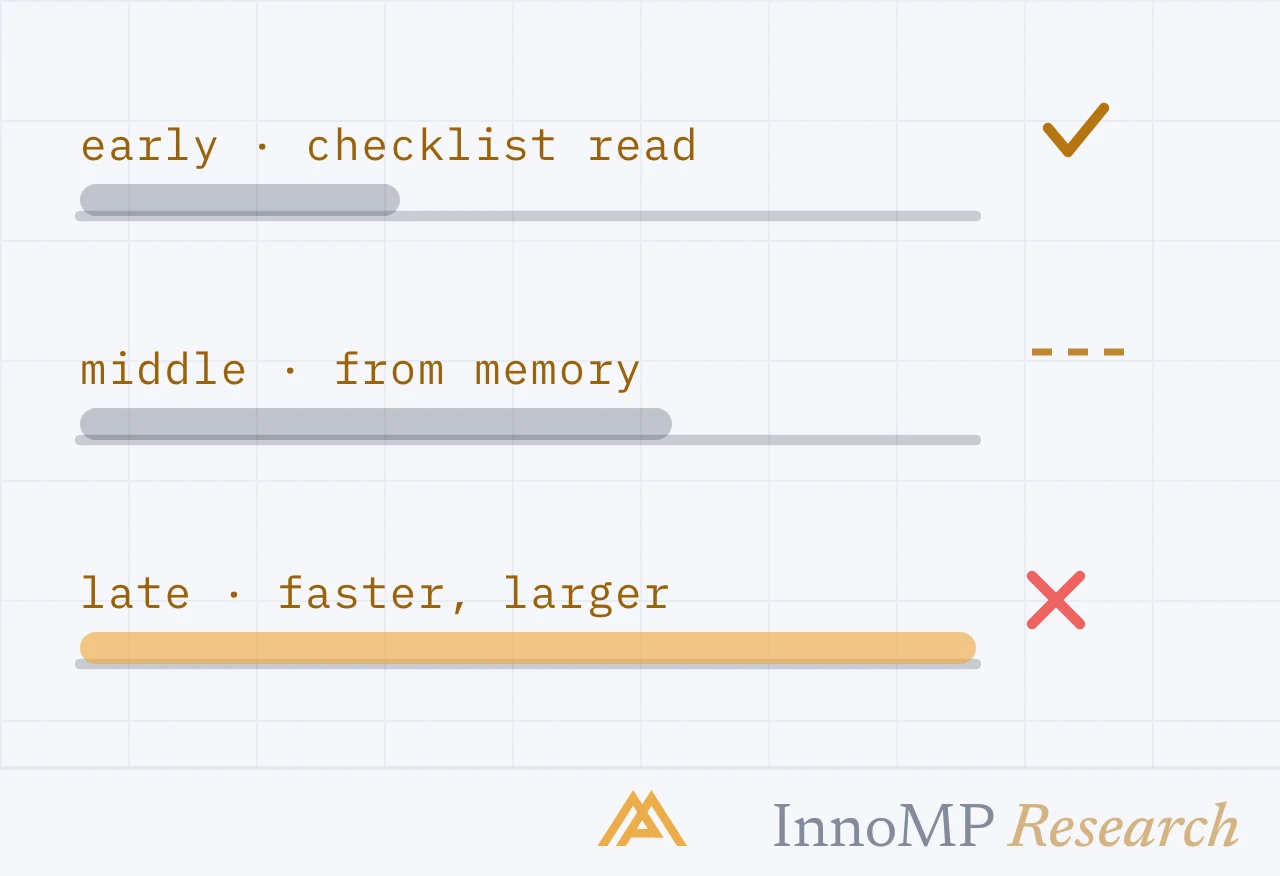
Under a minute, on paper. A physical list interrupts momentum in a way an intention cannot.
Question five is the tilt check. Keep it in writing rather than in memory.
The post-trade routine
Same day, while recall is still accurate. Ten minutes. This is post-trade analysis at retail scale: not a performance report, but a check of each closed trade against the plan that was written before it.
Fill in the journal — results in R, rule compliance for each trade, your state during the session. Then one line: what to repeat, what to change.
The compliance field is what makes this worth doing. A session where you followed the plan and lost is a good session; a session where you broke the plan and profited is the one that needs attention. Without recording compliance, those two are indistinguishable a week later.
Key takeaway
The routine is not about finding better setups. It is about reducing the number of decisions made under pressure — which is where nearly all avoidable losses come from. A trader running the same sequence every day is a trader whose bad days are ordinary rather than catastrophic.
Without recording compliance, those two sessions are indistinguishable a week later — and the wrong one gets repeated.
Making it survive
A kept routine outperforms a better one that is not. Design for survival rather than completeness.
Track adherence. Add one journal field: did I run the routine today? The correlation with results usually settles the argument for you.
Levels marked before a session are drawn without a position influencing the reading.
Checking the economic calendar removes an entire category of avoidable loss.
A written checklist interrupts momentum in a way an intention does not.
Post-session review is most accurate within a short window of the trades themselves.
Post-trade analysis grades each trade on rule compliance as well as result, because a profitable rule break and a losing rule-following trade need opposite responses.
Frequently asked questions
What is the difference between pre-trade and post-trade?
Pre-trade is everything decided before an order is placed — market structure, levels, the calendar, risk per trade and the entry criteria. Post-trade is the review after positions close — recording results, checking each trade against the plan and noting what to repeat or change. The first limits decisions under pressure; the second turns outcomes into lessons.
What is post-trade analysis for a retail trader?
A short same-day review of each closed trade: result in R multiples, whether the entry, stop and size followed the written rules, and your state at the time. Over weeks the compliance column shows whether losses come from the strategy or from departures from it.
What should a pre-trade routine include?
Higher-timeframe structure, the levels that matter today, the economic calendar for scheduled releases, your risk parameters for the session, and alerts set at the zones you care about. Ten to fifteen minutes covers it.
Why mark levels before the session rather than during it?
Because a level drawn while you hold a position is drawn by someone who wants it to be there. Marking in advance, with no exposure, produces a reading that confirmation bias has not touched.
What should I review after trading?
Fill in journal results, note whether each trade met your criteria, record your emotional state during the session, and write one line on what to repeat or change. Do it the same day while recall is accurate.
Do routines actually improve trading results?
They improve consistency, which is what most strategies lack. Routines do not find better setups; they reduce the number of decisions taken under pressure, which is where the majority of avoidable losses come from.
IR
InnoMP Research · Education Desk
Trading education from first principles — position sizing, risk, market structure and the habits that keep accounts alive. Written for someone who has never opened a chart, with a diagram at every step.
Published 31 Aug 2026 · Updated 05 Oct 2026
Disclaimer: This content is provided for general informational purposes only and does not constitute investment advice, an offer, or a solicitation to buy or sell any financial instrument. It has been prepared without regard to your individual financial circumstances or objectives. Trading CFDs involves a high risk of loss.
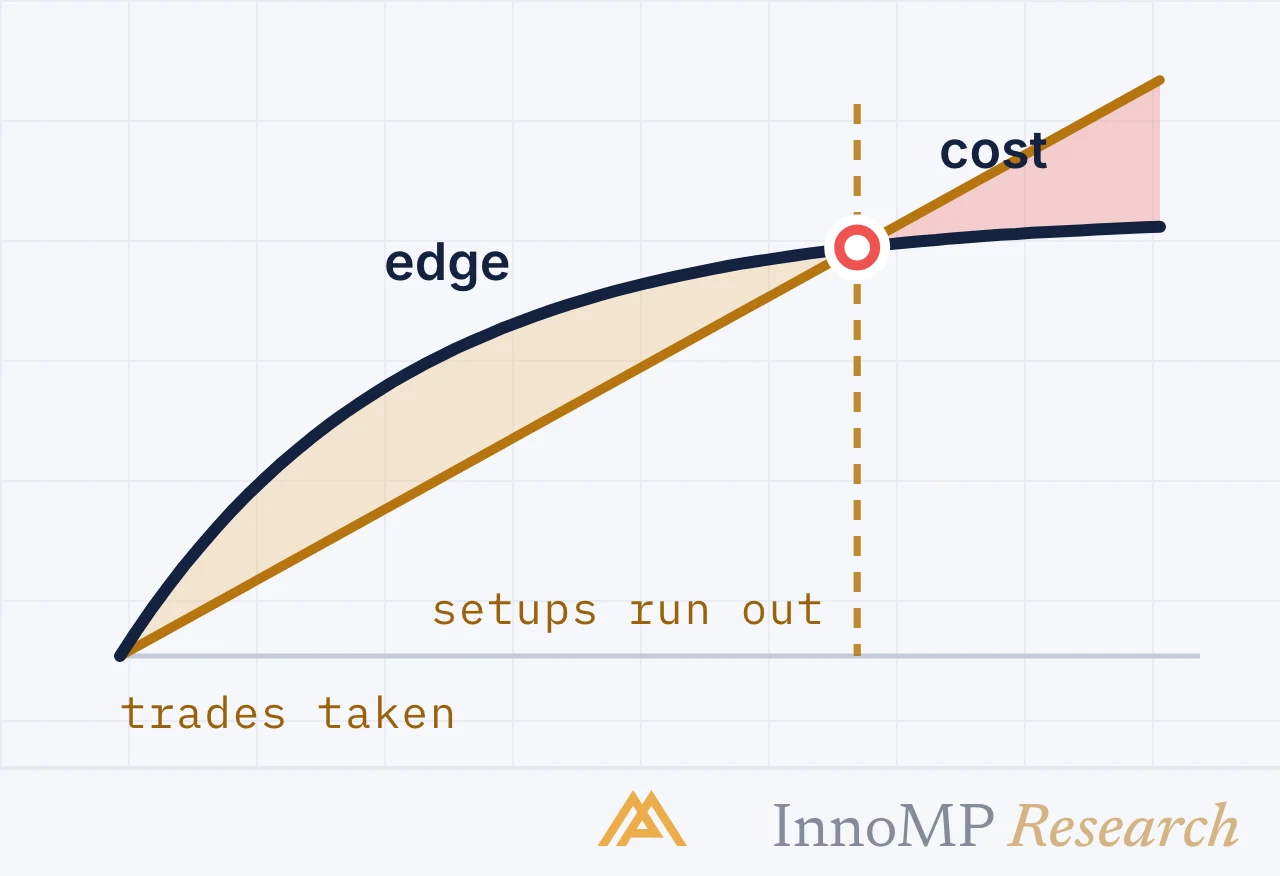
The sixth hour of a session produces worse decisions than the first. Why watching more leads to trading worse, and what to do with the hours you free up.
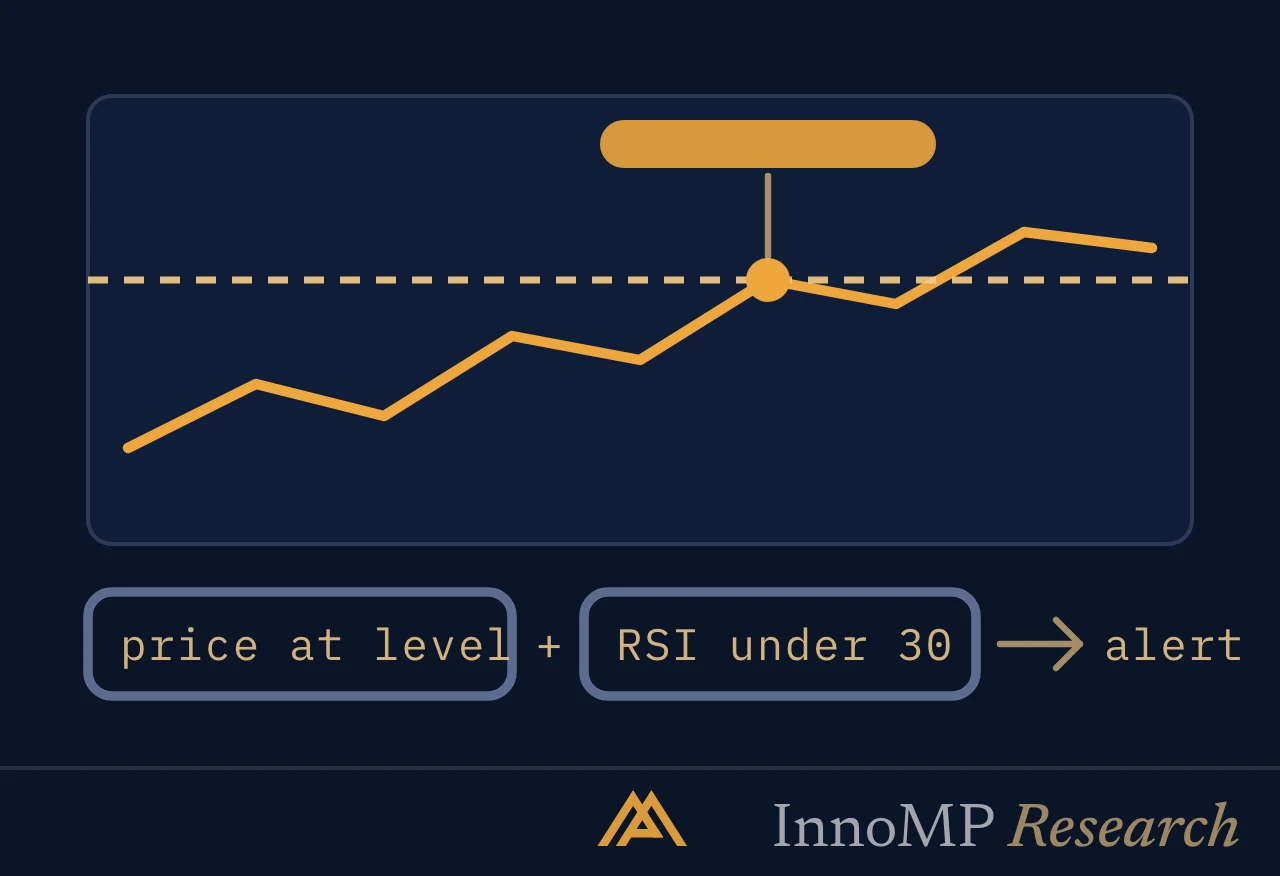
InnoMP's Market Watcher fires on price levels, moving averages, Bollinger bands, MACD, KDJ and RSI — with AND/OR logic. Set up properly, it also enforces deciding before price arrives, not after.