CFD trading is trading a Contract for Difference: an agreement to exchange the difference between an instrument's price when a position opens and when it closes, settled in cash, with no ownership of the underlying. It is done online through a broker's trading platform, can be long or short, and is margined, so profit and loss run on the full position size while only a fraction is posted as collateral. Costs are the spread, any commission and overnight swap.
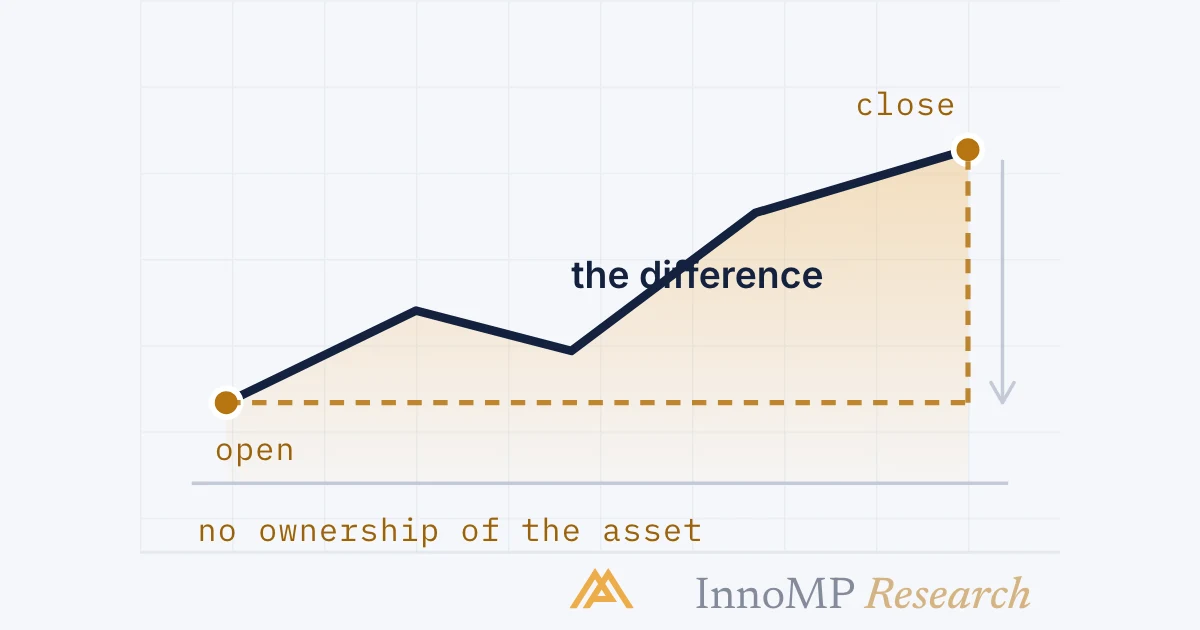
A Contract for Difference is exactly what the name says: an agreement to exchange the difference between an instrument’s price when a position opens and its price when it closes. If the difference is in your favour, you receive it; if not, you pay it. At no point do you own the thing being priced.
That one design choice — price exposure without ownership — produces everything else about the product, good and bad.
The mechanics in one example
Gold trades at 2,400. You believe it will rise, and buy a CFD covering 10 ounces.
- Gold rises to 2,430: the difference is 30 × 10 = 300 in your favour, minus costs.
- Gold falls to 2,370: the difference is 30 × 10 = 300 against you, plus costs.
No vault, no delivery, no ownership — a price bet, settled in cash, in either direction. That last part matters: because nothing is owned, selling first and buying back later (going short) is exactly as easy as buying first, which is a genuine structural difference from most ways of accessing markets.
How online CFD trading works
A CFD has no exchange of its own. It is a contract with a broker, opened and closed on the broker’s platform, which is why CFD trading is almost always online trading. The sequence is the same everywhere:
- Open and fund an account. The deposit is margin — collateral for positions, not the price of them.
- Pick an instrument and a direction. Buy if you expect the price to rise, sell if you expect it to fall.
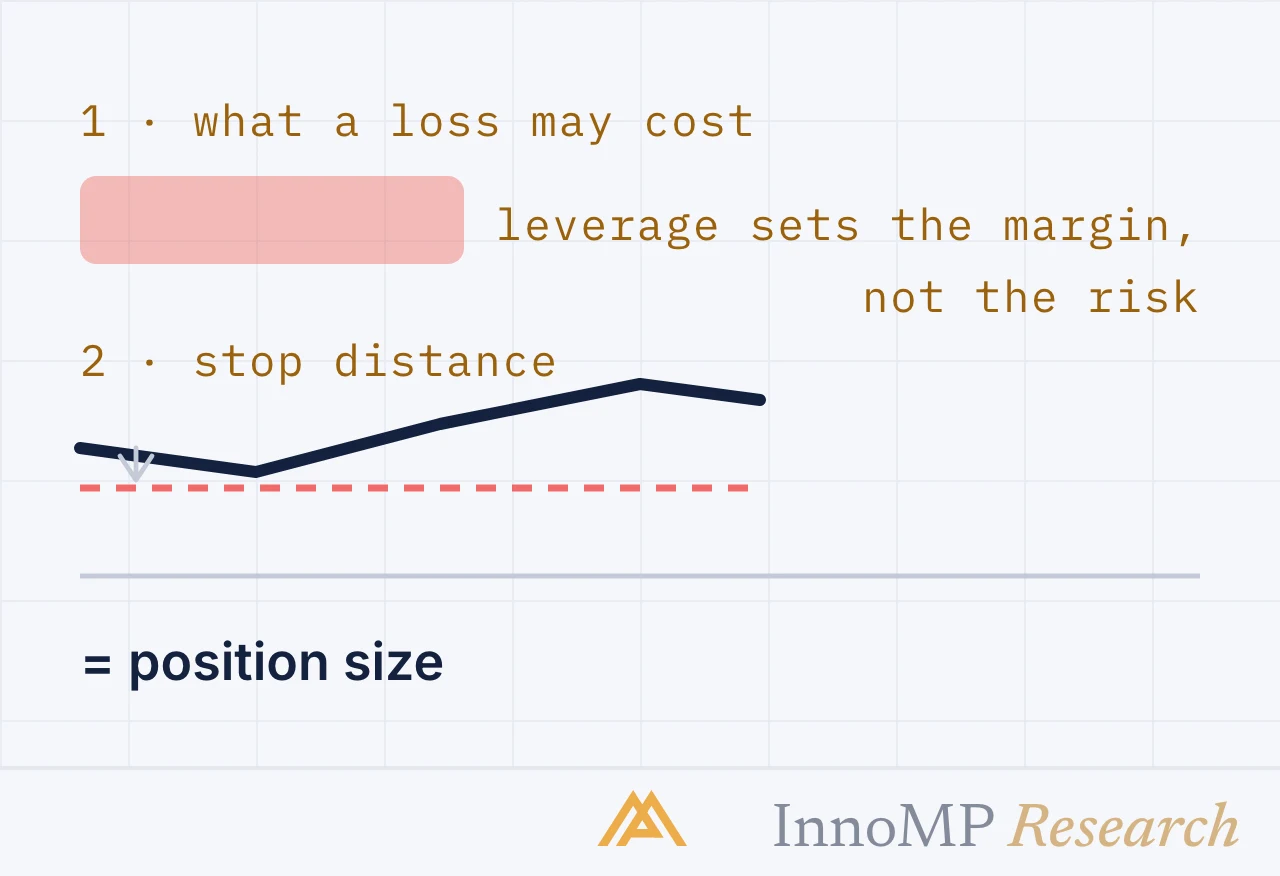
- Size the position. The size, not the deposit, decides what a price move costs — the position size calculator turns a stop distance and a risk budget into lots.
- Manage and close. Profit or loss is settled in cash when the position closes; overnight swap is charged or paid while it stays open.
On InnoMP the platform choice is three-way — the InnoMP APP, WebTrader in a browser, or MetaTrader 5 — compared in Choosing your platform. The contract mechanics are identical on all three.
Where leverage enters
CFDs are margined products. To hold that 10-ounce gold exposure — 24,000 of notional value — the platform requires only a fraction as collateral. The fraction is set by the margin requirement; the multiple it implies is the leverage.
What leverage does not do is change the size of the bet. The position’s profit and loss is calculated on the full 24,000 of exposure whether the margin posted was large or small. Leverage decides how much of your money is reserved, not how much is at risk — a distinction covered properly in Leverage, margin and why position sizing comes first, which is the article to read immediately after this one.
Key takeaway The risk in a CFD is the position size, not the margin. A small deposit controlling a large exposure is the product’s power and its danger, in the same sentence — and it is why every serious introduction to CFDs is mostly an introduction to risk management.
What CFD trading costs
Three costs, one of which is routinely underestimated:
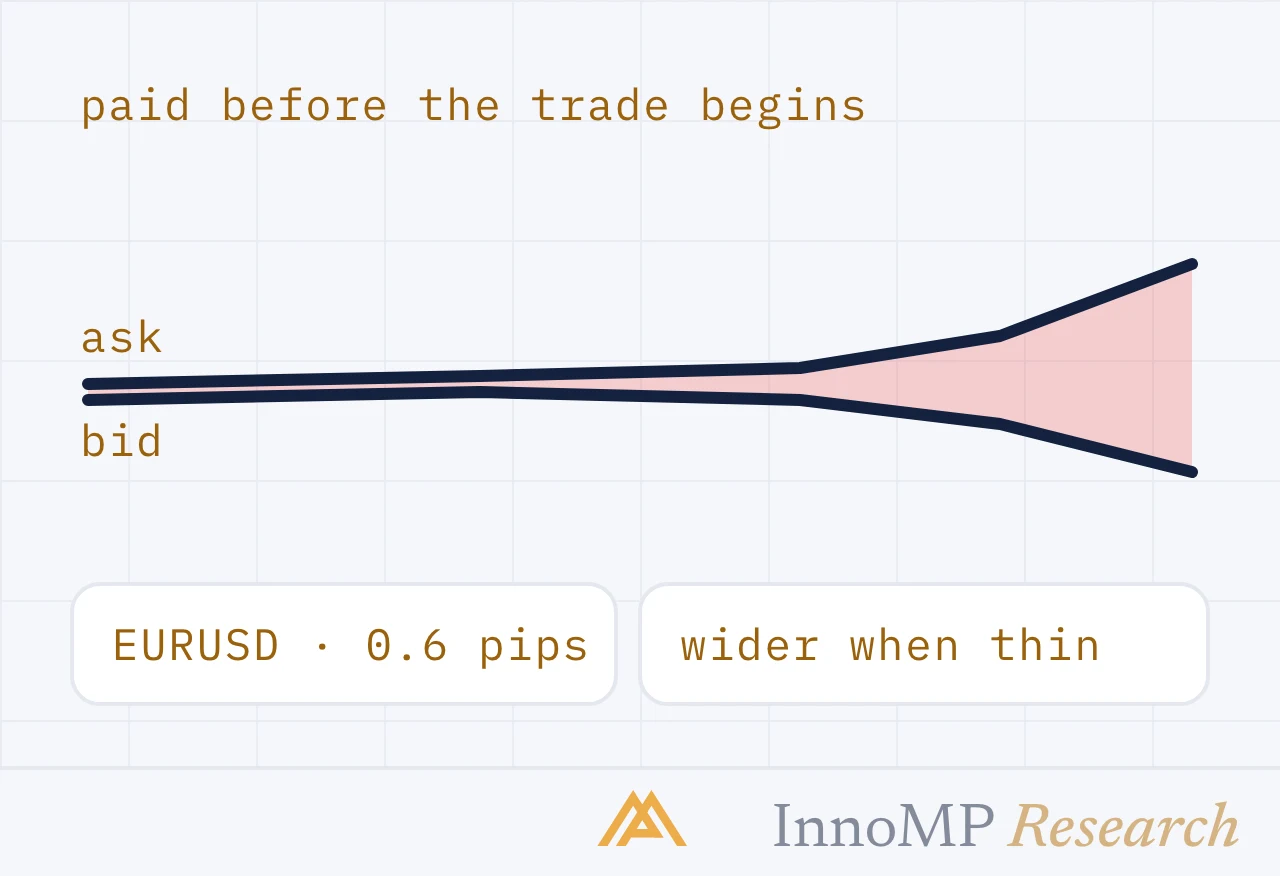
- The spread — the gap between buy and sell prices, paid on entry
- Commission — an explicit per-lot charge on some account types
- Swap — nightly financing on positions held past rollover, which on multi-week holds usually exceeds the spread many times over
The full breakdown, with worked numbers, is in Spreads, swaps and the real cost of holding a position.
The risks, stated plainly
Leverage cuts both ways. Losses are computed on the full exposure. An adverse move of a few percent on a heavily leveraged position can consume the margin supporting it.
Fast markets move past orders. A stop-loss executes at the next available price — across a gap or in thin liquidity, that can be meaningfully worse than the stop level. See stop placement and weekend gaps.
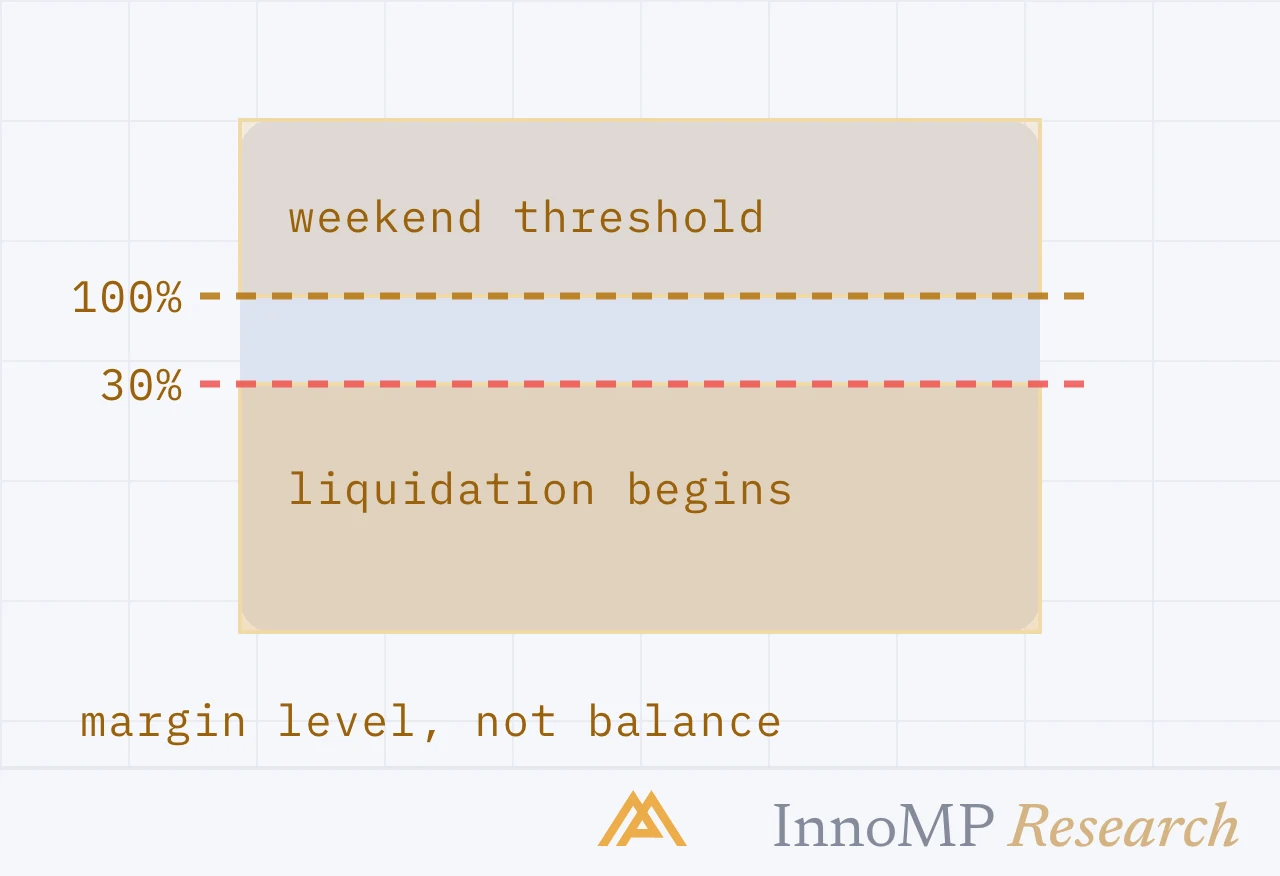
Margin can be called. If equity falls relative to margin in use, positions can be reduced or closed by the platform — on InnoMP, forced liquidation begins at a 30% margin level during the week and 100% over the weekend. Understanding margin calls and stop-outs before meeting one is strongly recommended.
Holding costs accumulate. Financing is charged nightly, profit or not.
CFDs are speculative instruments carrying a high degree of risk, and they are not suitable for everyone. Nothing here is a recommendation to trade them — it is an explanation of how they work, which is the minimum owed to anyone deciding.
Where to go from here
The sequence that serves beginners best: what a pip is for the units, position sizing for the survival arithmetic, trading costs for the bill, and a demo account used properly for practice at zero tuition. The markets will still be there when the fundamentals are in place — they always are.
- A CFD pays or charges the price difference between open and close; the trader never owns the underlying asset.
- Because nothing is owned, going short is as straightforward as going long.
- CFDs are margined: profit and loss are calculated on the full notional value, not on the margin posted.
- The three costs of a CFD are the spread, commission on some account types, and overnight swap.
- Online CFD trading runs through a broker's platform — on InnoMP the InnoMP APP, WebTrader or MetaTrader 5.