Process versus outcome: judging the part you control
A good trade can lose and a bad trade can win. Evaluating yourself on results teaches the wrong lessons — here is what to grade instead.
IRInnoMP Research · Education Desk Published 31 Aug 2026 · Updated 31 Aug 2026 4 min read
In short
Process is what you control — setup selection, sizing, entry, exits, adherence to rules. Outcome is the result, which depends on process and on variance in unknown proportion for any single trade. Evaluating trades by outcome reinforces rule-breaking that happens to profit and discourages correct decisions that lose, so consistent traders grade process and let outcomes aggregate.
Process is what you control. Outcome is what you get. For any single trade, the relationship between them is weak — the result contains an unknown mixture of decision quality and variance.
This creates a problem for learning: the feedback signal traders naturally attend to is the one that teaches least reliably.
The four cells
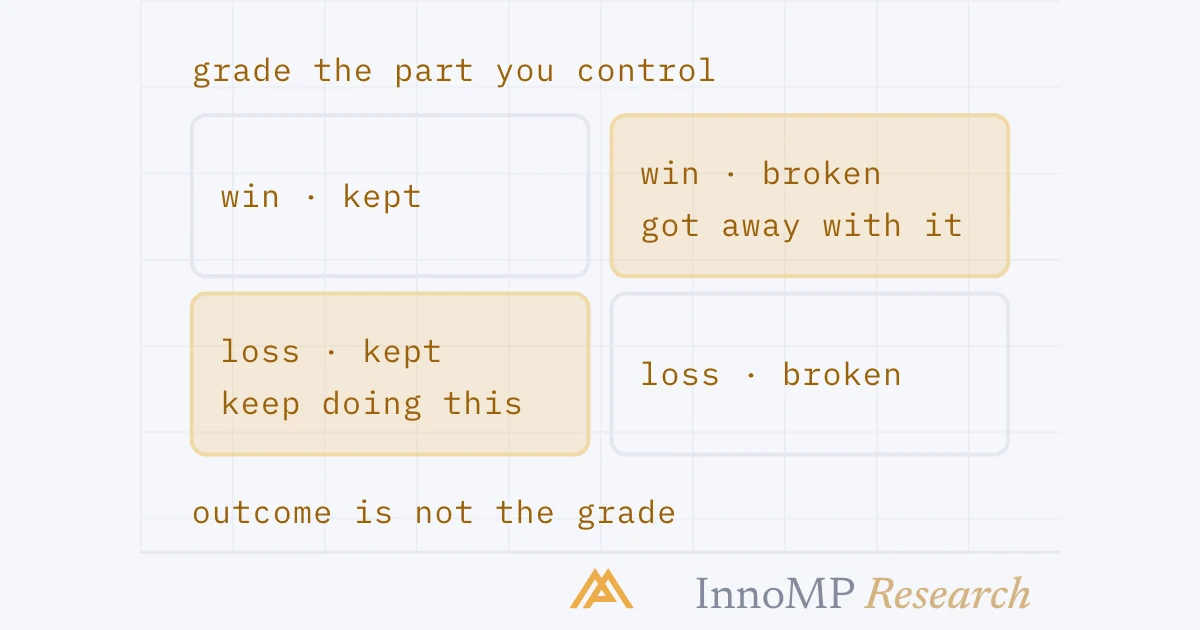
Two cells teach correctly and two teach backwards. The lower-left is the one to watch, because a rule-breaking win feels like evidence the rules were optional.
Bad process, good result. A trade taken outside your rules that profits. Filed as success, the behaviour is reinforced, and it will be repeated at a worse moment. This is the most dangerous cell because it feels like the best one.
Correct process, bad result. A rules-compliant trade that loses. Filed as failure, correct behaviour is discouraged — and this is the cell that causes traders to abandon working strategies.
Why process is the better target
Process is available sooner, is fully under your control, and is the thing that actually improves.
It is available sooner. Results need a sample large enough for variance to average out before they say anything about edge, as Part 4 covers. Process quality is visible in ten trades.
It is fully under your control. Working on what you control is the only work available.
It is what actually improves. A trader whose compliance rate goes from 65% to 90% has genuinely improved. A trader whose results improved over twenty trades may have improved or may have been lucky, and cannot tell which.
Grading it
Recorded independently of result. The compliance rate is then a number you can improve this week, without needing the market to cooperate.
Key takeaway
A rules-compliant loss is a good trade. Recording it as one is not a consolation exercise — it is the only way to keep executing a strategy through the losing runs that every strategy produces, which is the precondition for its edge ever showing up.
Compliance improves within weeks and is entirely under your control. Results need roughly a hundred trades and depend partly on variance you do not.
The habit worth building
Once you know the result, the assessment is no longer available to you in uncontaminated form. The ordering is the whole technique.
That ordering is small and it defeats outcome bias more effectively than any amount of resolving to be objective.
Any single trade's outcome contains an unknown mix of process and variance.
Grading by outcome rewards profitable mistakes and punishes correct losing decisions.
Process quality becomes visible in far fewer trades than edge does.
A compliance field in the journal makes process gradeable independently of result.
Frequently asked questions
What is the difference between process and outcome in trading?
Process is the set of decisions you control — which setups you take, how you size, where you place stops and targets, whether you follow your rules. Outcome is the profit or loss, which depends on process plus market variance you do not control.
Why is judging trades by profit and loss a problem?
Because a single trade's result is largely variance. Grading by result files a rule-breaking win as success and a rule-compliant loss as failure, which reinforces exactly the wrong behaviours.
How do I grade my process?
Record for each trade whether it met every written criterion, whether the size matched your risk rule, and whether the exits were the ones planned. That gives a compliance rate you can improve directly, independent of results.
How long before results reflect skill rather than luck?
Longer than it feels like it should be. A strategy winning 45% of the time throws five-loss runs about one sequence in twenty, so a few dozen trades cannot separate skill from variance, and low-frequency strategies need longer still. Process quality is visible far sooner, which is why it is the better thing to work on in the meantime.
IR
InnoMP Research · Education Desk
Trading education from first principles — position sizing, risk, market structure and the habits that keep accounts alive. Written for someone who has never opened a chart, with a diagram at every step.
Published 31 Aug 2026 · Updated 31 Aug 2026
Disclaimer: This content is provided for general informational purposes only and does not constitute investment advice, an offer, or a solicitation to buy or sell any financial instrument. It has been prepared without regard to your individual financial circumstances or objectives. Trading CFDs involves a high risk of loss.
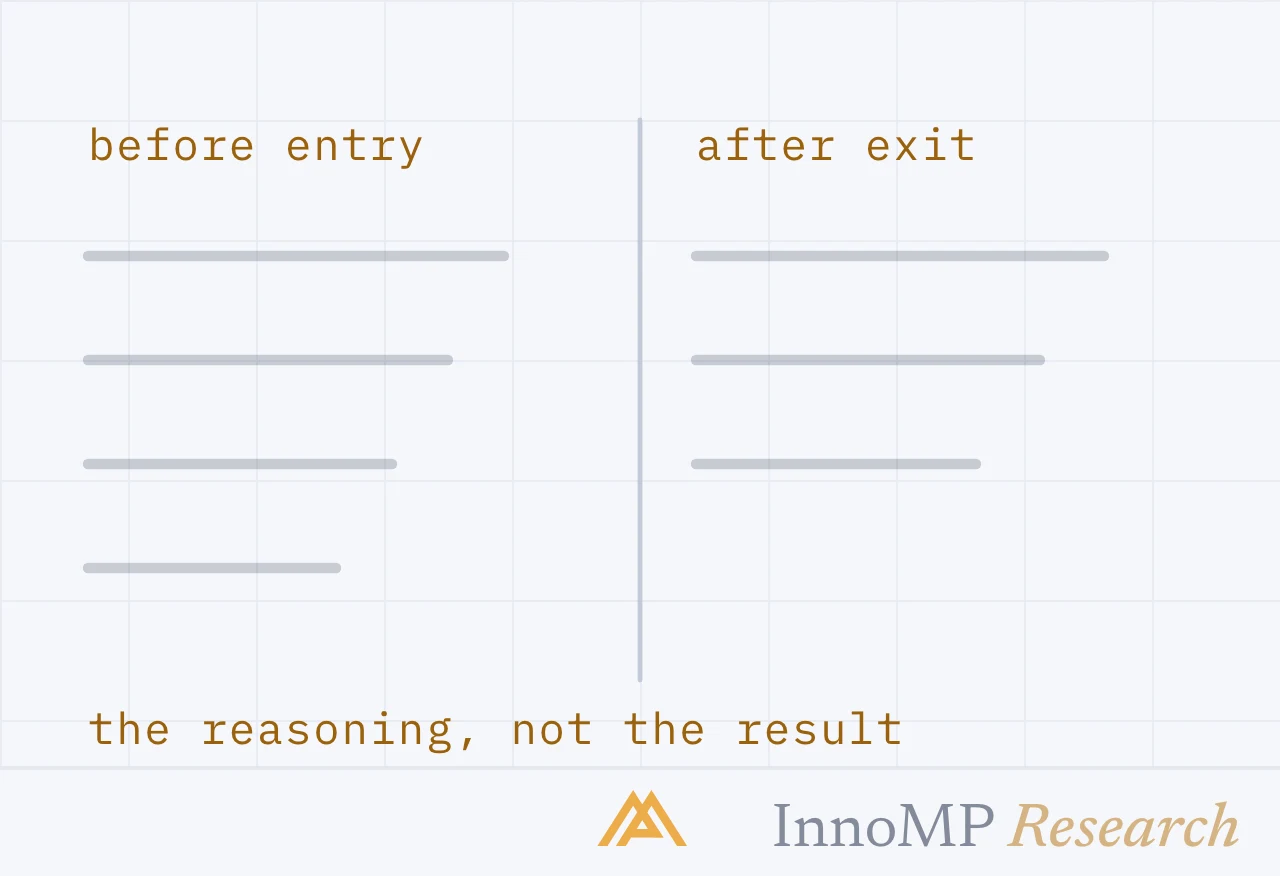
A list of profits and losses teaches almost nothing. What to record instead, and why the fields that matter are the ones written before the outcome is known.
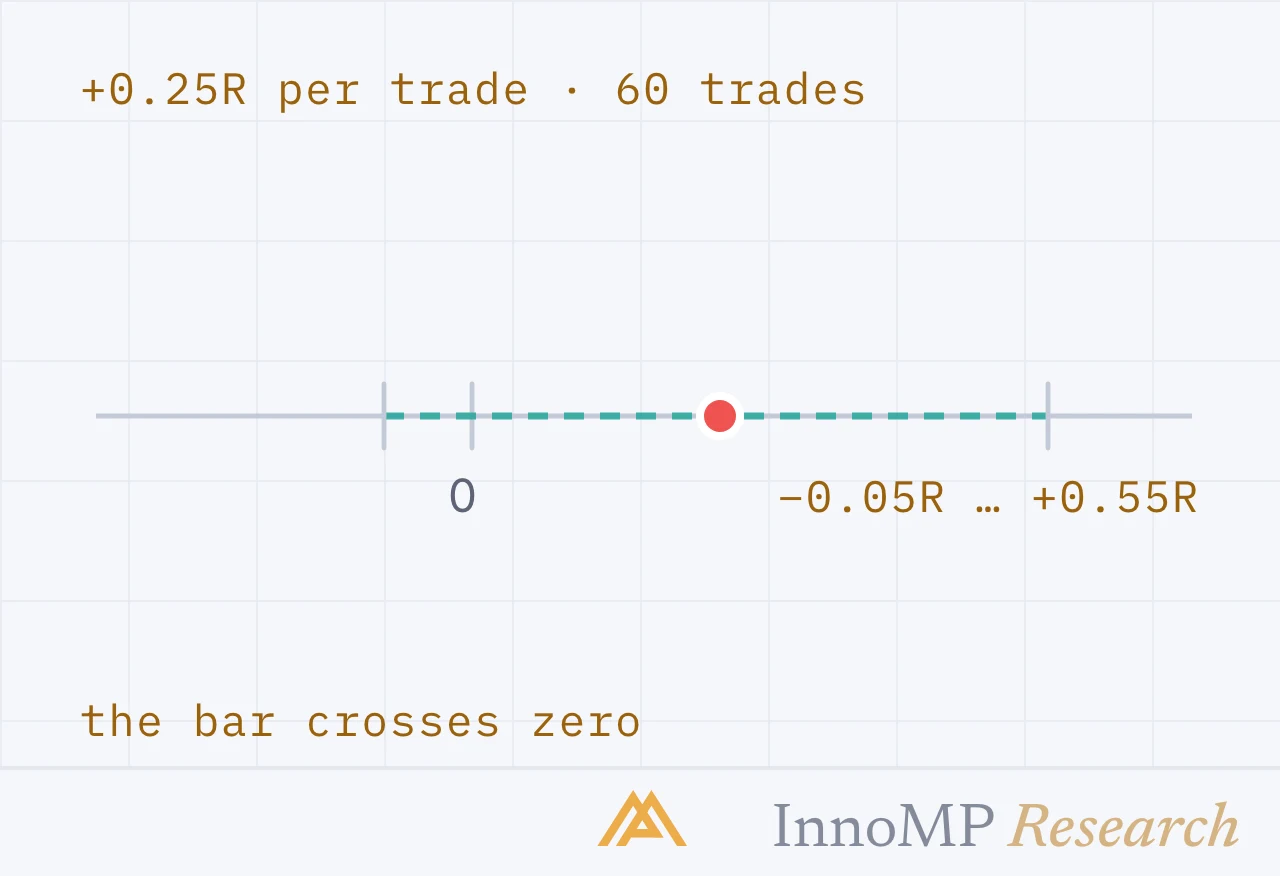
A record says +0.25R per trade. The question is how far from that the truth could be. How to put a standard error and a confidence interval on expectancy, and how many trades it takes to tell an edge from zero.
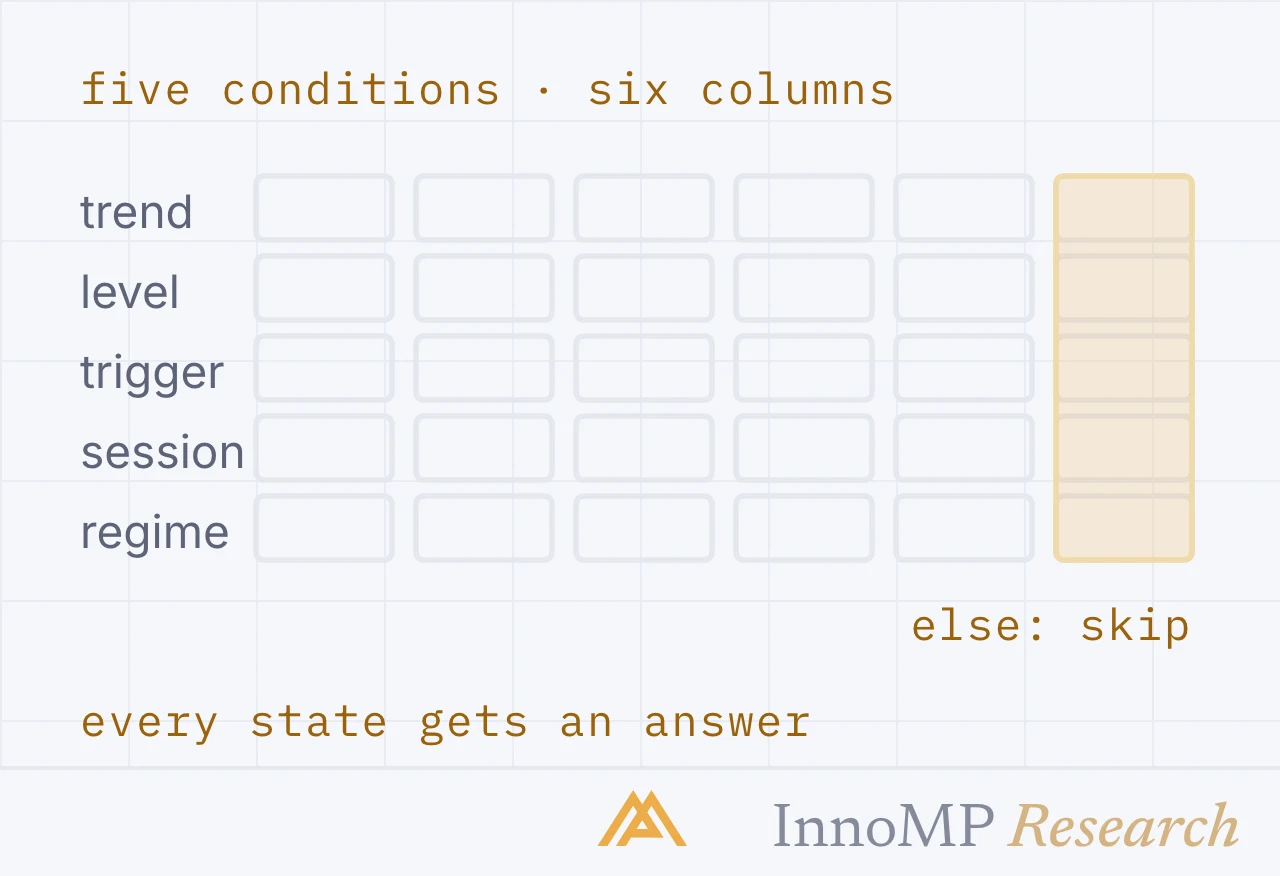
A written setup still leaves gaps: market states its prose never mentioned. How to lay the rules out as a decision table — conditions down the side, a column per rule — and find the gaps and contradictions first.