Trading journal
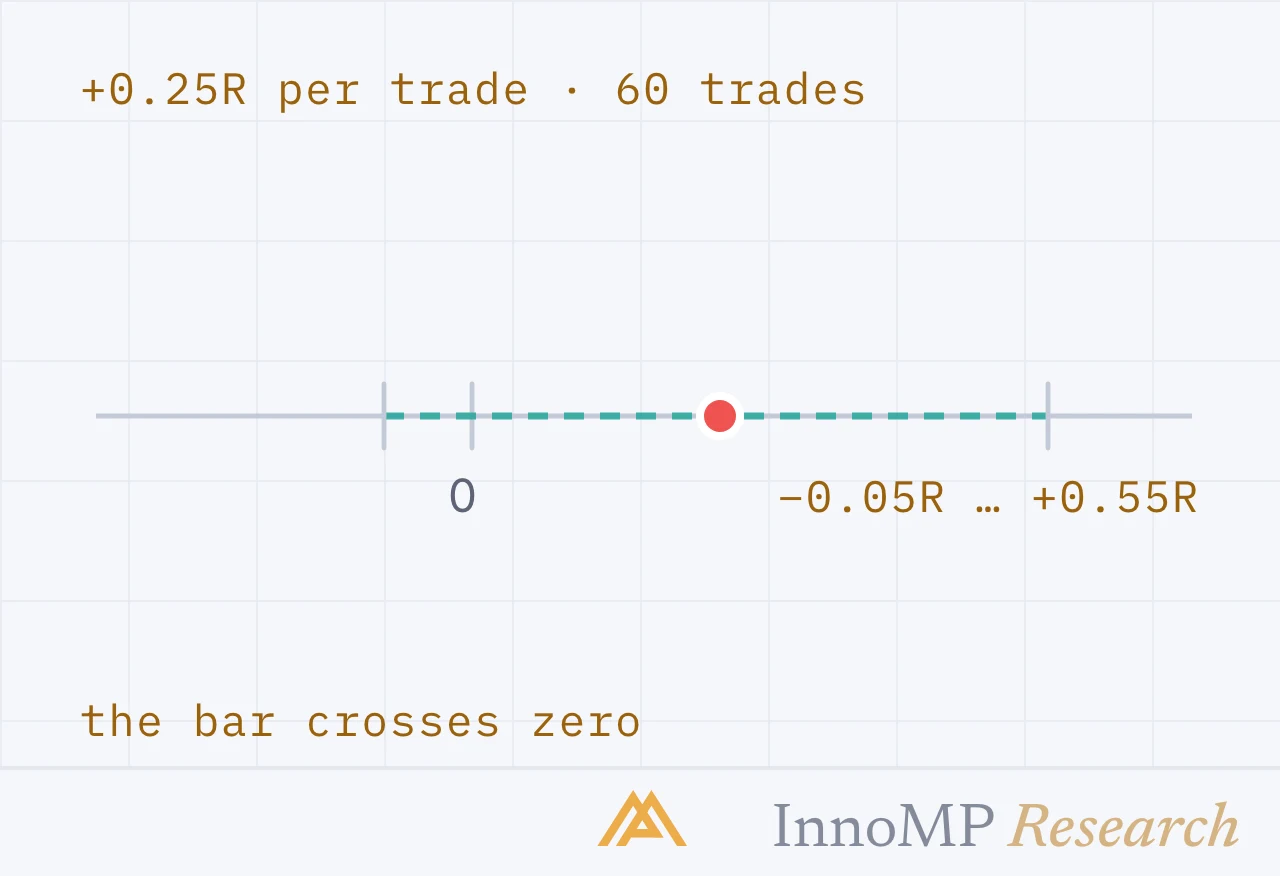
A record says +0.25R per trade. The question is how far from that the truth could be. How to put a standard error and a confidence interval on expectancy, and how many trades it takes to tell an edge from zero.
Read more → 9 min read
Discipline
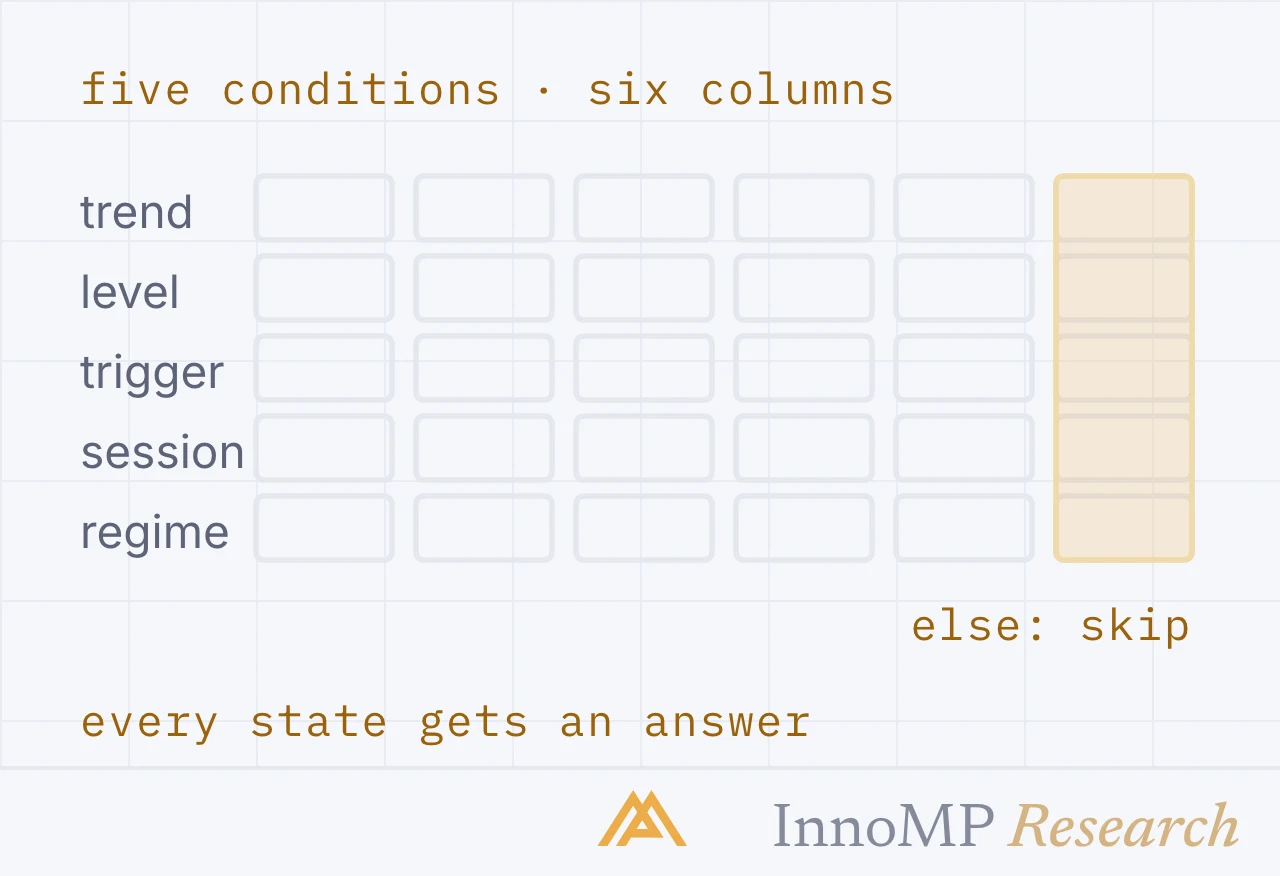
A written setup still leaves gaps: market states its prose never mentioned. How to lay the rules out as a decision table — conditions down the side, a column per rule — and find the gaps and contradictions first.
Read more → 9 min read
Trading journal
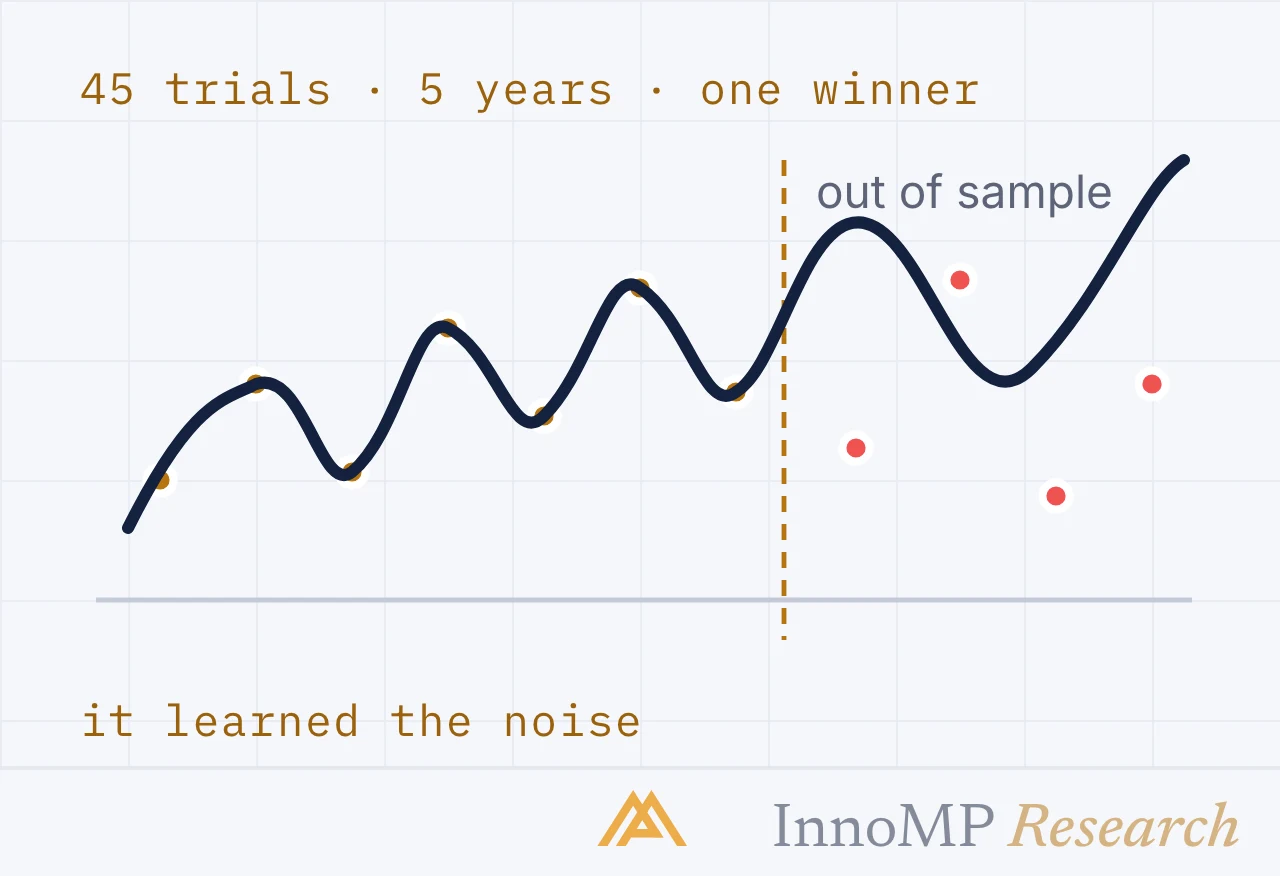
Try enough versions of a rule and one will shine on the past by chance. What overfitting is, why the trial count matters more than the winner's numbers, and how held-out data and walking forward tell fit from luck.
Read more → 10 min read
Discipline
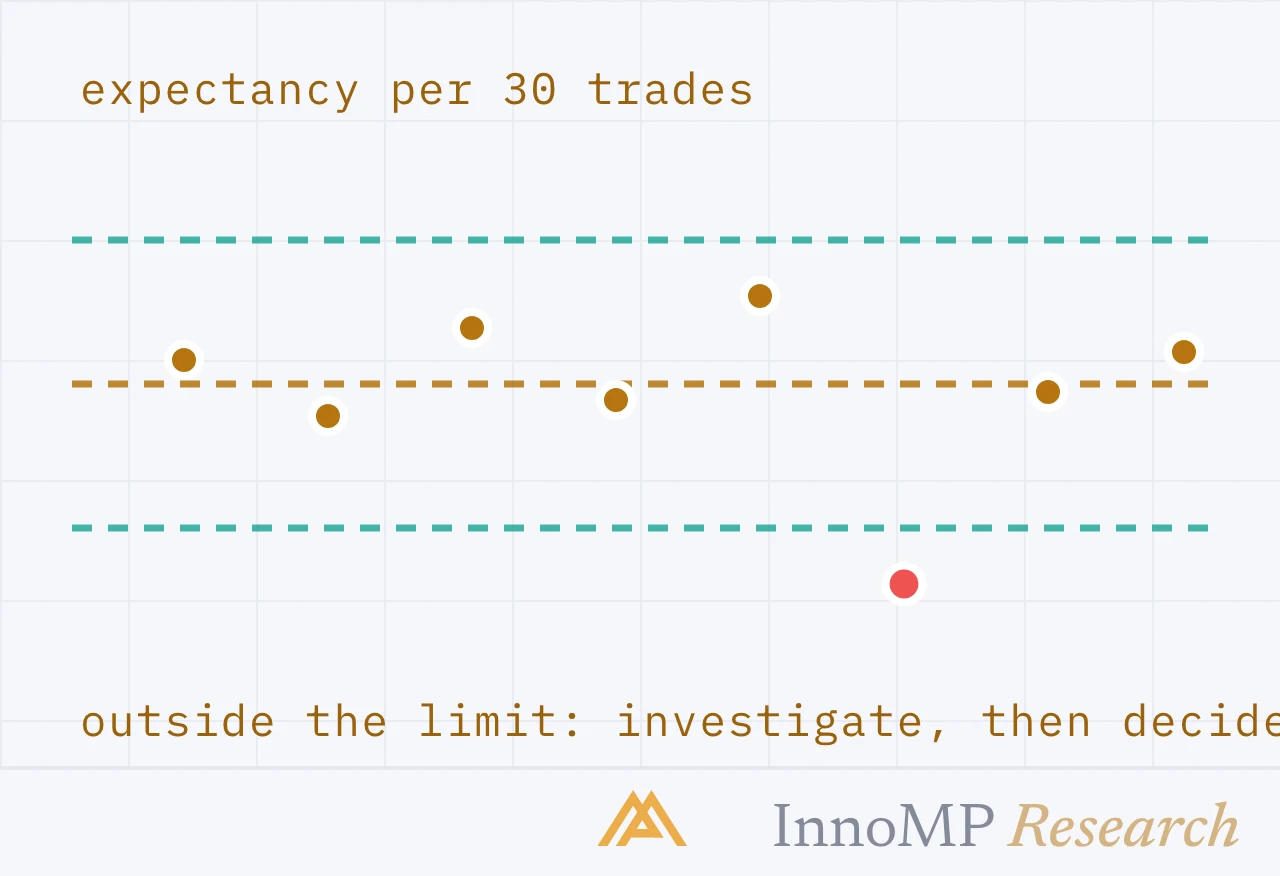
A system never reviewed drifts; one reviewed after every loss is switched off by noise. How to set a weekly, monthly and quarterly cadence, put control limits on the record, and write the kill criteria before trade one.
Read more → 10 min read
Trading journal
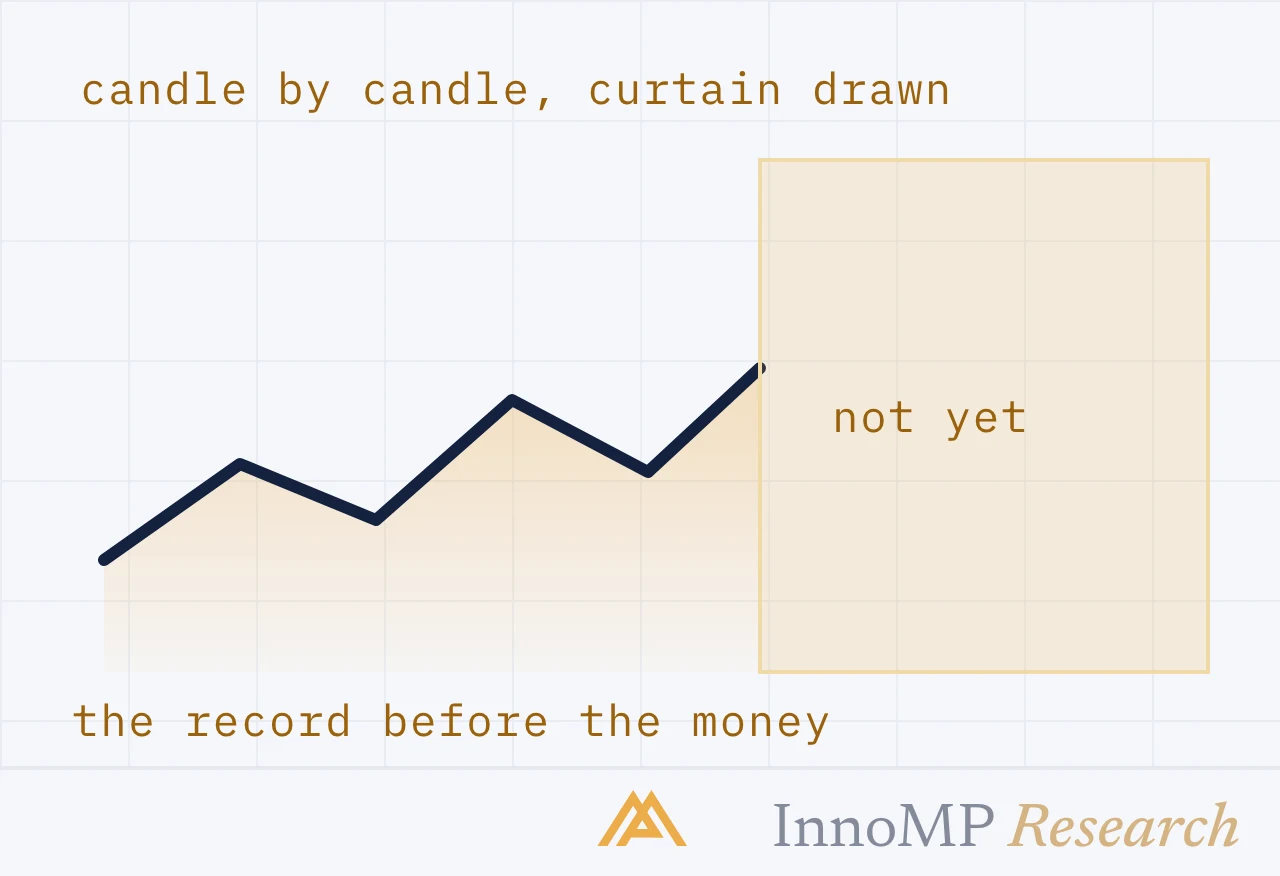
Before a setup is trusted with money it is trusted with a notebook. How to replay a chart candle by candle, record every trade the rules would have taken, and know how many trades it takes before the numbers mean much.
Read more → 9 min read

Discipline
The closing part. What to assemble from this series, in what order, and the honest note about which half of trading actually decides outcomes.
Read more → 4 min read
Cognitive bias
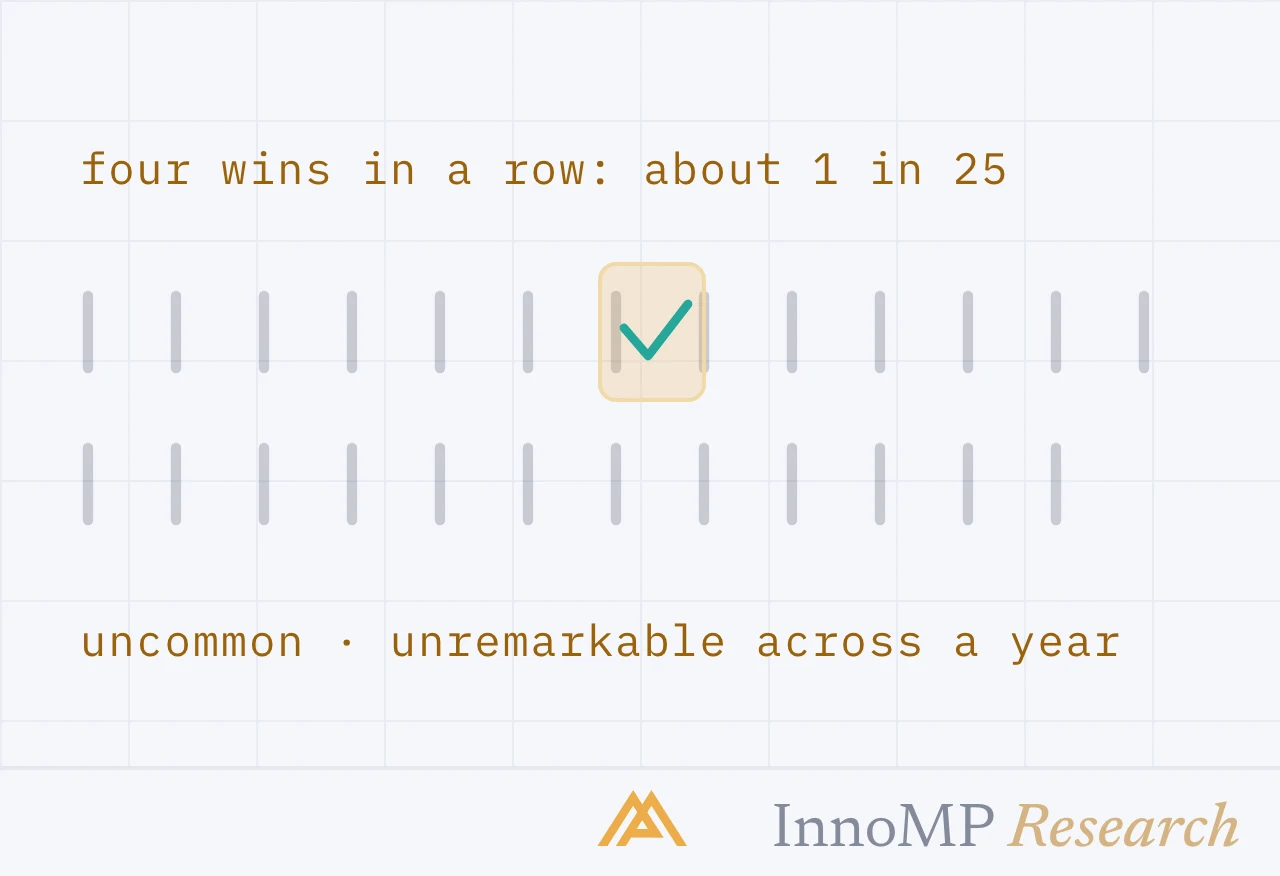
A run of wins feels like skill and is frequently luck. How outcome bias distorts self-assessment, and why the largest losses often follow the best weeks.
Read more → 5 min read
Discipline
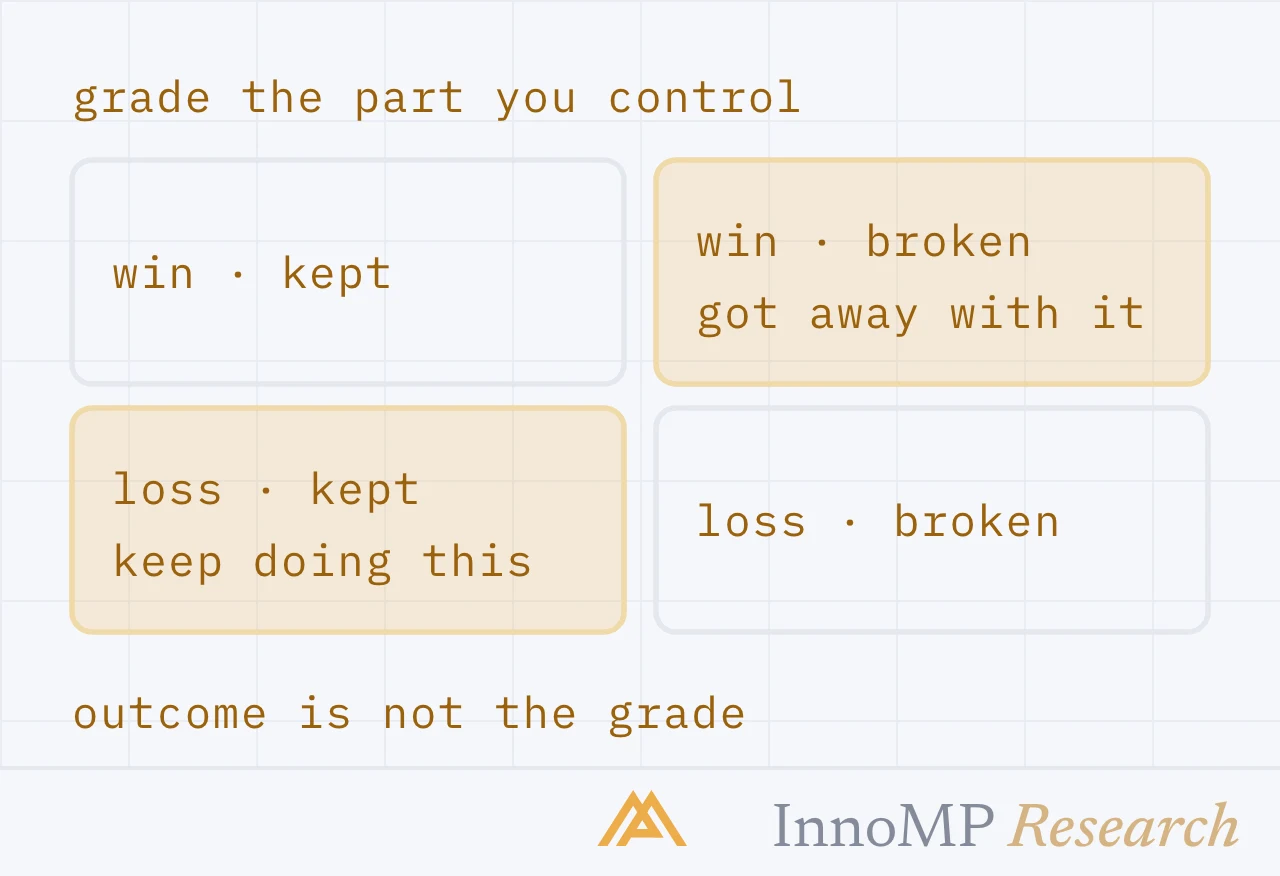
A good trade can lose and a bad trade can win. Evaluating yourself on results teaches the wrong lessons — here is what to grade instead.
Read more → 4 min read
Cognitive bias
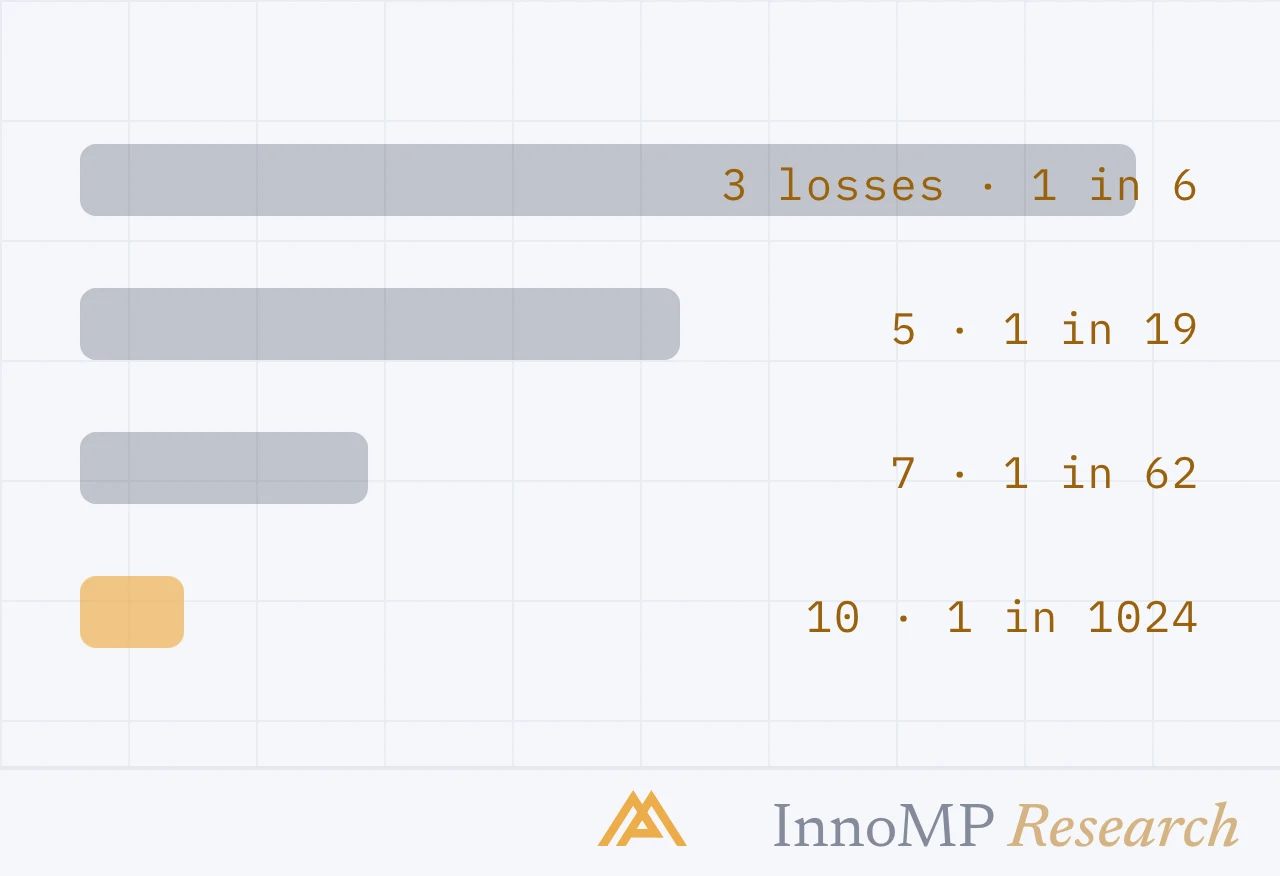
Recent and vivid events dominate judgement out of proportion to their weight. What that does to strategy assessment, and the sample sizes that actually mean something.
Read more → 4 min read
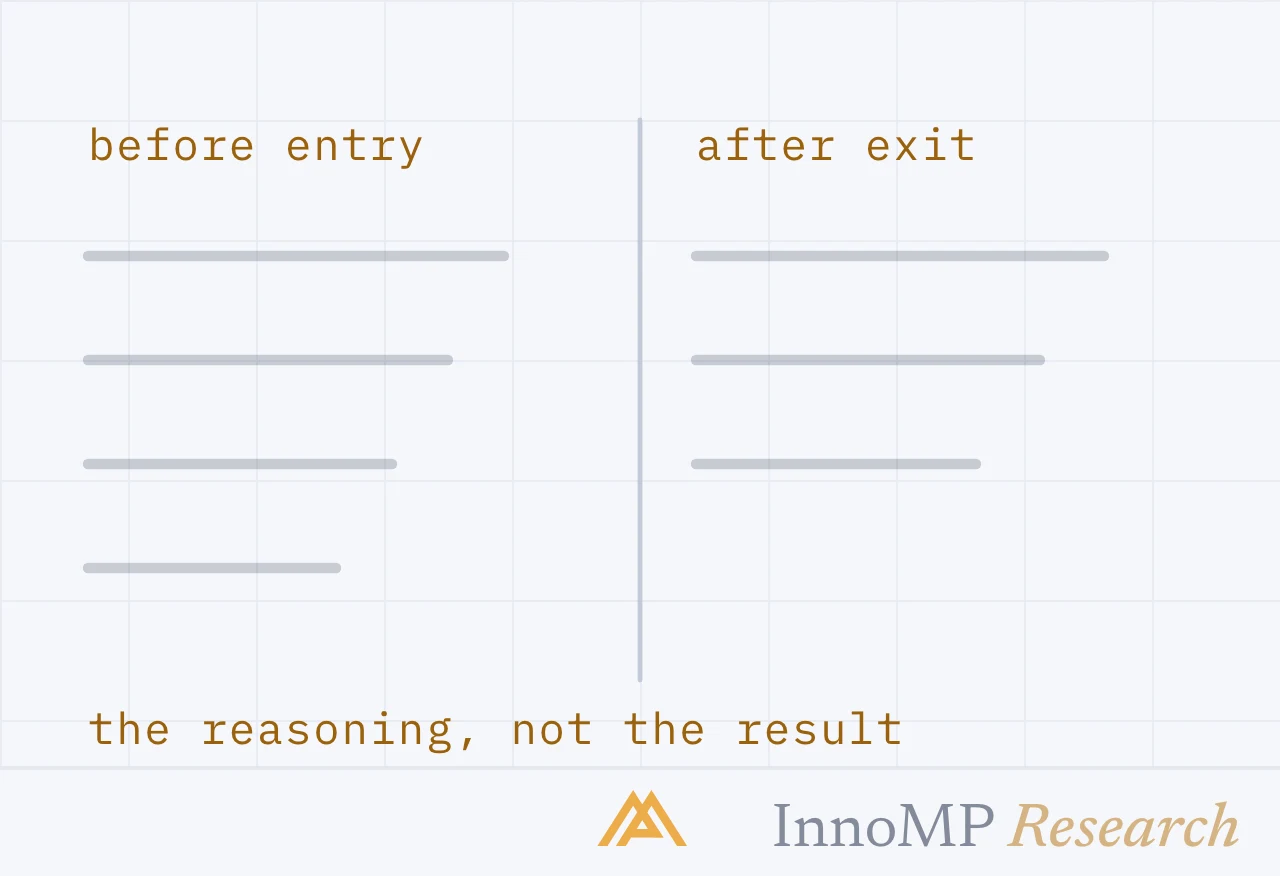
Trading journal
A list of profits and losses teaches almost nothing. What to record instead, and why the fields that matter are the ones written before the outcome is known.
Read more → 4 min read
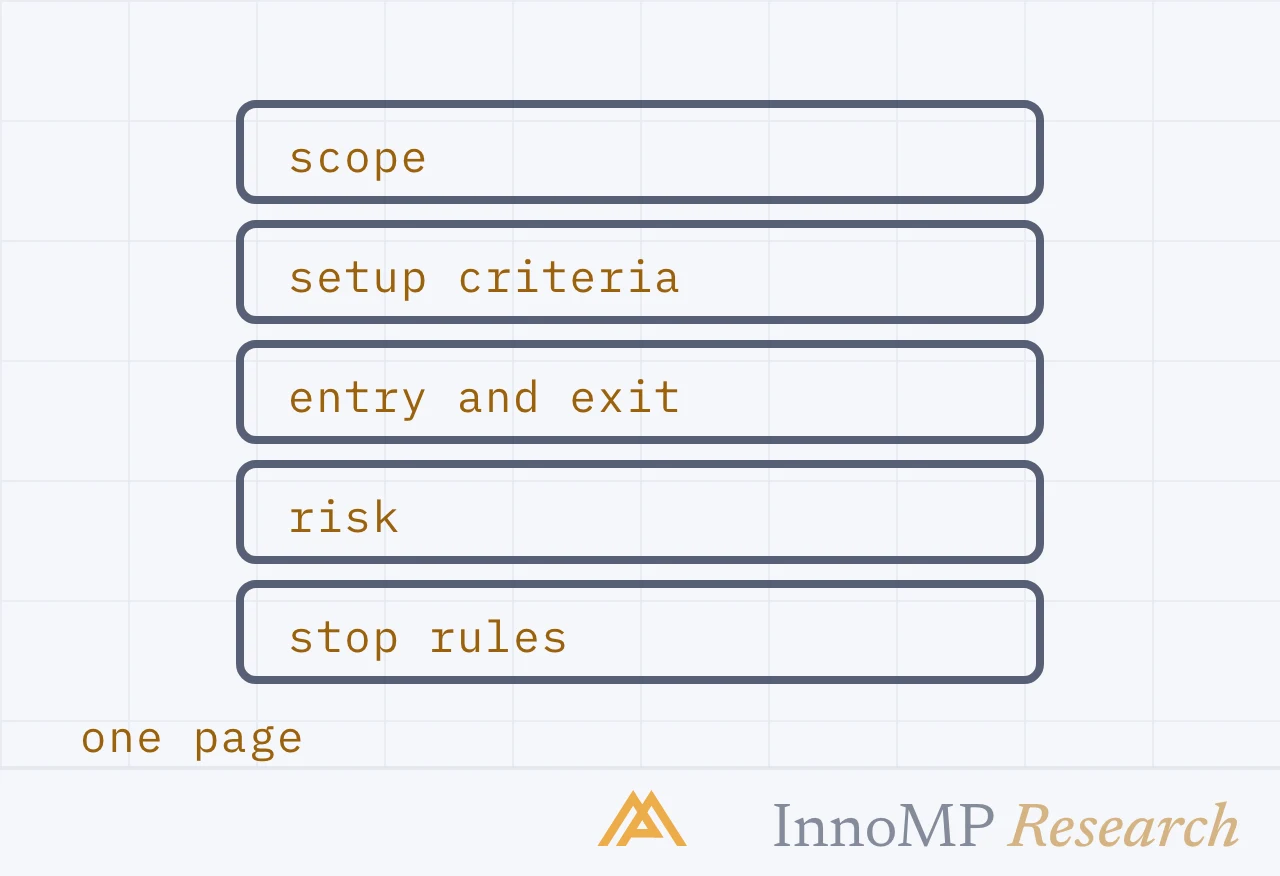
Discipline
Most trading plans are documents nobody reads twice. What a usable one contains, and the test that separates a plan from a wish list.
Read more → 4 min read
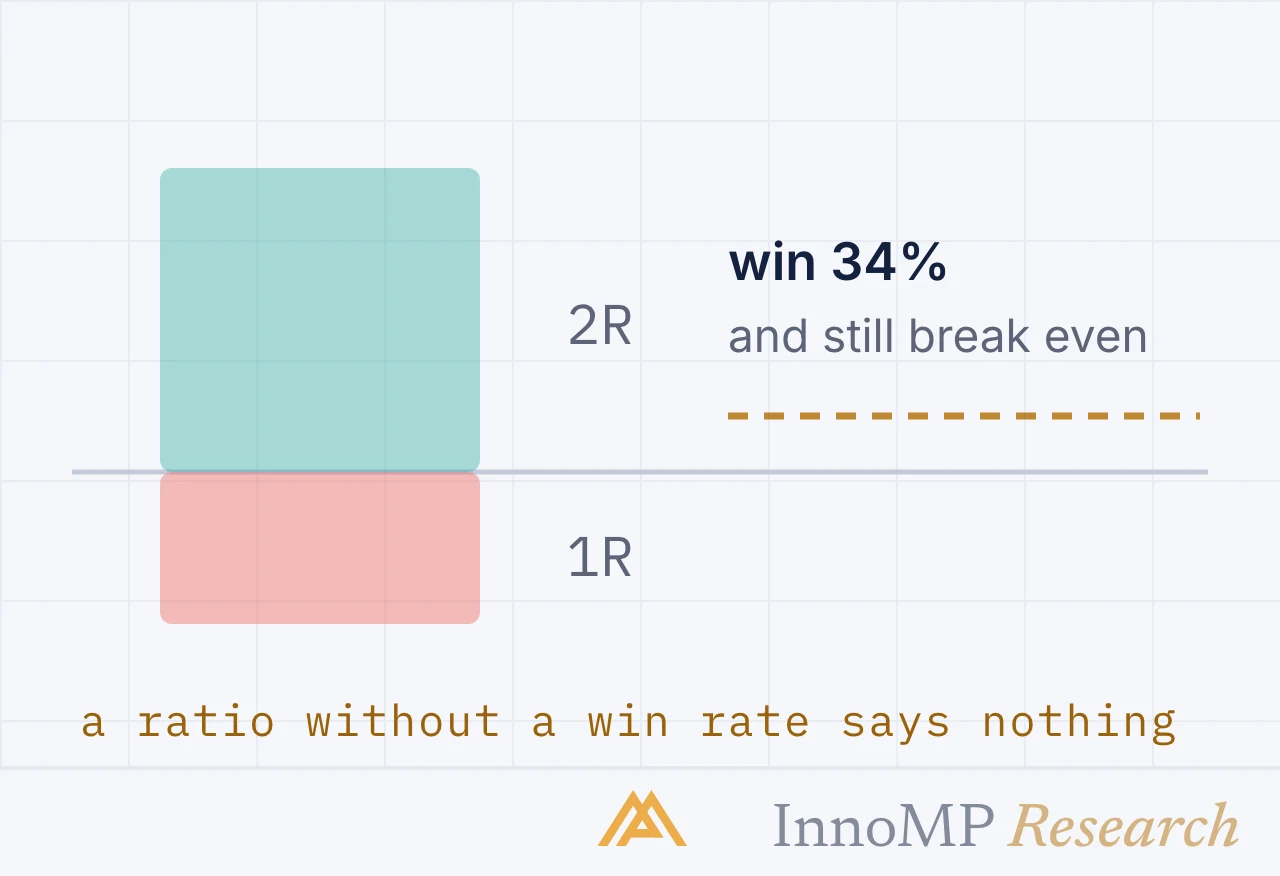
Risk-reward
R-multiples make strategies comparable and journals honest — but only when the reward is as real as the risk. Where the ratio genuinely helps, and the two ways it gets gamed.
Read more → 5 min read
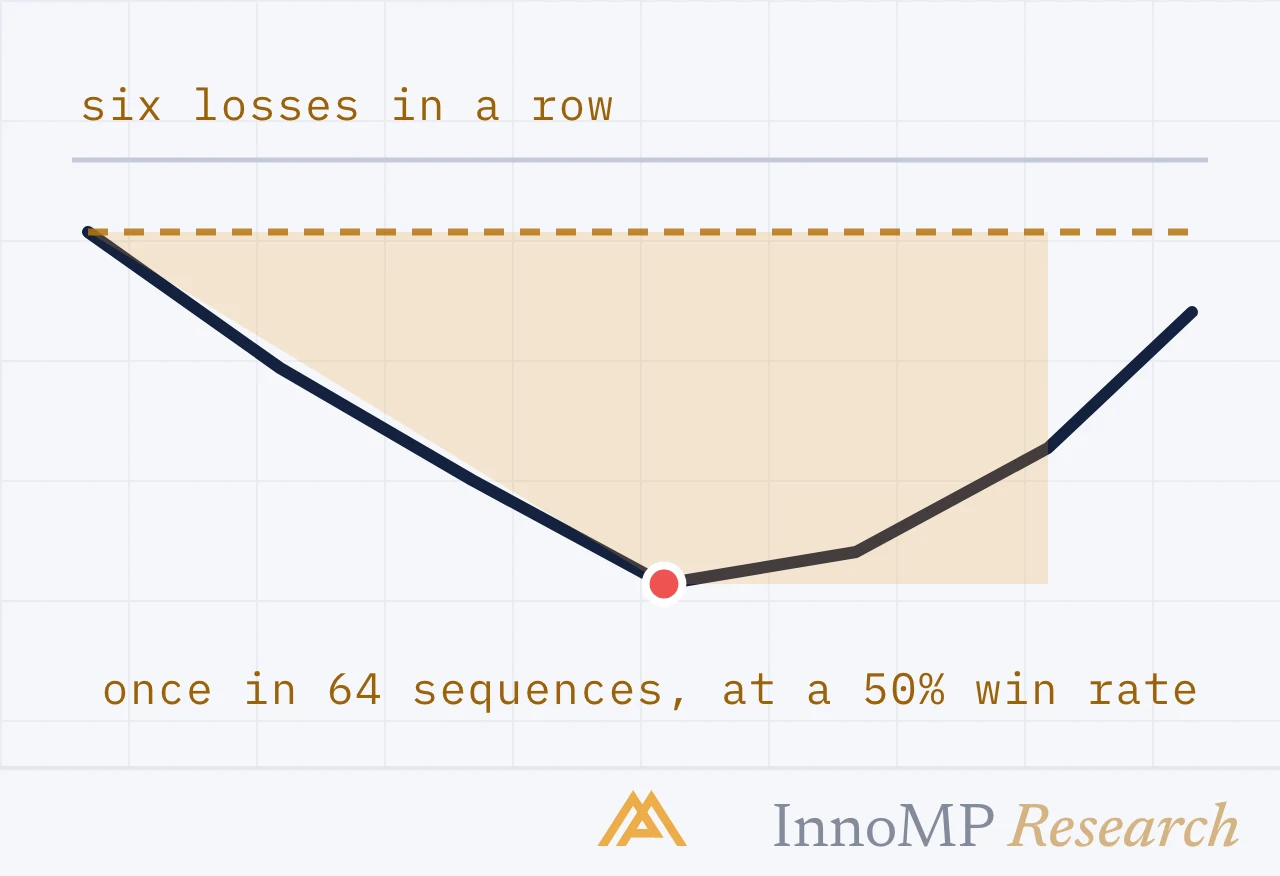
Drawdown
Every strategy has losing runs. Telling an ordinary one apart from a genuine failure is the difference between abandoning something that worked and persisting with something that stopped.
Read more → 6 min read
Risk managementDisciplineDrawdownPosition sizingCognitive biasRisk-reward