The spread is the difference between the price you can sell at (the bid) and the price you can buy at (the ask), quoted in pips or points. It is paid on entry: a position opens underwater by the spread and must recover it before it is flat. Liquidity sets it, so the most traded pairs are tightest, and it widens when liquidity thins — around data releases, in the rollover hour, at the weekend open and in stress. Whatever the pricing model, compare accounts on round-turn cost per lot.
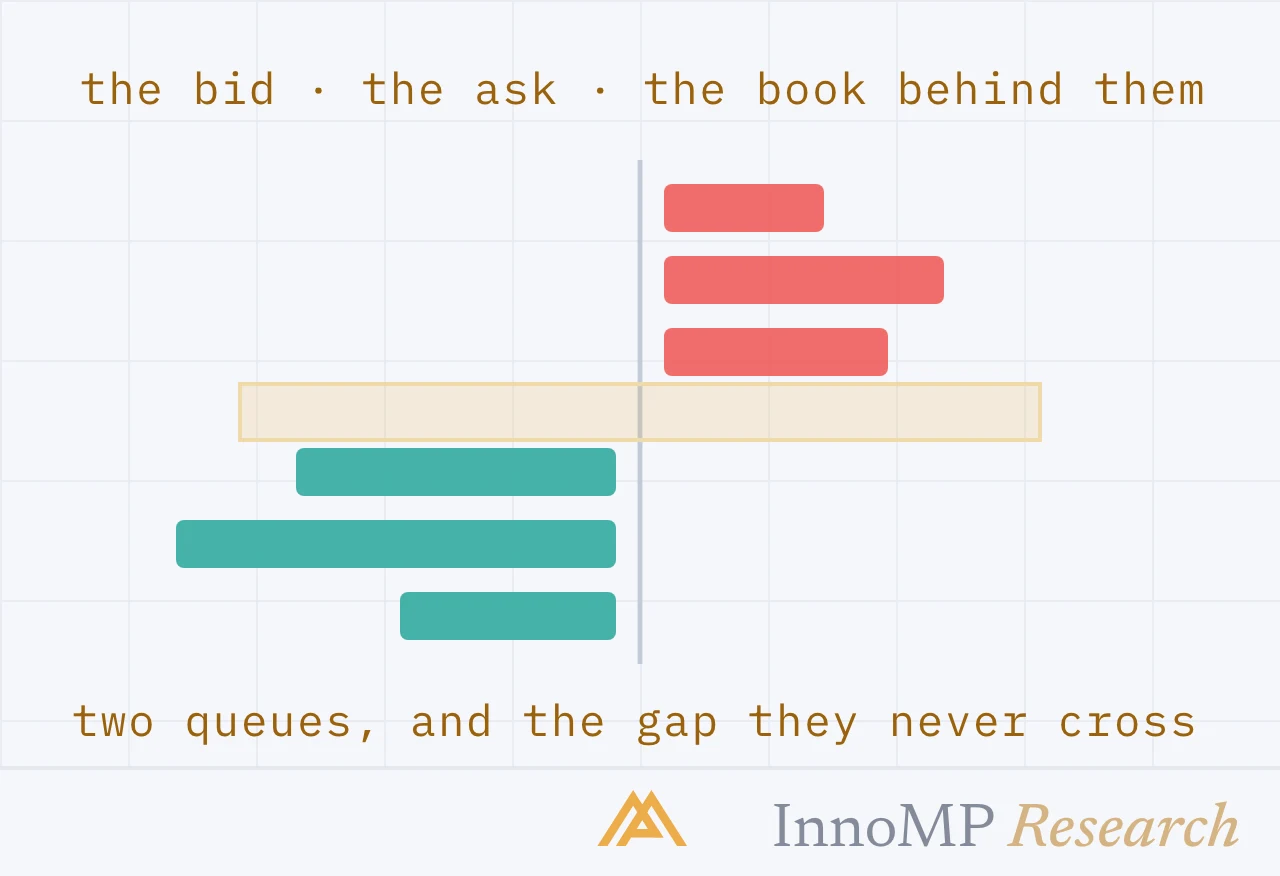
The spread is the difference between the price you can sell at and the price you can buy at. Every quote is two numbers: the bid, which is what the market will pay you, and the ask, which is what it will charge you. The gap between them is the spread, and it is the first cost of every trade — paid before the position has moved at all.
Most traders learn the spread as a definition and then stop thinking about it, because on a single trade it looks small. It is not small. It is a cost that scales with how often you trade, it changes across the day and around events, and it is the cost most likely to be missing from a backtest. This is what it is, what sets it, and how to measure the one you actually pay.
What the spread is
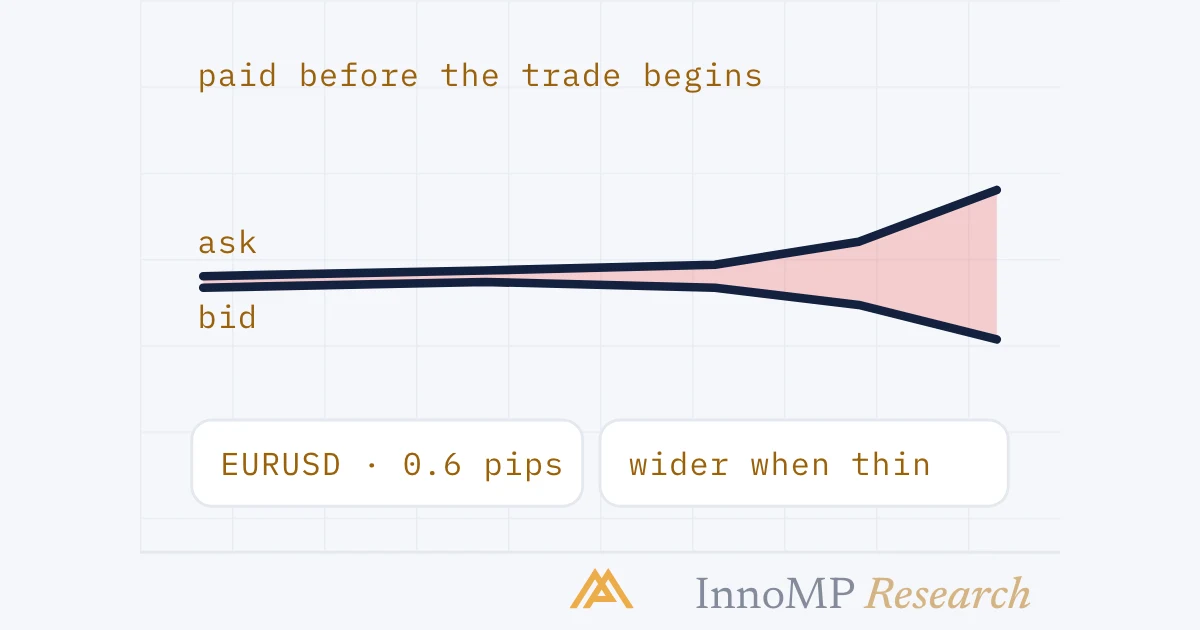
A EURUSD quote of 1.08400 / 1.08406 has a bid of 1.08400 and an ask of 1.08406. The spread is 0.00006 — six points, or 0.6 pips on the four-decimal convention that pips are counted in.
Buy at the ask and the position is worth the bid the moment it opens: 1.08400, six points below where you bought. Sell at the bid and the same thing happens in reverse. Either way the trade starts underwater by the spread and has to recover it before it is flat. That is why the spread is described as paid on entry — nothing is charged separately, but the position begins behind.
On a standard lot of EURUSD, 0.6 pips is about 6 USD. Across two hundred trades in a month it is 1,200 USD. The arithmetic for turning any spread into money is in the real cost of a trade; this article is about where the number comes from and when it moves.
What sets the spread
Liquidity, first. The spread is the price of finding someone to take the other side. Where there are many participants quoting, the gap between the best bid and the best ask is small; where there are few, it is wide. The US dollar is on one side of 88% of all currency trades, per the BIS, and global turnover runs to 7.5 trillion USD a day — which is why the dollar majors carry the tightest spreads a retail account will see, and why a minor pair or an exotic quotes several times wider for the same lot.
Time of day, second. Liquidity is not constant across the clock. For currencies it peaks in the London–New York overlap and thins in the hours between the New York close and the Tokyo open; the session map is a map of the spread as much as of anything else. The same pair can quote 0.6 pips at 14:00 London and 2 pips at 22:00 New York.
Volatility and events, third. Around a scheduled release, market makers widen their quotes to protect themselves against the number, and the spread can go from a fraction of a pip to several pips for a few seconds. The calendar playbook covers the minute itself; the point here is that the widening is not an accident, it is the market repricing the risk of quoting.
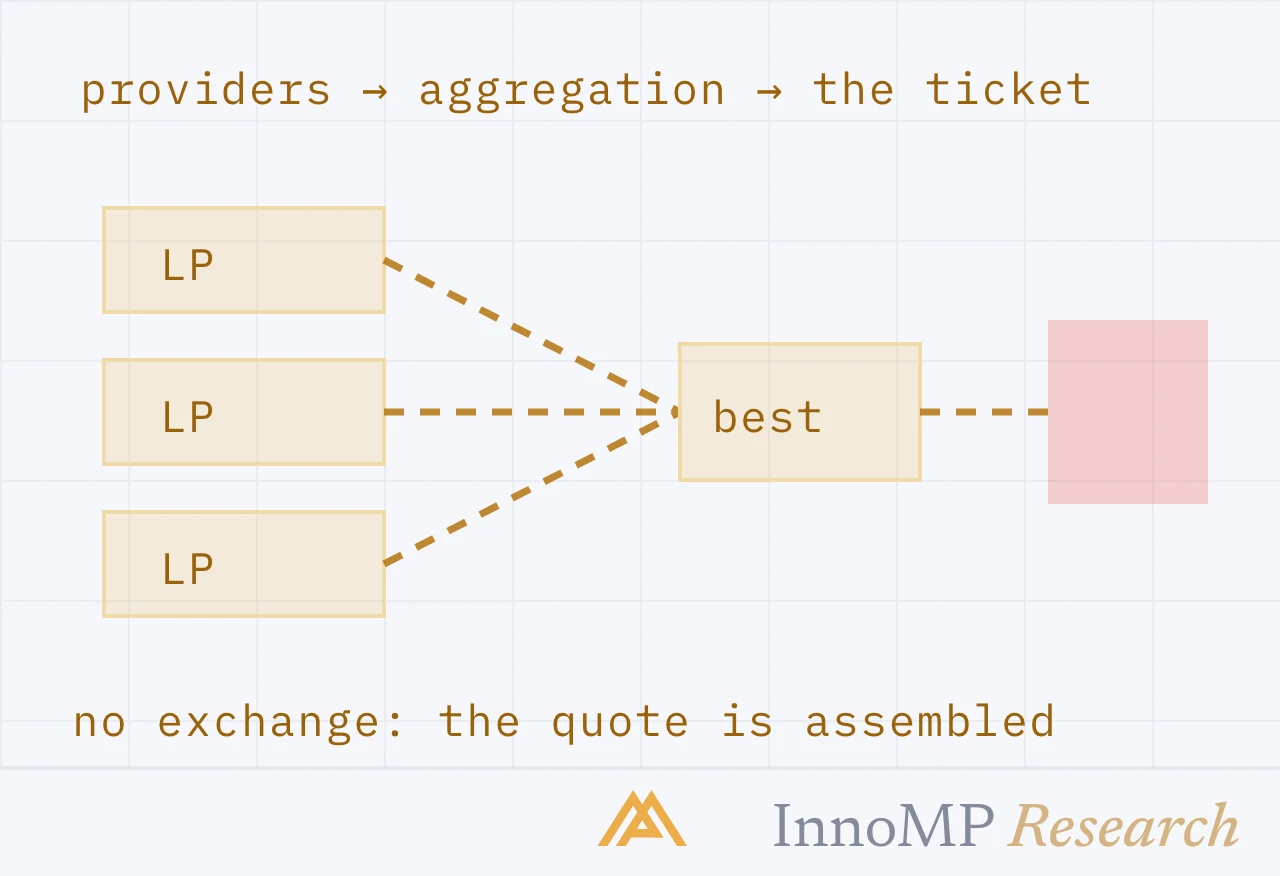
The broker’s pricing model, last. The same underlying market can reach you as a raw spread with a commission on top, or as an all-in spread with no separate charge. Which one you are on changes the number you see without changing what the market itself costs.
Fixed, variable, raw
Three words that get used loosely.
A variable spread moves with the market — tighter in liquid hours, wider in thin ones and around events. It is the normal case for CFD and forex pricing, and it is what this article describes.
A fixed spread is held constant by the broker regardless of conditions. It is simpler to reason about and usually wider on average, because the broker is carrying the risk of the widening instead of passing it on.
A raw spread is the underlying market spread passed through with little or no mark-up, with the broker’s charge taken as a commission per lot instead. Raw-spread accounts show very tight spreads; the cost has moved, not disappeared.
Two ways to be charged for the same thing
An account that quotes 0.2 pips with a 7 USD round-turn commission and an account that quotes 1.0 pips with no commission are charging for the same thing in different clothes. Per standard lot of EURUSD:
| Spread cost | Commission | Round-turn | |
|---|---|---|---|
| Raw + commission | 0.2 pips ≈ 2 USD | 7 USD | ≈ 9 USD |
| All-in spread | 1.0 pip ≈ 10 USD | — | ≈ 10 USD |
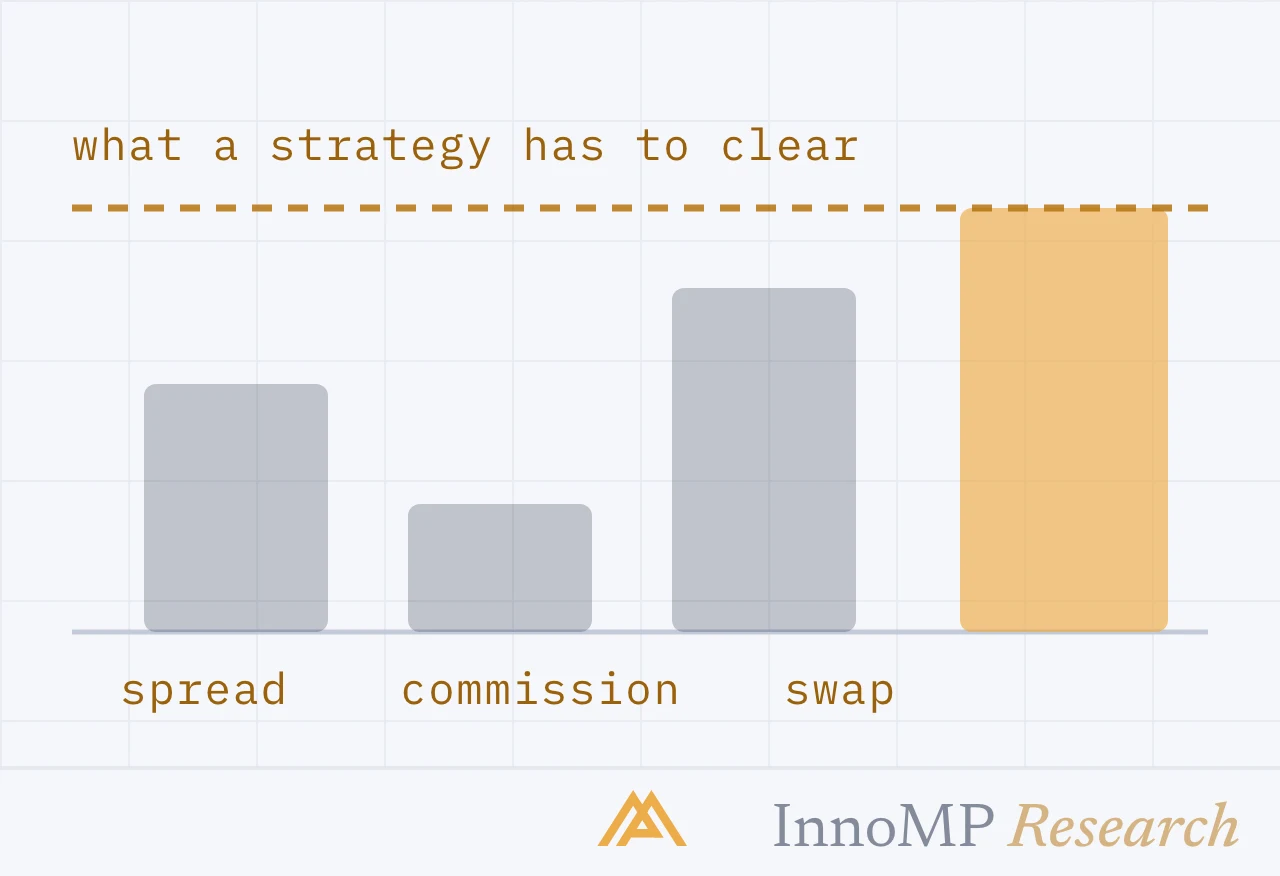
Neither is cheaper in general. The raw account wins here by a dollar; at a higher commission or a tighter all-in spread it would lose. The number to compare is the round-turn cost per lot, in your account currency, at the hours you actually trade. Where the spread is all-in, that is what the platform’s contract details describe as the cost; where it is raw, add the commission both ways.
Key takeaway The spread is the smallest number on the ticket and the easiest to ignore, which is why it is the cost that ruins short-term strategies. Measure it as a share of your stop distance: on a 10-pip stop a 1-pip spread is 10% of the risk before anything has happened. The tighter the stop, the more the spread decides the outcome.
When it widens, and what that does to a stop
Four windows carry wider spreads than the average, and all four are predictable.
The rollover hour. After the New York close, liquidity providers step back and spreads widen sharply for a short window while swap is applied.
Scheduled data. In the seconds around a release, spreads can be several times their normal width.
The Sunday open. The first hours of the week are thin, and the opening quotes are the week’s worst.
Stress. When markets are moving fast, quotes widen to match — and the widening lasts as long as the stress does.
What matters for a trader is what a wider spread does to a resting stop. A stop is triggered on the bid for a long position and on the ask for a short. When the spread widens, the bid falls and the ask rises without the market moving, and a stop sitting close to price can be executed by the widening alone. Stop placement covers where a stop belongs; the spread is the reason it belongs further away in the four windows above.
Measuring the spread you actually pay
Backtests assume an average spread. You do not trade the average; you trade the spread at the moments you enter. For one week, note the quoted spread on your instrument at each entry — the platform shows both prices on the ticket — and compare the median to what your backtest assumed. If the two are far apart, the strategy was tested against a cost it does not pay in practice, and its expectancy is overstated by the difference times the number of trades.
Then divide the spread by your typical stop distance. That ratio is the fraction of each trade’s risk spent before the trade has done anything. A strategy whose ratio is above a tenth is being decided by execution cost as much as by analysis, and the fix is either a wider stop, a more liquid hour, or a different instrument — not a smaller spread that was never on offer.
A closing point
The spread is not a fee a broker adds to a market; it is the market’s own price for letting you in and out, marked up or passed through depending on the account. It cannot be avoided, only measured, timed and sized around. Traders who know their round-turn cost per lot, at the hours they trade, as a share of the stop they use, have most of what this article can give them. The rest is on the ticket, every time, in the gap between two numbers.
- The spread is the ask minus the bid, quoted in pips or points; on a five-decimal EURUSD quote of 1.08400 / 1.08406 it is 0.6 pips.
- It is paid on entry — the position opens underwater by the spread and must recover it before it is flat.
- Liquidity sets the baseline: the US dollar is on one side of 88% of FX trades, which is why dollar majors carry the tightest spreads.
- Spreads widen when liquidity thins — around scheduled data, in the rollover hour after the New York close, at the Sunday open and in market stress.
- A raw spread with commission and an all-in spread with no commission are the same cost in different clothes; compare them as round-turn cost per lot.