Market structure
How to trade US100 CFDs: a framework for the Nasdaq-100
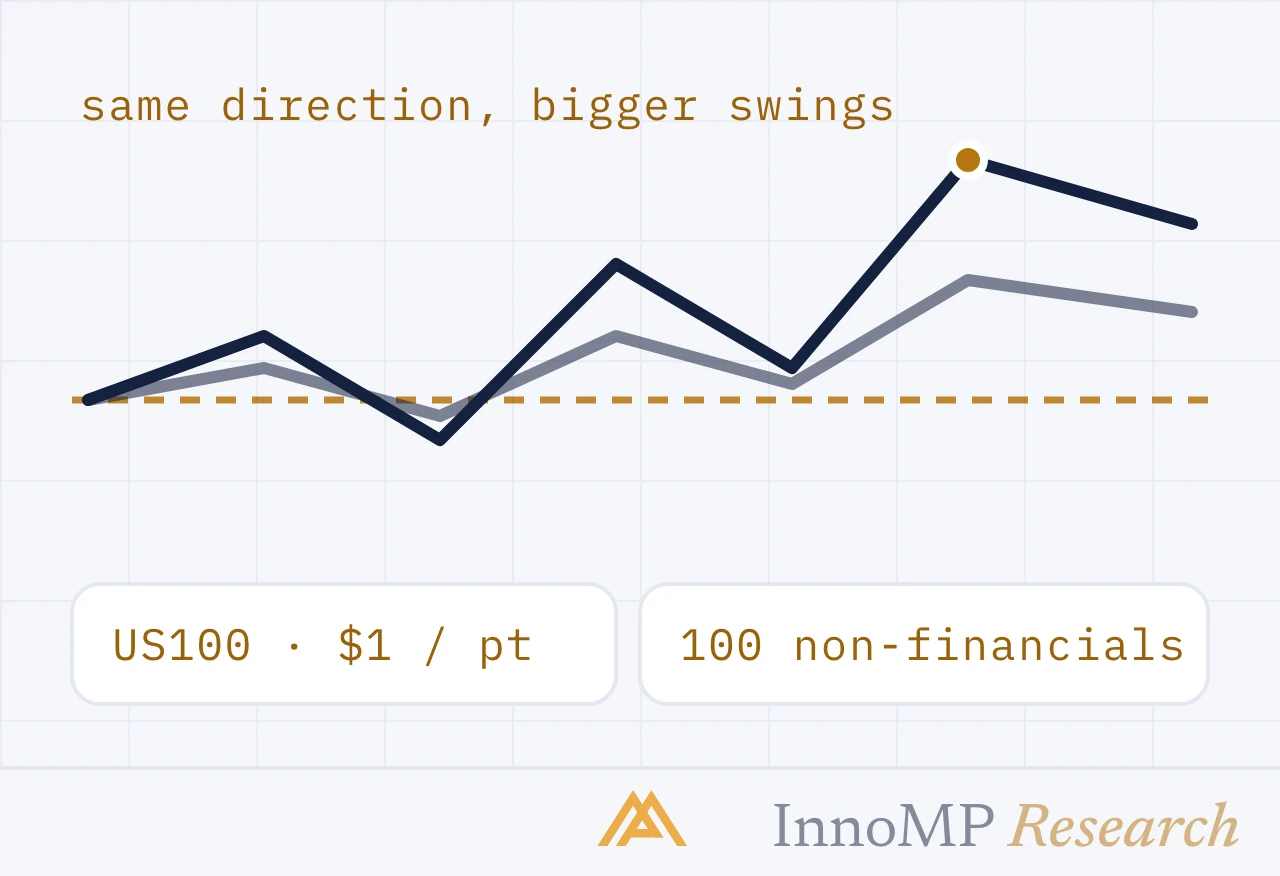
Same direction as the S&P 500, bigger swings. Why the Nasdaq-100 moves more, how concentrated it may be, the one-contract lot, and sizing at a higher level.
9 min read
Sessions, overlaps, weekends and the hours that quietly cost money.
16 articles
Same direction as the S&P 500, bigger swings. Why the Nasdaq-100 moves more, how concentrated it may be, the one-contract lot, and sizing at a higher level.
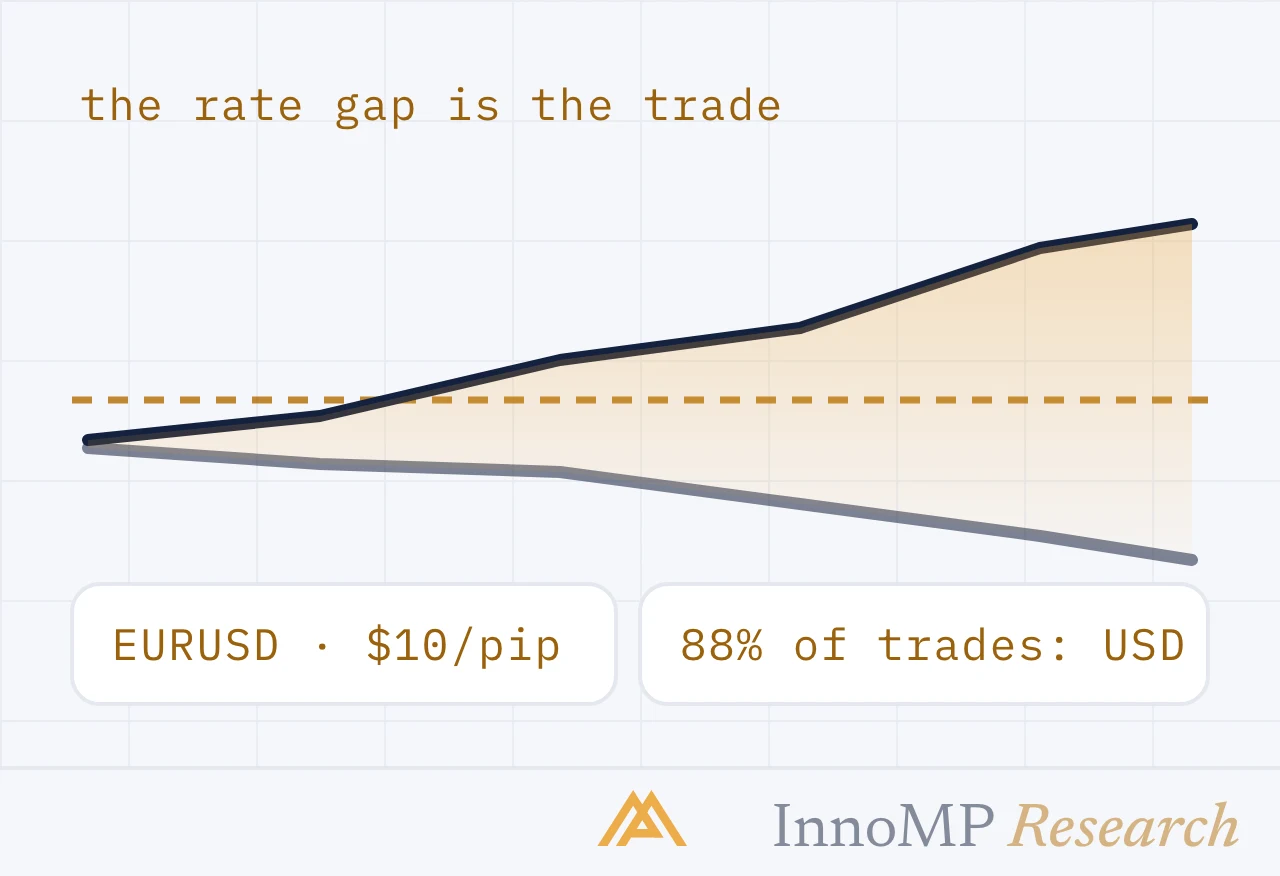
The dollar is on one side of 88% of currency trades, the euro on 30%. What moves EURUSD, the contract, the two central banks, and sizing for a liquid pair.
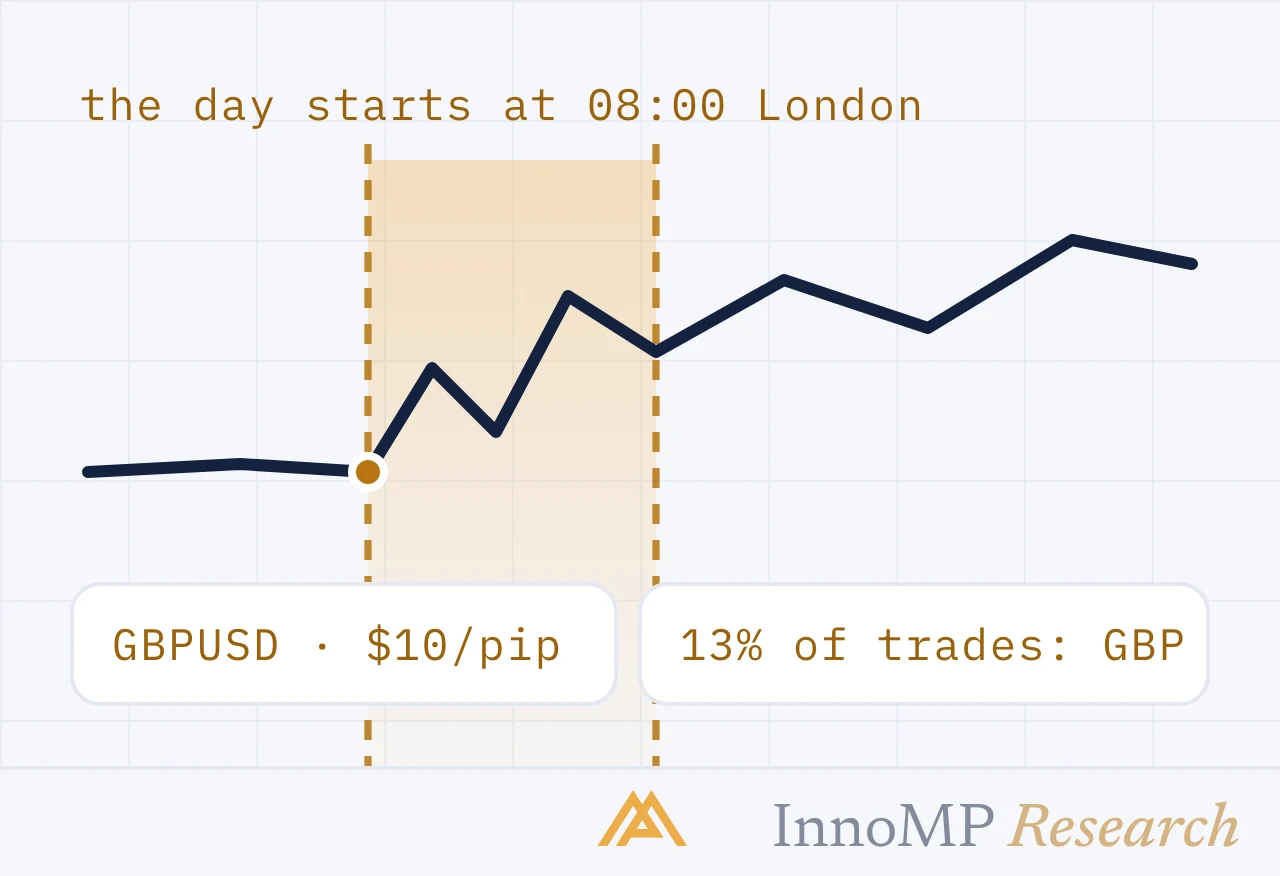
The fourth most traded currency, a day that starts at 08:00 London, a 07:00 inflation print into a thin book, a noon Bank of England. Drivers, contract, sizing.
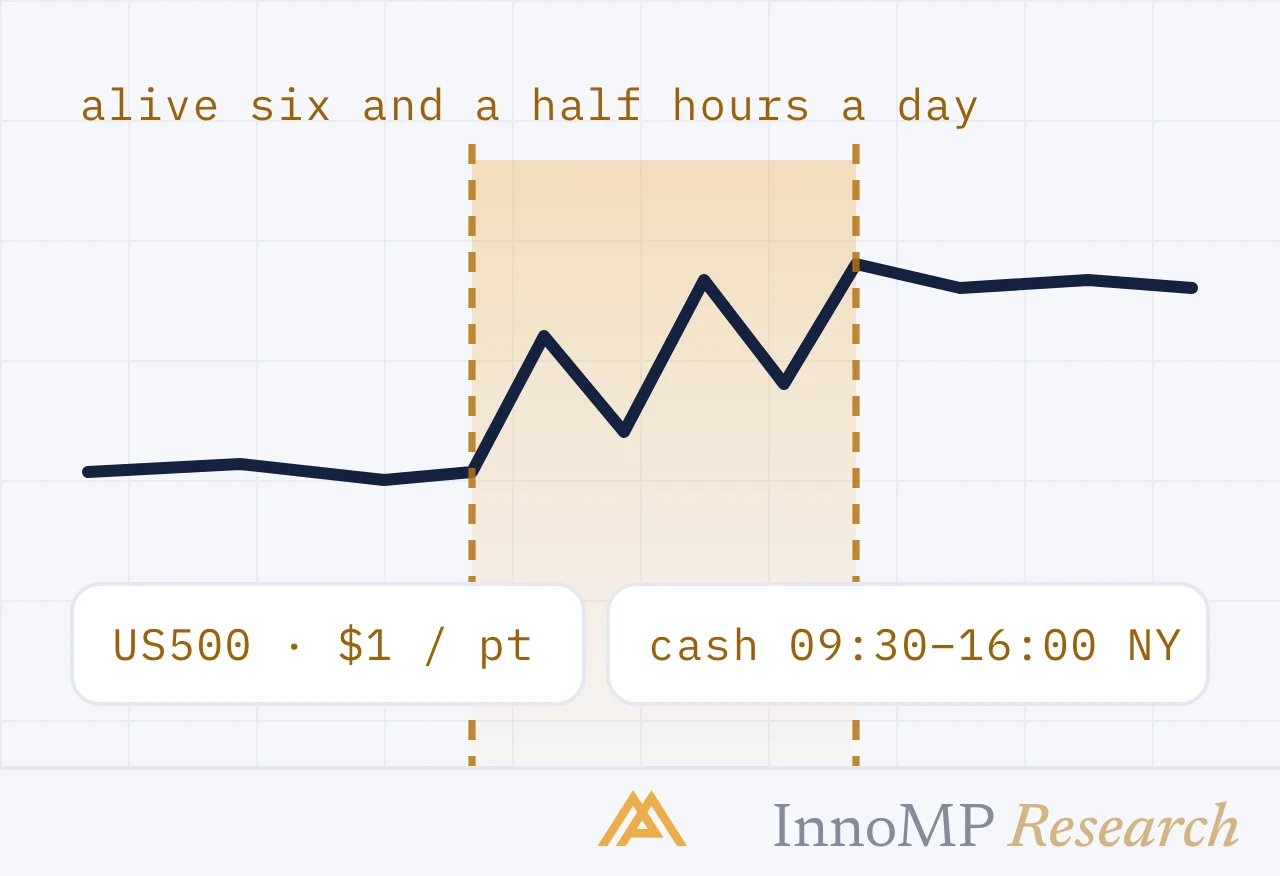
An index CFD quotes all day but is alive for six and a half hours. What moves the S&P 500, the one-contract lot, the cash session, and sizing for an index.
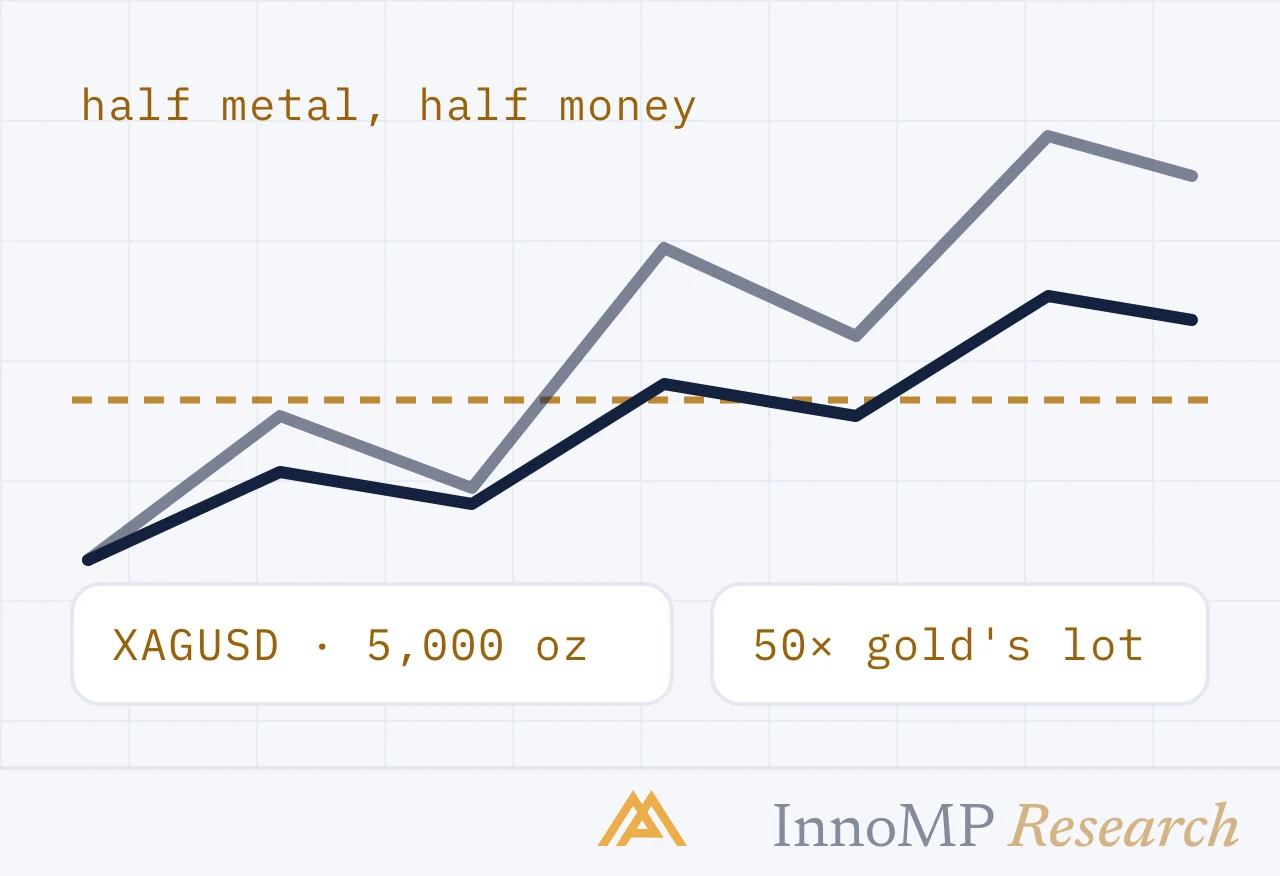
Silver is half metal and half money, so it moves more than gold both ways. What drives it, how the 5,000-ounce contract is sized, and how to size for its range.
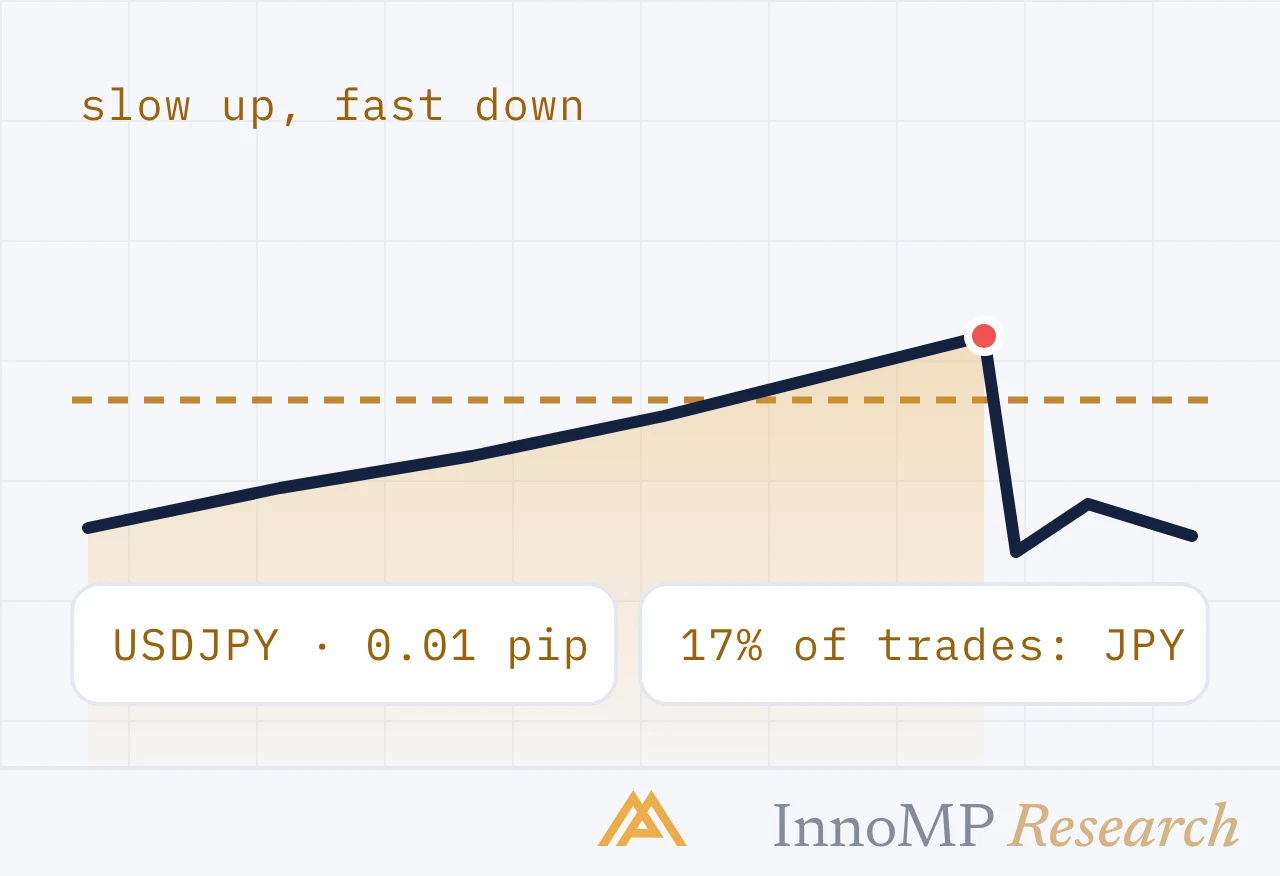
The yen is the third most traded currency, and the pair climbs slowly and falls fast. Rates, the carry trade, intervention, a moving pip value, and sizing.
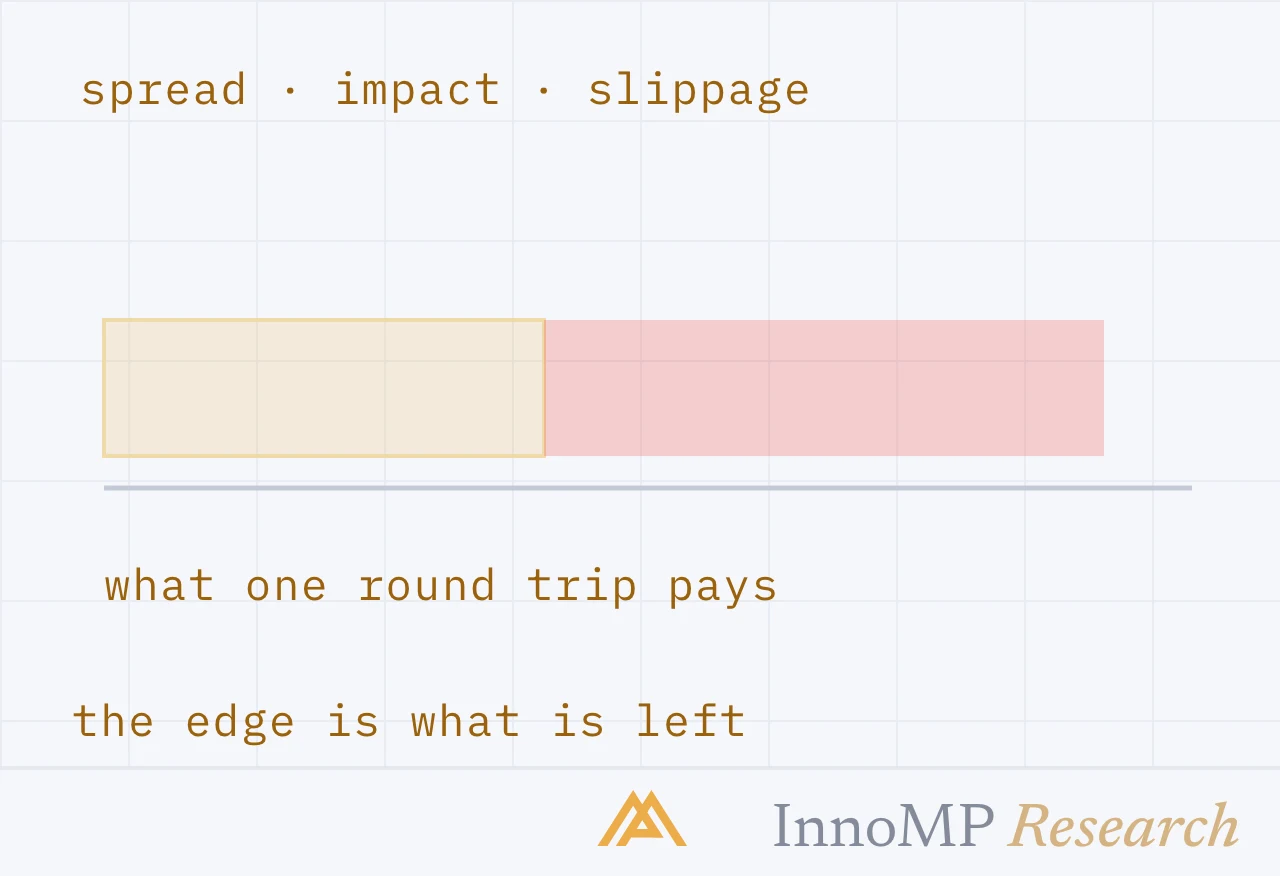
The spread is the visible cost. Depth decides whether that spread is available for your size, and slippage is the gap between the price you saw and the price you got. Why an edge is measured after all three.
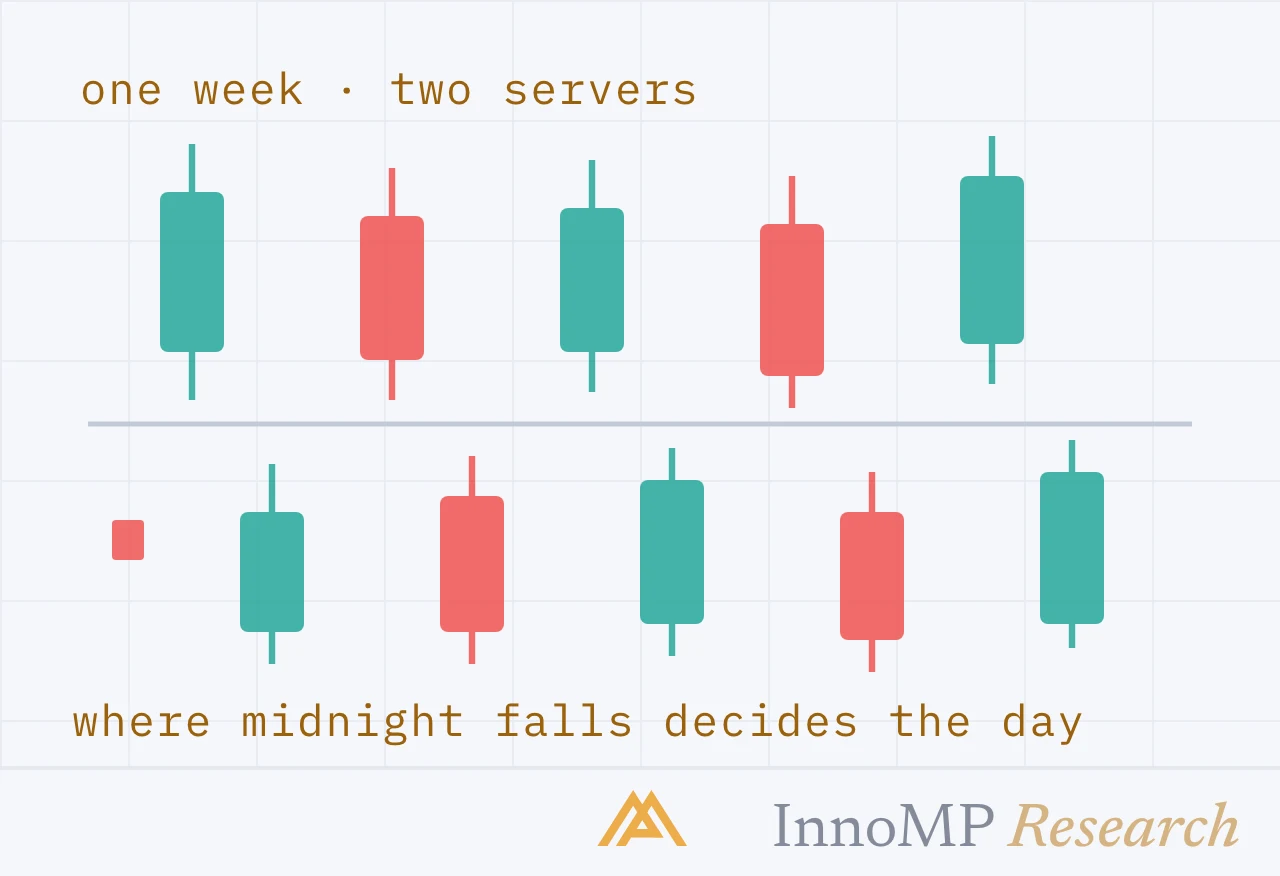
Two traders open the same pair on the same day and see different daily candles. Neither chart is wrong. Where a broker's server puts midnight decides what a day is — and every level built on daily candles moves with it.
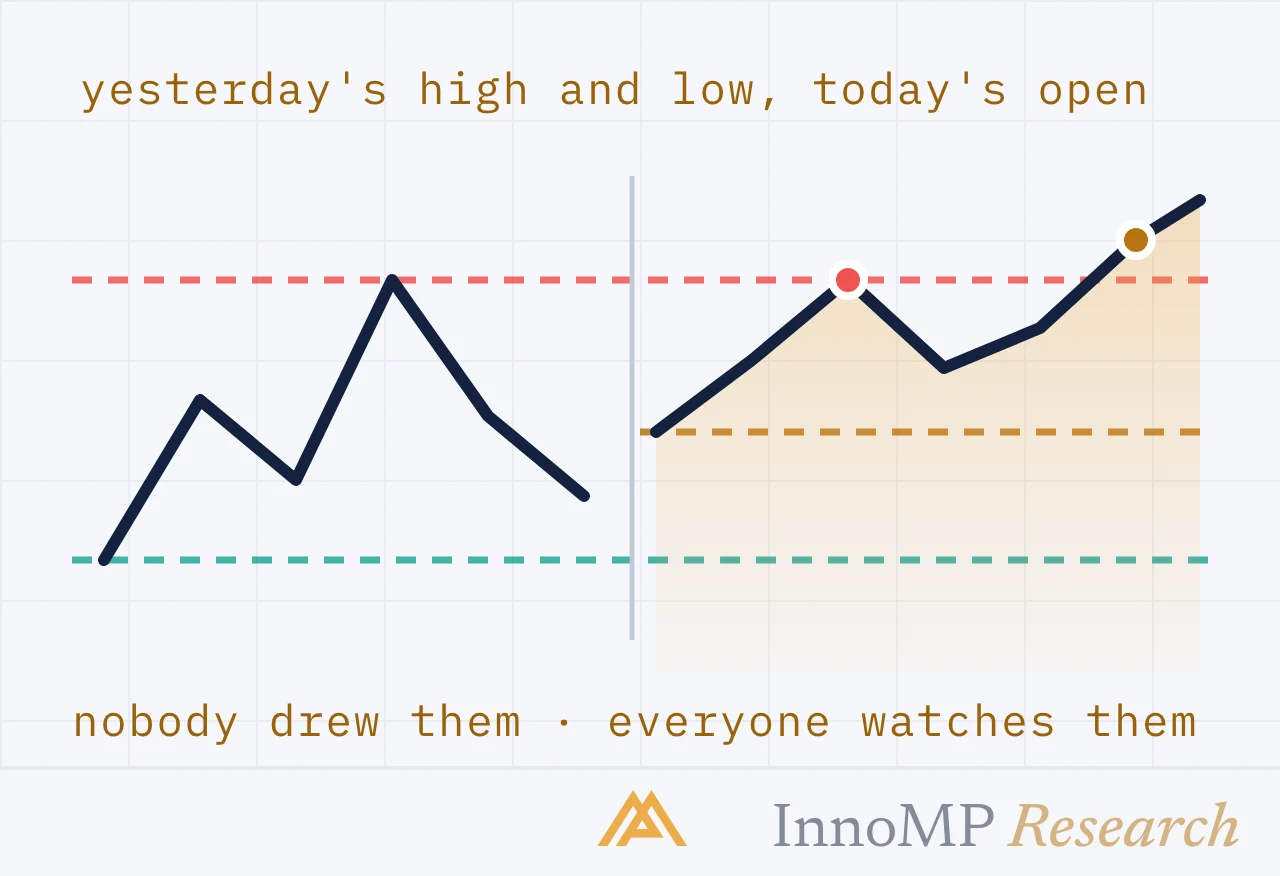
Every day leaves levels behind that thousands of screens watch: the previous day's high and low, the daily and weekly open, each session's extremes. Why they behave like support and resistance, and how to rank them.
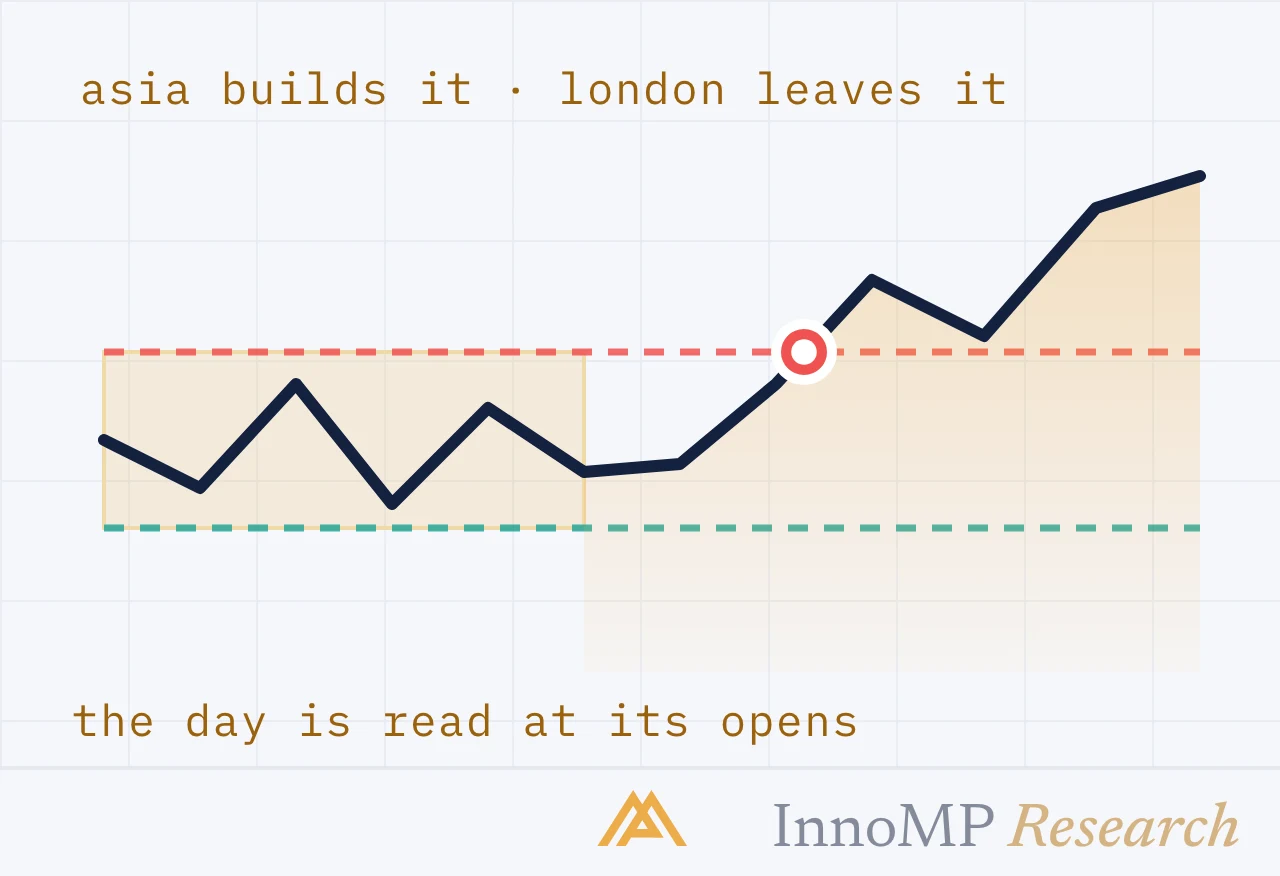
A forex day is not 24 equal hours. Asia builds a range, London decides which side of it to leave, New York extends that or reverses it. How to read each open as an event, and what the Asian range is worth.
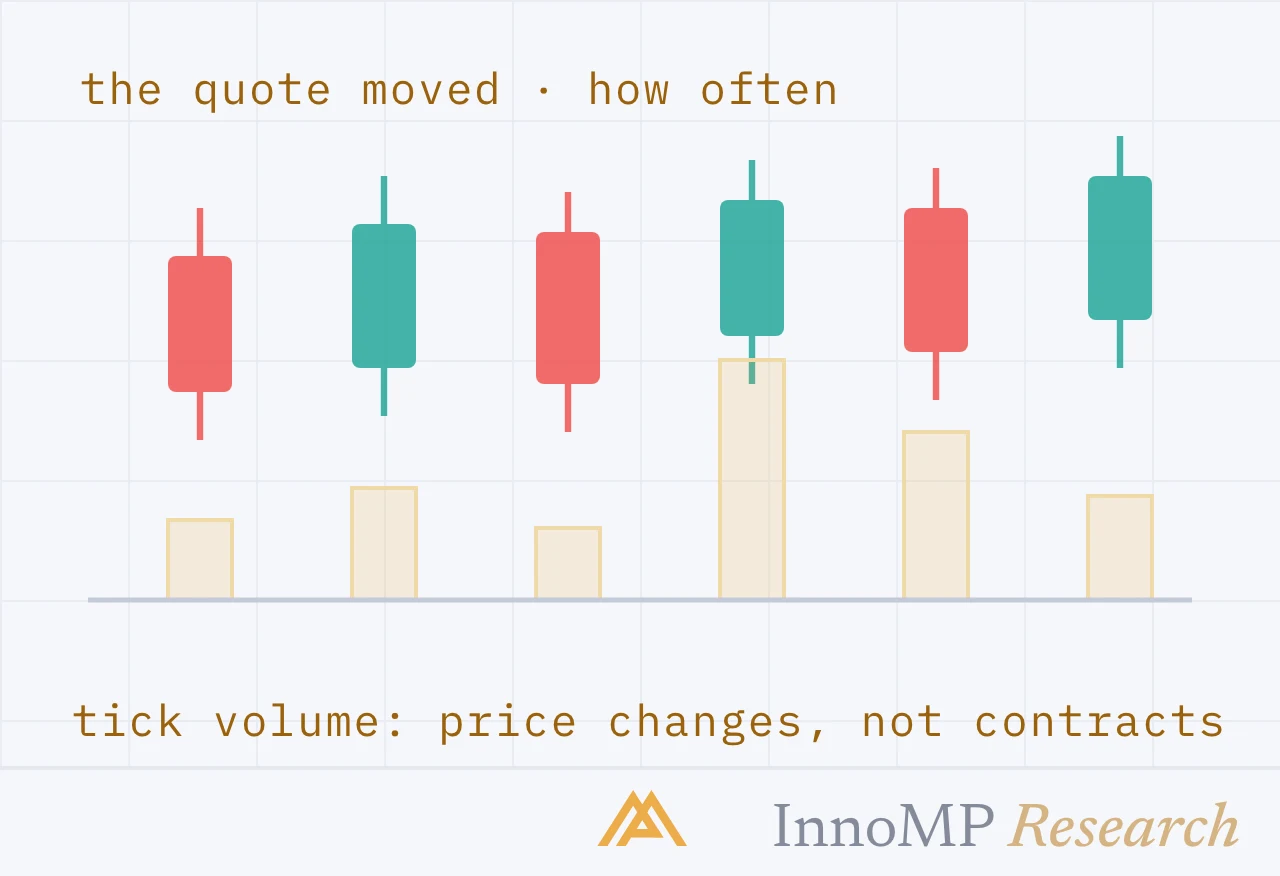
Forex has no central exchange, so the volume under a currency chart counts price changes, not contracts. What tick volume can still tell you, how to read it against the session, and where it misleads.
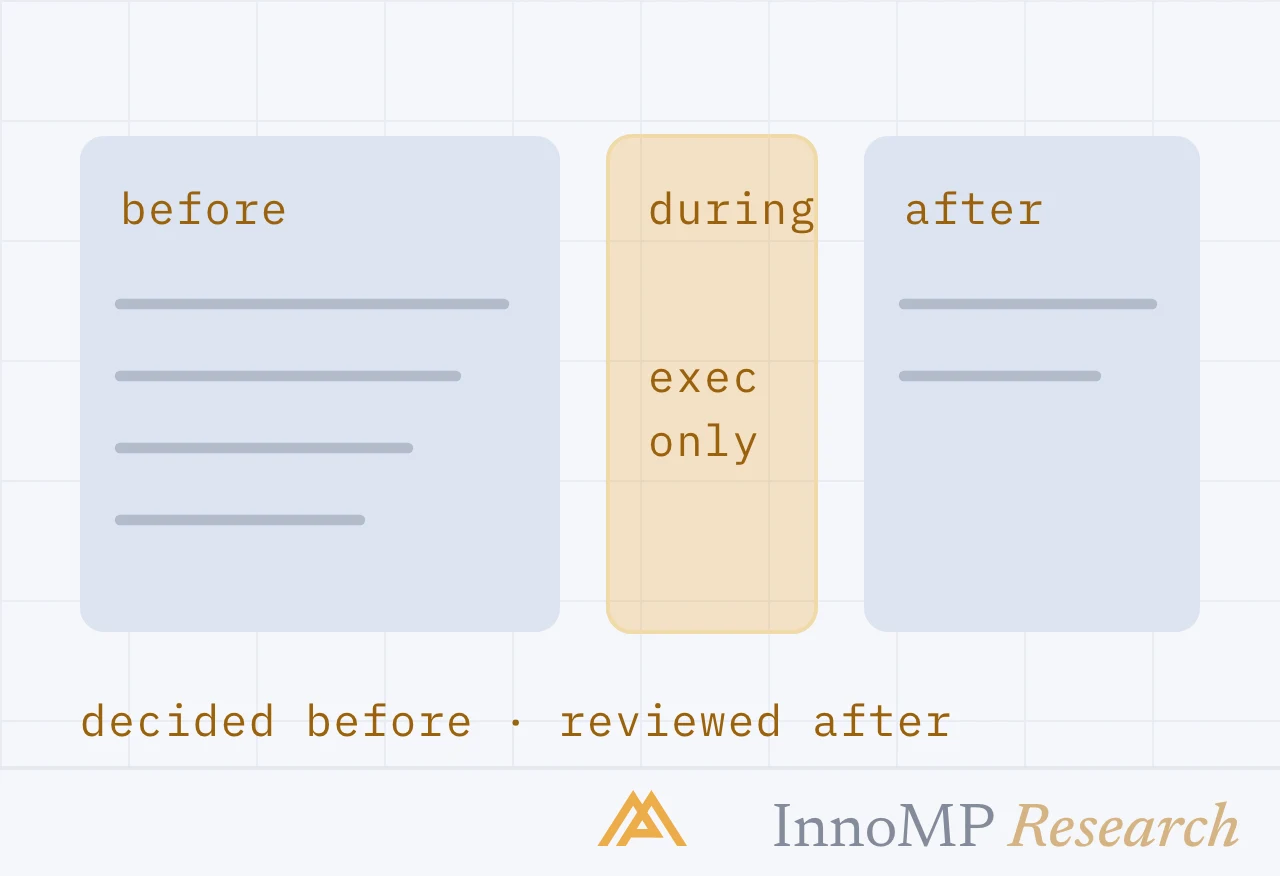
The decisions that matter are made before the session and reviewed after it. What belongs in each routine, and why the checklist beats the intention.
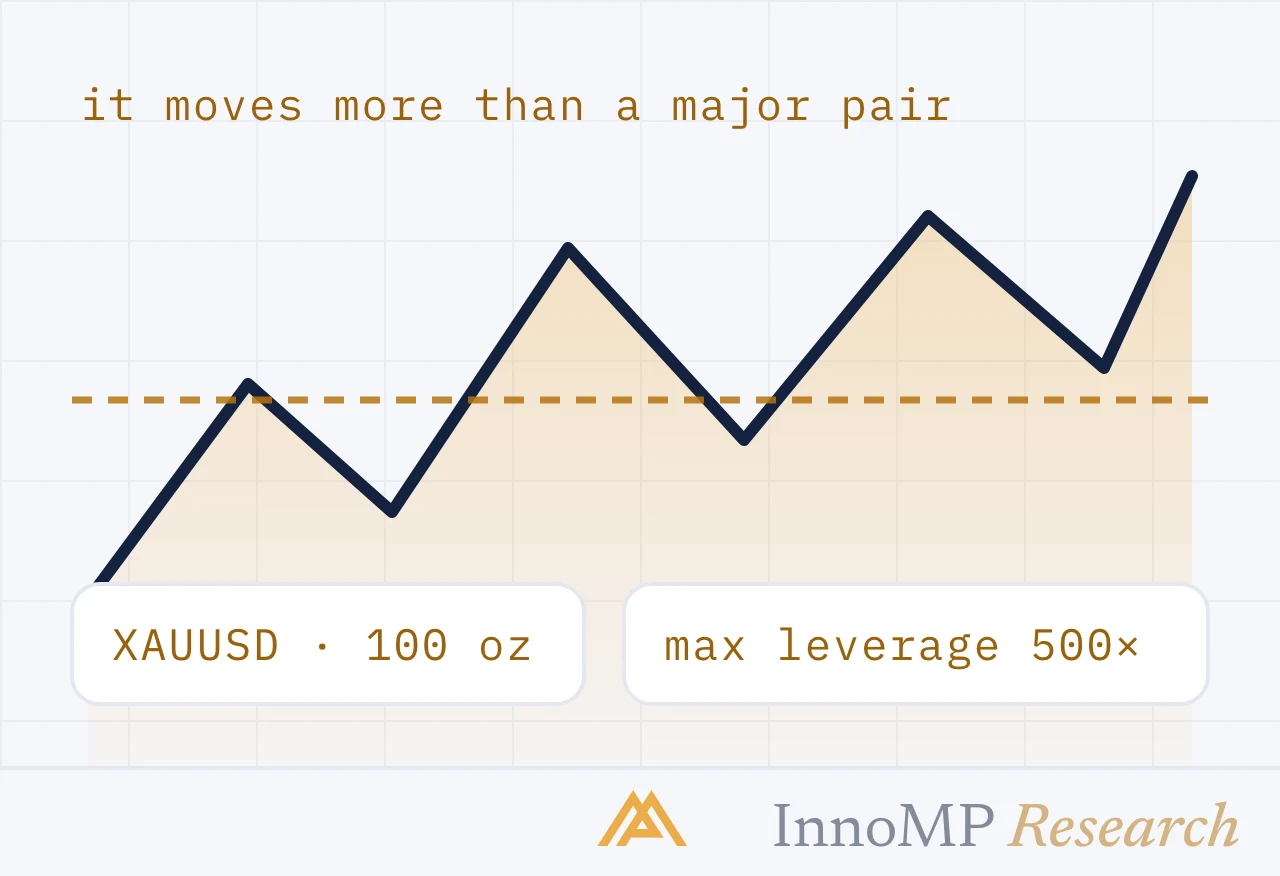
What actually moves gold, how the XAUUSD contract works, the sessions that matter, and a sizing approach that respects the metal's volatility.
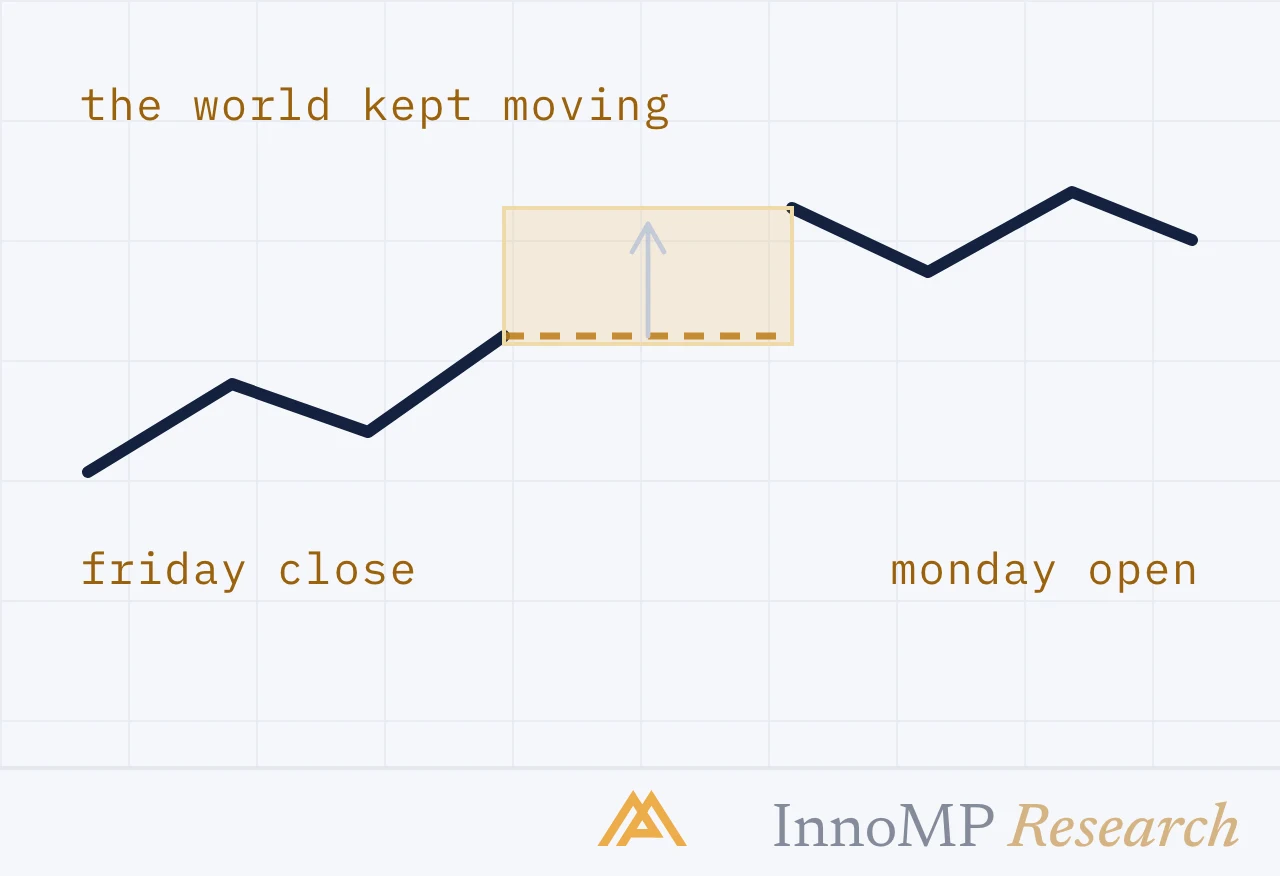
CFD markets close for the weekend; the world that prices them does not. Where gap risk comes from, why InnoMP raises the weekend liquidation threshold, and how to size for both.
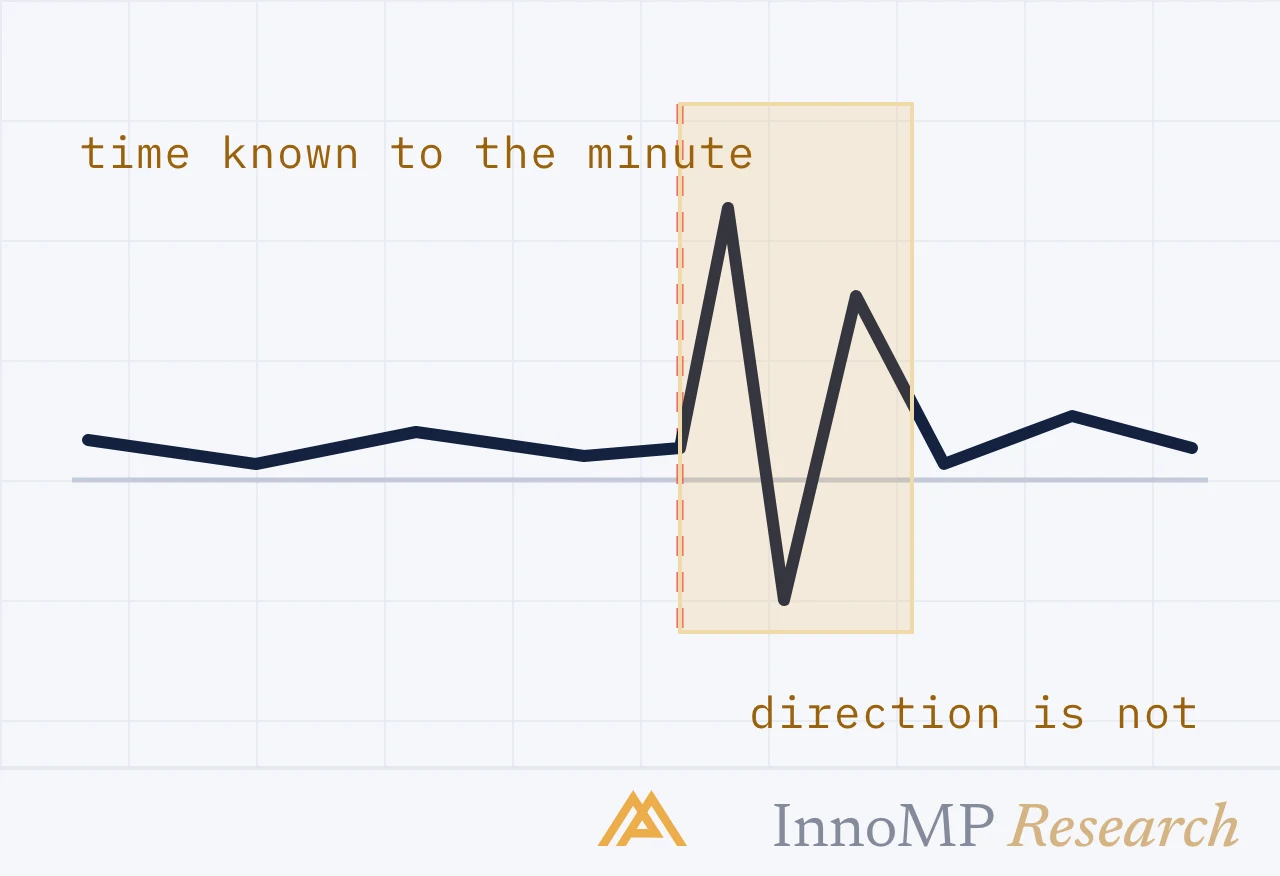
Scheduled releases compress a day of volatility into ninety seconds. A pre-event checklist and a sizing rule matter more than a view on the number itself.
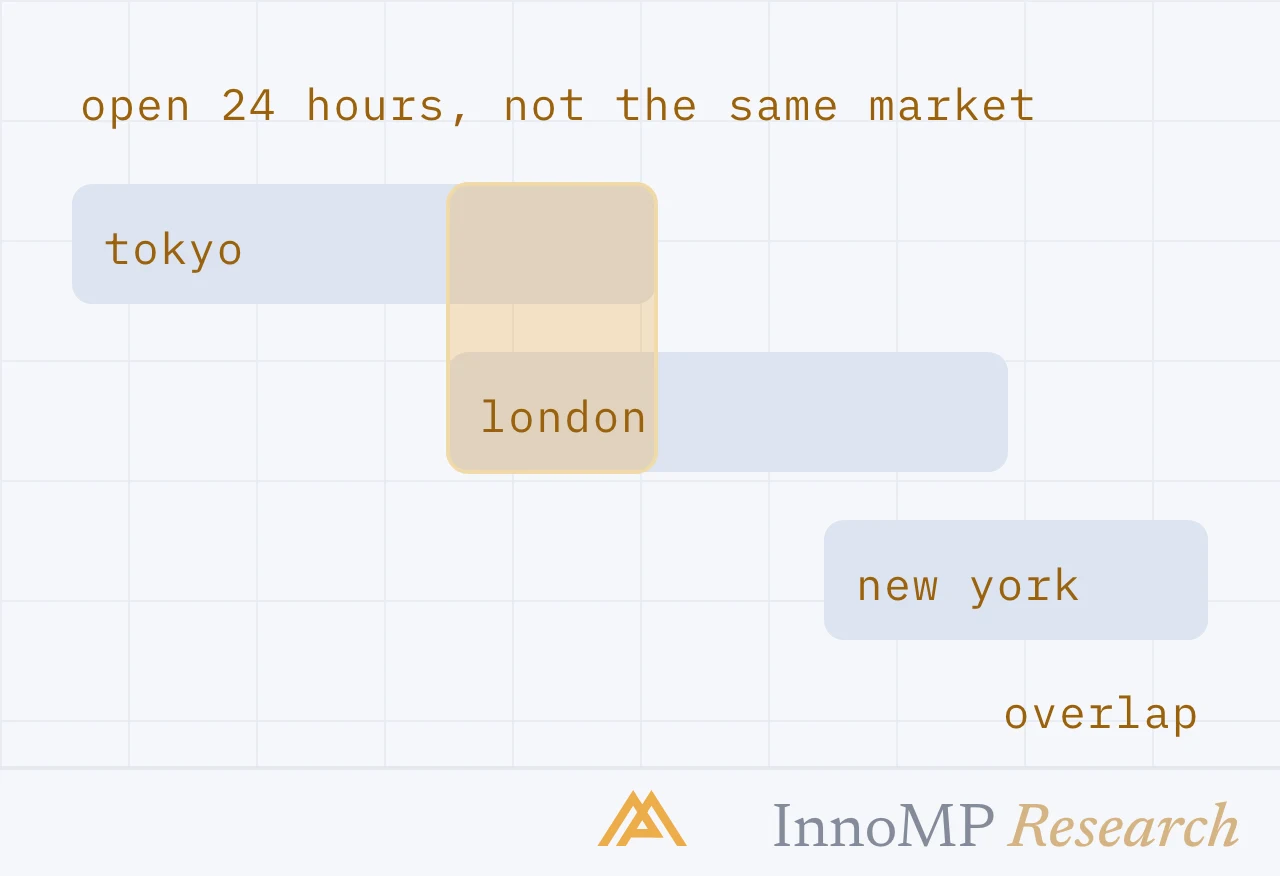
The forex market runs around the clock but not uniformly. What each session trades like, why the London–New York overlap dominates, and the hours that quietly cost money.
Market structurePosition sizingTrading costsPlatformsIndicatorsSupport & resistanceDisciplineMarket Watcher