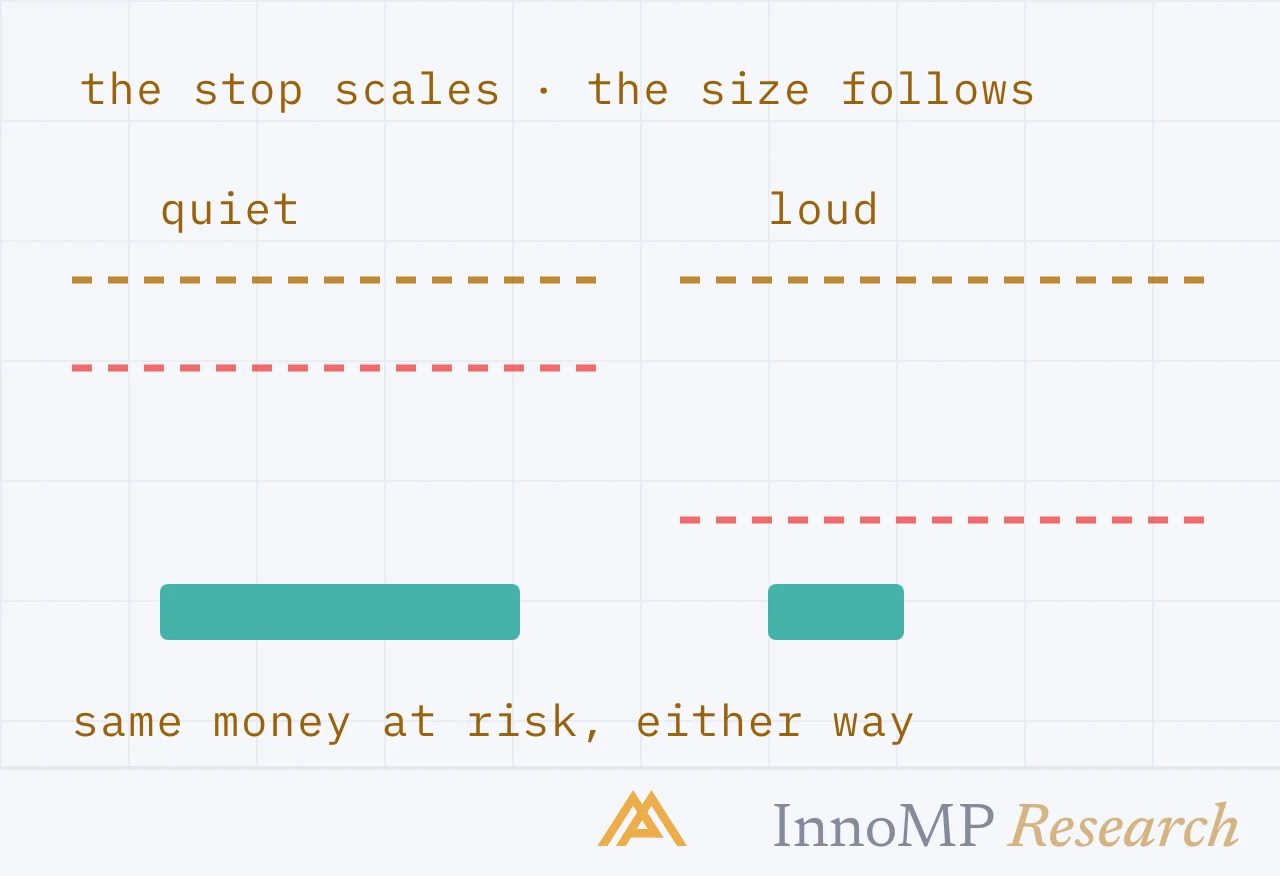
Position sizing
A 30-pip stop is tight in one regime and inside the noise in another. How to place the stop as a multiple of ATR, size the position from it so that risk in money stays constant, and what changes when volatility does.
Read more → 8 min read
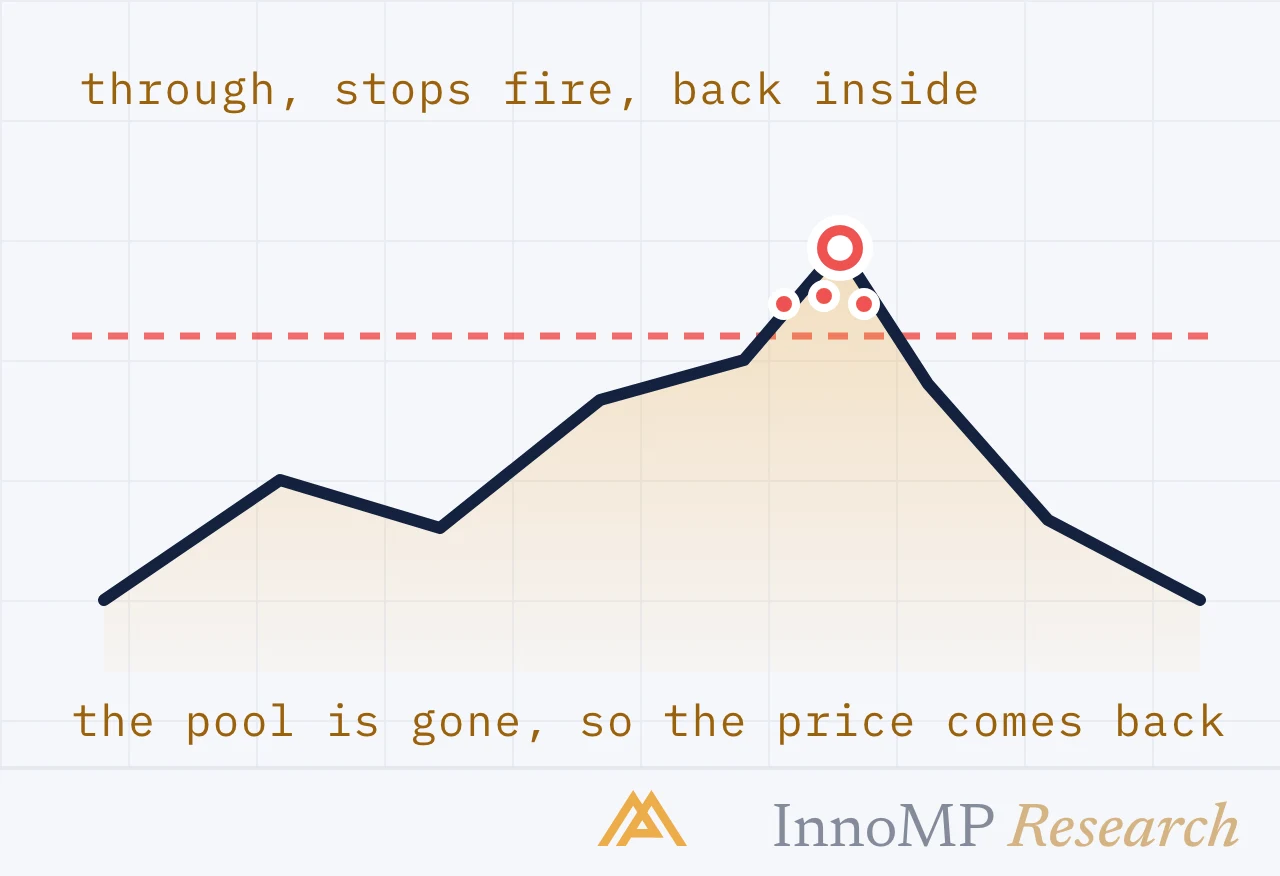
Market structure
Price pushes through an obvious level, triggers the stops resting beyond it, and comes straight back. What a sweep is mechanically, why it happens where it does, and how to tell it from a break that is going to hold.
Read more → 8 min read
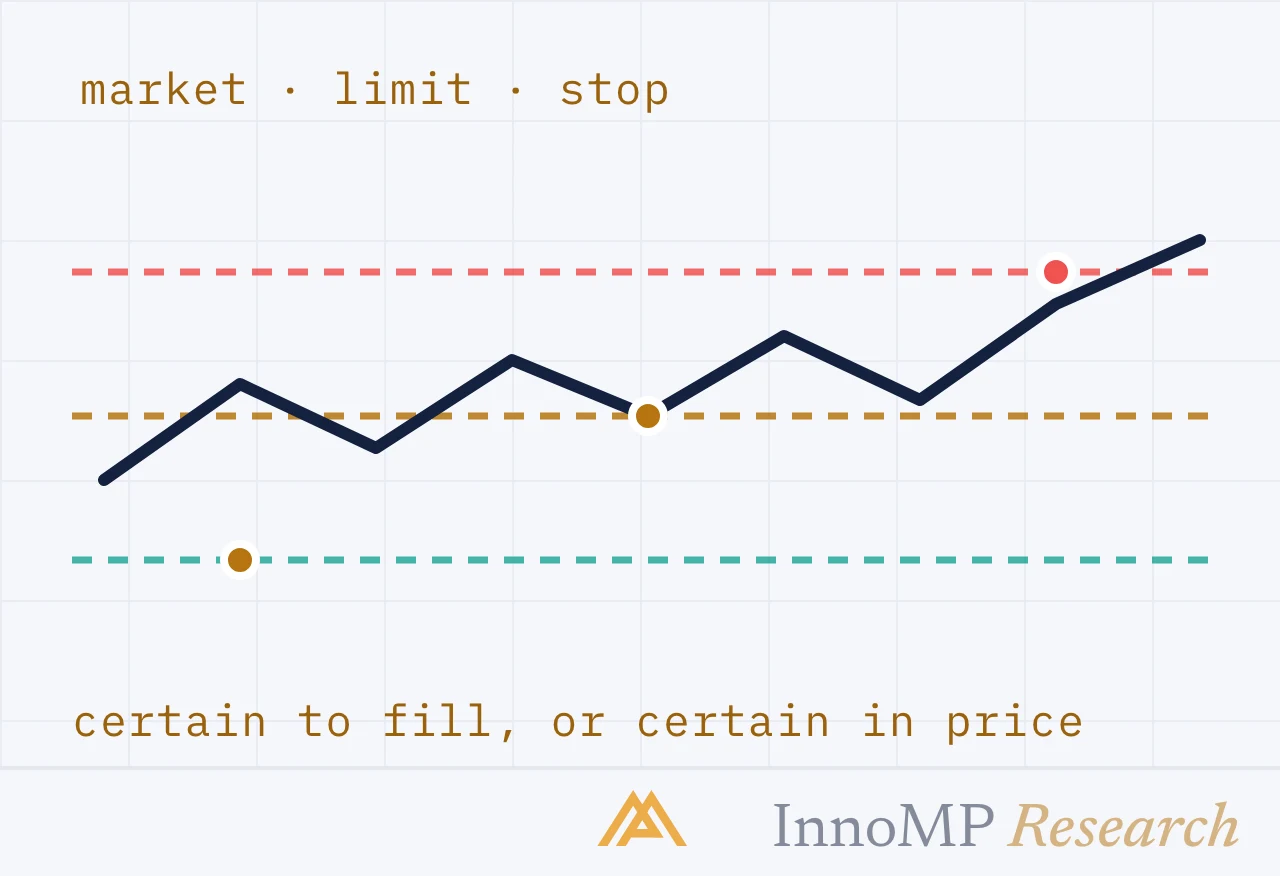
Trading costs
Every order is a choice between certainty of fill and certainty of price. Market orders take what the book offers, limit orders wait to be taken, stop orders become market orders at a trigger.
Read more → 8 min read
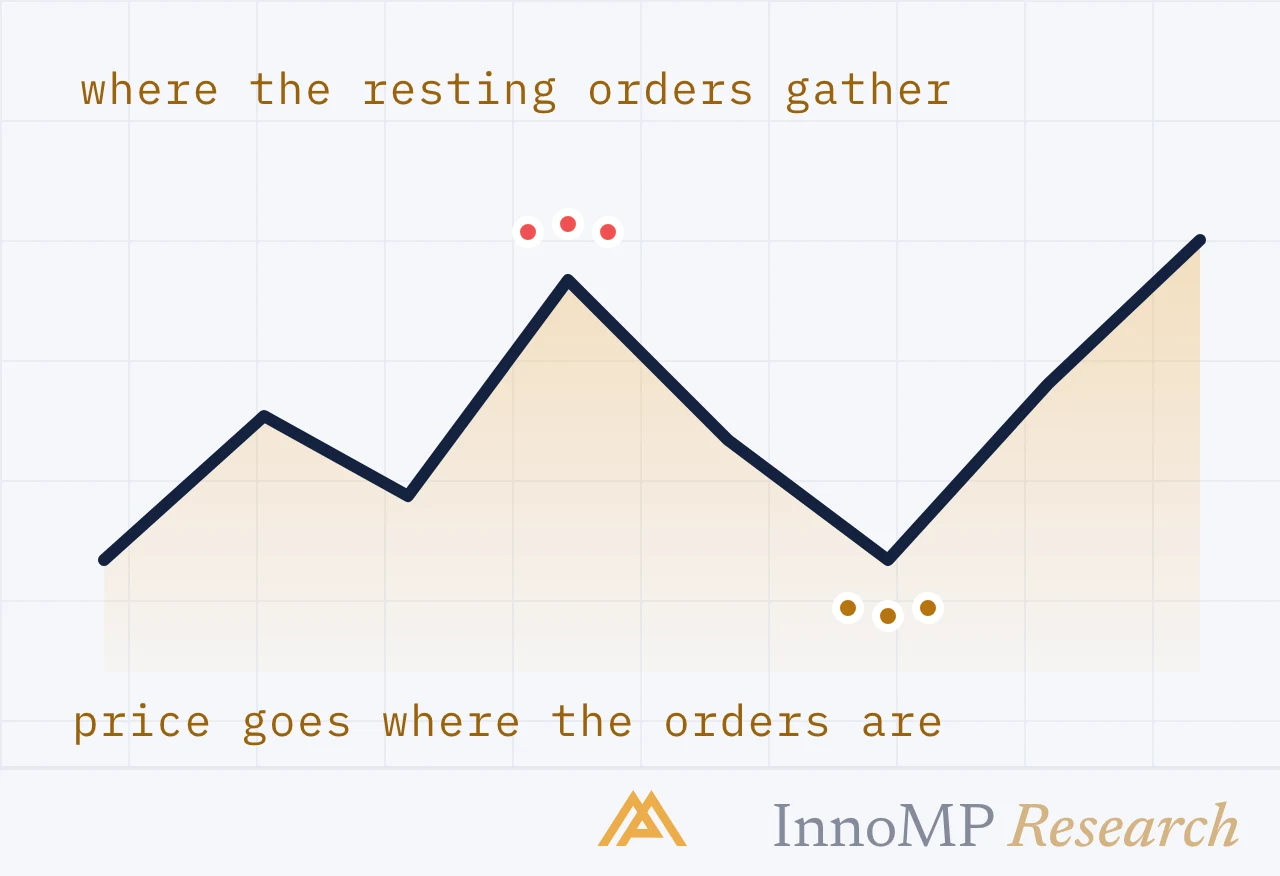
Market structure
Liquidity is resting orders, and resting orders are not spread evenly. They gather beyond swing points, at round numbers and reference levels, and on the far side of obvious lines. Why price is drawn to those places.
Read more → 8 min read
Discipline
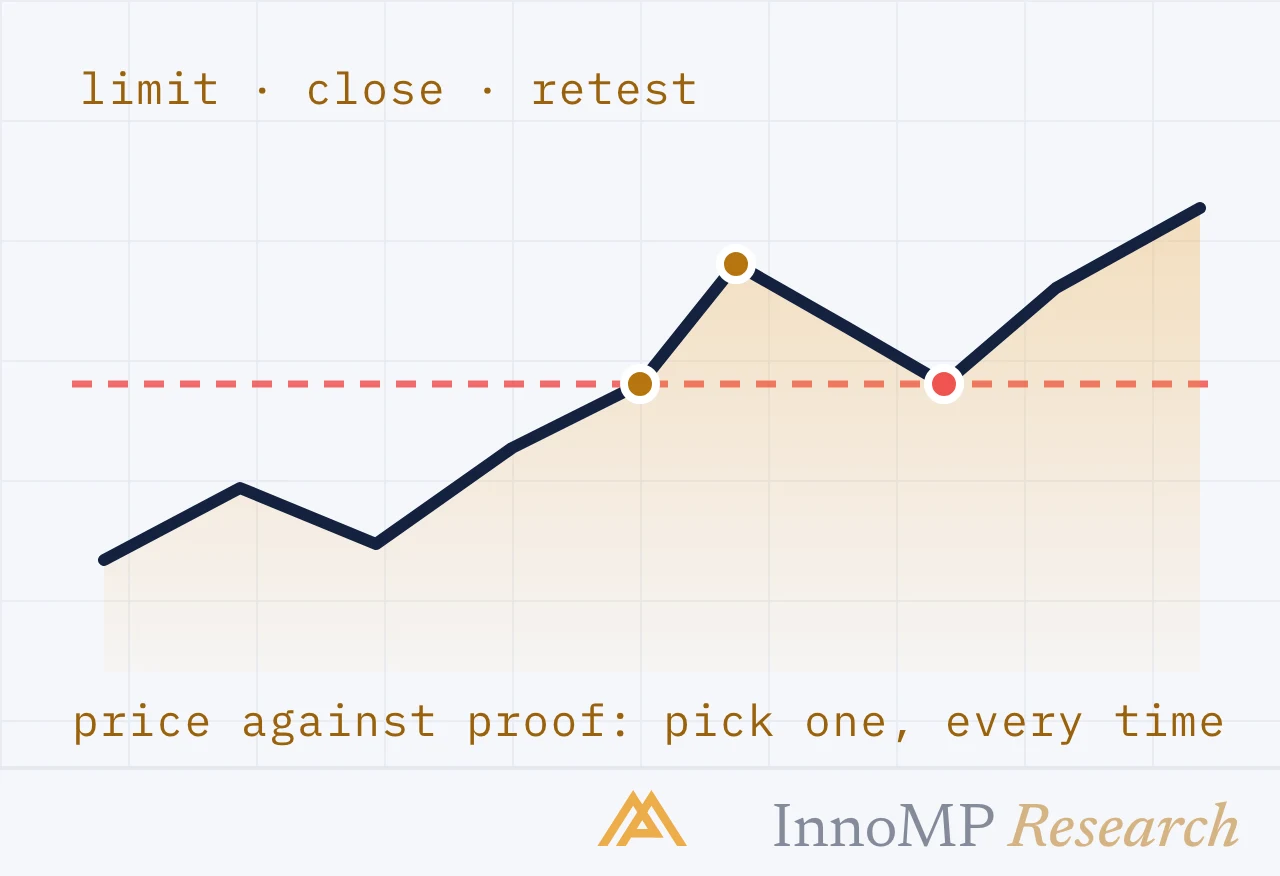
Every entry trades price against evidence. Enter early and the stop is tight but the setup is unproven; wait for confirmation and it is proven but the price is worse. The three common triggers, priced against each other.
Read more → 7 min read
Risk management
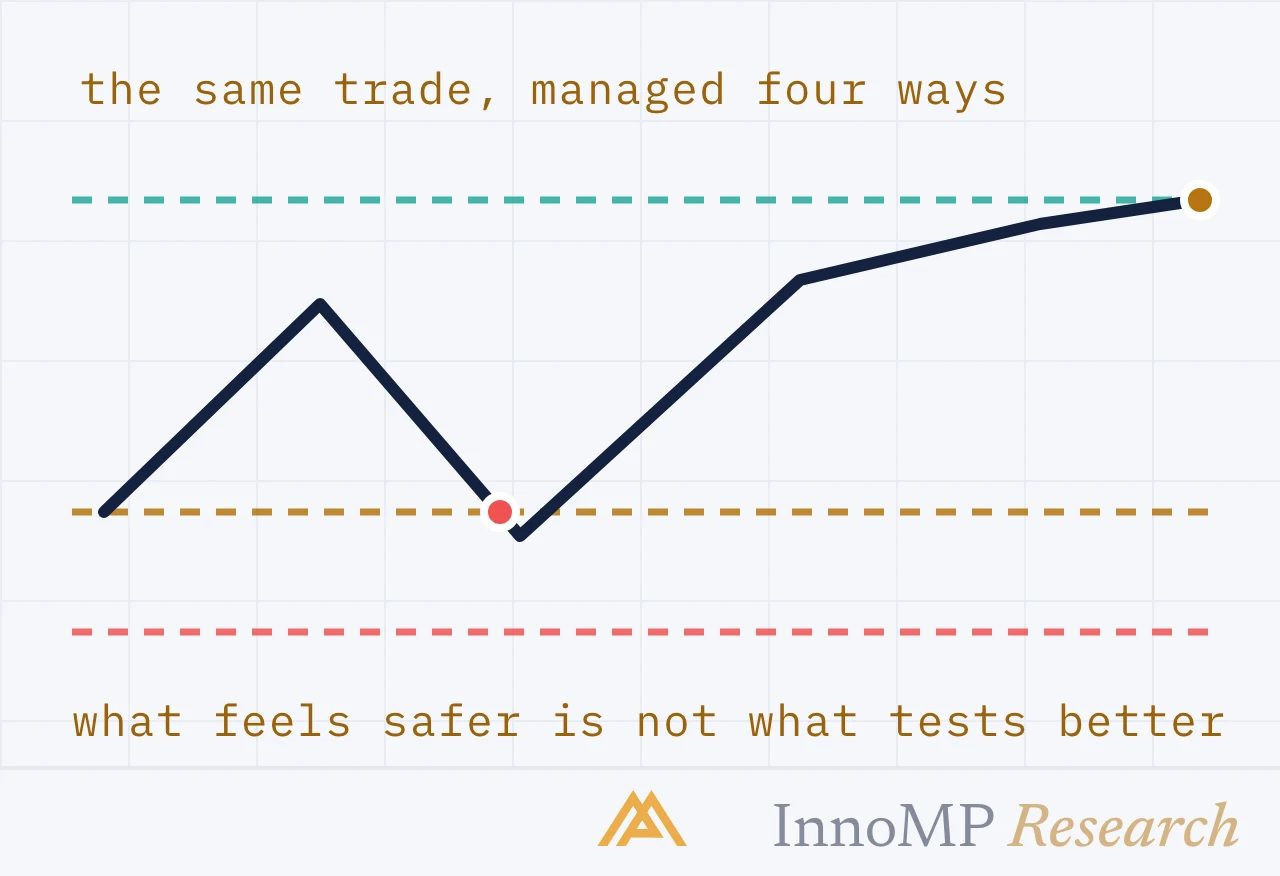
Everything done after entry changes a trade's expectancy, usually less than it changes how it feels. What partials, break-even stops and trailing do to the average win and loss, and when the arithmetic says do nothing.
Read more → 8 min read
Market structure
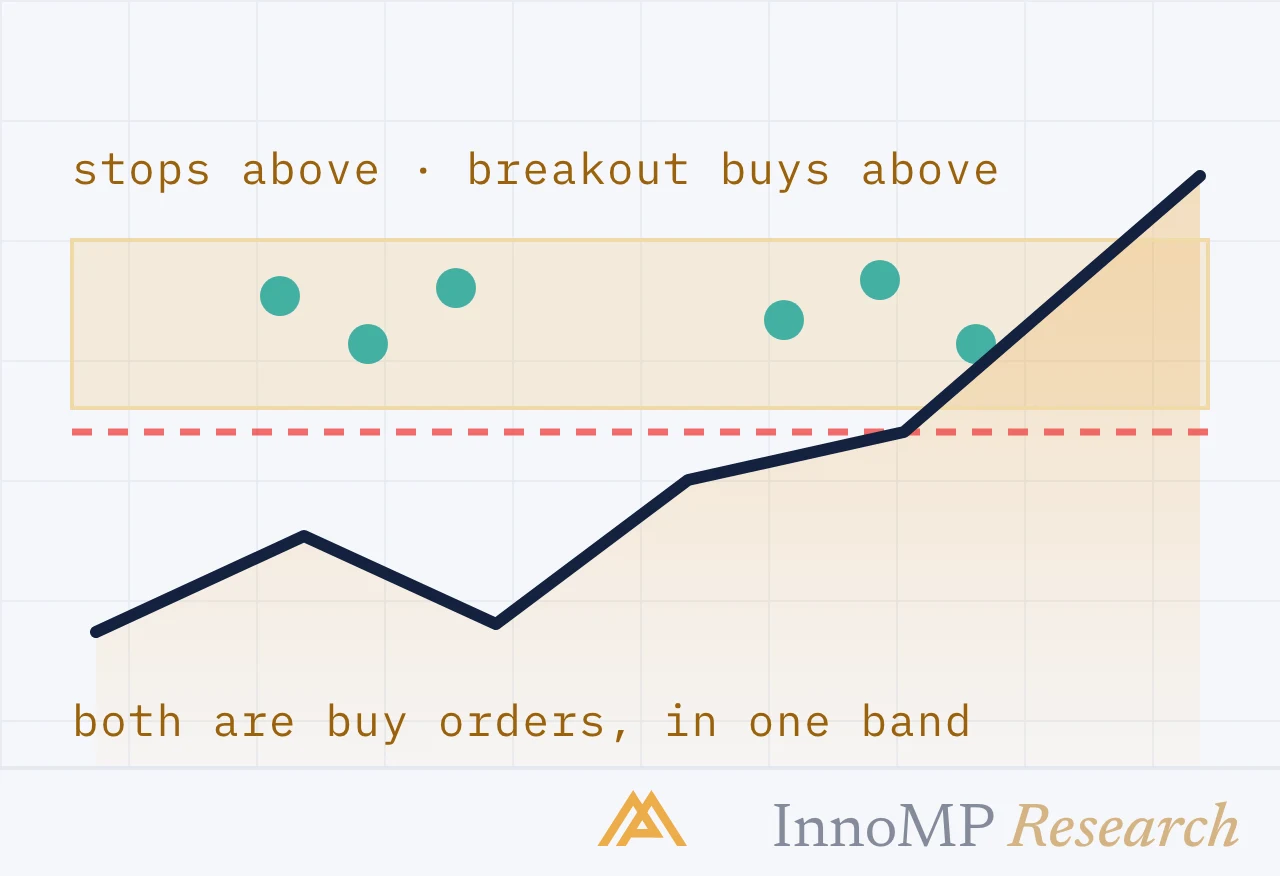
The break of a level is the most-watched event on any chart and the least reliable. What separates a break that holds from one that traps you.
Read more → 5 min read
Margin
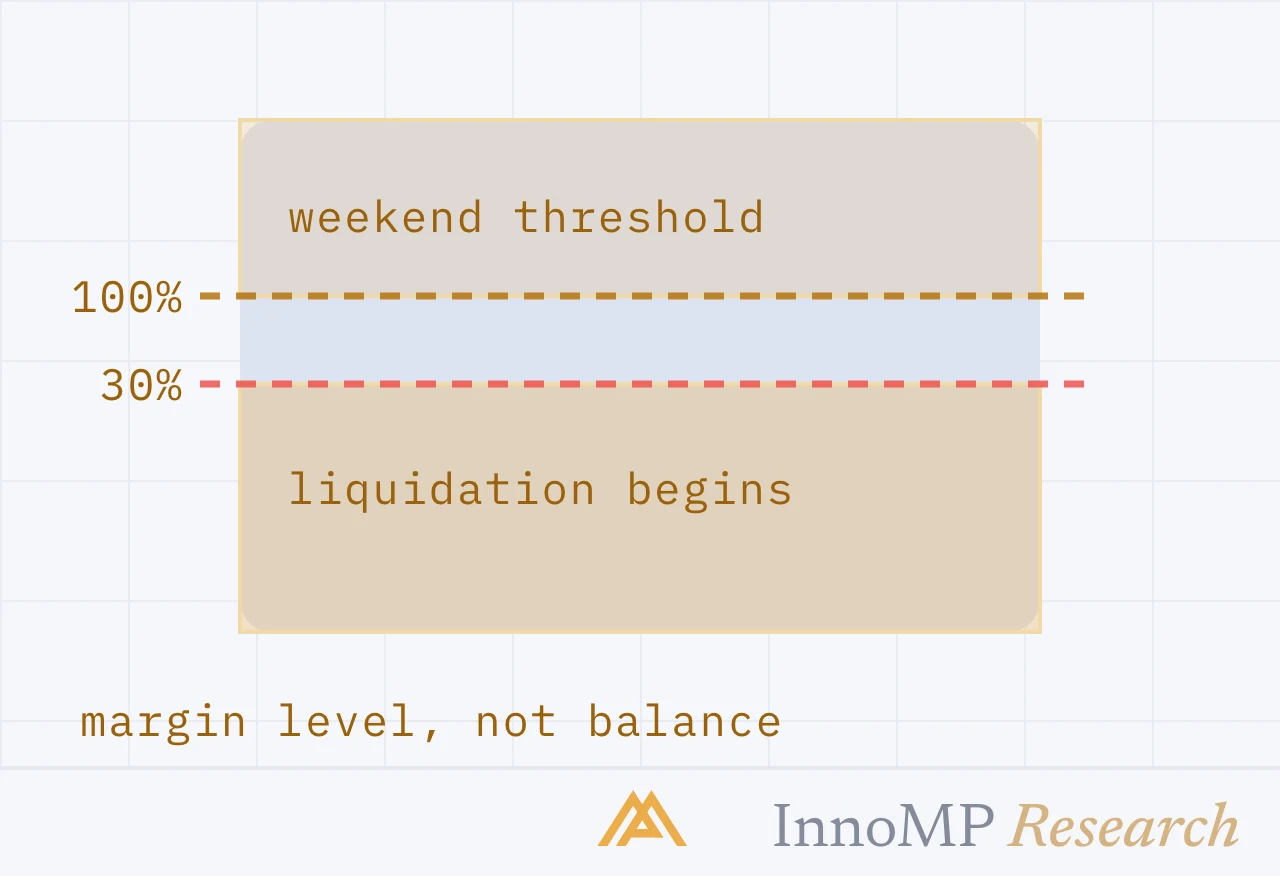
Margin level is the number the platform watches. What it measures, InnoMP's 30% weekday and 100% weekend liquidation thresholds, and the sizing habits that keep both permanently out of reach.
Read more → 6 min read
Risk management
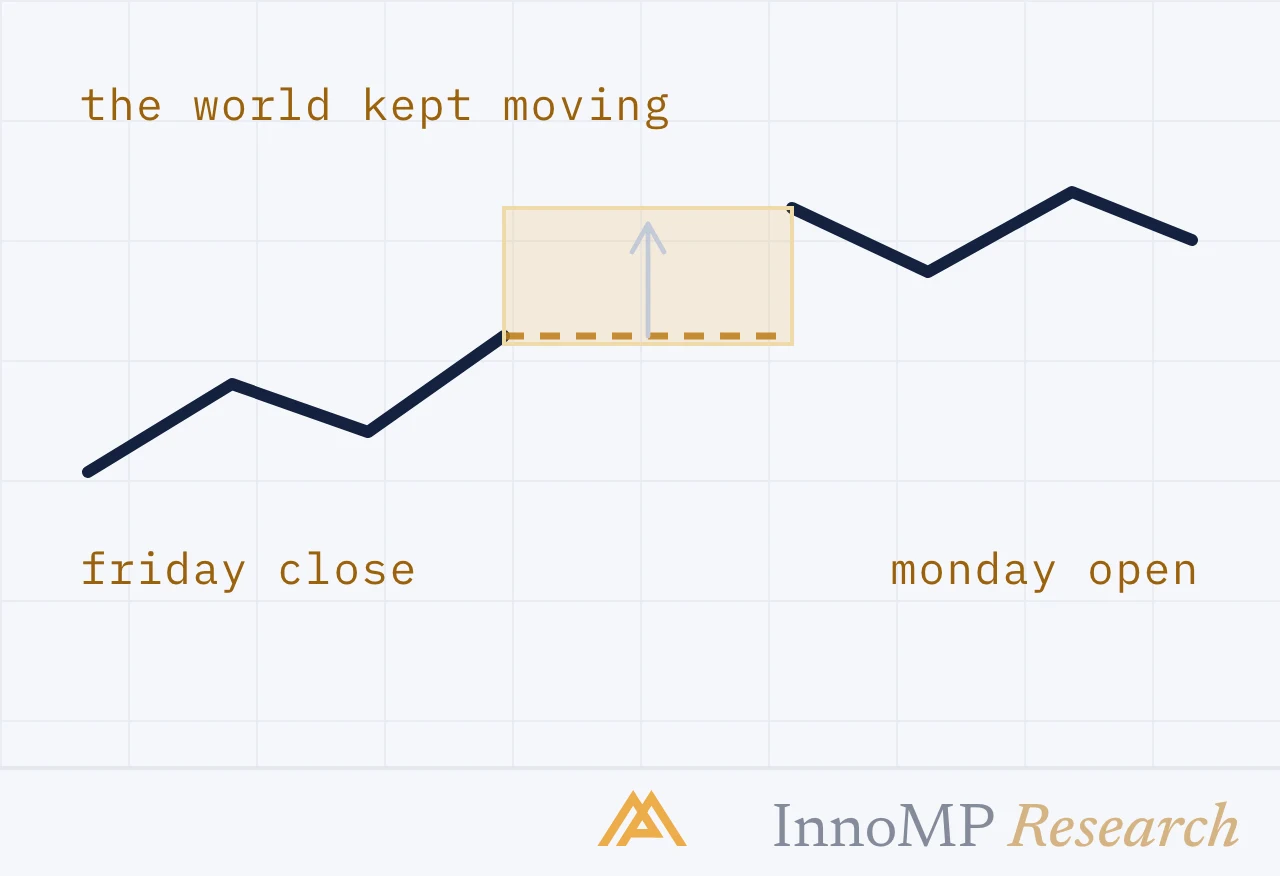
CFD markets close for the weekend; the world that prices them does not. Where gap risk comes from, why InnoMP raises the weekend liquidation threshold, and how to size for both.
Read more → 5 min read
Stop-loss
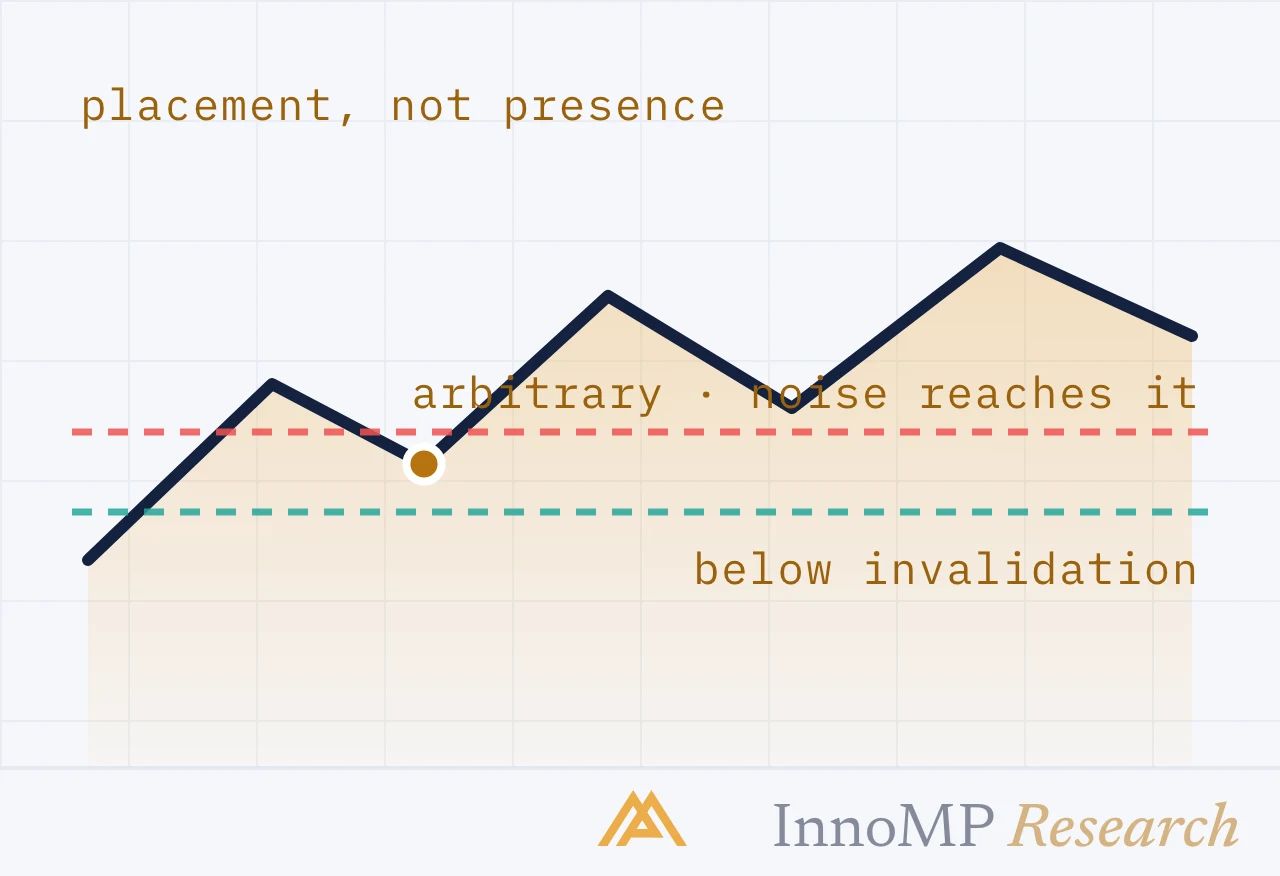
Having a stop is table stakes. Where it sits determines whether it protects the account or simply donates to the market on schedule.
Read more → 6 min read
Position sizingRisk managementMarket structureChart patternsTrading costsCFD basicsSupport & resistanceDiscipline